Incident management

The 6 Pillars of an Agentic Harness for Production — Varun Krovvidi, Resolve AI

The 6 Pillars of an Agentic Harness for Production — Varun Krovvidi, Resolve AI

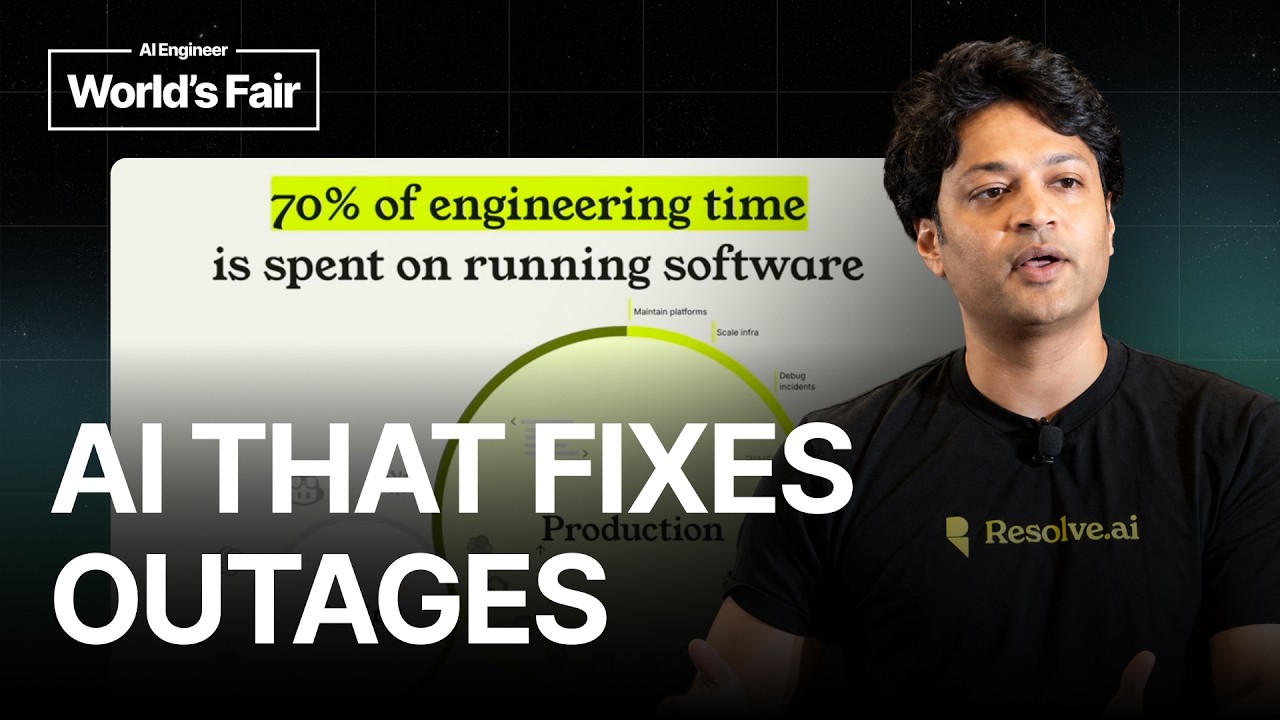
Varun Krovvidi of Resolve AI explains why AI excels at code generation but struggles with the complex, multi-domain problem of running and fixing software in production. He outlines five common failure modes for AI agents in production (anchoring bias, context issues, coherent vs. causal answers, guardrails, lack of learning) and introduces Resolve AI's six-pillar architecture: model orchestration, context engineering, causal reasoning, governed actions, learning systems, and multi-level evaluations. A demo illustrates how Resolve AI diagnoses a Grafana alert to its root cause, ruling out coincidental events and maintaining its causal reasoning.
Always-on agents run production without the on-call tax — Justin Smith, Resolve AI

Always-on agents run production without the on-call tax — Justin Smith, Resolve AI

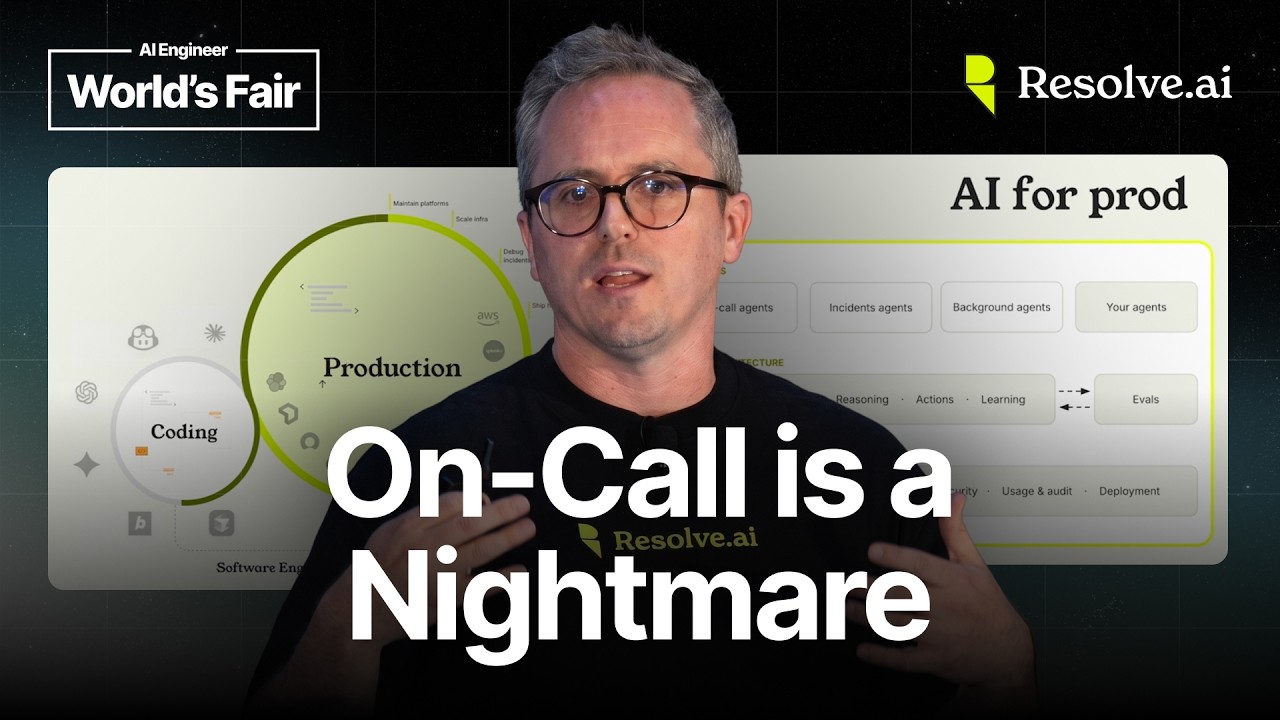
Justin Smith from Resolve AI discusses how AI agents address the increasing operational burden on engineers, highlighting that 70% of an engineer's time is spent running code. He introduces Resolve AI's background agents, which autonomously monitor deployments, perform health checks, generate reports, and answer engineering questions by leveraging deep production context and a self-learning knowledge system, effectively reducing the "on-call tax" and managing system complexity.

Sandboxing, Agent Harnesses, and Agent Teamwork

Sandboxing, Agent Harnesses, and Agent Teamwork

Shahram Anver, CEO of Cleric, details how AI agents for SRE are evolving beyond fast triage to continuous learning and operational memory. He discusses Cleric's architectural shifts, from complex early designs to simpler, sandboxed query agents, and the unique challenges SRE agents face in diverse production environments. A core focus is on human-agent interaction, redefining roles as managers overseeing agents, and how agents learn from unstructured data like Slack to build robust, actionable knowledge for autonomous, self-healing infrastructure. The discussion also touches on the future of software, differentiating between durable systems and rapidly developed "skills" or "vibe-coded" solutions.