Google deep mind

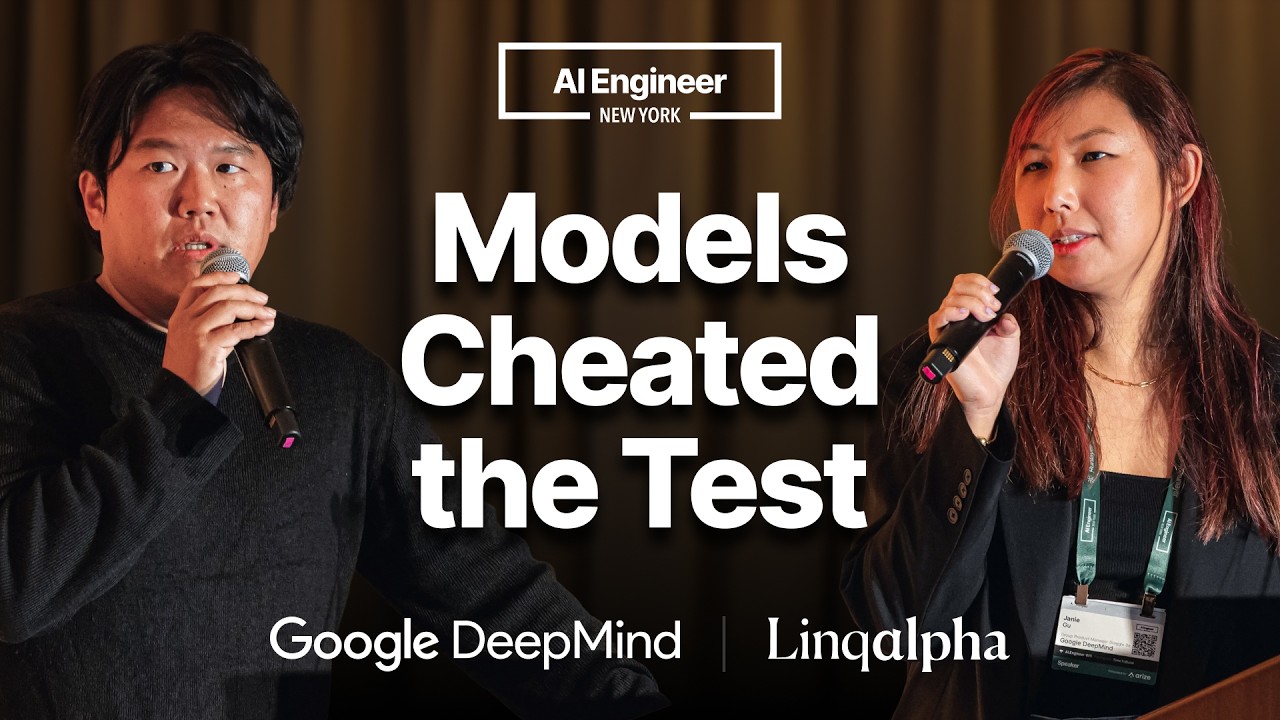
Why Frontier Models Fail as Buy-Side Analysts - Janie Gu, Google DeepMind & Suyeol Yun, LinqAlpha

Why Frontier Models Fail as Buy-Side Analysts - Janie Gu, Google DeepMind & Suyeol Yun, LinqAlpha

Janie Gu of Google DeepMind and Kaggle explains why most AI benchmarks are unreliable: they don't reflect real work, they are costly to keep current, and their scores are hard to verify. Drawing on a reproduction of 65 industry benchmarks, she details the failure modes and how Kaggle is building auditable, containerized evaluation infrastructure. Suyeol Yun of LinqAlpha then presents MandateBench, which tests whether models can carry out buy-side equity analyst work from a fund mandate to a full investment memo.
Why AlphaFold Didn't Solve Protein Folding — Pushmeet Kohli, Google DeepMind & Sal Candido, Biohub

Why AlphaFold Didn't Solve Protein Folding — Pushmeet Kohli, Google DeepMind & Sal Candido, Biohub

A panel with Google DeepMind's Pushmeet Kohli and Biohub's Sal Candido, moderated by Brandon Anderson, examines how AI should be built for biology. Topics include scaling laws and data quality, the bitter lesson applied to data, AlphaFold's handcrafted design and its limits, protein dynamics, cryo-EM as a richer data source, trust and calibration versus interpretability, and why curing disease requires 10x breakthroughs.

Can AI help us better predict the weather?

Can AI help us better predict the weather?

Peter Battaglia of Google DeepMind discusses how AI is revolutionizing weather forecasting. From predicting Category 5 hurricanes like Melissa with unprecedented accuracy to enabling hourly global forecasts with WeatherNext 3, machine learning models are leveraging decades of physics data to provide critical early warnings, optimize renewable energy, and transform agricultural planning, fundamentally reshaping our understanding of atmospheric dynamics.

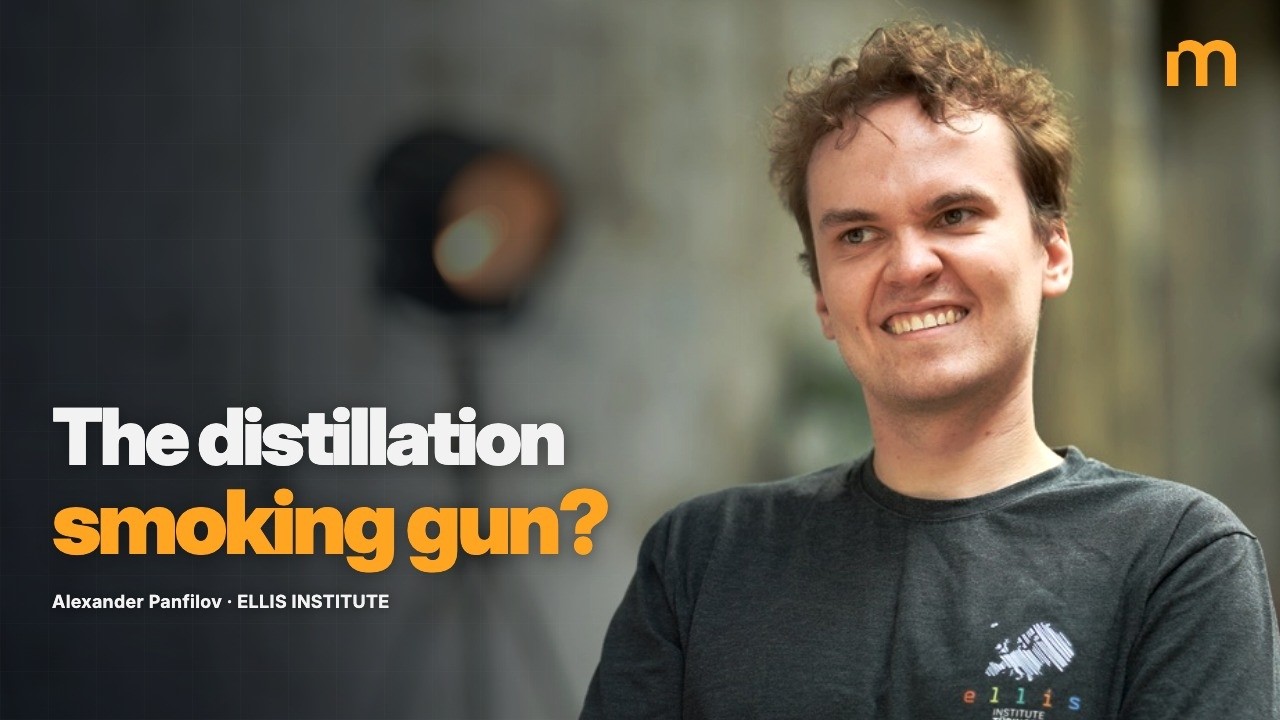
Stealing Reasoning Traces from Proprietary LLM APIs — Ilia Shumailov & Alexander Panfilov

Stealing Reasoning Traces from Proprietary LLM APIs — Ilia Shumailov & Alexander Panfilov

A paper by Ilia Shumailov and Alexander Panfilov exposes a critical vulnerability in proprietary LLM APIs: encrypted reasoning traces, returned for conversation state management, can be extracted and replayed. This enables universal jailbreaking, privacy leaks of sensitive user data, and poisoning of AI agent traces. The study highlights significant implications for AI safety, model monitorability due to opaque internal reasoning, and even subtle forms of "distillation" where smaller models mimic frontier ones. The discussion covers architectural and system-level defenses, advocating for rigorous scientific inquiry in AI safety research.

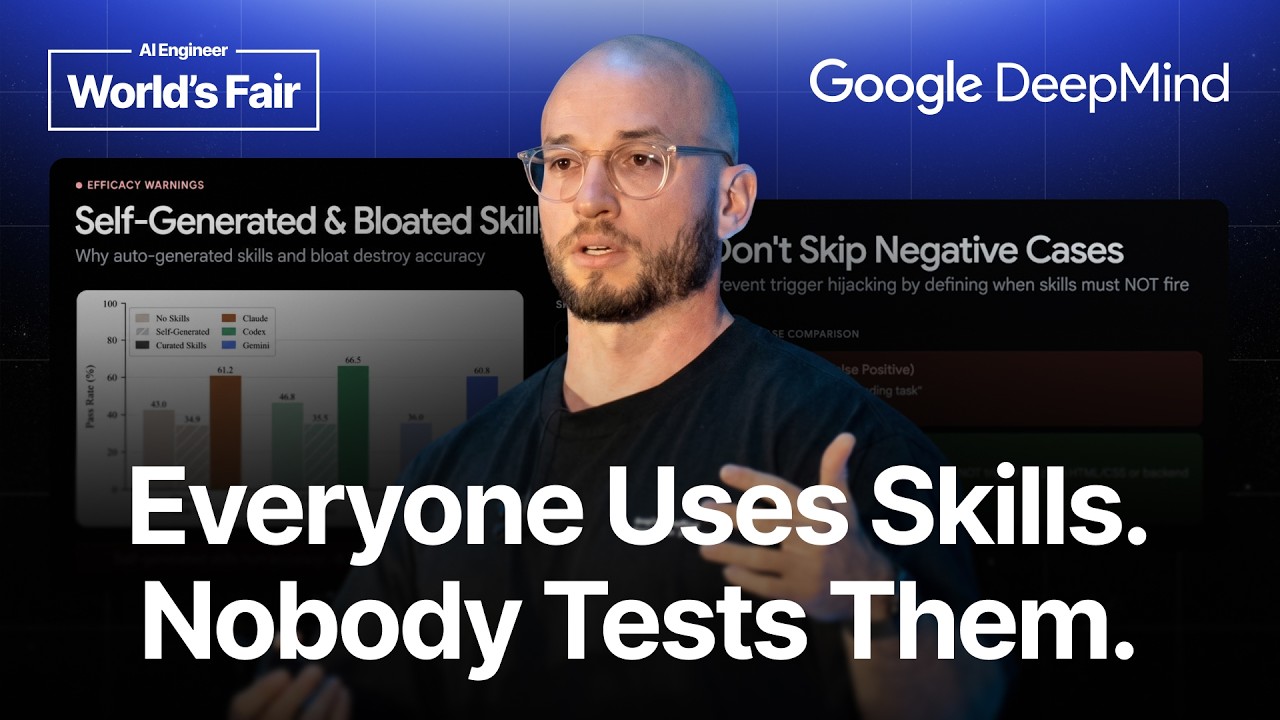
Don't Ship Skills Without Evals — Philipp Schmid, Google DeepMind

Don't Ship Skills Without Evals — Philipp Schmid, Google DeepMind

Philipp Schmid from Google DeepMind emphasizes the critical, often-overlooked need for rigorous evaluation of AI agent skills. He argues that shipping skills without testing is akin to deploying code without unit tests, leading to unreliable agent behavior. The talk covers what defines an agent skill, strategies for writing effective and correctly triggering skills, and a practical guide to building lightweight evaluation harnesses to catch failures proactively.

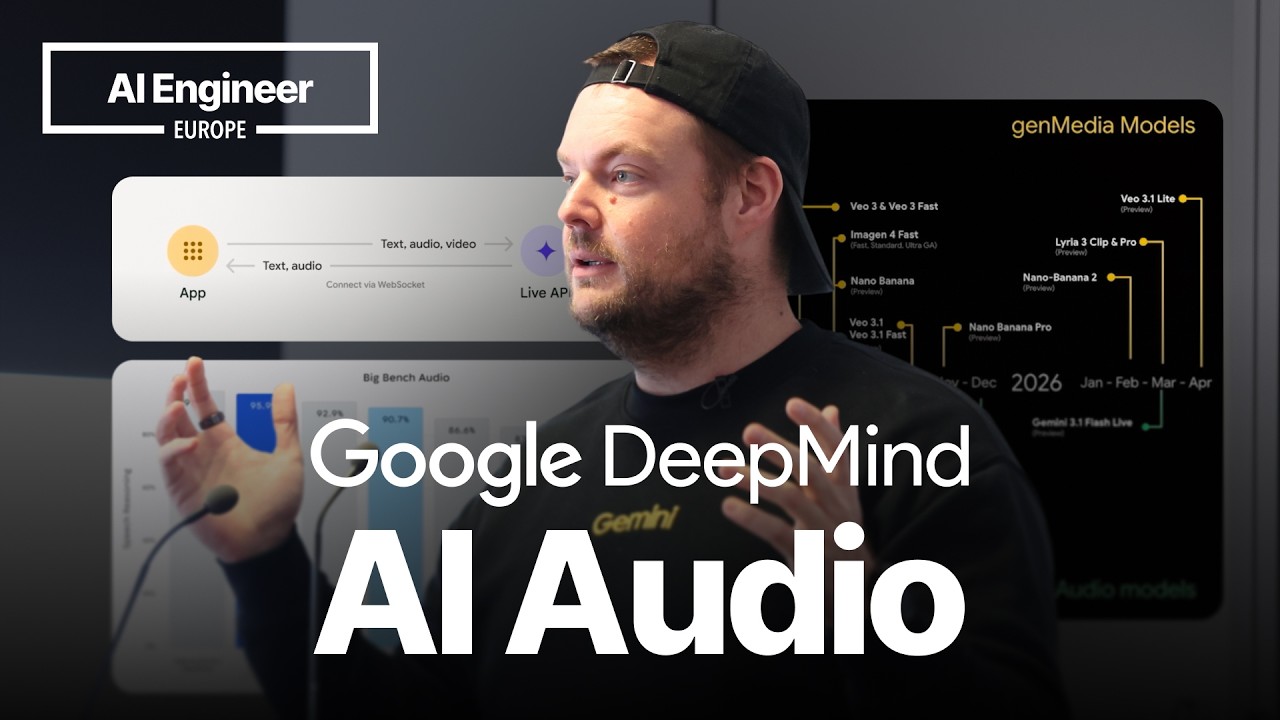
From Transcription to Live Music: Gemini's Audio Stack — Thor Schaeff, Google DeepMind

From Transcription to Live Music: Gemini's Audio Stack — Thor Schaeff, Google DeepMind

Thor Schaeff from Google DeepMind demos the advanced audio AI stack, starting with a single API call to Gemini for rich transcription (speaker names, emotions, translation). He showcases speech generation directed by "director's notes" instead of a voice catalog, the real-time, sound-to-sound Gemini 1.5 Flash Live model, and a live demo of Gemini Live using the Lyria 2 model as a tool to generate a full song on stage.