Foundation models

Why Most Robot Demos Are Fake

Why Most Robot Demos Are Fake

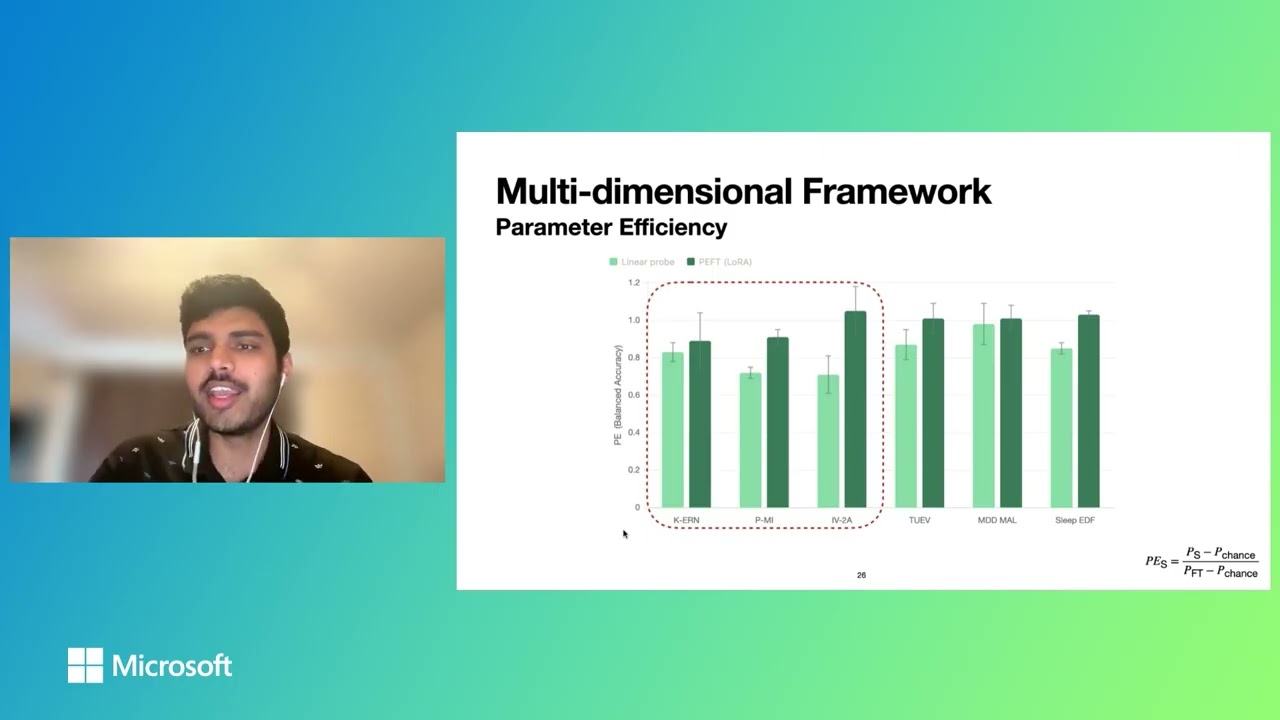
Changan Chen, co-founder of Rhoda AI, discusses their vision-first approach to building foundation models for robotics. The conversation covers their unique training pipeline, the distinction between policy and world models, and the path to deploying data-efficient, reliable robots in real-world industrial settings.

This Technology Scares OpenAI (Here's Why)

This Technology Scares OpenAI (Here's Why)

Jeff Hawke, CTO at Odyssey, provides a deep dive into the emerging field of "world models"—AI systems that generate continuous, interactive simulations. He draws parallels to the "GPT-2 era" of LLMs, outlining the current state, core research challenges like coherence and control, and the immense potential for applications in gaming, robotics, and content creation. Hawke also clarifies the confusing terminology, distinguishing canonical world models from spatial intelligence and generative video models like Sora.

Beyond AI implementation: Introducing JDLA's initiatives

Beyond AI implementation: Introducing JDLA's initiatives

This presentation by the Japan Deep Learning Association (JDLA) details Japan's strategy for accelerating AI adoption. It covers the government's strong pro-AI stance driven by demographic challenges, the critical need for corporate AI governance, and the rise of physical AI in robotics. JDLA's core initiatives are highlighted, including the G- and E-Certificate programs for talent development, which are increasingly becoming corporate standards, and the establishment of the AI Robot Association (AIROA) to build a foundational data infrastructure for robotics.

Lessons from Building Open Source Libraries

Lessons from Building Open Source Libraries

Thomas Wolf, co-founder of Hugging Face, discusses his journey from physics to AI, the power of open-source models to accelerate innovation, the practical challenges of productionalizing AI demos, and why the biggest opportunities for founders now lie in the application layer on top of powerful foundation models.

Graph Neural Networks Just Solved Enterprise AI?

Graph Neural Networks Just Solved Enterprise AI?

Jure Leskovec introduces Relational Foundation Models (RFMs), a new class of models based on graph neural networks that learn directly from raw, multi-table enterprise data. This approach bypasses manual feature engineering, leading to more accurate, faster-to-deploy, and easier-to-maintain predictive models for tasks like churn prediction, fraud detection, and recommendation systems.

How to Make AI Forget

How to Make AI Forget

Ben Luria, CEO of Hirundo, discusses the critical need for machine unlearning, framing it as a form of "AI neuro-surgery" for enterprise AI. He explains how this technique directly modifies model weights to remove unwanted data and behaviors, addressing core risks that superficial solutions like guardrails cannot solve.