Feature

Demis Hassabis on Building DeepMind, AlphaFold, and the Final Stretch to AGI

Demis Hassabis on Building DeepMind, AlphaFold, and the Final Stretch to AGI

Demis Hassabis, CEO of Google DeepMind, outlines the path to AGI, which he predicts by 2030. He discusses the profound impact of AI on science, particularly in revolutionizing drug discovery with systems like AlphaFold, and posits that AI will enable new forms of simulation-based science. Hassabis also delves into the philosophical underpinnings of his work, viewing information as the universe's most fundamental quantity and advocating for developing AGI as a powerful tool before tackling the deeper questions of consciousness.
The Moonshot Podcast Season 2, Episode 6: Silicon Horizons

The Moonshot Podcast Season 2, Episode 6: Silicon Horizons

This podcast episode explores two X moonshot projects aimed at revolutionizing computer chips. Project Positron focused on creating specialized chips for real-time AI inference, acting as 'brains for robots'. Project Bodger took a meta-approach, using AI and inverse design to automate the chip design process itself, aiming to overcome the limitations of Moore's Law.

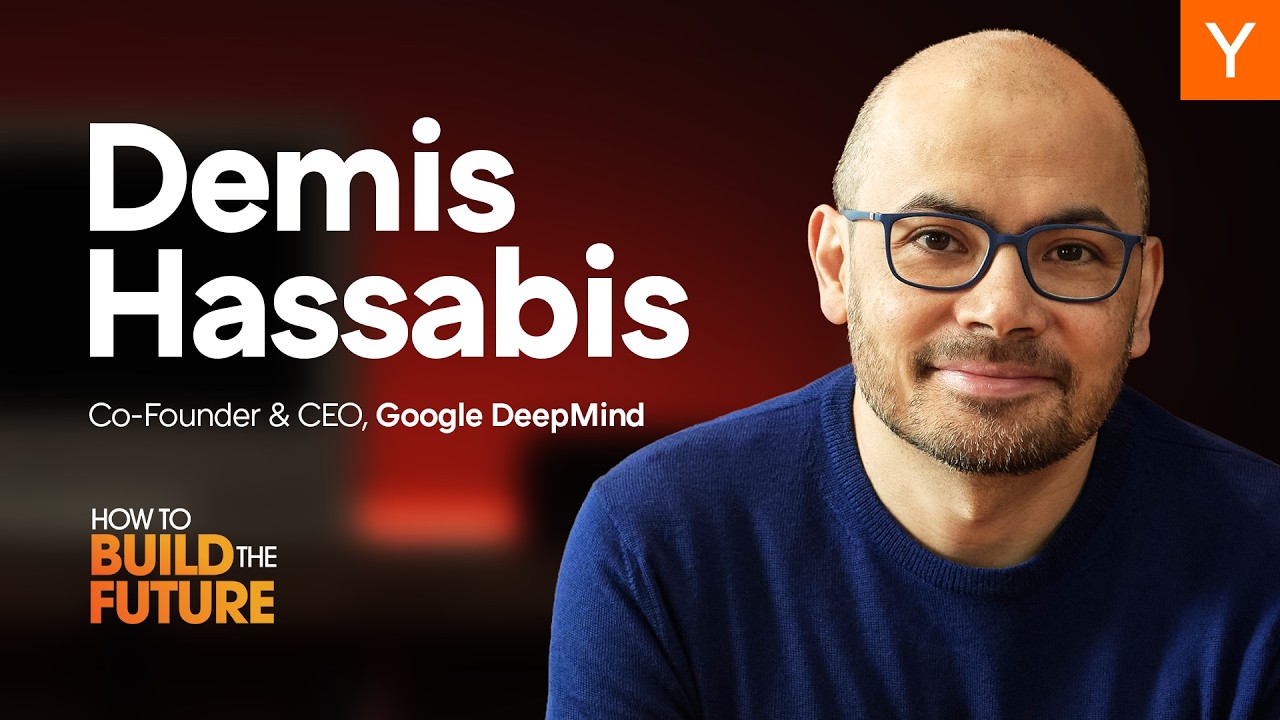
How to Build the Future: Demis Hassabis

How to Build the Future: Demis Hassabis

Demis Hassabis, CEO of Google DeepMind, outlines the remaining challenges on the path to AGI, including memory, continual learning, and true reasoning. He discusses how learnings from AlphaGo are shaping agent development, the strategic importance of powerful small models like Gemma, and his vision for AI as the ultimate tool for scientific discovery, offering a framework for identifying breakthrough opportunities and advice for founders building in the age of AI.

Build & deploy AI-powered apps — Paige Bailey, Google DeepMind

Build & deploy AI-powered apps — Paige Bailey, Google DeepMind

A developer-focused, demo-heavy session on rapid AI prototyping using the Google DeepMind stack. It covers how to leverage the full capabilities of AI Studio, from video analysis and code execution with Gemini 3.1 Flash, to building full-stack applications with databases, and exploring the frontiers of generative media with Genie 3, Veo 3.1 Lite, and Lyria 3.

Building your own software factory — Eric Zakariasson, Cursor

Building your own software factory — Eric Zakariasson, Cursor

Eric Zakariasson from Cursor explains the shift from single-agent pair programming to managing a multi-agent "software factory". He outlines the practical steps required, from establishing a well-structured codebase with guardrails to adopting a managerial mindset that focuses on automation, asynchronous work, and scaling agent fleets to increase software development throughput and consistency.

What happens now that AI is good at math? — the OpenAI Podcast Ep. 17

What happens now that AI is good at math? — the OpenAI Podcast Ep. 17

OpenAI researchers Sébastien Bubeck and Ernest Ryu discuss the dramatic and surprising progress of AI in mathematics. They cover how models went from basic arithmetic to solving Olympiad-level and even 40-year-old open research problems, what this progress means for the future of science and AGI, and the evolving role of human researchers in an era of AI-accelerated discovery.