Feature

Making the Case for the Terminal as AI's Workbench: Warp’s Zach Lloyd

Making the Case for the Terminal as AI's Workbench: Warp’s Zach Lloyd

Zach Lloyd, founder of Warp, discusses how the terminal is becoming the central workbench for AI-powered development. He explores the convergence of IDEs and terminals, the rise of cloud-based agent swarms, and his thesis that coding will soon be a "solved" problem, making the clear expression of human intent the final bottleneck.
W&B Models end-to-end demo

W&B Models end-to-end demo

W&B Models is the system of record for the entire model development lifecycle. This guide explores how to monitor training, tune hyperparameters, track artifacts and lineage for reproducibility, and automate MLOps workflows like evaluation and deployment using a central platform.

Late-Stage Investing in an AI-Driven Market

Late-Stage Investing in an AI-Driven Market

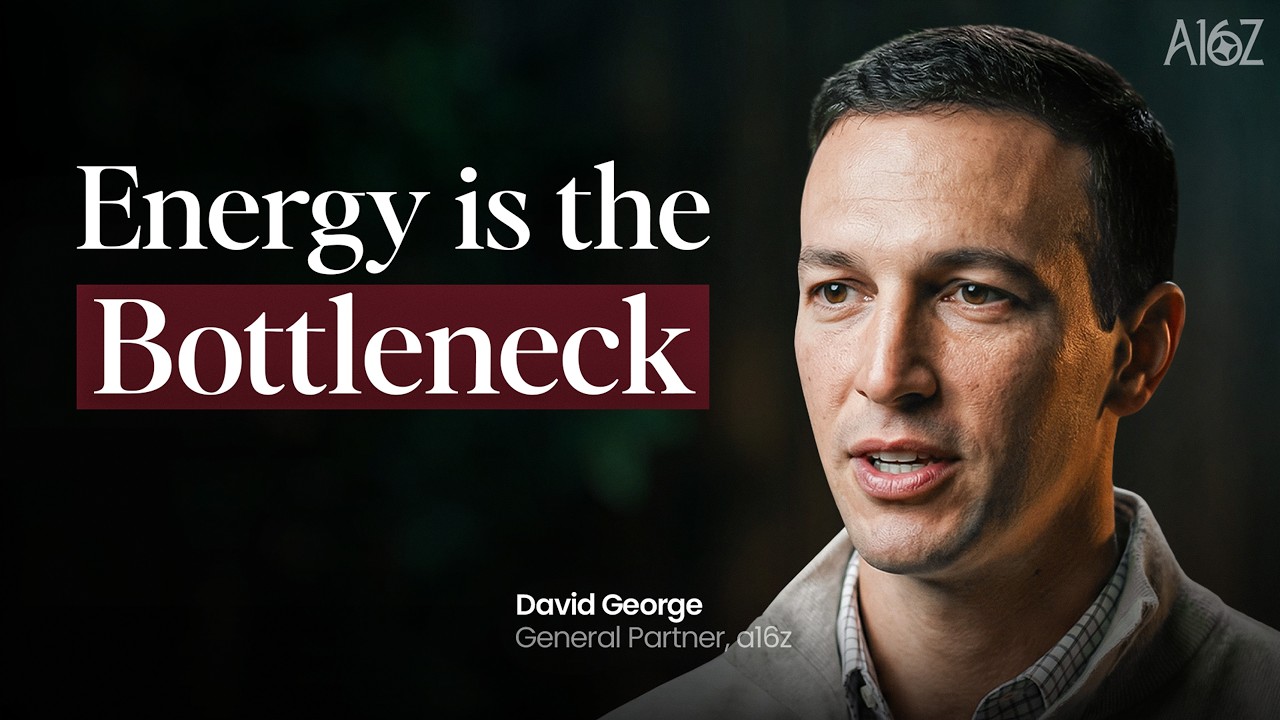
David George (General Partner, a16z) discusses how AI is fundamentally reshaping late-stage private markets. He covers the unprecedented scale of infrastructure investment, evolving business models and monetization strategies, why AI-native companies are staying private longer, and how this new paradigm changes the calculus for durability, value creation, and long-term growth.

Artie: Real Time Data Streaming For The AI Age

Artie: Real Time Data Streaming For The AI Age

Jacqueline Cheong and Robin Tang, founders of real-time data streaming platform Artie, discuss their journey from identifying the critical need for fresh data at companies like OpenDoor to building a production-ready solution, acquiring their first major customer Substack via a cold email, and navigating the complex technical challenges of real-time data processing at scale.

Building Planetary-Scale Data Systems with Venice • Felix GV & Olimpiu Pop • GOTO 2026

Building Planetary-Scale Data Systems with Venice • Felix GV & Olimpiu Pop • GOTO 2026

Félix GV, an architect of LinkedIn's Venice database, discusses its unbundled, planetary-scale architecture. He covers how components like Kafka and RocksDB form independent distributed systems, details their rigorous chaos engineering practices, explains CAP theorem trade-offs in multi-region deployments, and explores the experimental integration of DuckDB for SQL-based analytics.

If You Can't See Inside, How Do You Know It's THINKING? [Dr. Jeff Beck]

If You Can't See Inside, How Do You Know It's THINKING? [Dr. Jeff Beck]

Dr. Jeff Beck explores the philosophical and technical definitions of agency, arguing that the distinction between an agent and an object lies in computational sophistication, particularly the capacity for planning and counterfactual reasoning. The conversation provides a deep dive into Energy-Based Models (EBMs), Yann LeCun's JEPA for learning in latent space, and a pragmatic approach to AI safety centered on inverse reinforcement learning rather than fears of rogue superintelligence.