Explainable ai

Judge a Transaction by the Company It Keeps — Somya Rai & MD Sharique, EXL

Judge a Transaction by the Company It Keeps — Somya Rai & MD Sharique, EXL

EXL developed an advanced fraud detection system that augments XGBoost with Graph Neural Network (GNN) embeddings. Traditional tabular models struggle to capture fraud signals residing in transaction neighborhoods. The system's innovative design includes meticulous sampling strategies, disjoint monthly graph construction for leakage control, and a GraphSAGE architecture that aggregates mean, max, and standard deviation of neighbor features to detect subtle fraud patterns. Emphasizing explainability for regulatory compliance and analyst trust, it also features a highly optimized serving architecture achieving 3ms P99 latency, pivoting to edge prediction to reduce cache footprint from 60GB to 2-3GB. This led to a 27-33% relative lift in true positive rates and a projected $65 million incremental fraud capture.
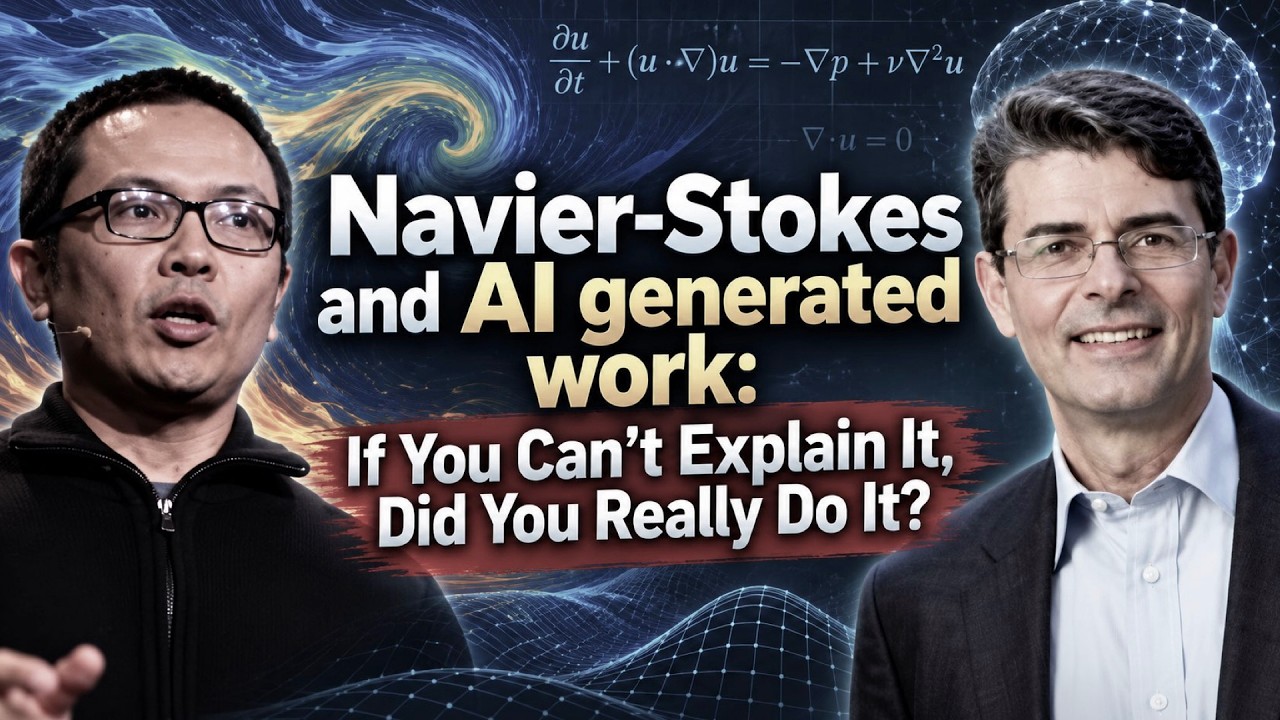
Navier-Stokes and AI generated work: If You Can't Explain It, Did You Really Do It?

Navier-Stokes and AI generated work: If You Can't Explain It, Did You Really Do It?

Ben Lorica and Evangelos Simoudis discuss the profound impact of AI on knowledge work, examining the Navier-Stokes controversy as a case study for IP protection and the need for human validation of AI-generated output. They explore the Chinese concept of "involution" and its implications for global productivity and Western knowledge workers, contrast US and Chinese approaches to AI risk, and reflect on 9/11's role in accelerating the big data revolution.

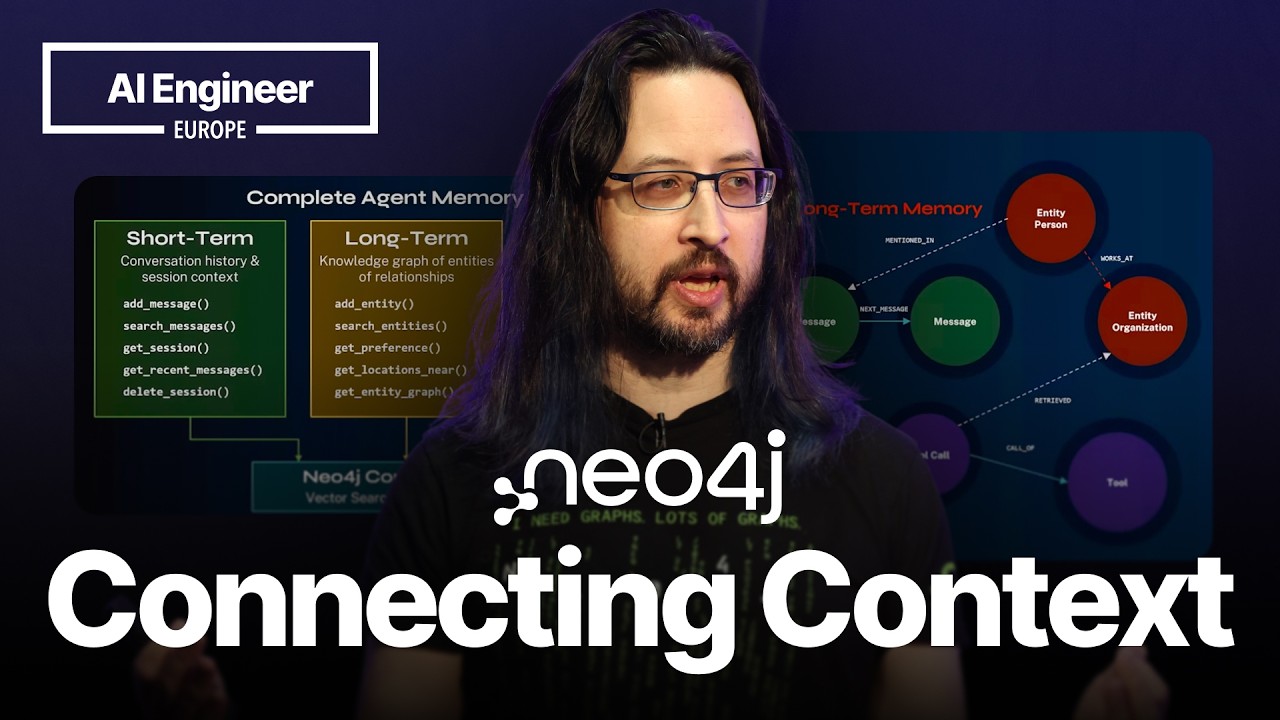
Connecting the Dots with Context Graphs — Stephen Chin, Neo4j

Connecting the Dots with Context Graphs — Stephen Chin, Neo4j

Stephen Chin of Neo4j argues that traditional RAG is insufficient because AI agents lose the reasoning behind past decisions. He introduces Context Graphs as a solution to capture the 'why' behind decisions, creating a queryable system of precedent that provides grounded, explainable, and auditable results.

Large-scale agentic quant research with Weights & Biases

Large-scale agentic quant research with Weights & Biases

Explore how Weights & Biases (W&B) enhances reliability, reproducibility, and explainability in large-scale, agent-driven quantitative research. This video demonstrates two core applications: debugging multi-agent alpha research pipelines with W&B Weave to identify root causes and iterate on forecasts, and automating strategy optimization using W&B Models to tune agent weights and gain insights from performance convergence and parallel coordinate plots.

Architecting Self-Healing Enterprise Operations: AI + DevSecOps | Akshay Mittal | SW Engineer | 4K|E

Architecting Self-Healing Enterprise Operations: AI + DevSecOps | Akshay Mittal | SW Engineer | 4K|E

Explore the shift from reactive to predictive DevSecOps with Akshay Mittal. This discussion covers how AI-Augmented DevSecOps and Agentic Workflows are creating self-healing systems, the critical role of Explainable AI (XAI), and a four-layer architecture for building scalable, enterprise-grade AI solutions.

Architecting Self-Healing Enterprise Operations: AI + DevSecOps | Akshay Mittal  | SW Engineer | 4K

Architecting Self-Healing Enterprise Operations: AI + DevSecOps | Akshay Mittal | SW Engineer | 4K

Akshay Mittal discusses the evolution of enterprise AI, focusing on the crucial shift from reactive to predictive security through AI-augmented DevSecOps. He explores how to productionize agentic AI workflows using AIOps and Kubernetes, and emphasizes the non-negotiable need for explainable AI (XAI) in critical systems.