Dspy

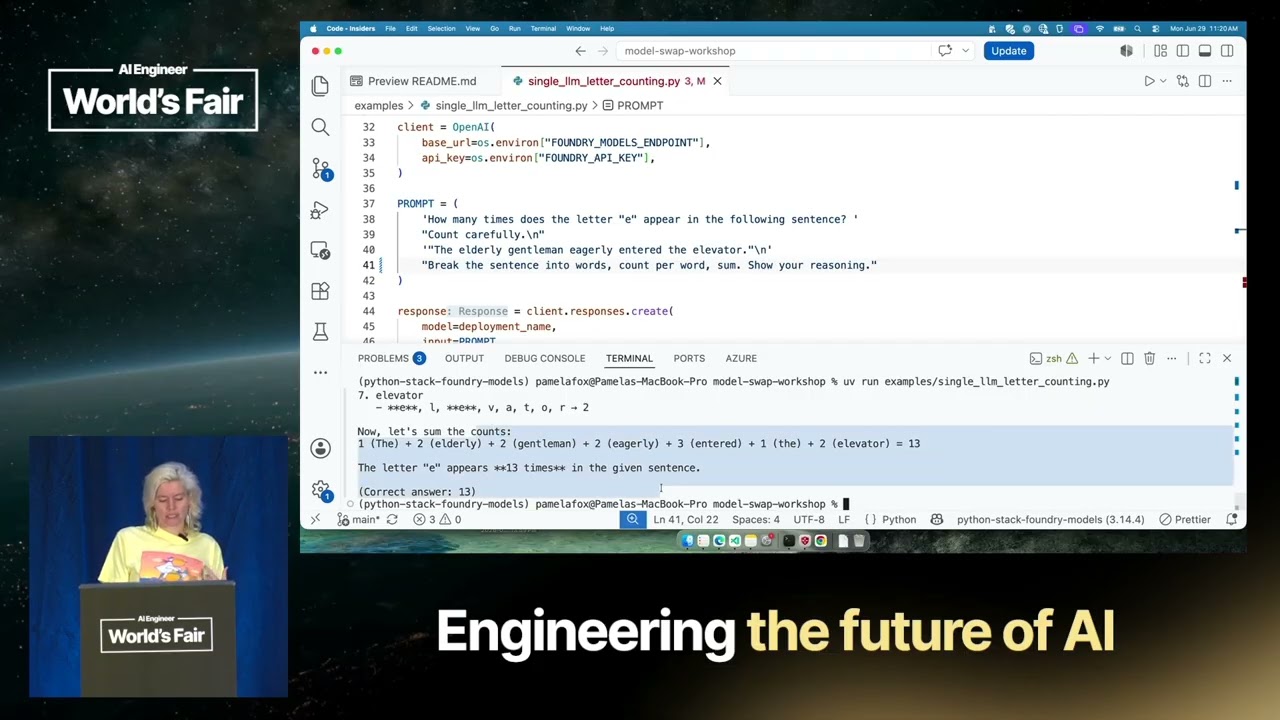
The Model Swap Workshop: GPT-5.5 vs Kimi vs DeepSeek vs Mistral

The Model Swap Workshop: GPT-5.5 vs Kimi vs DeepSeek vs Mistral

Pamela Fox runs a guided workshop comparing GPT-5.5, Kimi K2.6, DeepSeek V4 Flash, and Mistral Large 3 on Microsoft Foundry, showing that benchmarks cannot predict how a model will behave in a specific application. The talk covers counting, RAG groundedness, vision, multilingual failures, tool calling, parallel tool calls in agents, string-check and LLM-as-a-judge evals, Microsoft's ASSERT tool for generating test sets, and DSPy prompt optimization that lets a cheap model satisfy a spec.
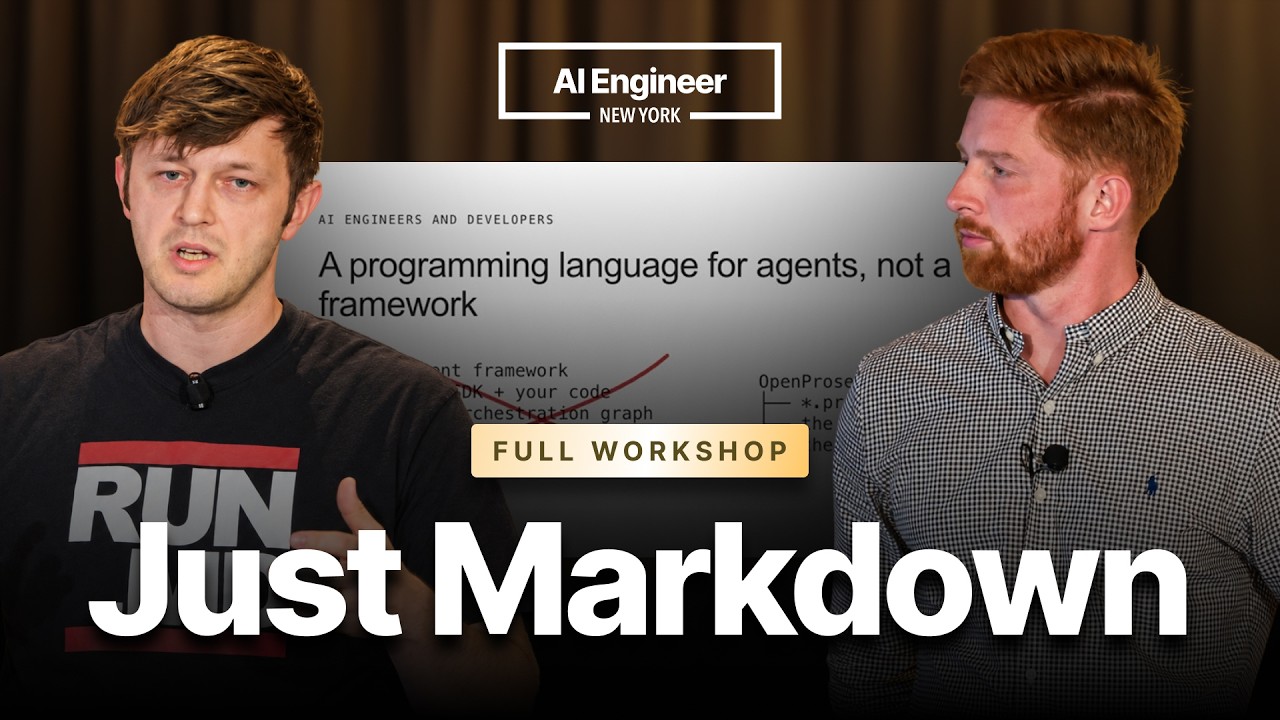
Stop Telling Agents How — Dan Barrett, Raymond Weitekamp & Jose Montes de Oca, OpenProse

Stop Telling Agents How — Dan Barrett, Raymond Weitekamp & Jose Montes de Oca, OpenProse

The OpenProse team presents a declarative approach to multi-agent workflows, where developers and domain experts write contracts in plain markdown that any harness can compile and run. The talk covers event-driven jobs triggered by webhooks and pull requests, a grumpy-senior PR reviewer demo, a bank model-documentation workflow, composing contracts, pinning successful runs into deterministic workflows, and how the approach contrasts with DSPy.

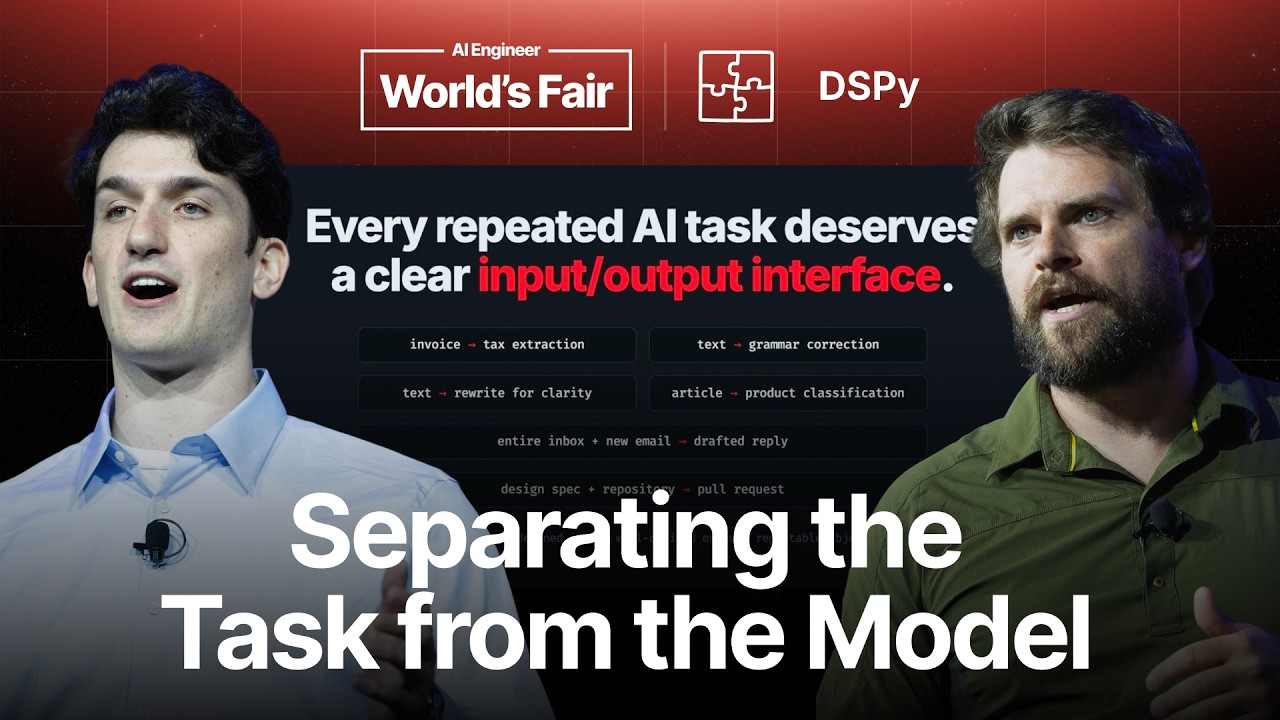
The Unreasonable Effectiveness of Separating the Task from the Model — Maxime Rivest, DSPy

The Unreasonable Effectiveness of Separating the Task from the Model — Maxime Rivest, DSPy

DSPy emphasizes separating task definition from model implementation using a "Signature" (inputs/outputs) to enable flexible, optimizable, and scalable AI programs. The framework relies on three pillars—instructions (specs), hard constraints (code), and examples (evals)—to fully specify tasks. DSPy 4.0 introduces DSPy Flex for learning program harnesses and Qualitative Learning for automated, feedback-driven evaluation refinement, offering significant benefits for enterprise applications and addressing "last-mile learning" for future AI systems.

RLM: Recursive Language Models for Large Codebases - Shashi, Superagentic AI

RLM: Recursive Language Models for Large Codebases - Shashi, Superagentic AI

This talk introduces Recursive Language Models (RLM) as a solution for coding agents struggling with large codebases. RLM externalizes context management into a programmable REPL, allowing the model to write code, inspect the repository, and recursively delegate sub-questions via `llm_query` to curate relevant context. The speaker demonstrates `RLM Code`, an independent implementation, showcasing its operational loop, observability features, and practical applications for AI engineers dealing with complex software projects.

DSPy: The End of Prompt Engineering - Kevin Madura, AlixPartners

DSPy: The End of Prompt Engineering - Kevin Madura, AlixPartners

An in-depth guide to DSPy, a framework for programming with language models, not just prompting them. Learn its core concepts—Signatures, Modules, Adapters, and Optimizers—and see real-world examples of building robust, testable, and transferable AI applications for the enterprise.

Advancing the Cost-Quality Frontier in Agentic AI // Krista Opsahl-Ong // Agents in Production 2025

Advancing the Cost-Quality Frontier in Agentic AI // Krista Opsahl-Ong // Agents in Production 2025

Krista Opsahl-Ong from Databricks introduces Agent Bricks, a platform designed to overcome the key challenges of productionizing enterprise AI agents. The talk covers common use cases, the difficult trade-offs between cost and quality, and how Agent Bricks uses automated evaluation and advanced optimization techniques to build cost-effective, high-performance agents.