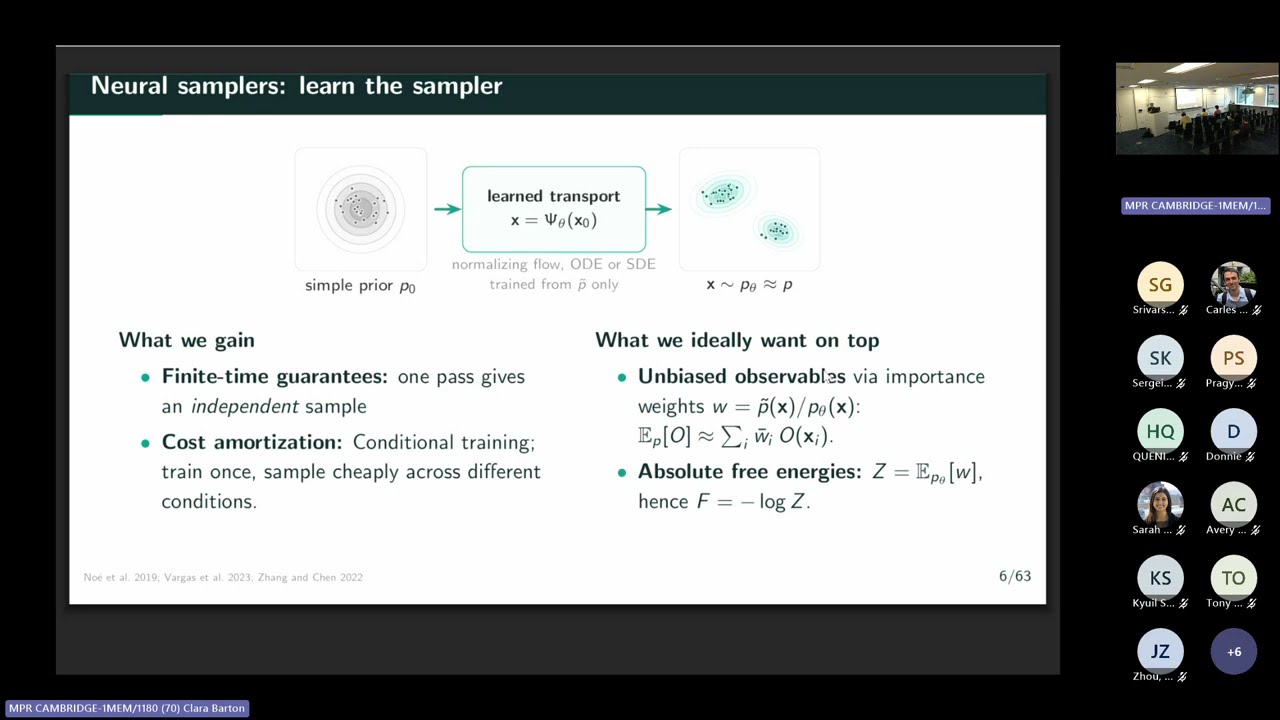
Scalable Training of Diffusion Samplers via Fixed-point Score Matching
Denis Blessing presents scalable training of diffusion samplers via fixed point score matching: a unifying framework for learning Boltzmann-type distributions from energy evaluations alone, with applications to amorphous materials, alloy phase diagrams, and reinforcement learning with flow policies.
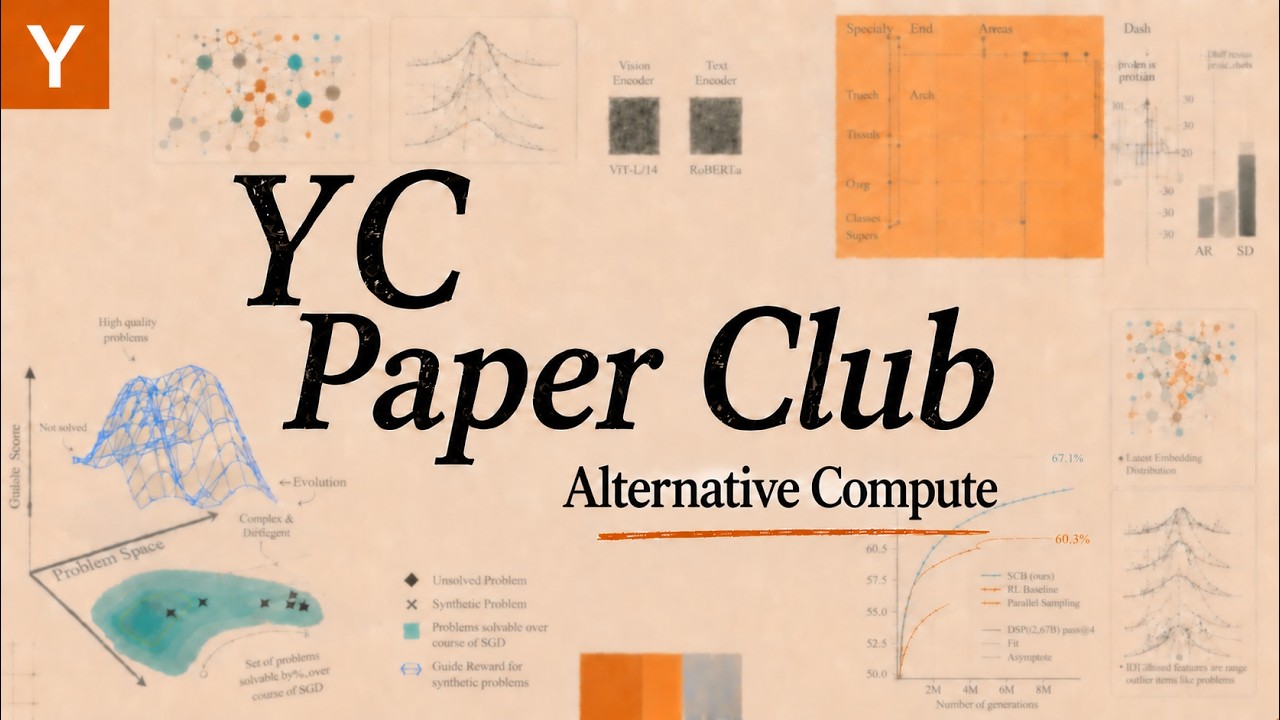
What If We Stopped Using GPUs? | YC Paper Club
A session on alternative compute covering the argument for abandoning backpropagation in favor of zero-order optimization and sharded training, optical computing that performs diffusion-style image generation with propagating light, the state of neuromorphic computing in 2026, and how cultured human neurons learned to play Doom through reinforcement learning.
Runway’s Bet Beyond Video: World Models, Robotics, and the Neural OS — Anastasis Germanidis
Anastasis Germanidis, co-founder of Runway, discusses the company's journey from early generative creative tools to frontier video models, emphasizing their pivot towards general-purpose world simulation. He details the evolution of Gen-1, Gen-2, and Gen-3 (scaling 10x after Sora's release), highlighting the importance of controllability and the inevitability of real-time generation. The conversation delves into cutting-edge applications like Interface World Models (a fully neural operating system) and World Models for Robotics, where third-person video data and robust simulation are key to training intelligent agents.
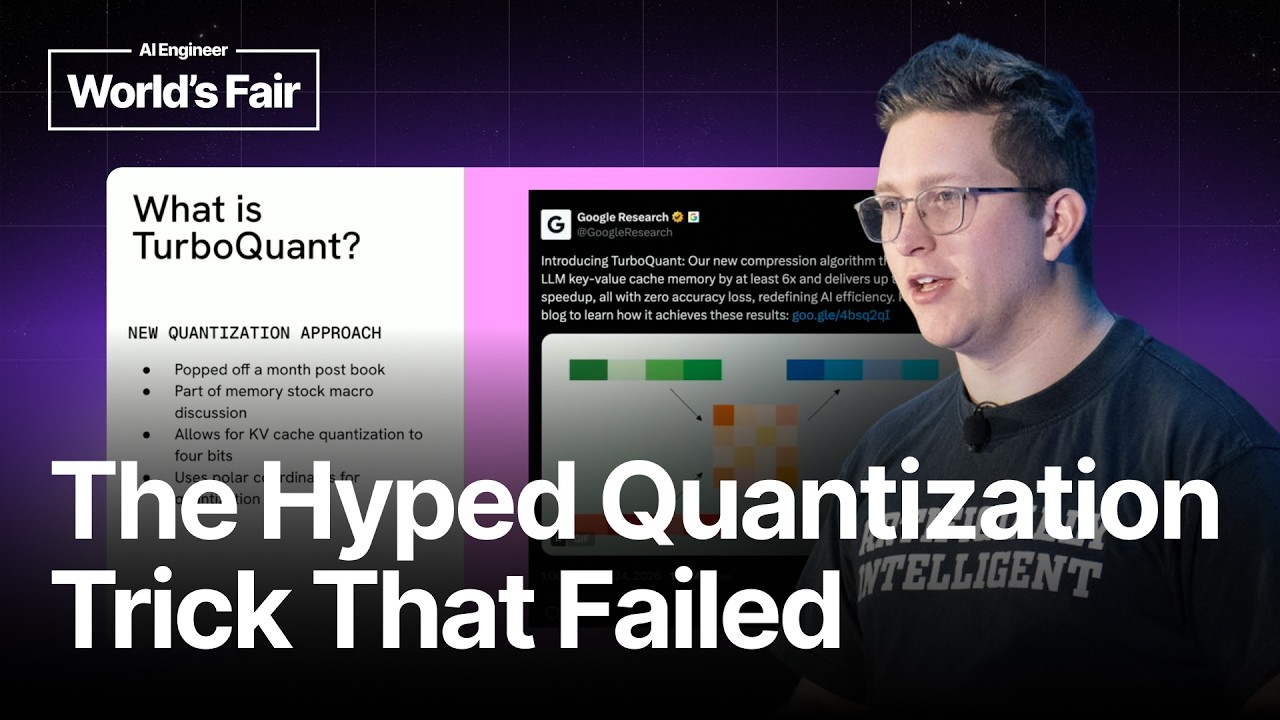
What's New in Inference Engineering — Philip Kiely, Baseten
Philip Kiely provides an update on recent advancements in inference engineering, covering new techniques in quantization (TurboQuant's specific application), KV cache compaction (introducing 'Still' for learned, compressed memory), and speculative decoding (from Eagle 3 to Dlash and DSpark, including continuous retraining). He emphasizes the blurring lines between training and inference and differentiates between local and data center optimization strategies.
Why Diffusion Will Win AI Inference with Inception Co-Founder and CEO Stefano Ermon
Stefano Ermon, co-founder and CEO of Inception, discusses his company's radical bet on diffusion models to overcome the hardware and latency bottlenecks of autoregressive LLMs. He explains how parallel token generation in diffusion offers superior inference scaling and GPU utilization, expanding beyond images to discrete text and code generation. Ermon shares insights into Inception’s Mercury models, real-world applications like voice agents, the custom software stack required, and why efficiency will define the next era of AI competition.
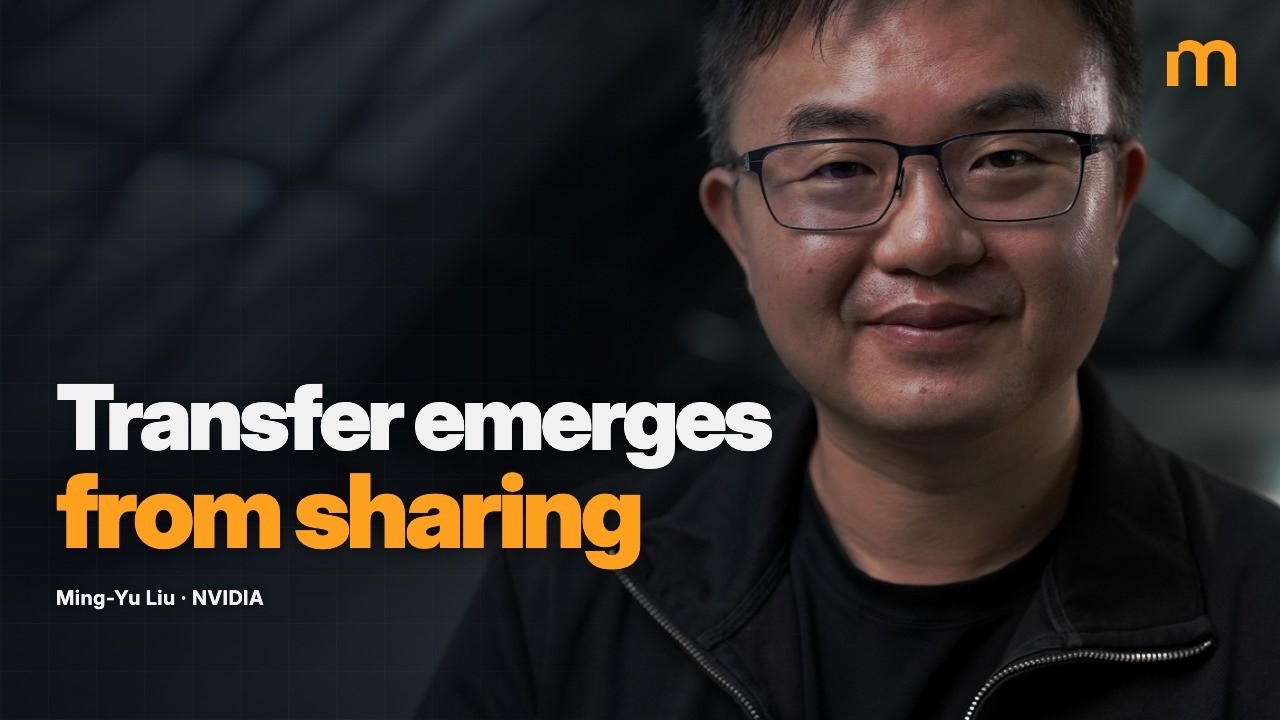
How Physical AI Learns Across Language, Video and Action — Ming-Yu Liu
Ming-Yu Liu from NVIDIA details Cosmos 3, a novel omnimodal world model capable of video description, generation, and robot action synthesis. He elaborates on its architecture, which integrates a vision language model with a bidirectional diffusion generator. Liu defines world models as a collection of tools comprising forward dynamics, inverse dynamics, and policy, trained synergistically. The discussion covers learning robot skills from human video, the crucial role of neural simulators like Cosmos Dreams for policy verification and accelerating development in robotics, and the importance of safety for future humanoid robots. The episode concludes by outlining the Super, Nano, and Edge model sizes and NVIDIA's commitment to open-sourcing Cosmos's code, models, and data.