Design principles

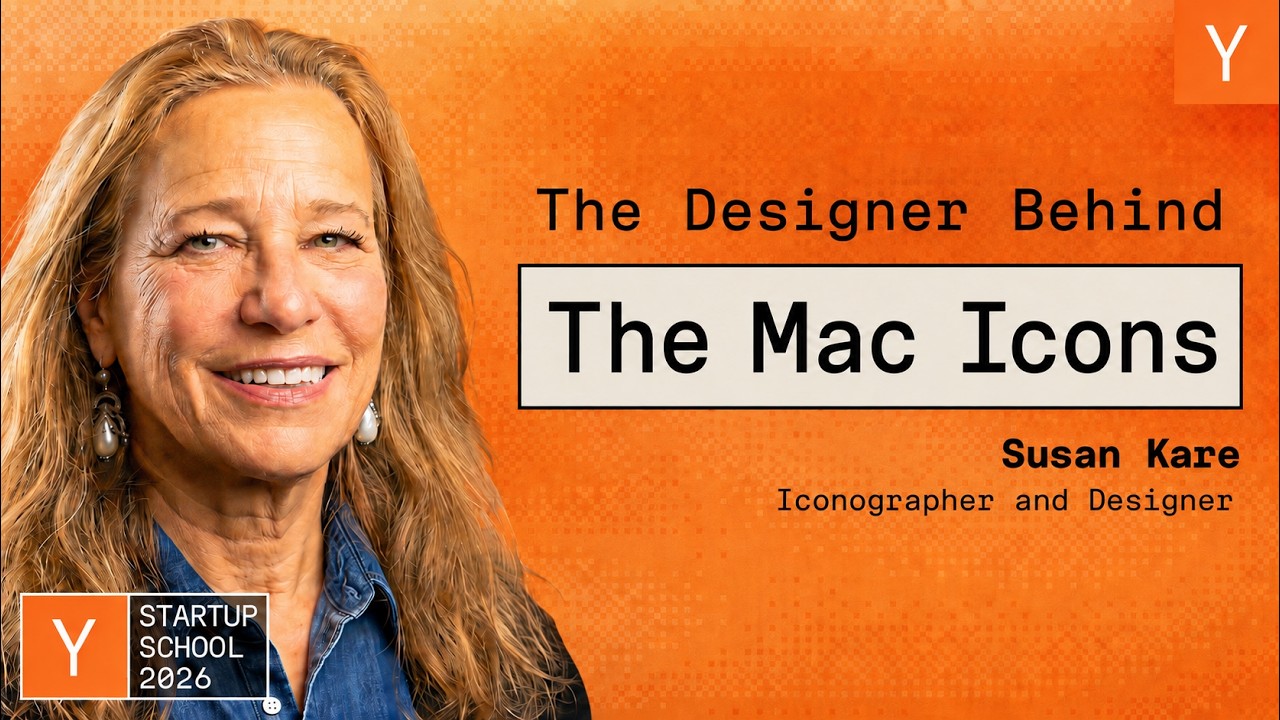
Susan Kare: How I Designed the Original Apple Mac Icons

Susan Kare: How I Designed the Original Apple Mac Icons

Susan Kare, the legendary designer behind the original Macintosh's iconic visual language, shares her journey from art history to computing. She discusses the creation of typefaces like Chicago and memorable icons such as the Happy Mac and the Command key symbol. Drawing lessons from Steve Jobs, Paul Rand, and others, Kare highlights key design principles: focusing on meaning and memorability, embracing technical constraints, iterating constantly, and using just enough detail to ensure instant clarity and universal appeal in human-computer interaction.


How To Design In The Agent Era

How To Design In The Agent Era

Stephen Haney, founder of Paper, discusses how his AI-native design tool leverages HTML and CSS to create a seamless agent-first workflow. He demos features like shaders, image generation, and design-to-code capabilities, explaining how Paper helps designers work faster with AI agents while maintaining human control. Haney identifies common "AI design tells" (e.g., overuse of bold, too many font sizes, generic visuals) and demonstrates how to correct them, emphasizing that human taste and intentionality are crucial for designs to stand out in the AI era. He also shares insights on Paper's community growth and future direction in design.

Ending AI Slop — Thais Castello Branco, Taste Labs

Ending AI Slop — Thais Castello Branco, Taste Labs

Thais Castello Branco of Taste Labs tackles 'AI slop' in subjective domains like design and creative writing. She proposes a framework to make 'taste' measurable by decomposing subjective concepts into verifiable elements, countering the 'collapse to the mean' that stifles creativity. The approach emphasizes high-signal human preference data, expert-driven feedback tied to specific choices, and a 'quality over quantity' mindset to train AI that understands and generates nuanced, multi-preference outputs.