Design patterns

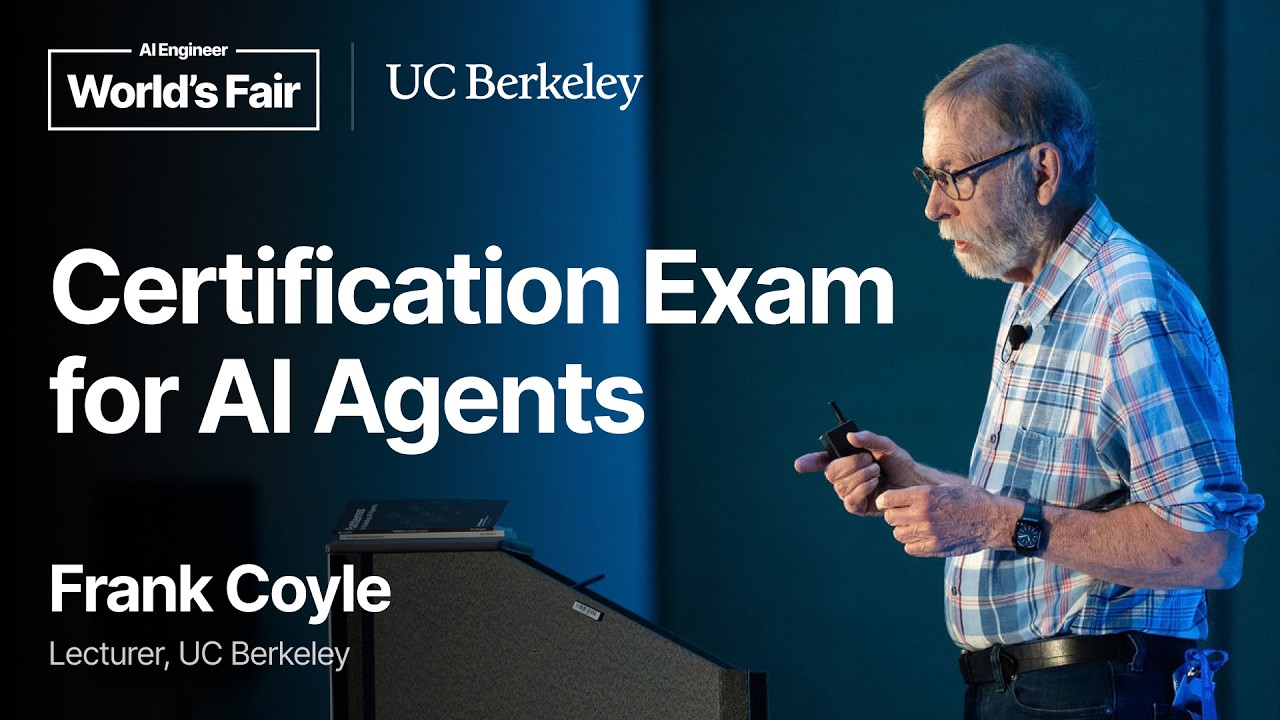
Anthropic's CCA Exam as a Field-Guide for Agentic Engineering — Frank Coyle, UC Berkeley

Anthropic's CCA Exam as a Field-Guide for Agentic Engineering — Frank Coyle, UC Berkeley

Frank Coyle demystifies the Claude Certified Architect exam by dissecting key scenarios and highlighting common anti-patterns in Agentic AI design. He provides actionable best practices, emphasizing effective tool use, context management, specialized agent architectures, and cost-saving techniques, all centered on understanding what to avoid to build robust LLM applications.


Java Generics and Collections • Maurice Naftalin & Stuart Marks

Java Generics and Collections • Maurice Naftalin & Stuart Marks

Maurice Naftalin and Stuart Marks discuss the second edition of "Java Generics and Collections," 19 years after the first. They explore the evolution of Java from version 5 to 25, focusing on major shifts like the move toward immutability, the introduction of sequenced collections and streams, and the critical design principles of collection encapsulation. The conversation delves into the anemic domain model anti-pattern, the controversial `UnsupportedOperationException`, and the framework's inconsistent null handling, reflecting on decades of experience with the Java Collections Framework.

Why SW Architecture is Mostly Communication • David Whitney, Ian Cooper & Hannes Lowette • GOTO 2025

Why SW Architecture is Mostly Communication • David Whitney, Ian Cooper & Hannes Lowette • GOTO 2025

Three experienced software engineers—Ian Cooper, David Whitney, and Hannes Lowette—deconstruct the evolution of software architecture from a top-down, "ivory tower" practice to a modern, collaborative discipline. They explore the dynamics between emergent and intentional design, the importance of sustainable development over "slash-and-burn" cycles, and how architectural strategies must adapt to organizational scale. The conversation emphasizes that the architect's primary role has shifted to coaching, fostering a shared language, and managing trade-offs, concluding that all significant architectural challenges are ultimately people problems rooted in communication, empathy, and culture.