Data quality

State of Data — Sean Cai, Independent / State of Data

State of Data — Sean Cai, Independent / State of Data

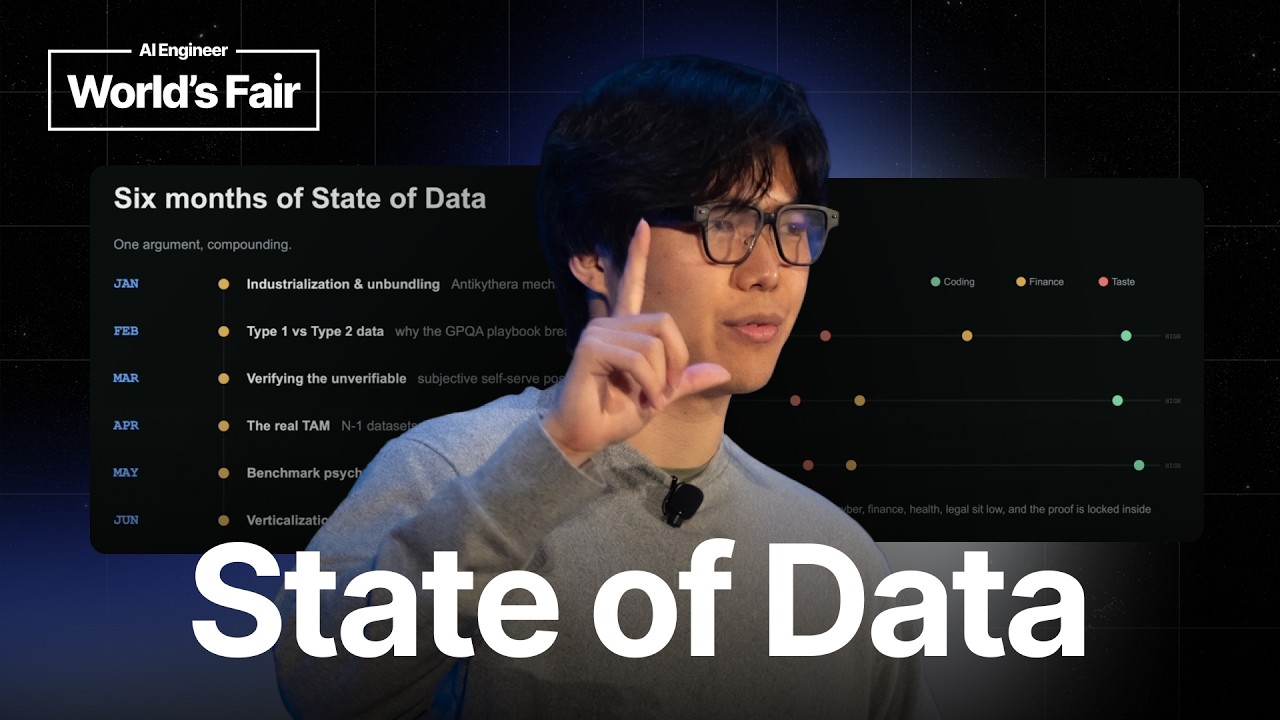
Sean Cai discusses the evolving landscape of AI data markets, highlighting the shift from raw annotation to high-quality, process-based data. He introduces "Verifier's Law" and its three axes to explain application layer maturity, critiques the shortcomings of current benchmarks, and predicts future AI trends by analyzing data market signals. Cai concludes by envisioning data companies transforming into "neo-labs" that provide enterprise-level reinforcement learning as a service and "Antikythera mechanisms" to manage and monetize real-world data assets.

Why Your Agent Disagrees With Itself (And What To Do About It) - Diane Lin, Datadog

Why Your Agent Disagrees With Itself (And What To Do About It) - Diane Lin, Datadog

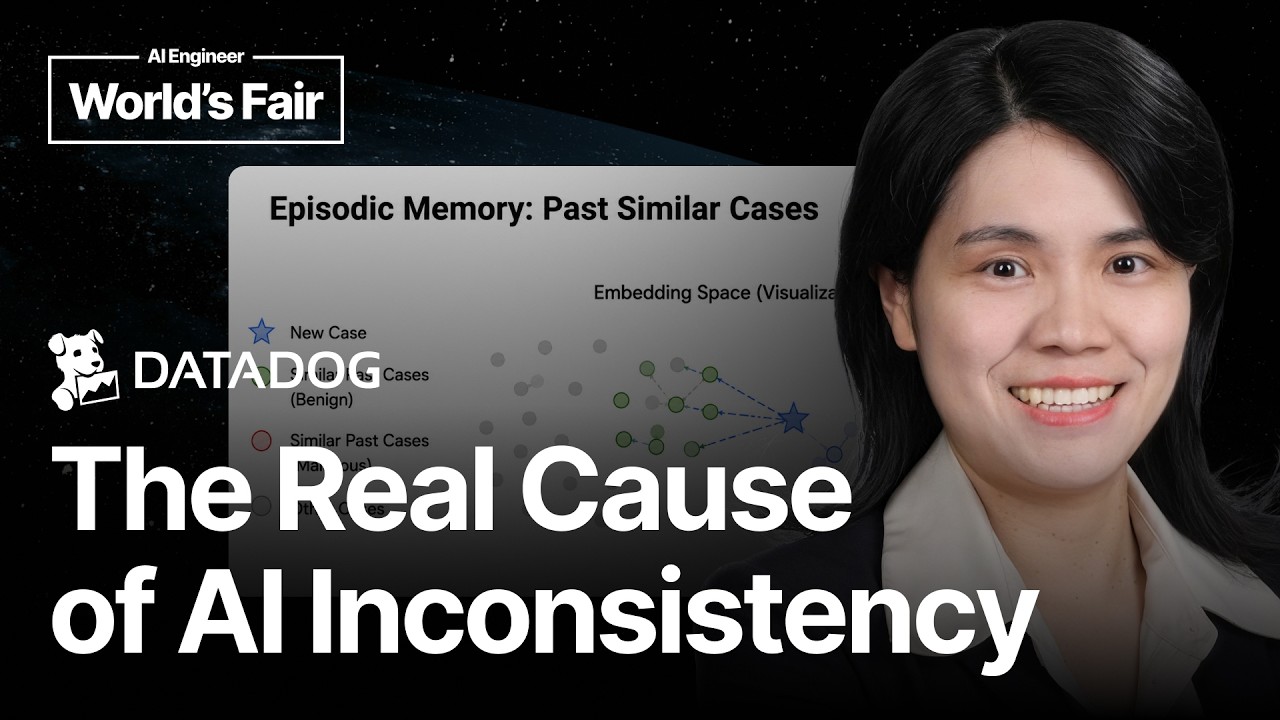
This session addresses the critical problem of AI agent inconsistency, particularly in LLMs, which leads to "flip-flops" in high-stakes domains like cybersecurity. It argues that this isn't a model failure but a signal of ambiguity in the "gray zone" near decision boundaries. The proposed solution involves using active learning to identify these ambiguous cases, followed by augmenting agents with semantic memory (explicit policies) and episodic memory (past similar cases) to clarify decisions, improve consistency, and adapt to customer-specific preferences without relying solely on expensive fine-tuning.

Enterprise Agents Have a Structure Problem - Ishita Daga, Tesla

Enterprise Agents Have a Structure Problem - Ishita Daga, Tesla

Ishita Daga, a Senior ML Engineer at Tesla, explains why enterprise AI agents fail, highlighting that current fixes like larger models or more RAG are insufficient. She identifies ambiguity, staleness, and user preference as key structural problems. Daga proposes a solution built on semantic retrieval infrastructure: a hierarchical approach to knowledge sources, including a curated semantic layer and metadata graphs. She also details a robust context life cycle with live data sources and continuous feedback loops to combat staleness. The challenge of integrating individual preferences, requiring agents to reason over business concepts rather than raw schemas, is also discussed.

6 Things to Know about AIE World's Fair 2026

6 Things to Know about AIE World's Fair 2026

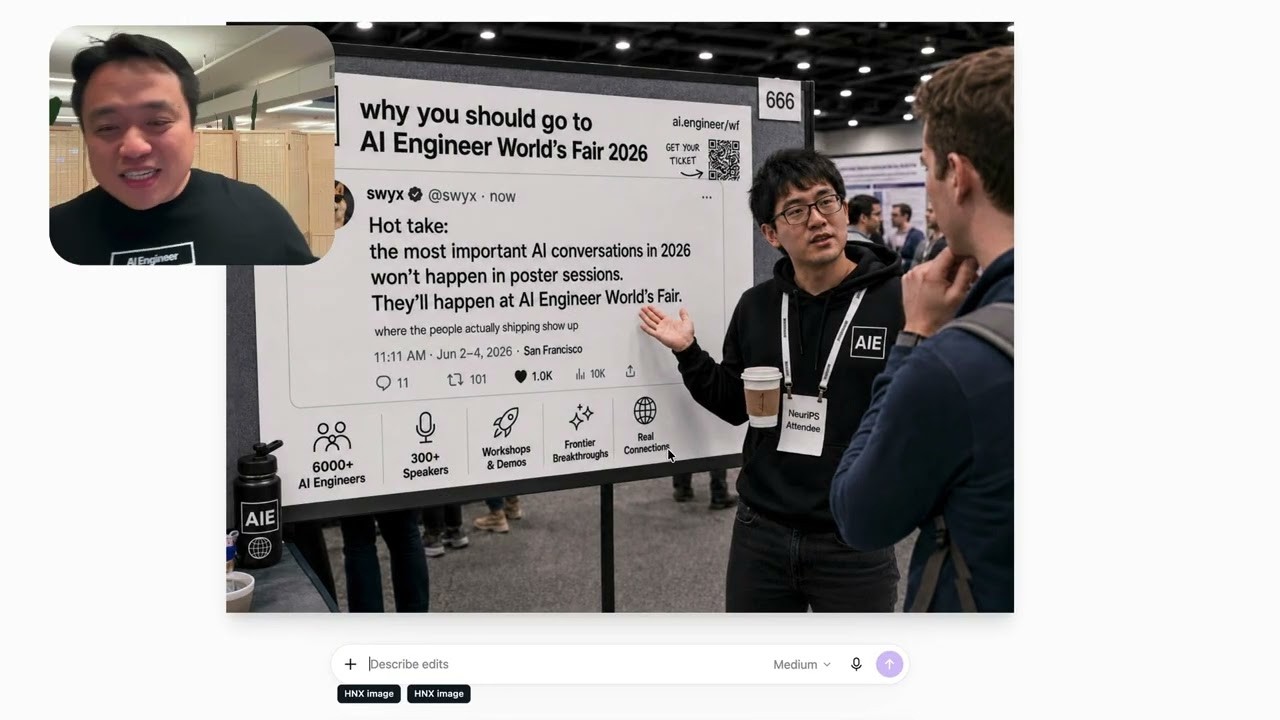
Discover the AI Engineering World's Fair 2026, the largest iteration yet, offering an unparalleled deep dive into AI engineering with expanded tracks on auto research, GPU specialization, and new verticals like finance and healthcare. Highlights include an innovative expo experience, exclusive leadership initiatives like the "Token Billionaires Program," and unique side events fostering community, including "Posters on AI" where attendees can defend their tweets. This event is designed to be a curated hub for practical, cutting-edge insights and networking in the AI/ML professional landscape.

Stop Making Models Bigger, Make Them Behave — Kobie Crawdord, Snorkel

Stop Making Models Bigger, Make Them Behave — Kobie Crawdord, Snorkel

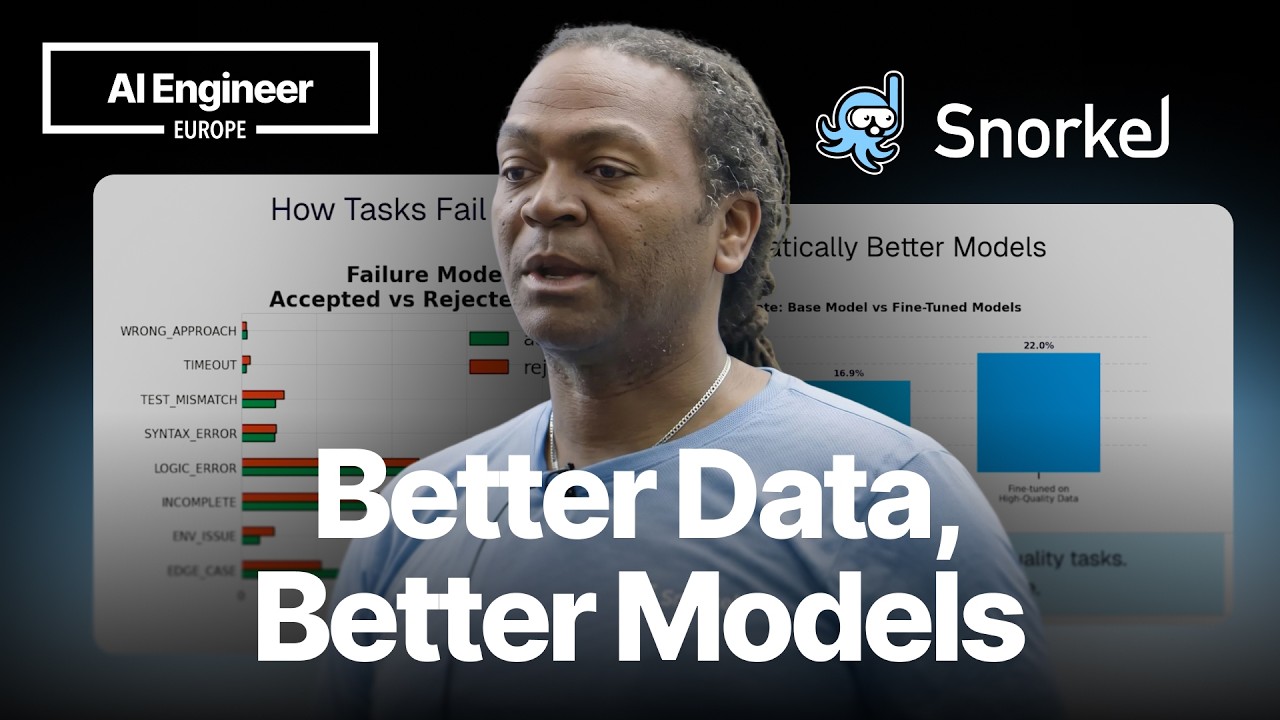
Snorkel.ai's research demonstrates how a 4-billion-parameter model, fine-tuned with Reinforcement Learning for under $500, significantly outperformed a 235-billion-parameter model on financial analysis tool-use tasks. The key was cultivating 'tool discipline' and error correction capabilities, rather than relying on sheer model size or deeper reasoning. Single-table training generalized effectively to harder multi-table problems, emphasizing the importance of targeted behavioral fixes identified through detailed evaluation rubrics.

Task Fidelity Scaling Laws — Kobie Crawdord, Snorkel

Task Fidelity Scaling Laws — Kobie Crawdord, Snorkel

An experiment by Snorkel AI reveals that in agentic AI training, the quality of tasks is paramount. Using the same model and compute, fine-tuning on high-quality tasks yielded a 6% performance improvement, a 5x greater uplift compared to the 1% gain from low-quality tasks. The key difference lies in the nature of the tasks: high-quality tasks are genuinely harder, featuring more tool calls and cleaner failure modes that provide a meaningful learning signal. In contrast, low-quality tasks often fail due to ambiguity and environmental noise, hindering effective model improvement.