Cypher

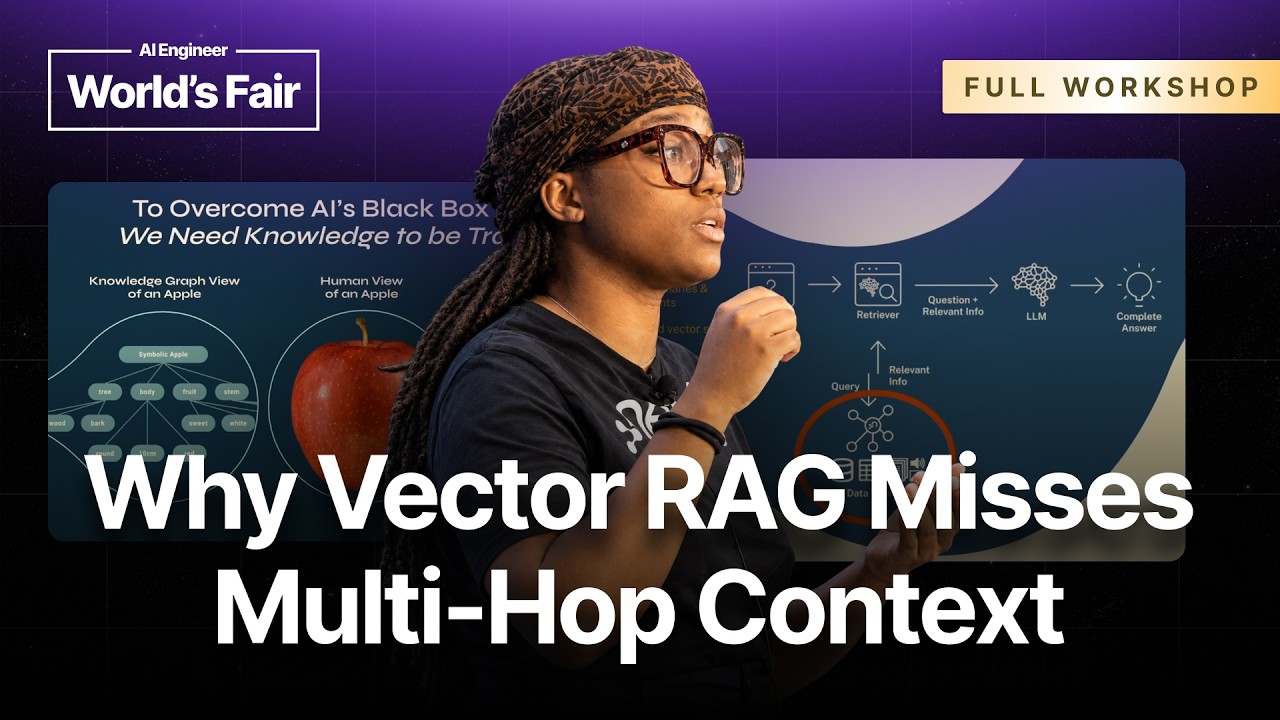
RAG Needs a Map: Using GraphRAG to Retrieve Connected Context — Nyah Macklin, Neo4j

RAG Needs a Map: Using GraphRAG to Retrieve Connected Context — Nyah Macklin, Neo4j

A hands-on GraphRAG workshop from Neo4j showing how combining vector search with a knowledge graph gives an agent connected context, multi-hop traversal, and explainable answers. It covers the difference between semantic similarity and relationships, LLM-driven entity and relationship extraction under a fixed schema, building an Aura database and Python pipeline, and configuring an Aura agent with similarity search and text-to-Cypher, with a closing check that shows why visible query evidence matters.
AI on Your Lakehouse: Context Comes in Shapes, Not Queries — Zach Blumenfeld, Neo4j

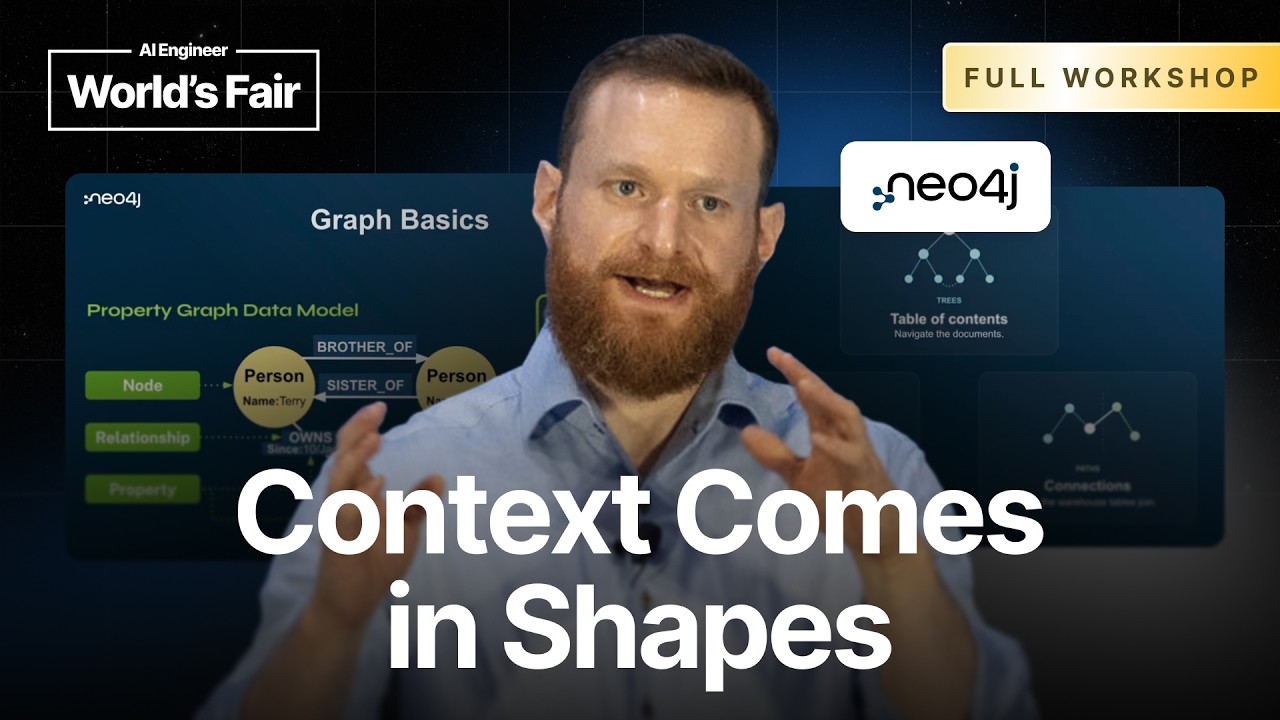
AI on Your Lakehouse: Context Comes in Shapes, Not Queries — Zach Blumenfeld, Neo4j

AI agents often struggle with context in lakehouses, leading to confident but incorrect answers. This workshop by Zach Blumenfeld introduces three Neo4j graph shapes built on lakehouse data—Connections (semantic layer), Trees (document outlines), and Communities (themes)—to provide essential context, enabling agents to accurately navigate structured and unstructured data, answer complex estate-level questions, and overcome limitations of traditional Text2SQL and vector search.

CrabRAG: Why Automated Assistants Need Graph Memory, Not More Tokens — Stephen Chin, Neo4j

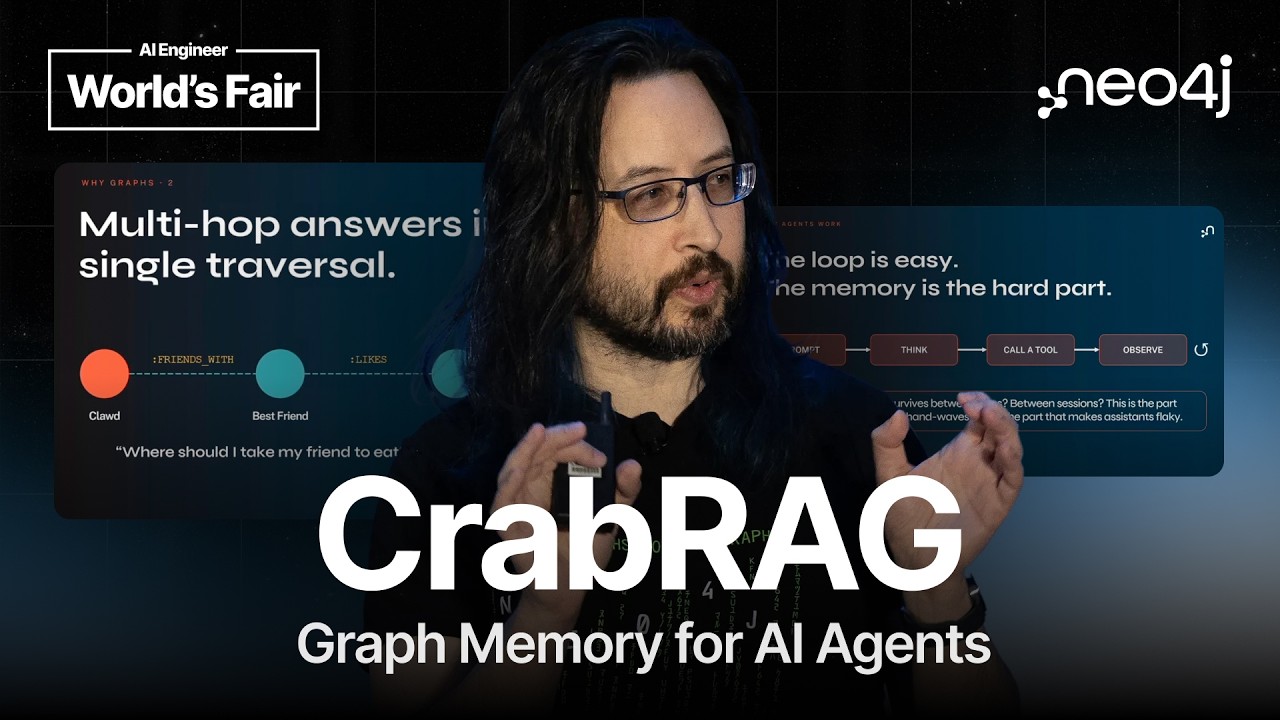
CrabRAG: Why Automated Assistants Need Graph Memory, Not More Tokens — Stephen Chin, Neo4j

Stephen Chin demonstrates how current LLM agent memory systems, relying on markdown files or vector databases, lead to token inefficiency, hallucinations, and a lack of multi-hop reasoning. He showcases graph databases as a superior alternative, providing precise, explainable, and auditable answers for complex, large-scale problems through a live demo of a home lab digital twin.