Cryptography

Fuzzy Extractors are Practical

Fuzzy Extractors are Practical

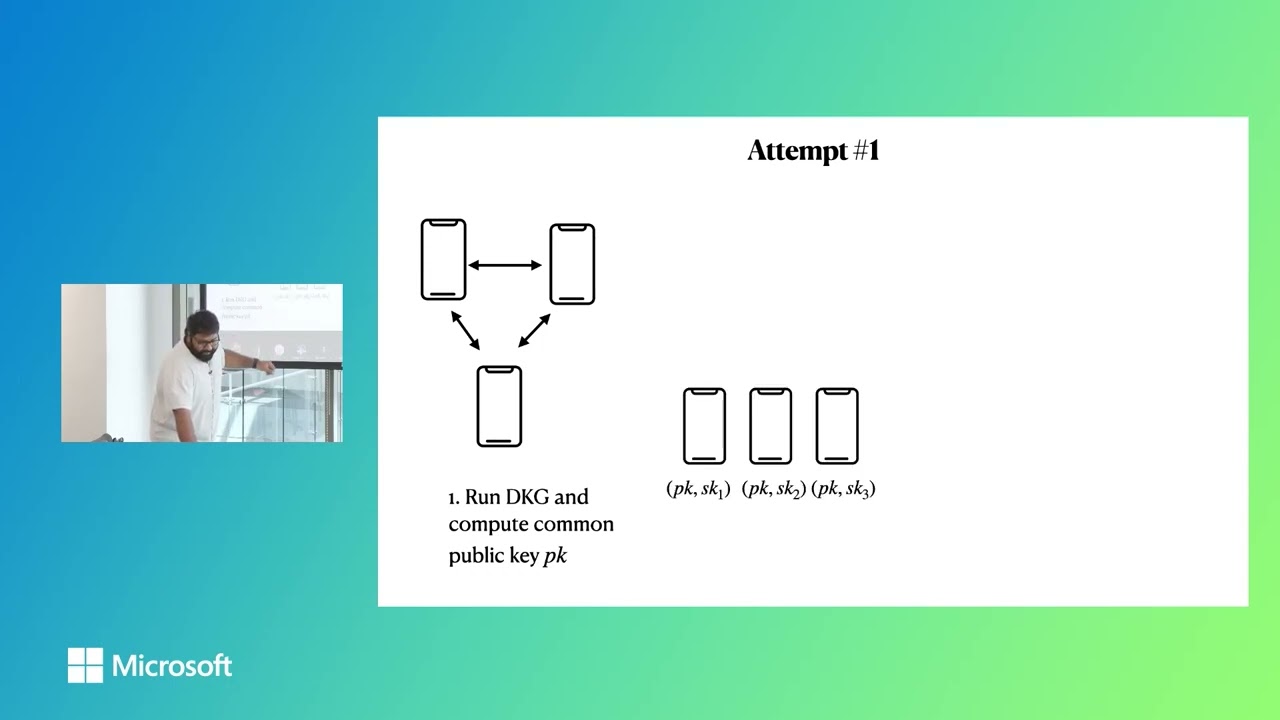
Amey Shukla from the University of Connecticut presents a novel system for biometric key derivation that closes the long-standing gap between the theory and practice of device-level authentication. The talk introduces a practical fuzzy extractor system, "Zeta then Lock," which, combined with an integrated machine learning feature extractor, achieves 105 bits of entropy with a 92% true accept rate for iris biometrics, overcoming the "more errors than entropy" problem that plagued previous designs.
Designing safe digital systems for the humanitarian sector

Designing safe digital systems for the humanitarian sector

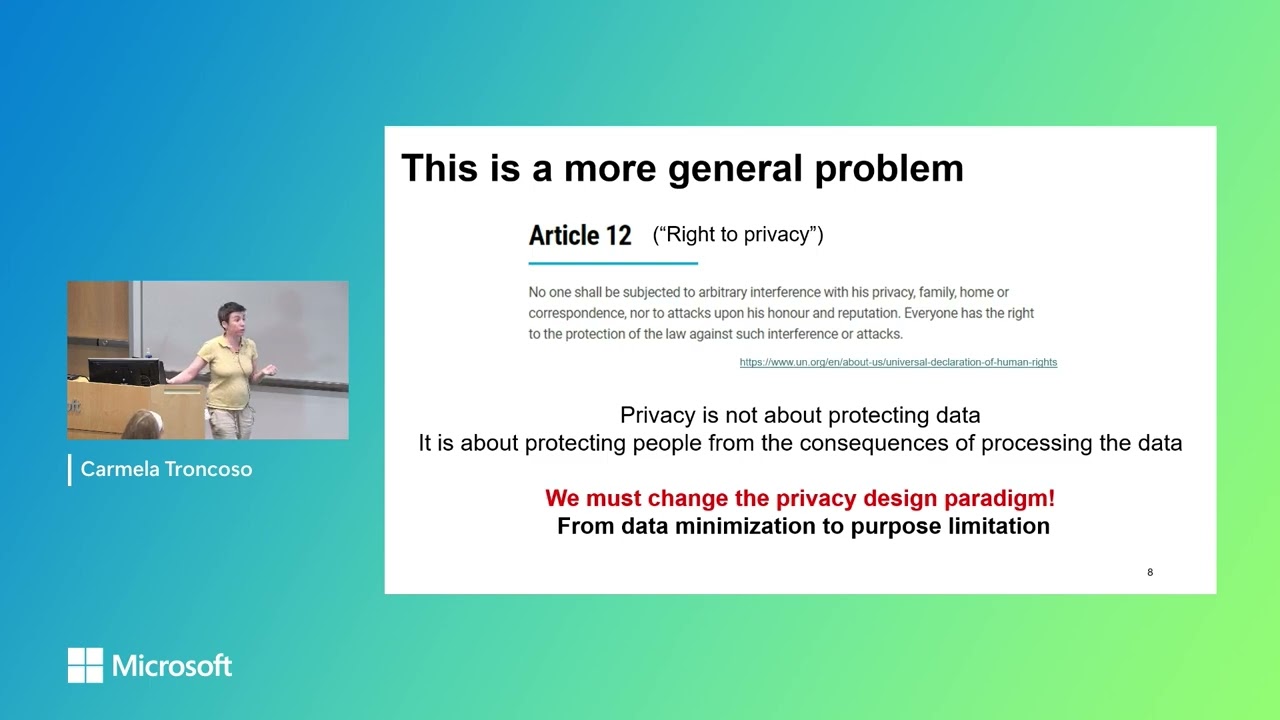
Carmela Troncoso from EPFL discusses her collaboration with the International Committee of the Red Cross (ICRC) to digitalize humanitarian aid distribution. She advocates for a paradigm shift from data minimization to "purpose limitation," designing systems that are structurally incapable of being misused, even if the data is accessed. The talk details a practical, low-cost, and connectivity-resilient system built on this principle, using smart cards and cryptographic techniques to protect vulnerable aid recipients while meeting the operational needs of the ICRC.

Lattice-Based Accumulator and Application to Anonymous Credential Revocation

Lattice-Based Accumulator and Application to Anonymous Credential Revocation

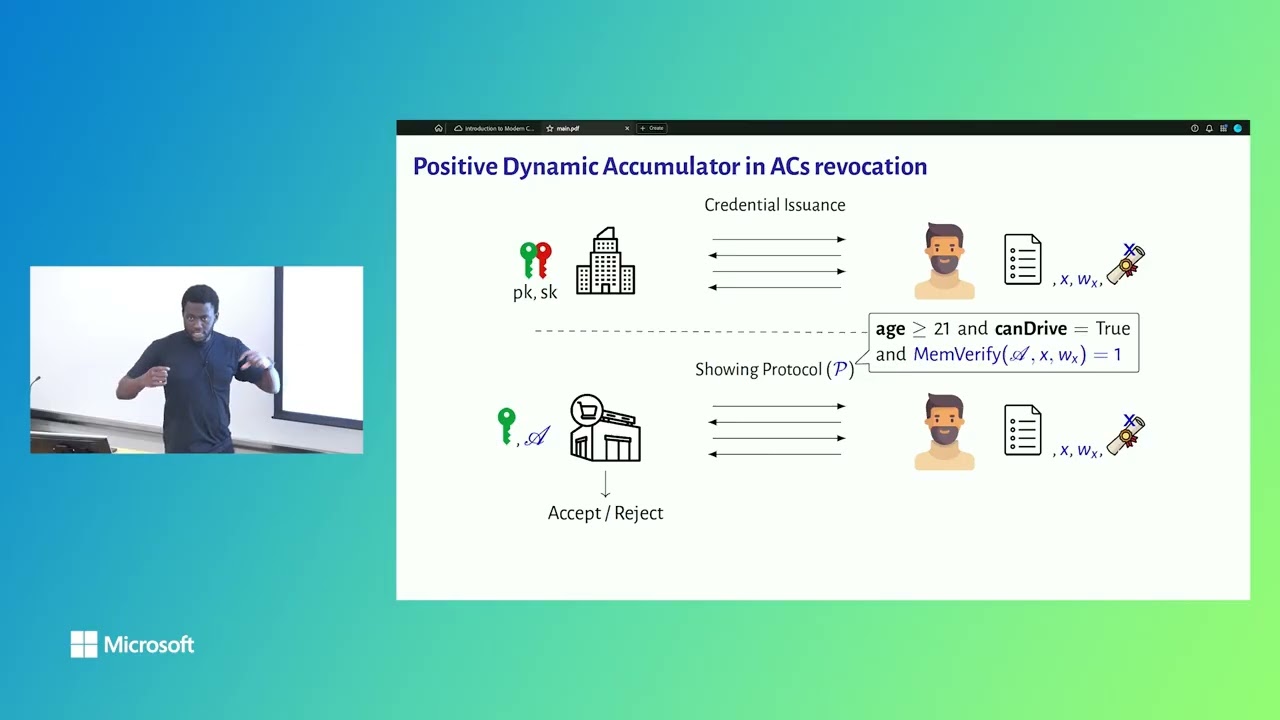
Victor Youdom Kemmoe from Brown University presents a novel, communication-efficient cryptographic accumulator based on the Module-SIS assumption. This construction is designed for applications like anonymous credential revocation, where elements can be added without needing to update existing membership witnesses, a significant improvement over previous post-quantum schemes.

Efficient Secure Aggregation for Federated Learning

Efficient Secure Aggregation for Federated Learning

Varun Madathil from Yale University presents Tacita, a novel, single-server protocol for secure aggregation in Federated Learning (FL). Tacita is designed to address the unique constraints of the FL environment, such as client dropouts and the absence of client-to-client communication. The protocol achieves one-shot execution with constant-size communication and robustness against dropouts by introducing two new cryptographic primitives: succinct multi-key linearly homomorphic threshold signatures (MKLHTS) and a homomorphic variant of Silent Threshold Encryption.

zk-promises: Anonymous Moderation, Reputation, & Blocking from Anonymous Credentials with Callbacks

zk-promises: Anonymous Moderation, Reputation, & Blocking from Anonymous Credentials with Callbacks

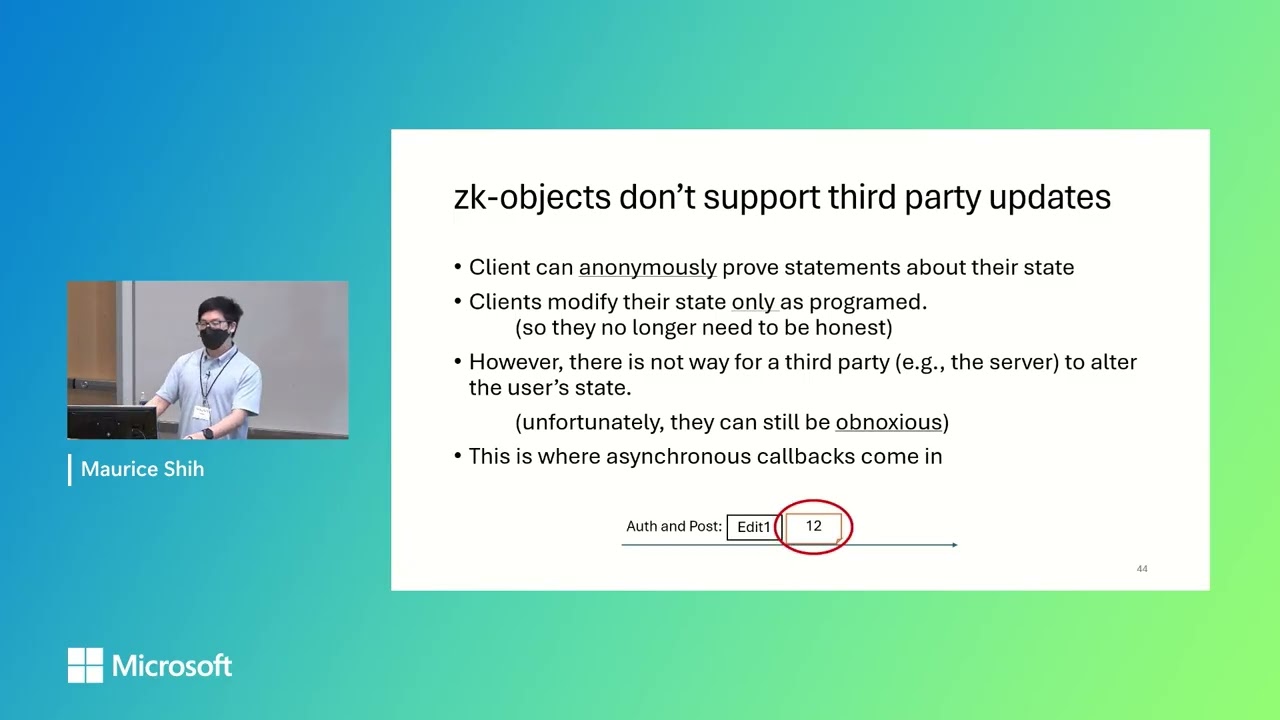
A novel framework called zk-promises is introduced, enabling stateful anonymous credentials with Turing-complete state machines and asynchronous callbacks. This allows for robust moderation, such as banning or reputation updates, for anonymous users without compromising their privacy, using zk-objects and zero-knowledge proofs to ensure state integrity.

Encrypted Computation: What if Decryption Wasn’t Needed? • Katharine Jarmul • GOTO 2024

Encrypted Computation: What if Decryption Wasn’t Needed? • Katharine Jarmul • GOTO 2024

An exploration of encrypted computation, detailing how techniques like homomorphic encryption and multi-party computation can enable machine learning on encrypted data. The summary covers the core mathematical principles, real-world use cases, and open-source libraries to build more private and trustworthy AI systems.