Coding agents

AI Makes Games Worse?

AI Makes Games Worse?

Piero Molino, CEO of Studio Atelico, argues that AI should be a foundational game mechanic enabling new experiences rather than a cost-cutting shortcut. He covers on-device multimodal engines built on small fine-tuned models, the economics of cloud inference, artist rights, open source in the game stack, and what skill means in an era of coding agents.
How Jev Turns AI Into Software That Gets Things Done

How Jev Turns AI Into Software That Gets Things Done

Diogo Almeida, founder of TypeSafe AI, joins a16z's Ben Horowitz and Martin Casado to explore why AI is so capable yet so underused for automation. He argues that coding agents make developers faster without making software better, and introduces Jev, a primitive that embeds probabilistic, intent-aware intelligence inside programs. The conversation covers reliability as the key to programmable AI, the revival of probabilistic software, why SaaS companies are well positioned to benefit, and the long-term goal of technology that can reliably "do what I mean."

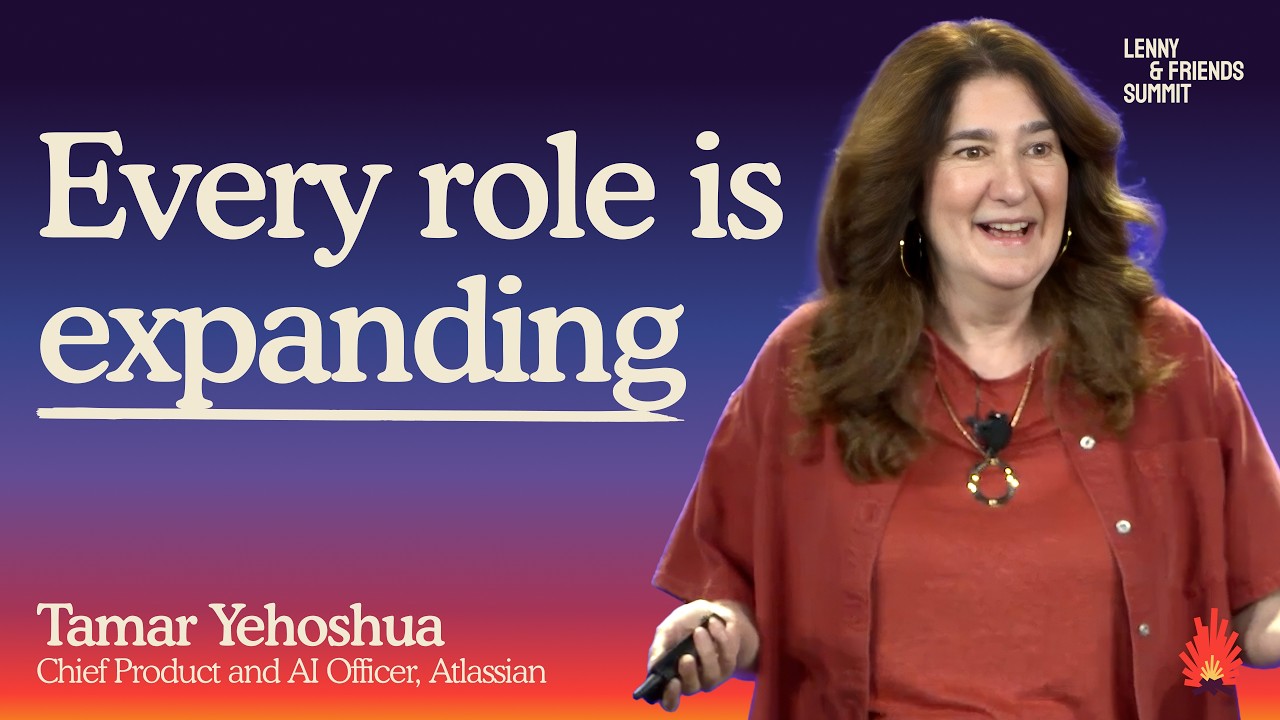
Roles aren't converging—they're expanding | Tamar Yehoshua (Atlassian CPO)

Roles aren't converging—they're expanding | Tamar Yehoshua (Atlassian CPO)

Atlassian's Tamar Yehoshua explains what the AI builder era looks like for product managers in a company of more than 10,000 people. Using Confluence, RovoClaw, and Jira as examples, she covers when PMs should write code and prototypes, when they should steer the team instead, and how Atlassian is building AI fluency in its PM organization.

Skill issue: stop deploying vision language models, use them with Skills — Merve Noyan, Hugging Face

Skill issue: stop deploying vision language models, use them with Skills — Merve Noyan, Hugging Face

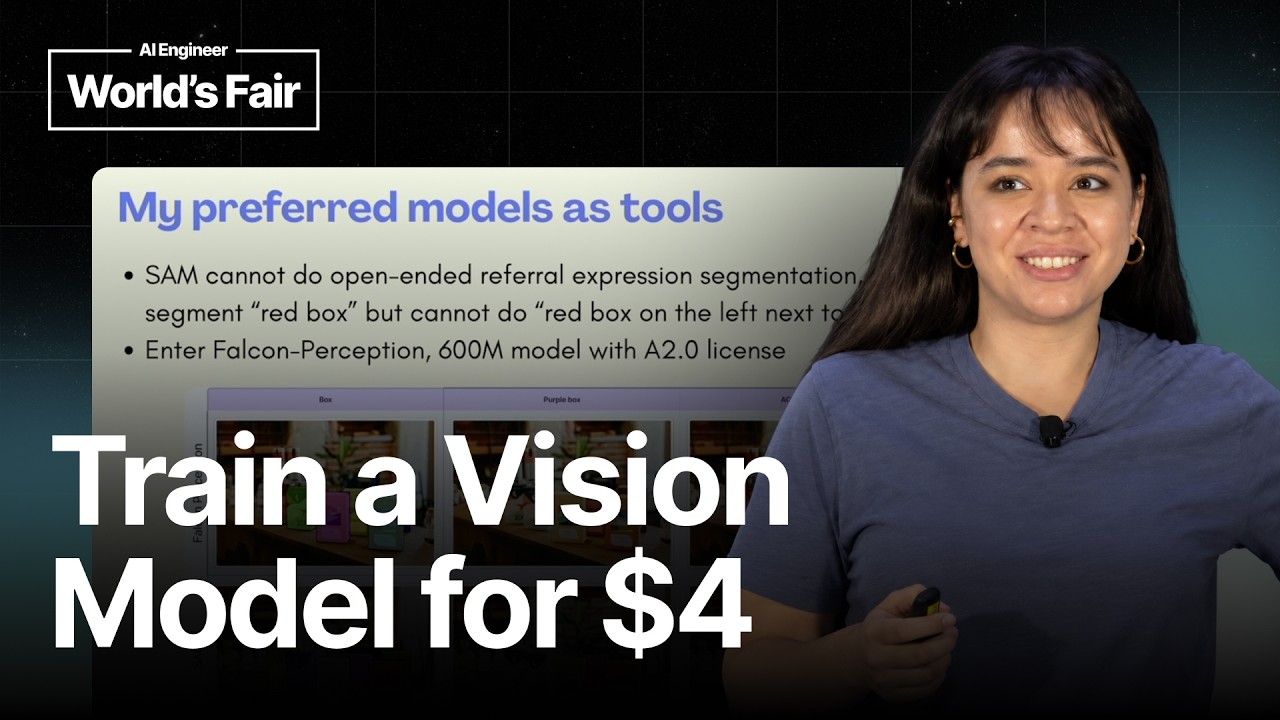
Merve Noyan discusses the pitfalls of directly using large Vision Language Models (VLMs) at runtime due to performance limitations and restrictive licensing. She introduces "Web Vision," a toolkit that enables efficient training of smaller, task-specific computer vision models using a novel "vibe training" methodology. This approach leverages VLMs for initial labeling and judgment, followed by training efficient models like RF-DETR, all while adhering to Apache 2.0 licenses and costing only a few dollars.

Open Models Change The Economics of AI

Open Models Change The Economics of AI

Ollama Co-founder Jeffrey Morgan discusses the enterprise shift to open models, driven by cost, customization, and coding agents, leading to a 150X token growth. He highlights the dominance of Chinese models in cloud consumption, the hardware renaissance enabling local LLMs, and the rise of ultra-efficient "flash" models. Morgan also shares Ollama's journey, from its YC pivot to its monetization strategy, and reflects on lessons for building AI companies.

The State of AI: Models, Moats, and the Consumer Renaissance

The State of AI: Models, Moats, and the Consumer Renaissance

Anish Acharya and Jen Kha delve into the evolving AI landscape, dissecting the model layer with its emerging multiple winners and the strategic choice between frontier and open-weight models. They explore how the application layer captures value through model aggregation and specialization, ultimately ushering in a renaissance for consumer AI with personal agents, coding tools, and new economic models, urging founders to think big.