Braintrust

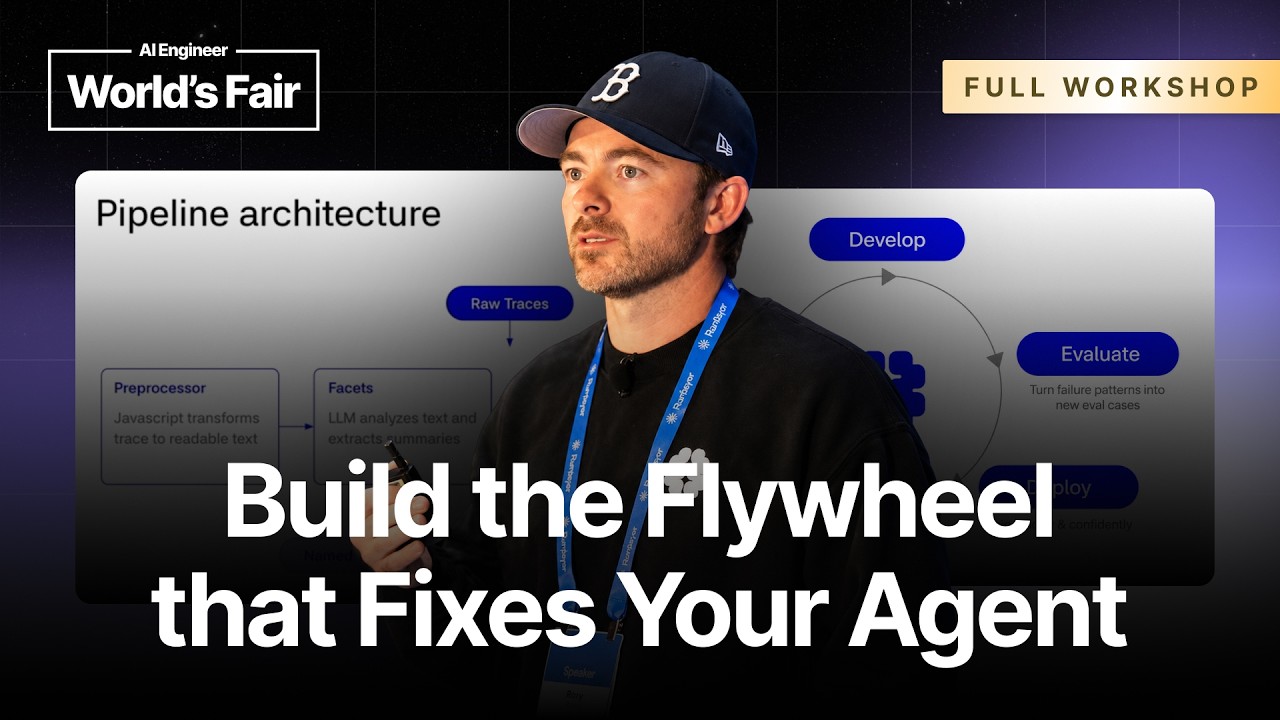
Advanced Workshop: Mastering AI Observability — Doug Guthrie, Braintrust

Advanced Workshop: Mastering AI Observability — Doug Guthrie, Braintrust

Doug Guthrie showcases how Braintrust connects observability with AI agent improvement. Using a support agent, he demonstrates setting up tracing, establishing evaluation baselines, and publishing custom scorers. The workshop delves into Braintrust's Topics feature for discovering unknown failure modes, configuring online automations, and importing real-world traces. A key focus is on automating the improvement cycle: using the Loop assistant for SQL-based trace analysis, integrating coding agents with Braintrust CLI skills to propose code changes, add regressions, run evals, and generate pull requests, thereby closing the feedback loop from production to development.
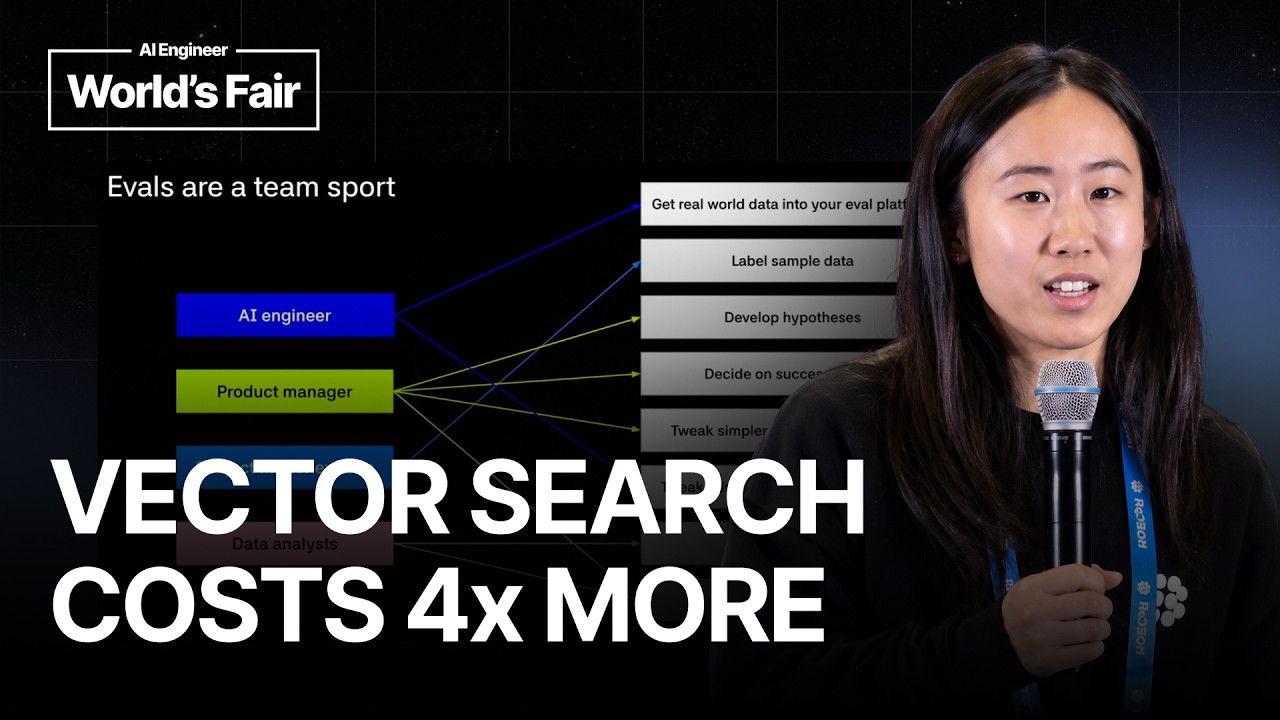
Agentic Search vs Vector Search for Coding Agents: We Ran the Eval — Braintrust

Agentic Search vs Vector Search for Coding Agents: We Ran the Eval — Braintrust

This talk by Jess Wang from Braintrust delves into the critical importance of evaluations (evals) in AI development, moving beyond subjective "vibes" to data-driven decision-making. She breaks down the four core components of an eval—dataset, task, scoring, and experiments—and illustrates the continuous improvement "eval flywheel" integrating observability. The central experiment compares agentic search against vector search for a coding agent tasked with finding buggy code in Microsoft's TypeScript Go repo. While both methods achieved identical accuracy, vector search proved four times more expensive due to its inability to capture surrounding context within code chunks, leading to excessive, inefficient searches. Wang concludes with practical caveats and best practices for conducting effective LLM evals.