Bm25

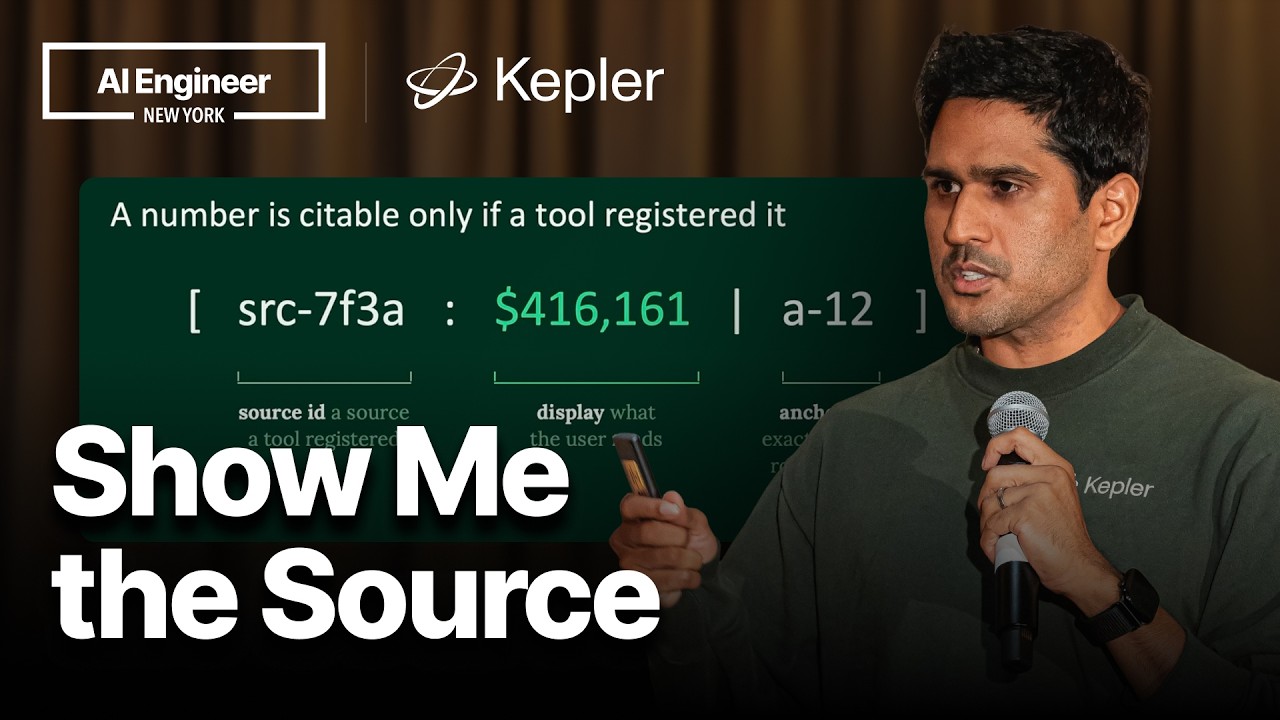
Do Not Let Models Invent Numbers - Vinoo Ganesh, Kepler

Do Not Let Models Invent Numbers - Vinoo Ganesh, Kepler

Vinoo Ganesh, CEO of Kepler, explains how the company builds a verifiable financial research platform. Models cite numbers but never write them. Deterministic code performs the math, a citation registry built from more than 30 million SEC documents anchors every figure, and a post-processing filter strips anything untraceable. The talk covers hybrid search and re-ranking on Turbopuffer, tenant isolation, and why plain RAG produced thousands of wrong numbers in evaluations.
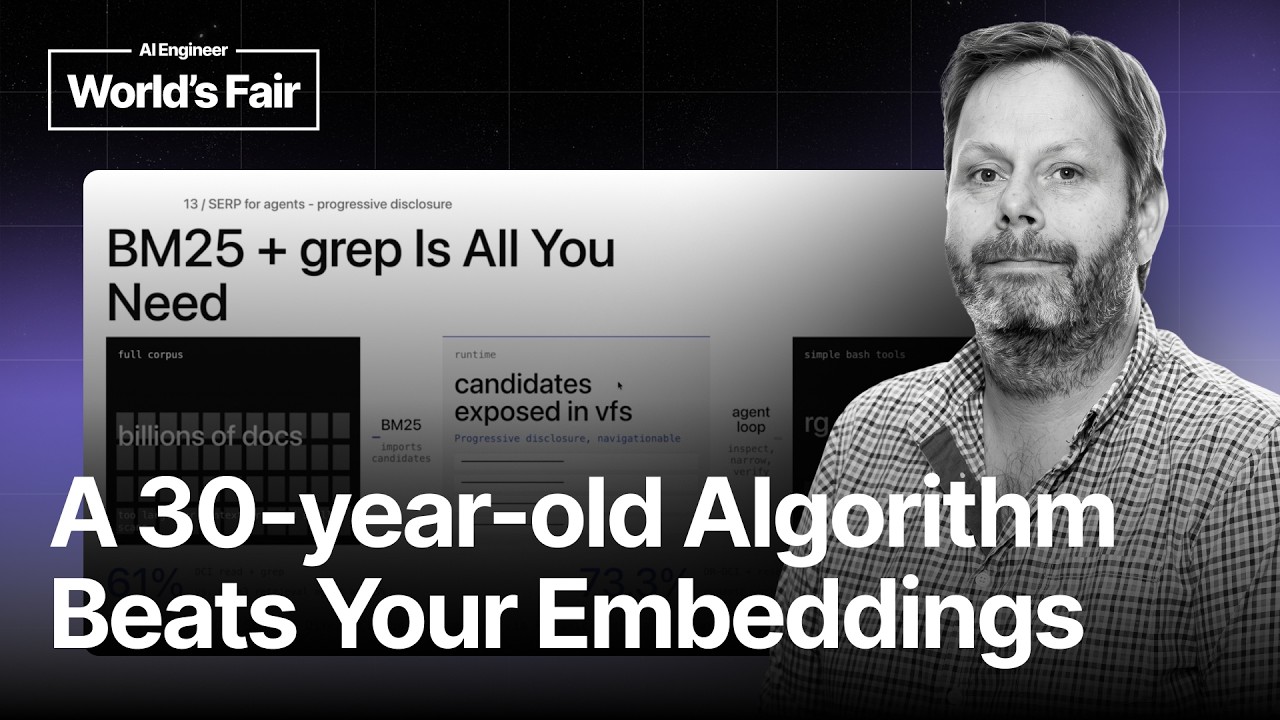
The unreasonable effectiveness of BM25 for agentic search — Jo Kristian Bergum, Hornet.dev

The unreasonable effectiveness of BM25 for agentic search — Jo Kristian Bergum, Hornet.dev

Jo Kristian Bergum argues that the 30-year-old lexical search function BM25 is making a powerful comeback, not because it has changed, but because LLM agents are fundamentally different and more capable users. He highlights how these agents, with their general knowledge and ability to formulate complex queries, leverage BM25's strengths. Using the Browsecom+ benchmark, he demonstrates that reasoning isn't the bottleneck for LLMs, but effective retrieval and query formulation are. He advocates for a "file system workspace" approach, allowing models to use their existing coding and bash skills to interact with retrieved documents, signaling a shift in how search systems are designed and evaluated for agentic applications.

Context Engineering in 2026 — Louis-François Bouchard, Omar Solano & Samridhi Vaid, Towards AI

Context Engineering in 2026 — Louis-François Bouchard, Omar Solano & Samridhi Vaid, Towards AI

Experiments with an AI tutor reveal that not compacting context often outperforms summarization, leading to better recall, lower cost, and faster responses, primarily due to LLM API prompt caching. Compaction invalidates the cache, making it unexpectedly expensive. While cloud environments benefit from full history, local hardware limits necessitate compaction, highlighting the need to prioritize actual constraints over default compaction strategies.

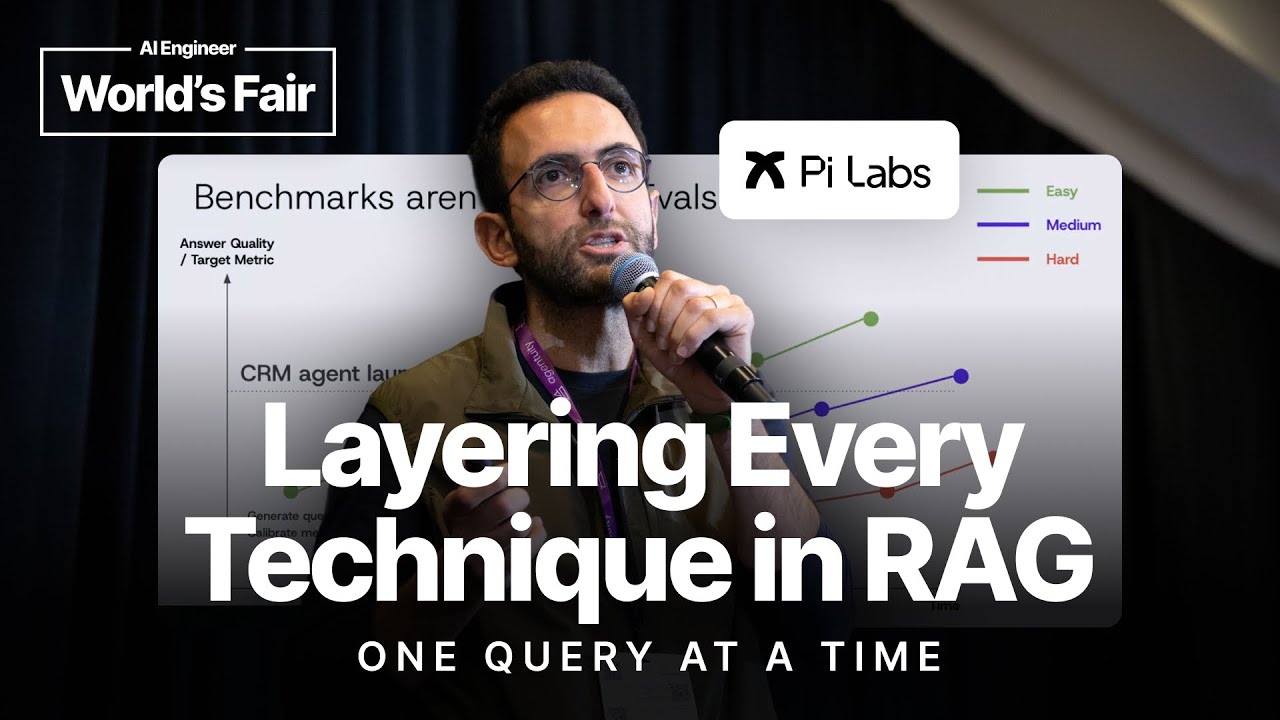
Layering every technique in RAG, one query at a time - David Karam, Pi Labs (fmr. Google Search)

Layering every technique in RAG, one query at a time - David Karam, Pi Labs (fmr. Google Search)

David Karam, formerly of Google Search, presents a pragmatic framework for enhancing RAG systems, advocating a "quality engineering" approach. The talk progresses through a ladder of techniques, from in-memory retrieval and BM25 to custom embeddings, re-ranking, and advanced orchestration, emphasizing that the choice of technique should be driven by empirical analysis of system failures ("loss analysis") and balanced by a "complexity-adjusted impact" mindset.

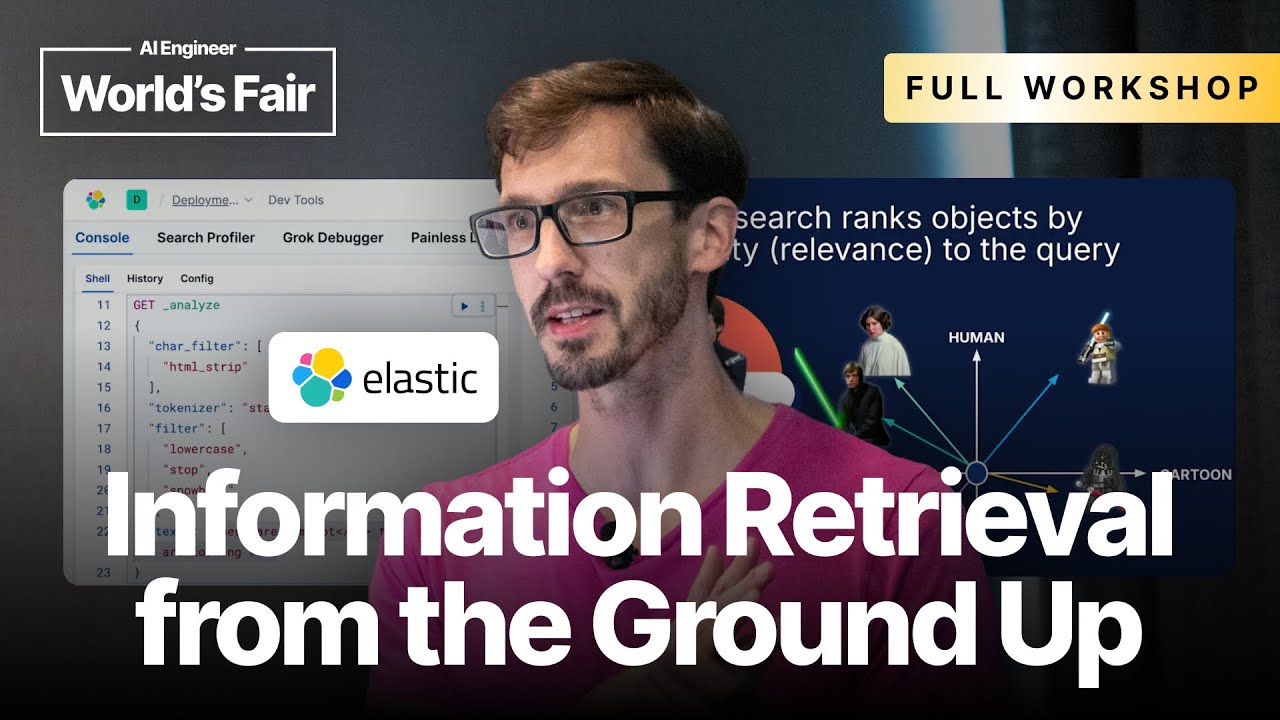
Information Retrieval from the Ground Up - Philipp Krenn, Elastic

Information Retrieval from the Ground Up - Philipp Krenn, Elastic

Philipp Krenn from Elastic demystifies the 'R' in RAG, arguing that modern retrieval is a sophisticated blend of classic keyword search (like BM25) and modern vector search. This workshop explores the fundamentals of lexical analysis, scoring, dense/sparse vectors, and advanced hybrid search techniques like Reciprocal Rank Fusion (RRF).