Arc agi

Beating RL With Reflection: GEPA and Optimize Anything — Lakshya A. Agrawal, GEPA

Beating RL With Reflection: GEPA and Optimize Anything — Lakshya A. Agrawal, GEPA

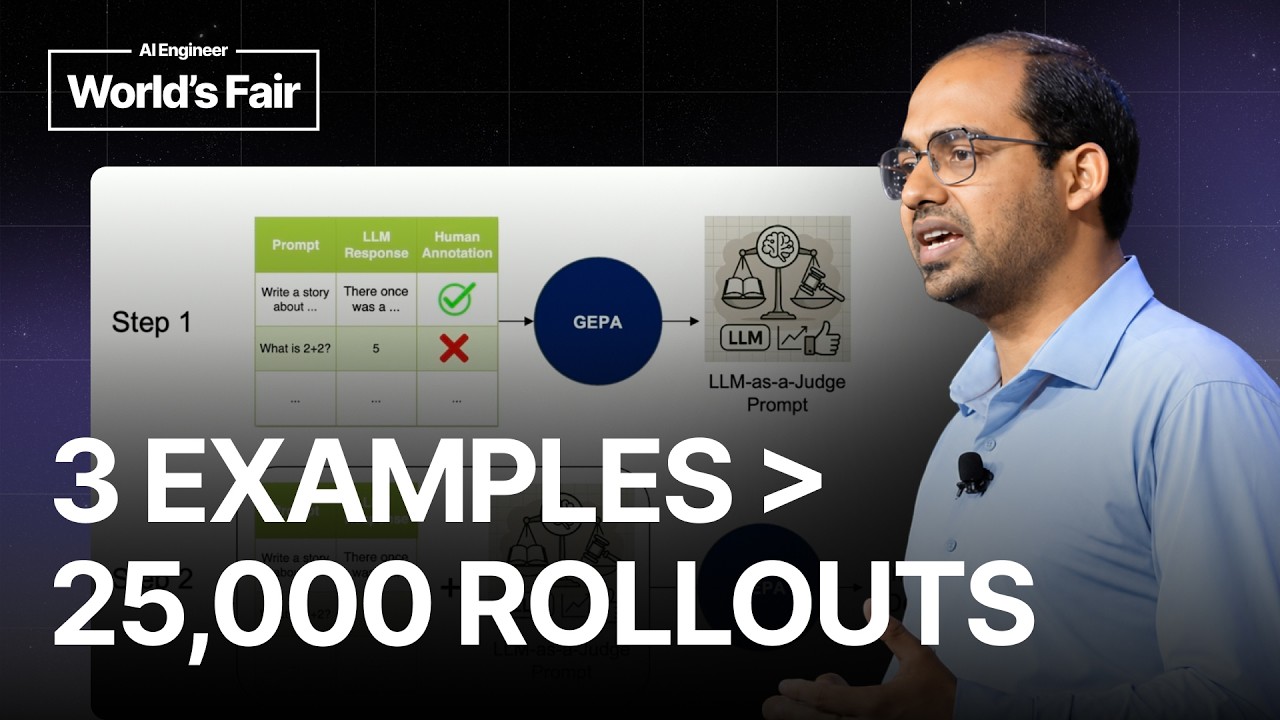
Lakshya Agrawal, creator of GEPA and a PhD student at UC Berkeley's Sky Computing Lab, presents reflective optimization as an alternative to scalar-reward reinforcement learning. GEPA lets a model read full rollout traces, including reasoning, tool calls, and error messages, and rewrite prompts from that feedback, with a Pareto candidate pool guarding against local optima. The talk covers the GEPA vs. GRPO sample-efficiency comparison, domain-knowledge discovery, the Optimize Anything API for text-based artifacts like code, harnesses, and skills, and production results from Databricks, Snorkel, and others.
Self-Improving Harnesses, Local Personal AI And YC's Agent For Work | YC Paper Club

Self-Improving Harnesses, Local Personal AI And YC's Agent For Work | YC Paper Club

A deep dive into the evolving world of LLM harnesses, demonstrating how they've transformed from simple prompt engineering into sophisticated self-improving systems. The discussion covers architectural advancements (e.g., Prime Agent's context as cache, Turing vs. Von Neumann), practical applications (auto-researchers, on-device personal AI like OpenJarvis, YC's QM for work), and the challenges and future directions of agentic AI. It emphasizes that harness innovation is key to unlocking significant performance gains and enabling LLMs to operate autonomously and adaptively.

Thinking Machines Lab drops Inkling & Meta’s Muse Spark 1.1

Thinking Machines Lab drops Inkling & Meta’s Muse Spark 1.1

This episode covers Thinking Machines' Inkling, an open-source, customizable model prioritizing architecture over benchmarks; Meta's Muse Spark 1.1, positioned for agent orchestration and enterprise use; OpenAI's GPT-5.6 Sol's 8% score on ARC-AGI-3, reigniting AGI debates; and Anthropic's "J-space" paper, exploring internal model reasoning and its implications for AI safety and interpretability.

How A Team Of 7 Keeps Breaking AI Benchmark Records

How A Team Of 7 Keeps Breaking AI Benchmark Records

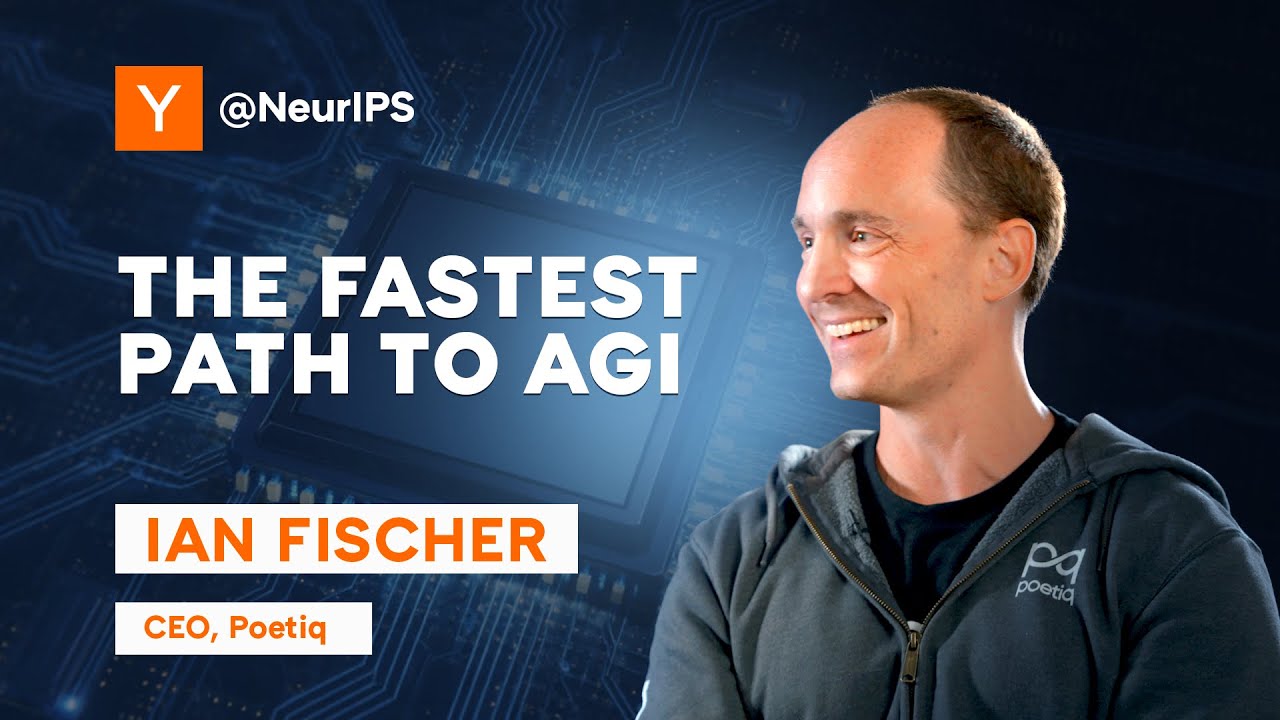
Poetiq, a startup by former DeepMind researchers, has developed a recursive self-improvement meta-system that builds "reasoning harnesses" on top of existing LLMs. This approach avoids the costly "fine-tuning trap" and has achieved state-of-the-art results on benchmarks like ARC-AGI and Humanity's Last Exam by automatically optimizing prompts and discovering novel reasoning strategies.

This Startup Beat Gemini 3 on ARC-AGI — at Half the Cost

This Startup Beat Gemini 3 on ARC-AGI — at Half the Cost

Poetic, a startup by ex-DeepMind researchers, has significantly advanced performance on the ARC-AGI benchmark by applying a recursive self-improvement system to Gemini 3. Co-founder Ian Fisher discusses how their approach of automating prompt and system engineering provides a substantial performance boost without needing access to model weights, and explores its potential as a path toward AGI.

How Intelligent Is AI, Really?

How Intelligent Is AI, Really?

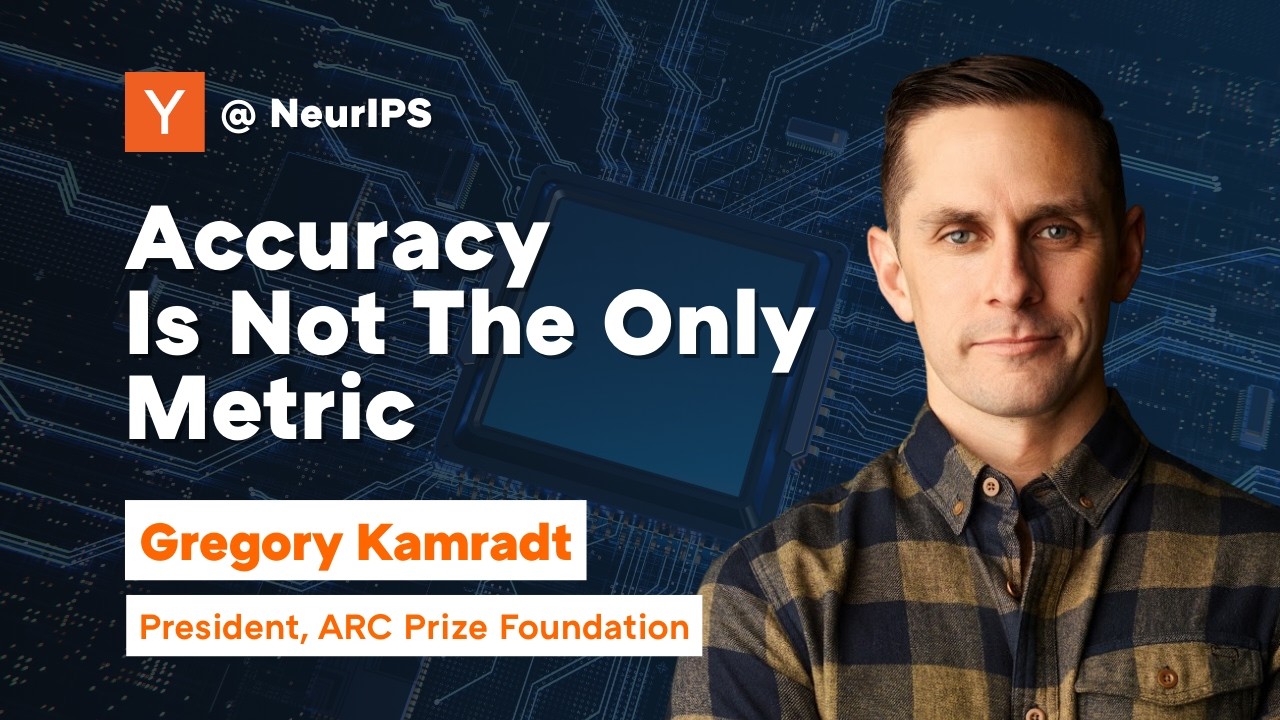
Greg Kamradt of the ARC Prize Foundation explains how the ARC-AGI benchmark is shifting the focus of AI evaluation from memorization to true intelligence, defined as the ability to generalize and learn new skills efficiently. He discusses the history of ARC-AGI, how it revealed the limits of early LLMs and highlighted the recent "reasoning breakthrough," and details the upcoming interactive ARC-AGI v3, which will measure AI performance against a human baseline with zero instructions.