Ai operations

Why AI Can Write Code But Can’t Keep It Running (Yet)

Why AI Can Write Code But Can’t Keep It Running (Yet)

Grepr CEO Jad Naous talks with a16z's Martin Casado about how coding agents have changed a 10-person engineering team, with projects that once took six months now finishing in about ten days. They examine whether AI can reason about and troubleshoot production distributed systems, why operations is a harder problem than code generation, and where AI adoption is likely to go next.
AI-Native Organisations Run on Skills: How to Structure and Scale Them — Imad Touil, QuantumBlack

AI-Native Organisations Run on Skills: How to Structure and Scale Them — Imad Touil, QuantumBlack

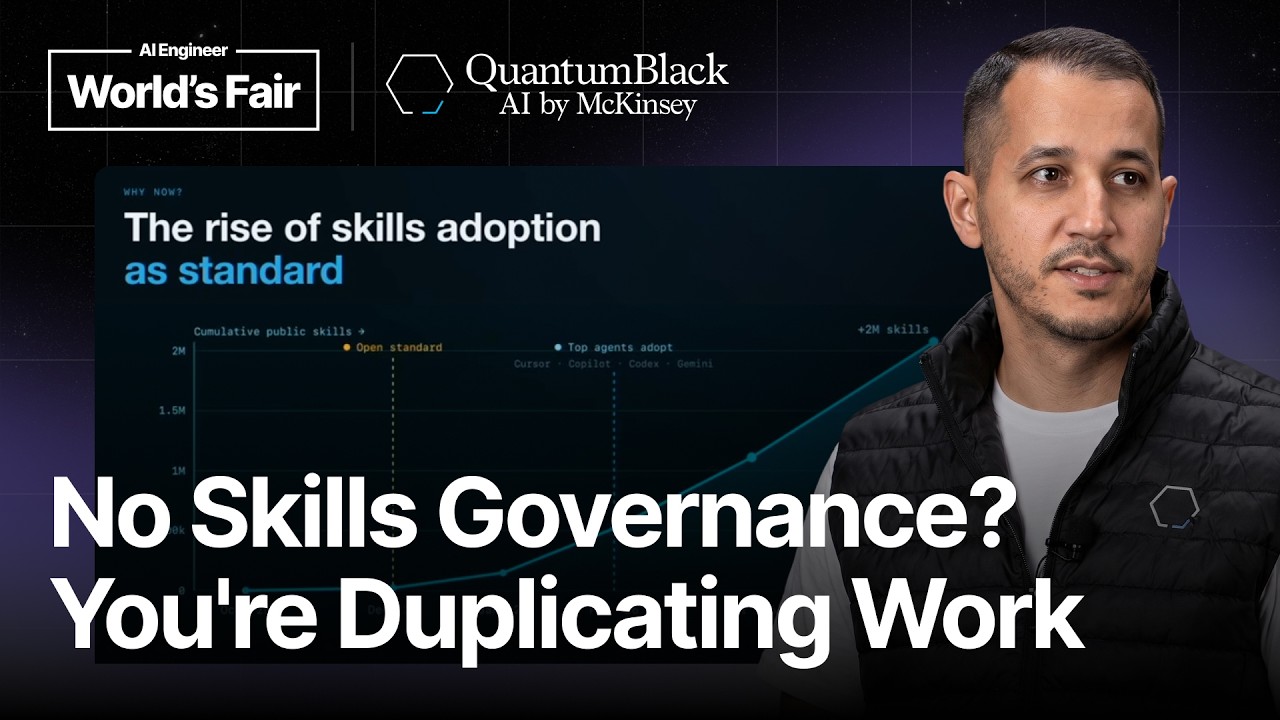
Imad Touil explores the critical need for governing AI skills within organizations, asserting that skills represent the true repository of enterprise know-how. He contrasts simplified coding agent loops with complex, real-world product lifecycles, demonstrating how ungoverned skills lead to technical debt—including duplication, quality degradation, security risks, and lack of discoverability. Proposing a microservices-inspired approach, Touil outlines a centralized skills platform and human-led governance model essential for achieving deterministic workflows, boosting productivity, and mitigating risks in AI-native enterprises.

The AI-native startup: 5 products, 7-figure revenue, 100% AI-written code. | Dan Shipper (Every)

The AI-native startup: 5 products, 7-figure revenue, 100% AI-written code. | Dan Shipper (Every)

Dan Shipper, CEO of Every, shares how his 15-person team operates on the bleeding edge of AI, shipping products without writing code, using a team of specialized AI agents, and pioneering new AI-first workflows. This summary covers Every's operational playbook, their AI stack, and Dan's predictions on how AI will reshape jobs, skills, and companies.