Agent authorization

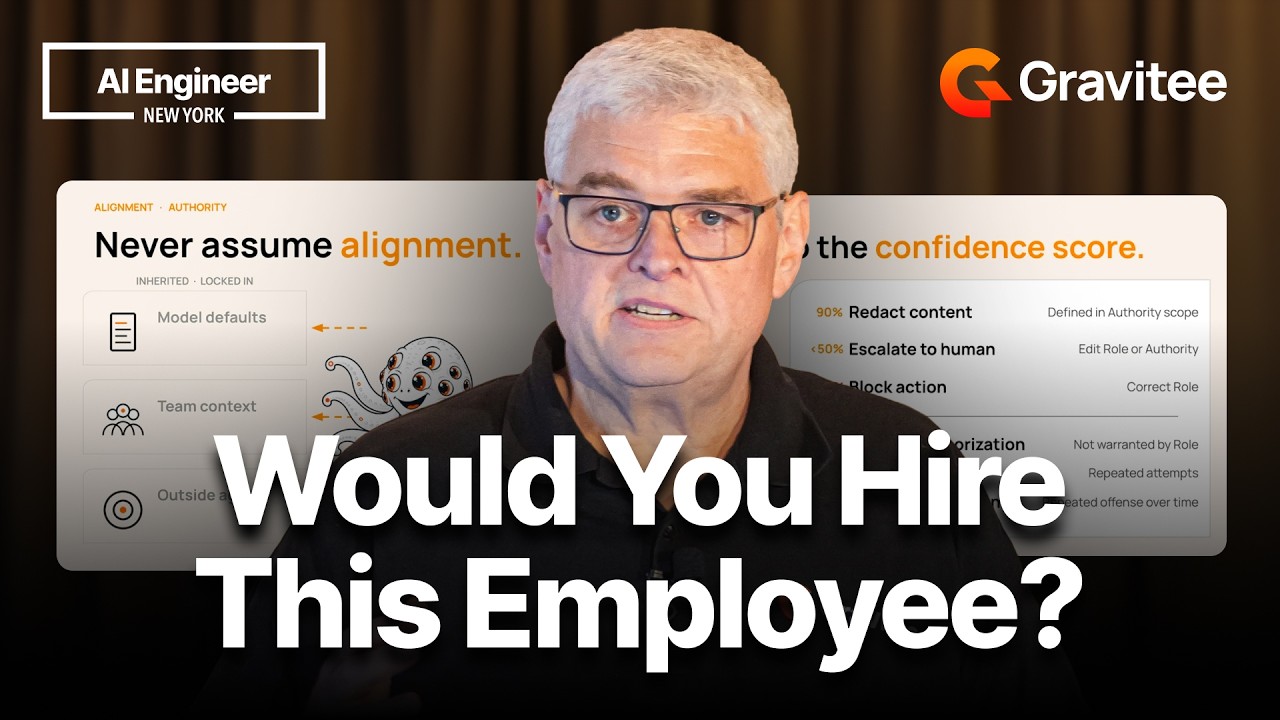
Why Are We Still Governing AI Agents Like Software? - Tim Tyler, Gravitee

Why Are We Still Governing AI Agents Like Software? - Tim Tyler, Gravitee

Tim Tyler of Gravitee introduces the Agent Accountability framework, which treats AI agents as a digital workforce governed through three stages: Assignment (identity, team, and a named sponsor), Alignment (role, mission, and least-privilege authority), and Administration (oversight scorecards, guardian agents, and graduated recourse when agents drift off course).
How to Let AI Agents Sign Up for Your App Safely — Isabelle Williams, WorkOS

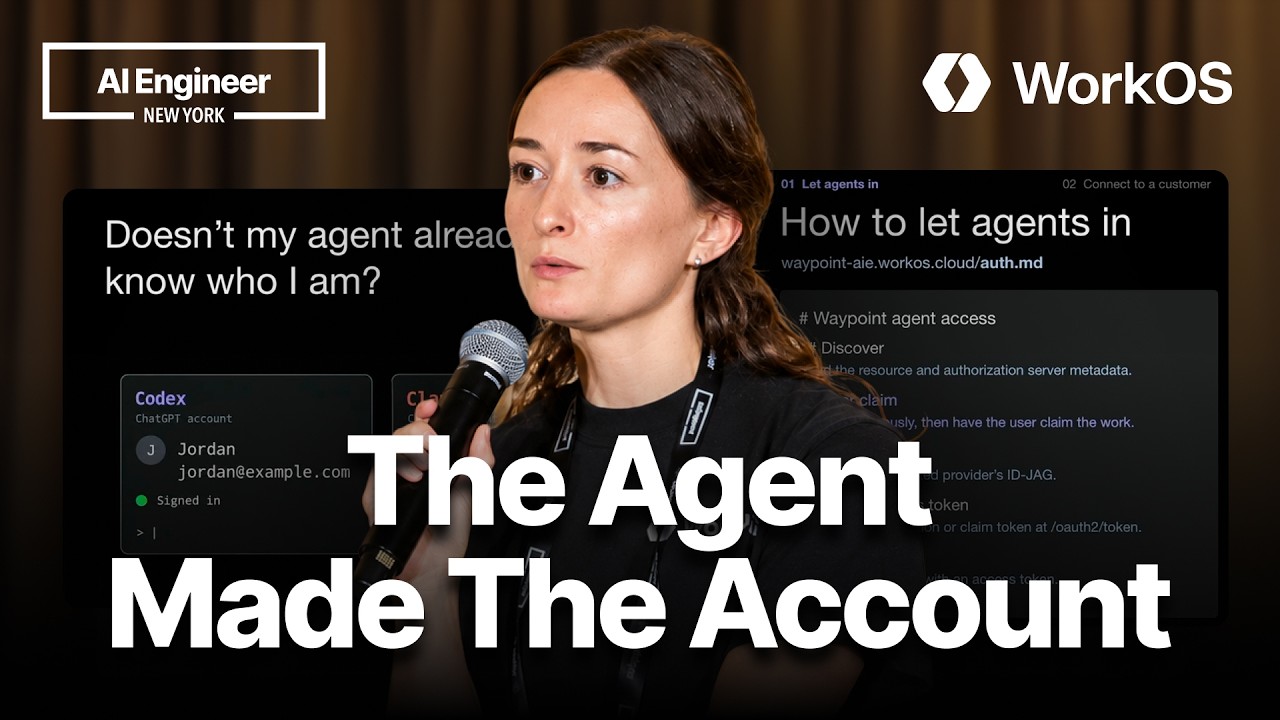
How to Let AI Agents Sign Up for Your App Safely — Isabelle Williams, WorkOS

Isabelle Williams of WorkOS demonstrates how to make an application ready for agent users, using a travel app called Waypoint. She covers the auth.md protocol for anonymous agent access and claim flows, ID-JAG identity assertions that let an agent's provider vouch for a user without a signup form, and scoped, revocable agent tokens that keep agent permissions auditable and bounded.

How to build agents that take ACTION

How to build agents that take ACTION

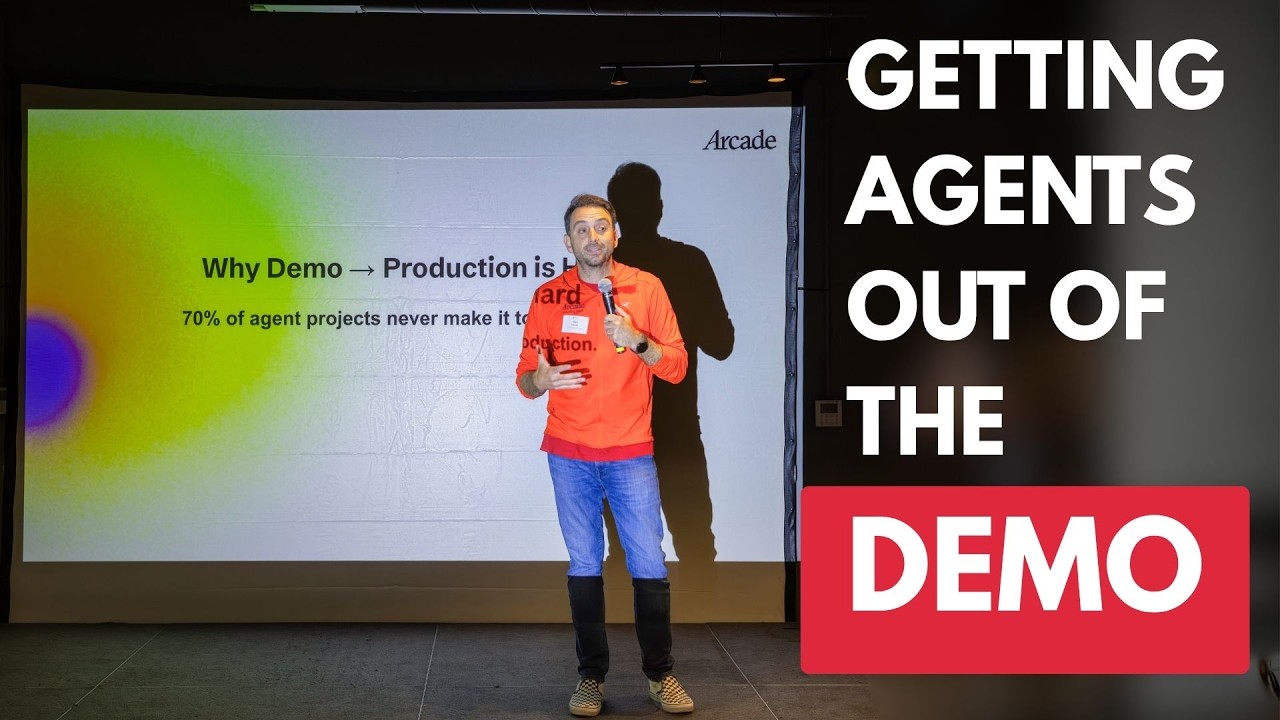
Alex Salazar, CEO of Arcade, argues that the true value of AI is not in chatbots but in agents that can take real-world actions. He details the primary reasons agents fail to reach production—security, cost, latency, and accuracy—and introduces an "Agent Hierarchy of Needs" as a framework for building robust, production-ready agents. The talk emphasizes a critical shift from exposing raw APIs to building intention-based tools and solving the complex challenge of agent authorization through a delegated model.