Posts

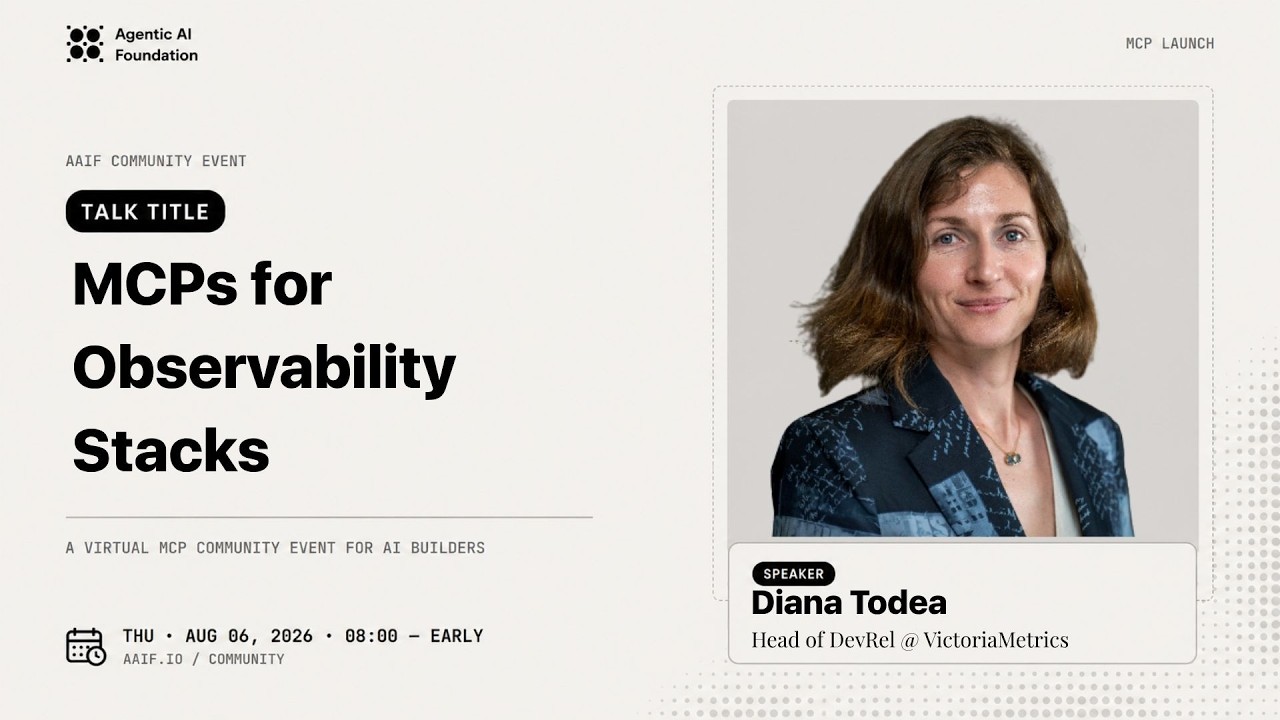
MCPs for Observability Stacks

MCPs for Observability Stacks

Diana Todea, Head of Developer Relations at VictoriaMetrics, demonstrates how Model-Controller-Pair (MCP) servers enhance observability stacks for faster, smarter troubleshooting. She highlights the use of AI-driven anomaly detection, natural language querying, and customizable "skills" to investigate production issues, manage metrics, and generate alerts, showcasing practical applications with two interconnected MCP servers.
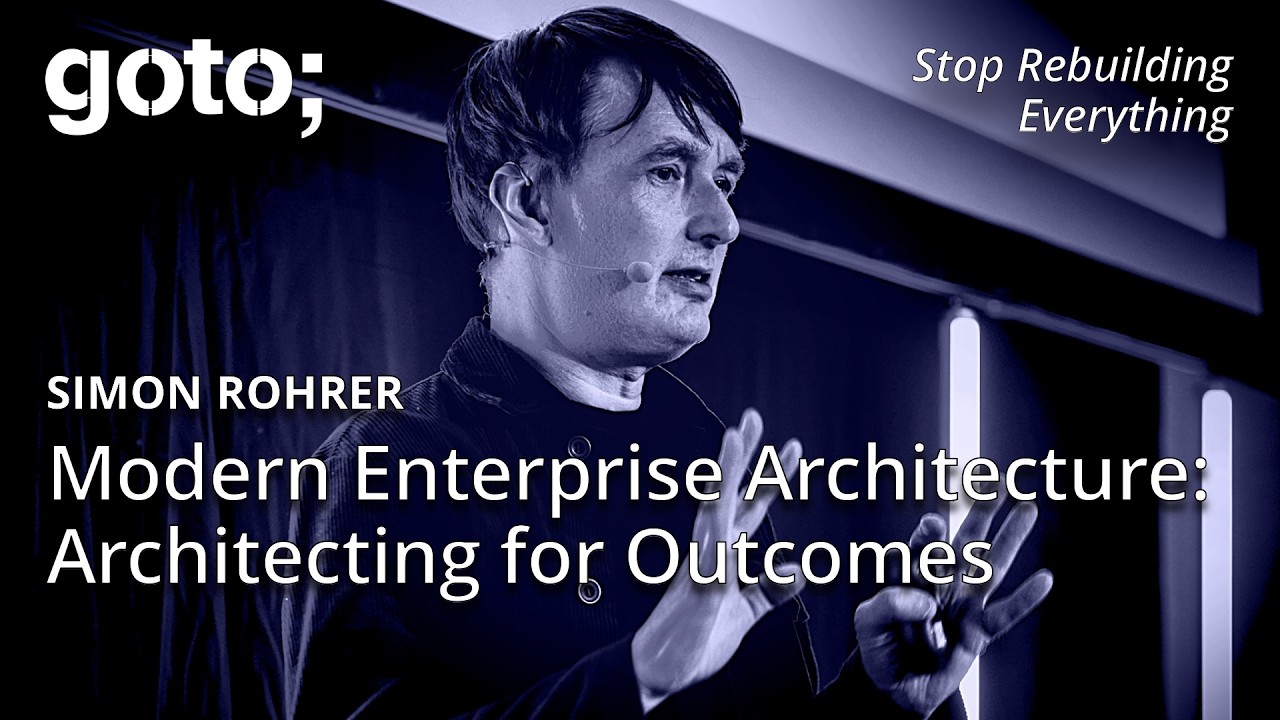
Modern Enterprise Architecture: Architecting for Outcomes • Simon Rohrer • GOTO 2025

Modern Enterprise Architecture: Architecting for Outcomes • Simon Rohrer • GOTO 2025

Simon Rohrer challenges traditional Enterprise Architecture (EA) principles, proposing a modern approach focused on outcomes, continuous evolution, and socio-technical alignment. He outlines five key tenets: Aligning Value, People & Technology; achieving Better Value Sooner, Safer, Happier; implementing Continuous Conversational & Automated Governance; scaling DevOps across the enterprise; and fostering Evolutionary Enterprise Architecture.

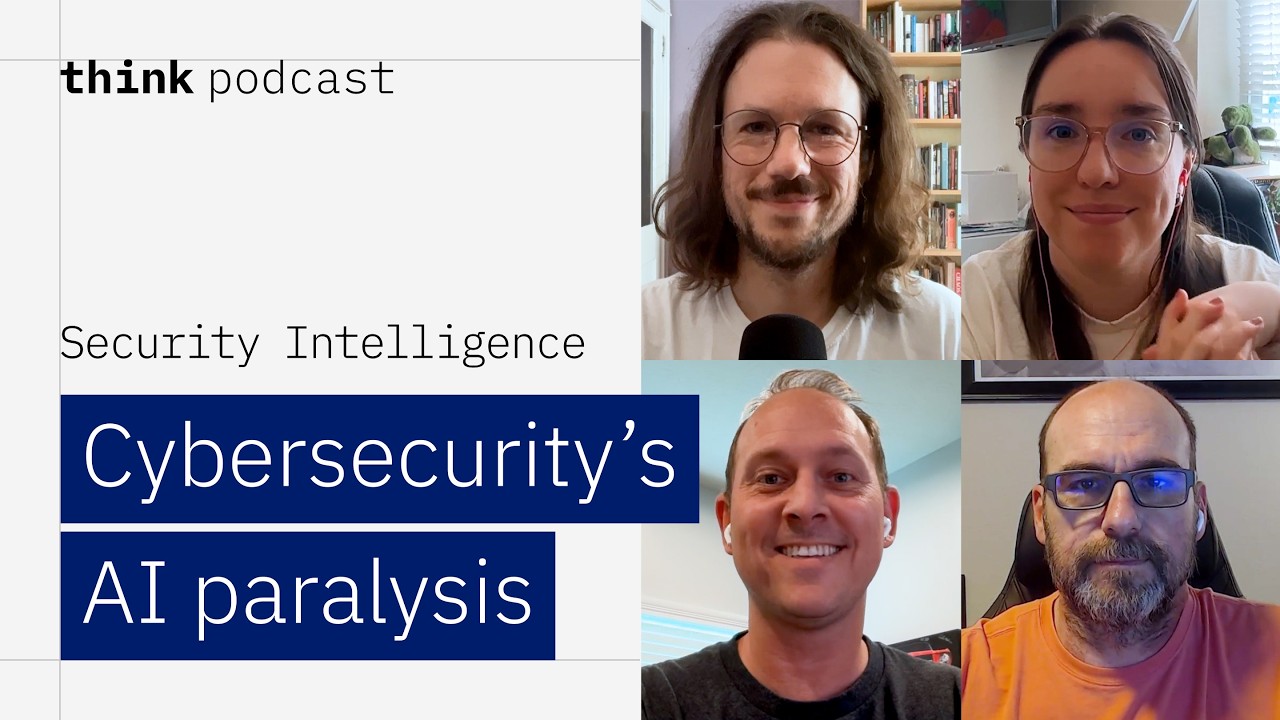
What should security leaders do with AI? They don’t know.

What should security leaders do with AI? They don’t know.

This podcast explores the challenges cybersecurity leaders face in adopting AI, the emergence of new threats like ghostjacking, and AI's current capabilities in patching vulnerabilities. It highlights the prevalent "AI decision paralysis" and offers strategic advice for integrating AI into security operations, advocating for a human-in-the-loop approach and a realistic assessment of AI's current

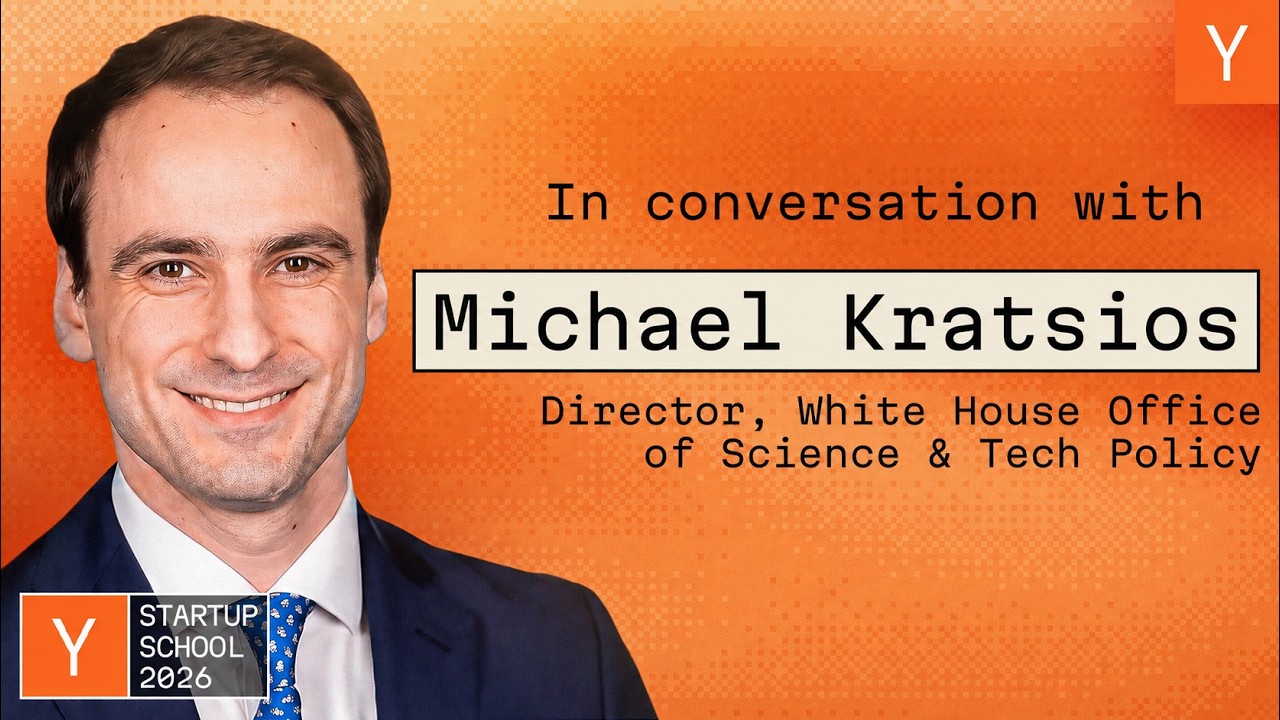
Michael Kratsios: Inside the White House's AI Strategy

Michael Kratsios: Inside the White House's AI Strategy

Michael Kratsios, from Scale AI and the White House, discusses US AI policy, advocating for open-source AI, flexible regulation, and supporting startups against incumbent moats. He outlines the White House's vision for AI-driven scientific discovery and the future focus on Quantum Information Science, while urging Congress to legislate on preemption and IP. He concludes with a call for technologists to engage in public service.

The Next Medium: Why Real-Time Interactive Video Changes Everything — Ahmed Ahres, Reactor

The Next Medium: Why Real-Time Interactive Video Changes Everything — Ahmed Ahres, Reactor

Ahmed Ahres argues that real-time interaction fundamentally changes the medium, not just its speed, especially in generative AI. He defines "world models" as interactive, effectively infinite, and steerable video, drawing parallels with GPS and camera viewfinders. This paradigm shift unlocks new forms of control, intelligent advertising, programmable worlds for robotics and education, and advanced live avatars. He highlights the critical infrastructure challenges of streaming pixels, managing stateful sessions, and achieving global sub-100ms latency, emphasizing that batch infrastructure is unsuitable for real-time applications. Evaluation of consistency for these models remains an unsolved problem.

Infra behind Krea 2: How to train and serve at scale — Gabriel Jorge Menezes, Krea.ai

Infra behind Krea 2: How to train and serve at scale — Gabriel Jorge Menezes, Krea.ai

Krea's Gabriel Jorge Menezes shares critical insights into building the infrastructure for large-scale ML model training and serving. Key takeaways include the necessity of custom metrics beyond standard GPU utilization, aggressive checkpointing on ultra-fast storage to counter frequent cluster crashes, and a dynamic Kubernetes-based system using gang scheduling, virtual-kubelet, and taints to seamlessly shift inference workloads to external providers when training consumes on-prem GPUs. The approach highlights practical solutions for silent failures, thermal management, and optimizing resource utilization in a unified production and training environment.