Posts

From AI-Assisted to AI-Native: Building a Frontier Development Team — Clare Liguori, AWS

From AI-Assisted to AI-Native: Building a Frontier Development Team — Clare Liguori, AWS

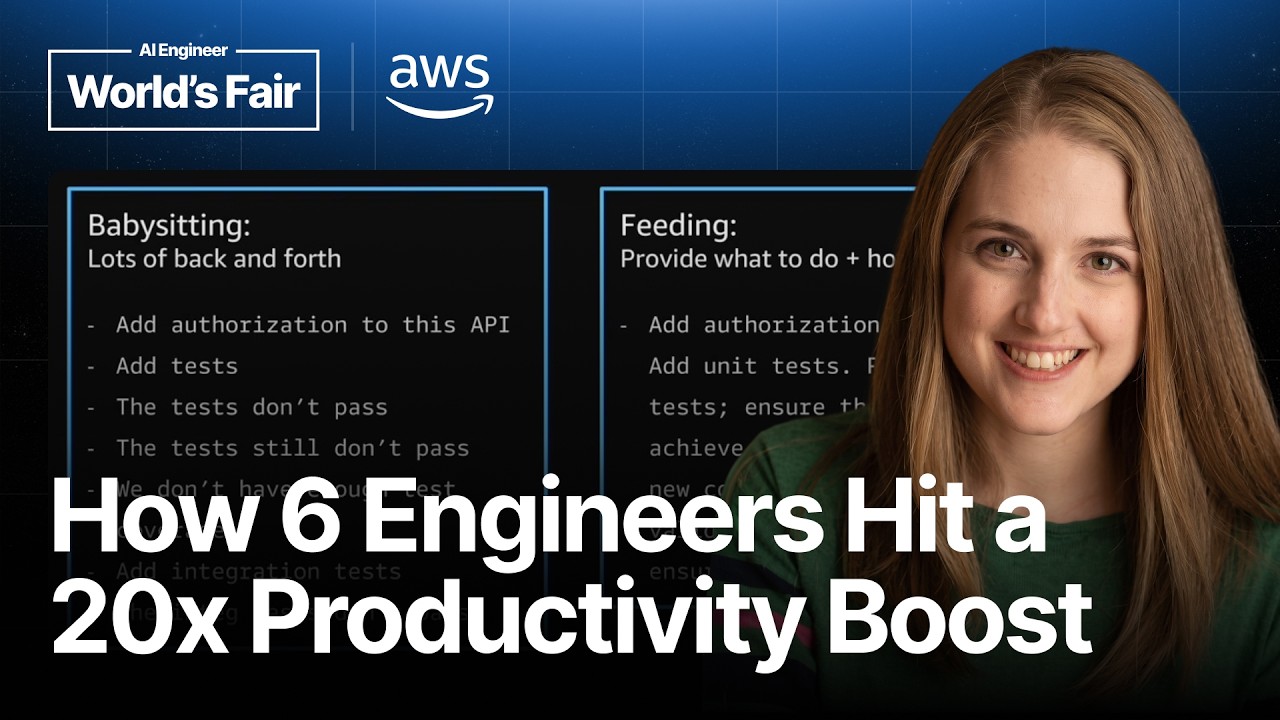
Clare Liguori, a Senior Principal Engineer at AWS, reveals how Amazon teams are achieving 4.5x to 10x productivity gains through 'frontier development' with AI coding assistants like Kuro. She emphasizes that success isn't about the tools, but about fundamentally changing how engineers work, outlining five core habits: investing in agent context, embracing an initial slowdown for long-term speedup, feeding agents comprehensive instructions instead of micromanaging, making design intent explicit before coding, and shifting left with local, deterministic testing. Liguori also addresses new challenges like burnout and decision-making becoming the primary bottleneck in highly accelerated development cycles.
AI Evals for Cross-Functional Teams — Nachiket Paranjape & Swaroop Chitlur Haridas, DoorDash

AI Evals for Cross-Functional Teams — Nachiket Paranjape & Swaroop Chitlur Haridas, DoorDash

DoorDash's GenAI platform team transformed evaluation from an engineering-centric task into a cross-functional workflow. By adopting an API-first strategy, they empowered non-engineers like Strategy & Operations to "vibe code" their own annotation UIs using coding agents and self-serve calibrate LLM judge prompts. This approach dramatically reduced annotation costs, accelerated iteration, and fostered broader organizational ownership of AI quality.

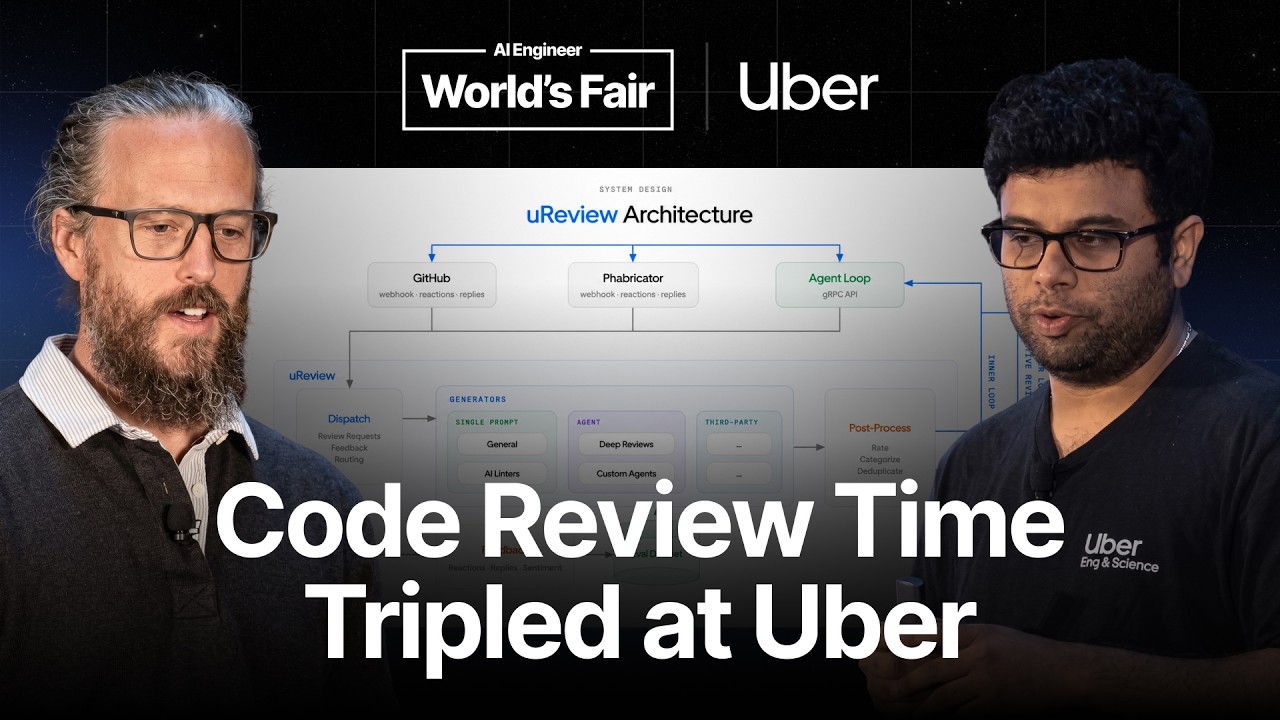
Building uReview, Uber’s Multi-Agent Code Review Engine — Will Bond & Ameya Ketkar, Uber

Building uReview, Uber’s Multi-Agent Code Review Engine — Will Bond & Ameya Ketkar, Uber

Uber's Will Bond and Ameya Ketkar present uReview, an in-house automated code review system developed to combat rising review times (3 to 9 hours for first review). They detail why Uber built it over buying—due to Phabricator, agentic SDLC integration, and distributed ownership—and its architecture, including comment deduplication. The presentation highlights their iterative approach using advanced observability (sentiment, addressal rate, agent trajectory) to tune model performance, acknowledging that "the model never knows that it is wrong." They discuss empowering hundreds of teams with custom review agents and skills, sharing impressive results: 25,000 comments weekly, 67% addressal rate, and 60% cost reduction. Finally, they explore the evolving role of human engineers in an agentic SDLC, predicting an "expanded outer loop" focused on architecture and domain expertise rather than direct code review.

Why Top Founders Are Racing Into AI Infrastructure

Why Top Founders Are Racing Into AI Infrastructure

a16z's new Machine Age Fund addresses the unprecedented demand for AI infrastructure, shifting the bottleneck from models to the foundational hardware. The discussion highlights surging Hyperscaler CapEx, component supply crunch extending to 2028, and the exponential compute needs driven by reasoning and agents. It explores how AI turns engineering problems into capital/compute challenges, identifying opportunities for new infrastructure companies in chips, power, and data center redesign, and the emergence of experienced "systems founders" to rebuild the computing stack for this new era.

CLAUDE.md, AGENTS.md, Skills, Hooks and Subagents: A Field Guide to Steering AI Agents (Ep. 1022)

CLAUDE.md, AGENTS.md, Skills, Hooks and Subagents: A Field Guide to Steering AI Agents (Ep. 1022)

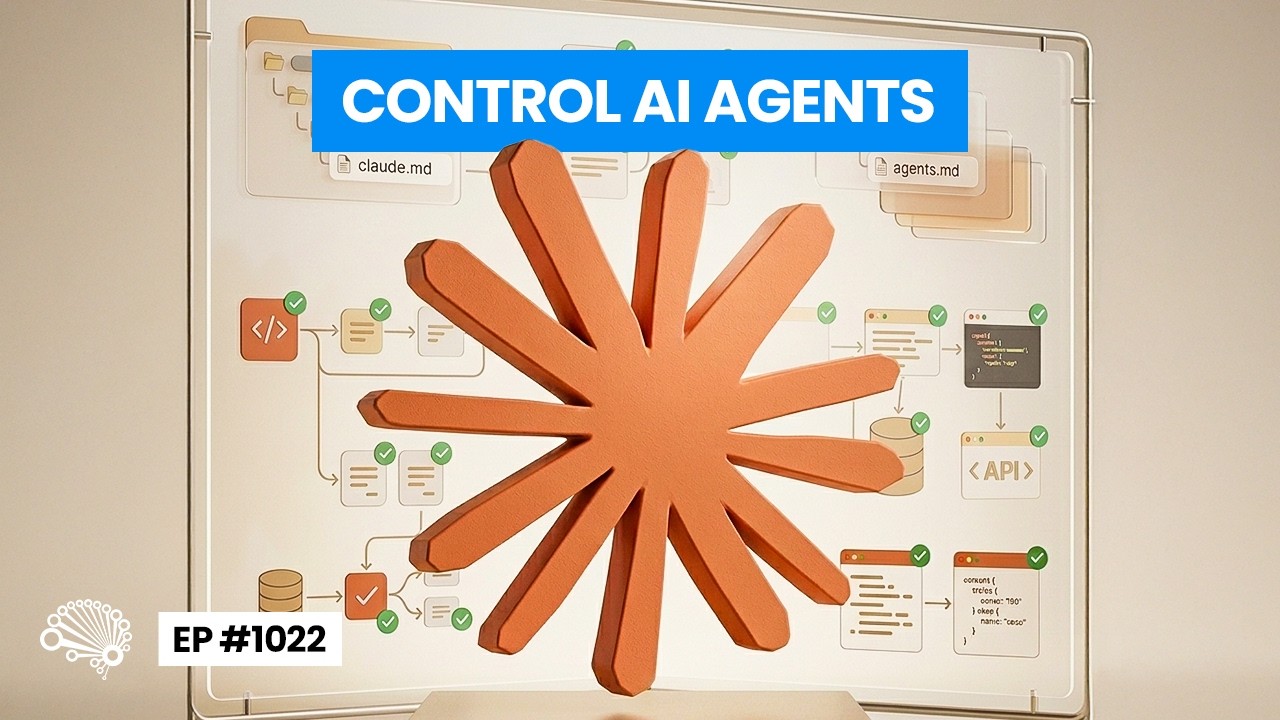
Episode 1022 dissects the crucial aspect of effectively steering AI agents by determining the optimal placement of instructions to ensure reliability and cost-efficiency. It explores seven distinct methods for instruction delivery, contrasting instructions as probabilities with hooks as guarantees, and highlights the industry-wide adoption of standards like `agents.md` and the importance of human-crafted guidance for superior agent performance.

Analyzing Group Chat Encryption in Messaging Applications

Analyzing Group Chat Encryption in Messaging Applications

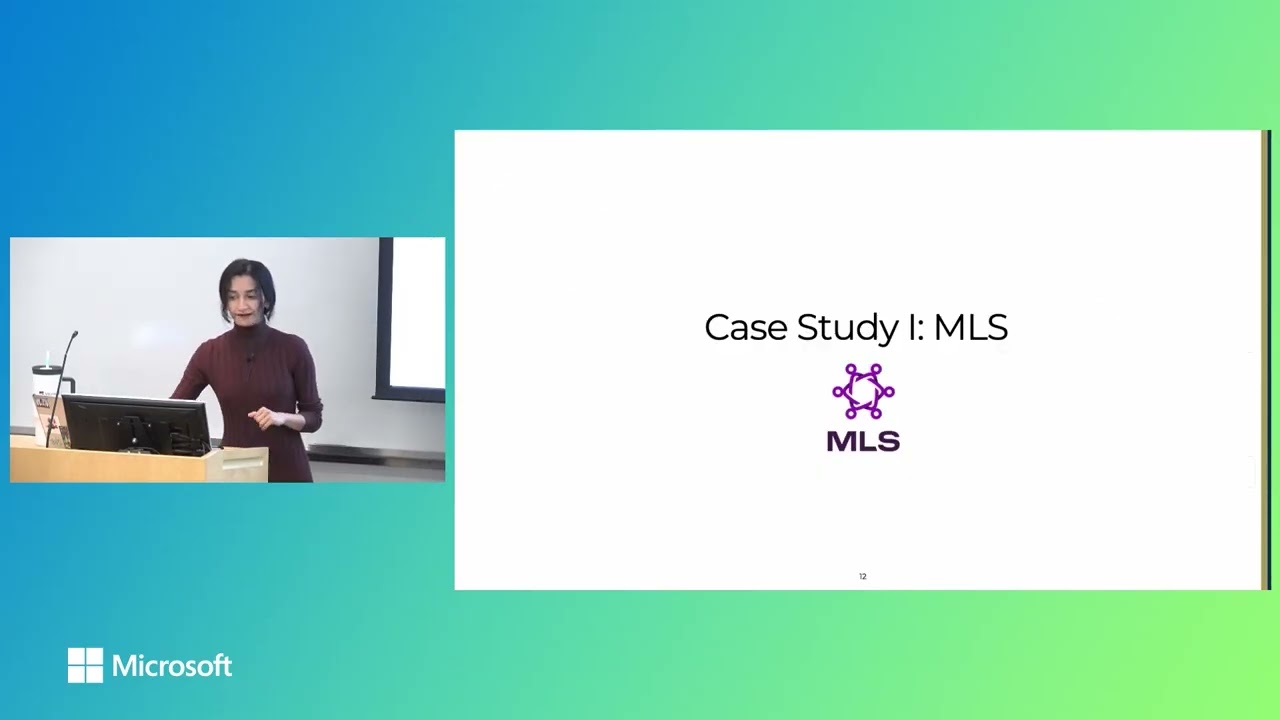
This talk details a formal security analysis of group chat encryption algorithms in popular messaging applications like MLS, Session, and Keybase. It introduces Symmetric Sign Encryption (SSE) to model these protocols, identifying critical vulnerabilities such as insider replay and reordering attacks in MLS and Session due to insufficient context binding. The analysis highlights the complexities of key-dependent messages and key reuse, demonstrating how formal methods can pinpoint subtle design flaws and suggest robust mitigations for real-world secure communication.