Posts

The Promptware Kill Chain: How Prompt Injection Becomes AI Malware

The Promptware Kill Chain: How Prompt Injection Becomes AI Malware

Promptware introduces a new class of AI malware leveraging prompt injections to exploit architectural flaws in LLMs. This summary details The Promptware Kill Chain, covering stages from initial access and jailbreaking to persistence, lateral movement, and real-world impact. It emphasizes the critical need for a Zero Trust approach, treating AI agents as hostile runtimes to defend against these sophisticated AI-native threats.


India Can Create The Largest AI Companies

India Can Create The Largest AI Companies

This panel from Startup School India explores why India's technical talent is poised to lead the global AI wave, challenging traditional career advice. It highlights Y Combinator's focus on young, high-agency founders who leverage AI for rapid prototyping and embrace 'second mover advantage' to build global companies, emphasizing customer obsession and relentless resourcefulness.

Builders Unscripted: Ep. 4 - Pietro Schirano

Builders Unscripted: Ep. 4 - Pietro Schirano

Pietro Schirano, Founder & CEO of MagicPath, discusses his pioneering work with GPT-5.5 and Codex, transforming creative ideas into software and hardware solutions. He details using advanced AI for image-to-sound conversion, multi-agent workflows, resurrecting obsolete tech with new functionalities, and building his company, MagicPath, on the principle of humans directing AI agents. This interview provides deep insights into the creative potential and practical applications of cutting-edge AI for developers and entrepreneurs.

Welcome Session - Microsoft Research India Academic Summit 2026

Welcome Session - Microsoft Research India Academic Summit 2026

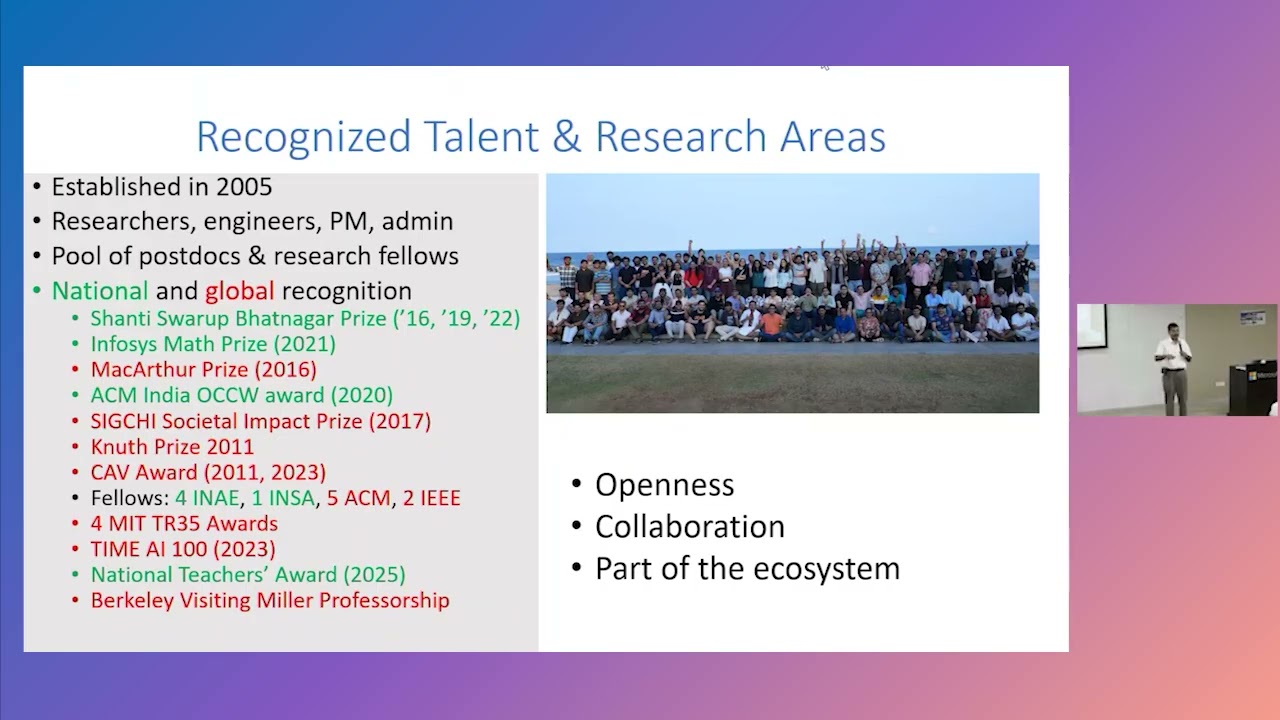
The Microsoft Research India Academic Summit 2026 opens with MSR India Lab Director Venkat Padmanabhan outlining the lab's collaborative research philosophy and Microsoft's evolution into an AI infrastructure powerhouse. He details MSR India's four core research pillars: fundamental AI advancements, specialized domain solutions, efficiency across the AI stack (including small language models), and the crucial diffusion of AI technologies for societal impact in India and the Global South, exemplified by diverse projects and collaborations.

Plenary Talk 3: Challenges and Research Opportunities for Global Hyperscale Services

Plenary Talk 3: Challenges and Research Opportunities for Global Hyperscale Services

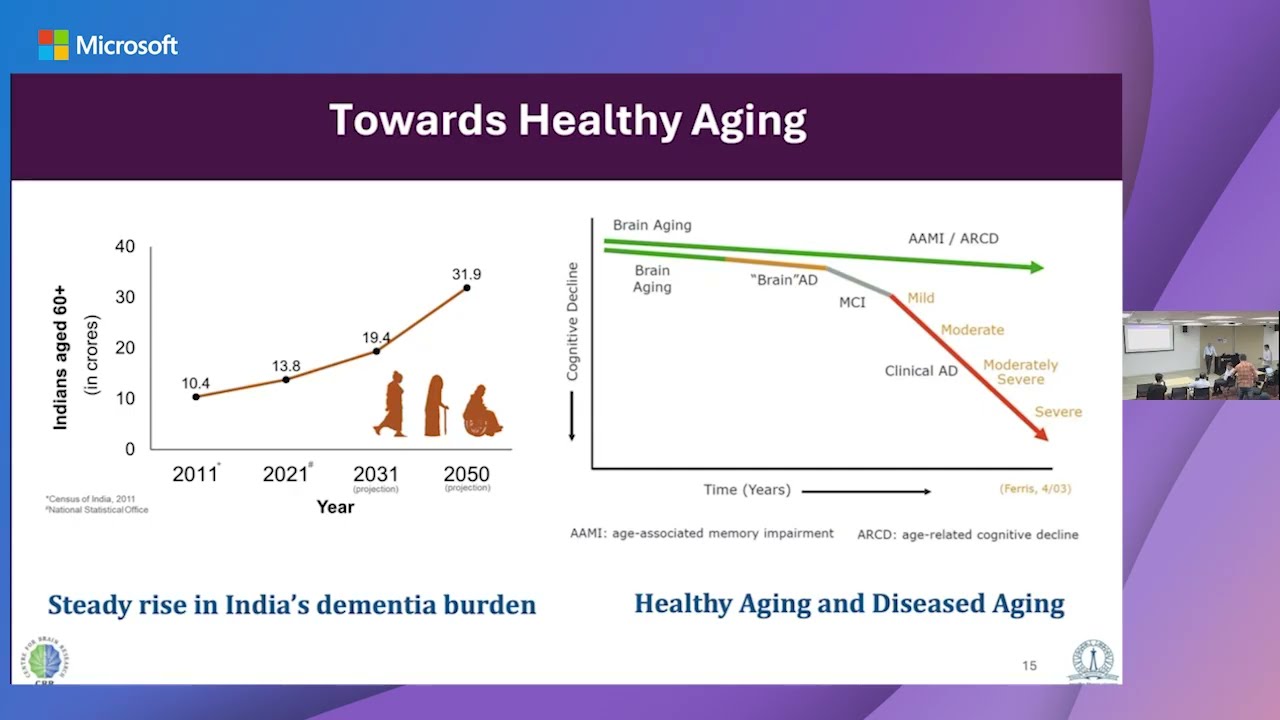
This talk provides a comprehensive overview of cellular aging, brain function, and the mechanisms of cognitive decline, particularly focusing on Alzheimer's disease. It delves into the role of various cell types, neural communication, and methods for assessing cognition. The speaker highlights research challenges, the limitations of current pharmacological interventions, and the critical importance of non-pharmacological lifestyle interventions. A significant portion of the discussion is dedicated to the Centre for Brain Research's (CBR) multi-disciplinary efforts in India, including large-scale cohort studies, multimodal data collection, and the development of AI-driven tools and a localized foundation model for the Indian brain to address neurodegeneration.

Plenary Talk 2: Reimagining Education and Skilling for the Age of AI: Challenges & Opportunities

Plenary Talk 2: Reimagining Education and Skilling for the Age of AI: Challenges & Opportunities

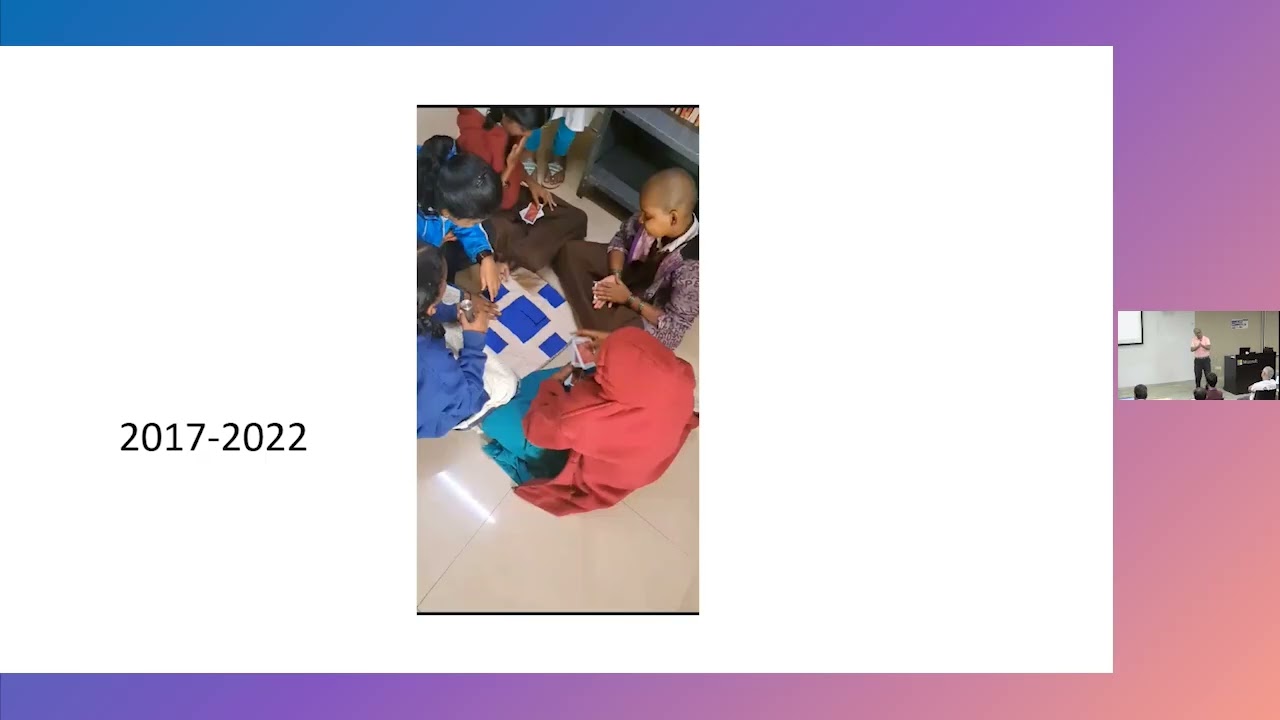
Manohar Swaminathan critiques India's "broken" education system, asserting AI offers a unique opportunity for fundamental redesign rather than incremental fixes. He introduces `Echaliva` (reimagined workflows) and `Shiksha` (agentic AI support) frameworks, underpinned by six pillars: pervasive AI access, learner agency in real-world problem-solving, portfolio-based assessment, micro-credentialing, lifelong learning, and faculty incentives focused on impact. The talk details how agentic AI, via tools like "lumens," can manage complex learning pathways and showcases examples from institutions implementing these transformative changes, extending to a "Pluriversity" model for large-scale skilling and enhanced employability.