Posts

Session on Inclusive AI: Data, Models, Evaluation

Session on Inclusive AI: Data, Models, Evaluation

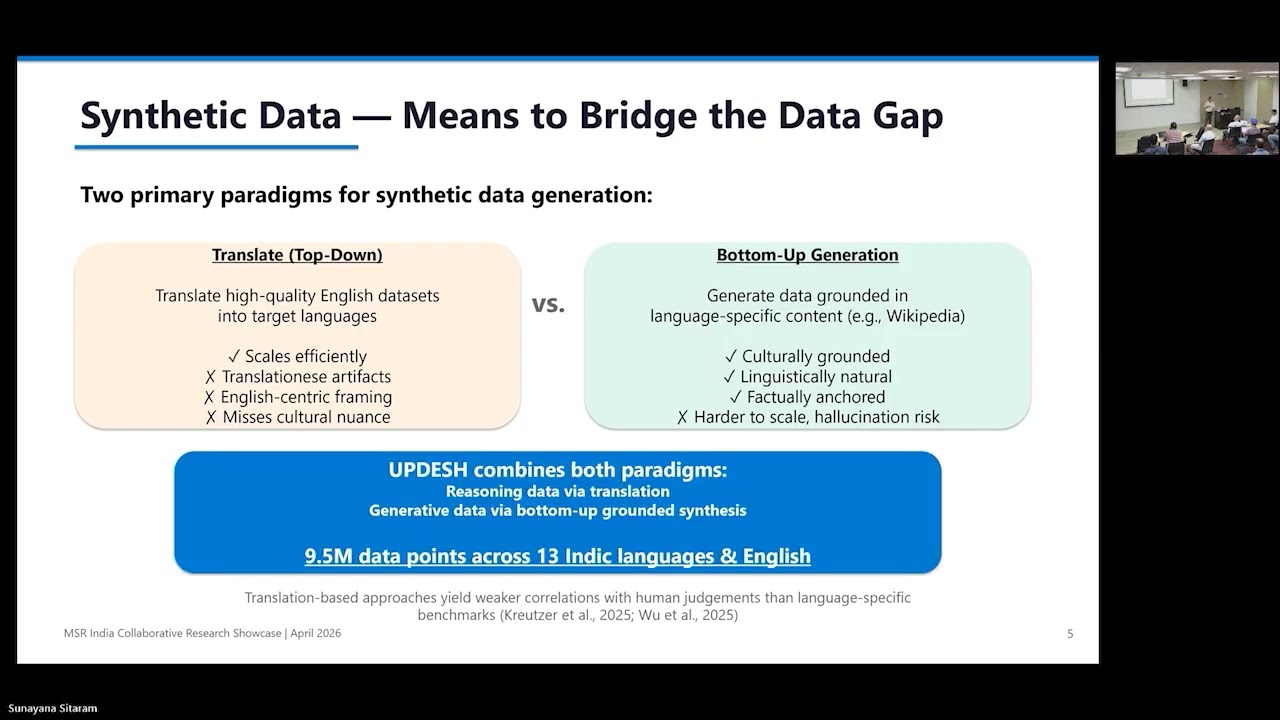
The Microsoft Research India Academic Research Summit 2026 session on "Inclusive AI" explored critical challenges in developing AI that serves diverse linguistic and cultural contexts. Speakers Niloy Ganguly, Danish Pruthi, Sunayana Sitaram, Anoop Kunchukuttan, and Ashutosh Modi addressed data gaps, model biases, and evaluation shortcomings, emphasizing the need for equitable and culturally relevant AI. Key themes included the use of synthetic data for low-resource languages, the impact of tokenization on model performance, geographical disparities in generative AI, and the application of AI for social good in legal and accessibility domains. The discussions underscored the importance of community involvement, open data, and designing AI for multilinguality from the outset, rather than as an afterthought.
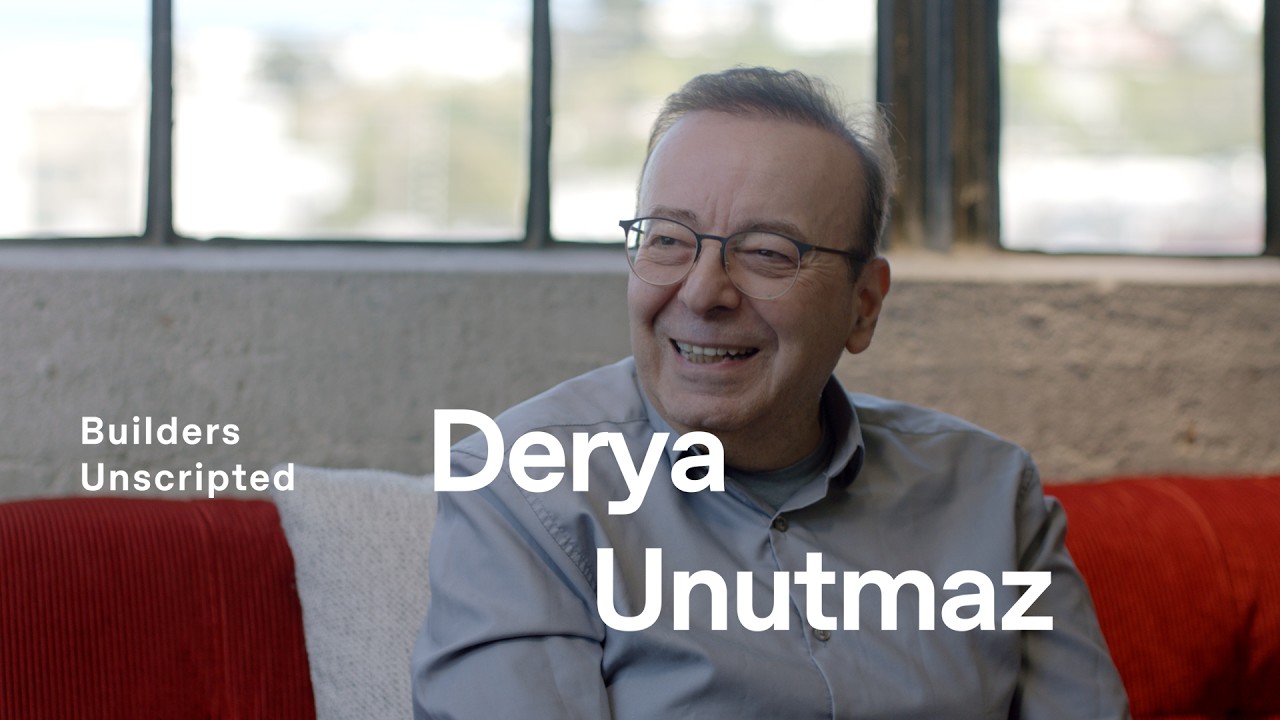
Builders Unscripted: Ep. 5 - Derya Unutmaz

Builders Unscripted: Ep. 5 - Derya Unutmaz

Derya Unutmaz, an immunologist, shares how AI, particularly Codex, is transforming biological research, from building custom cell analysis tools and T-cell simulators to envisioning a future of digital twins and personalized medicine, highlighting a coming "Science 2.0" paradigm.

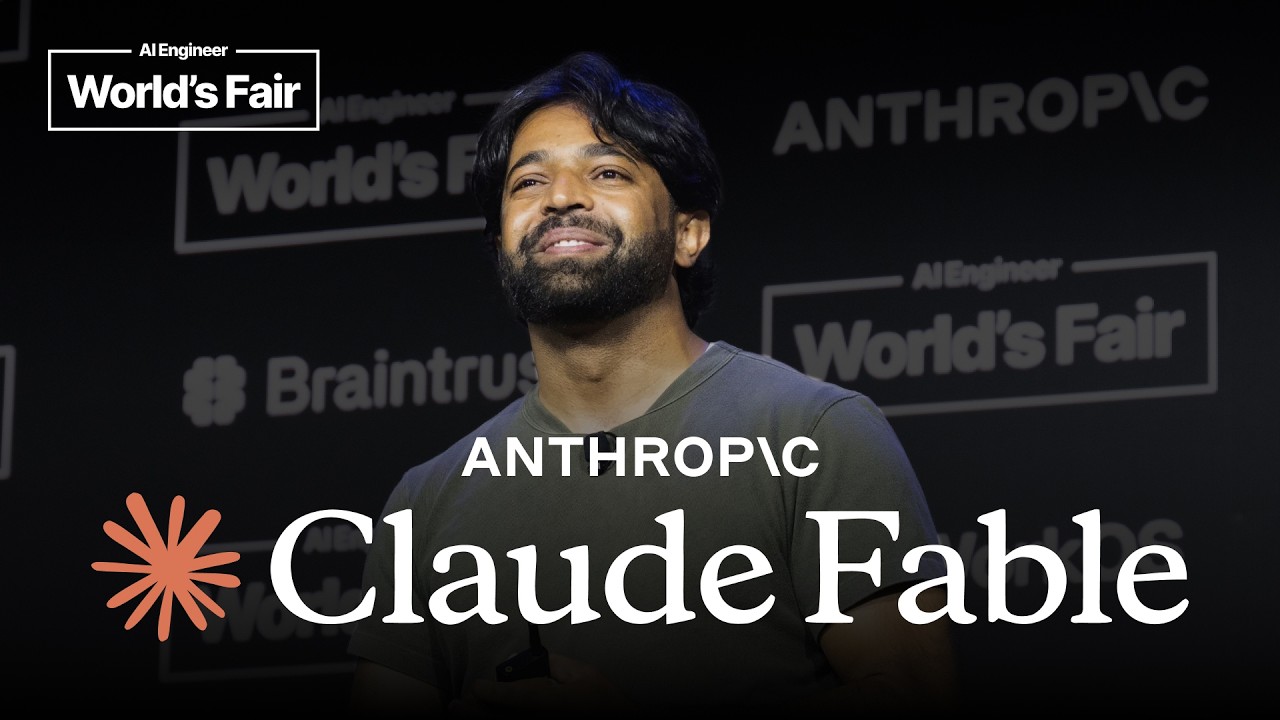
Field Guide to Fable — Thariq Shihipar, Anthropic

Field Guide to Fable — Thariq Shihipar, Anthropic

Thariq Shihipar from Anthropic introduces Fable, their newest model, as a major leap forward, emphasizing "capability overhang" where tool use unlocks unprecedented intelligence. He provides a "field guide" on working with Fable, discussing evolving prompt engineering, advanced tool interactions (like HTML reports), and strategies for identifying project unknowns. He concludes by challenging the necessity of traditional tradeoffs, advocating for ambitious development that is both good, fast, and cheap, and urging AI engineers to prove the transformative power of AI.

What Is AI Code Refactoring? Agentic AI & Safe Code Changes

What Is AI Code Refactoring? Agentic AI & Safe Code Changes

This video explores AI code refactoring, differentiating between inline and autonomous agentic approaches. It highlights how AI can leverage pattern recognition for tasks like improving readability or reducing duplication, thereby addressing technical debt. A key focus is on the safety guardrails, detailing a multi-step, human-in-the-loop process involving planning, searching, reporting, human approval, patching, and verification through testing, ensuring AI-driven changes are safe for production and can integrate into CI/CD pipelines.

AI Gave You A Promotion: Why AI Isn’t Replacing Jobs

AI Gave You A Promotion: Why AI Isn’t Replacing Jobs

AI isn't replacing jobs, but profoundly changing them. Jeff Crume introduces a 'diamond' model to explain how AI shifts job roles to higher-value work, leading to a 'promotion' for employees. This transformation, driven by Jevons Paradox, demands new skills like flexibility, curiosity, and critical thinking, ultimately fostering overall growth and innovation in the workforce.

a16z Goes Global: Why American Tech Must Lead the World

a16z Goes Global: Why American Tech Must Lead the World

This discussion explores a16z's expanding international strategy, emphasizing technology's pivotal role in economic growth and national security. The panel delves into why America's tech leadership is crucial globally, how AI is redefining government-private sector relationships, and the drive for countries to adopt frontier technologies while building local innovation ecosystems. Key topics include AI infrastructure, cybersecurity, defense tech, global startup expansion, and the elements of enduring tech ecosystems, highlighting trusted partnerships and the importance of Western technology.