Posts

Fable 5, GPT-5.6 and the high stakes of AI safeguards. Agentic ransomware, ClickFix reigns supreme

Fable 5, GPT-5.6 and the high stakes of AI safeguards. Agentic ransomware, ClickFix reigns supreme

This podcast explores the critical role of safeguards in frontier AI models like Anthropic's Fable 5 and OpenAI's GPT-5.6 Sol, analyzing the tension between powerful capabilities and misuse prevention. It also dissects the emergence and debate around agentic ransomware, specifically Jade Puffer, and covers the rise of ClickFix as a dominant social engineering attack targeting developers. Finally, it provides an in-depth analysis of UnregStealer, a credential-theft campaign impacting Latin American financial institutions, detailing its attack chain and mitigation strategies.
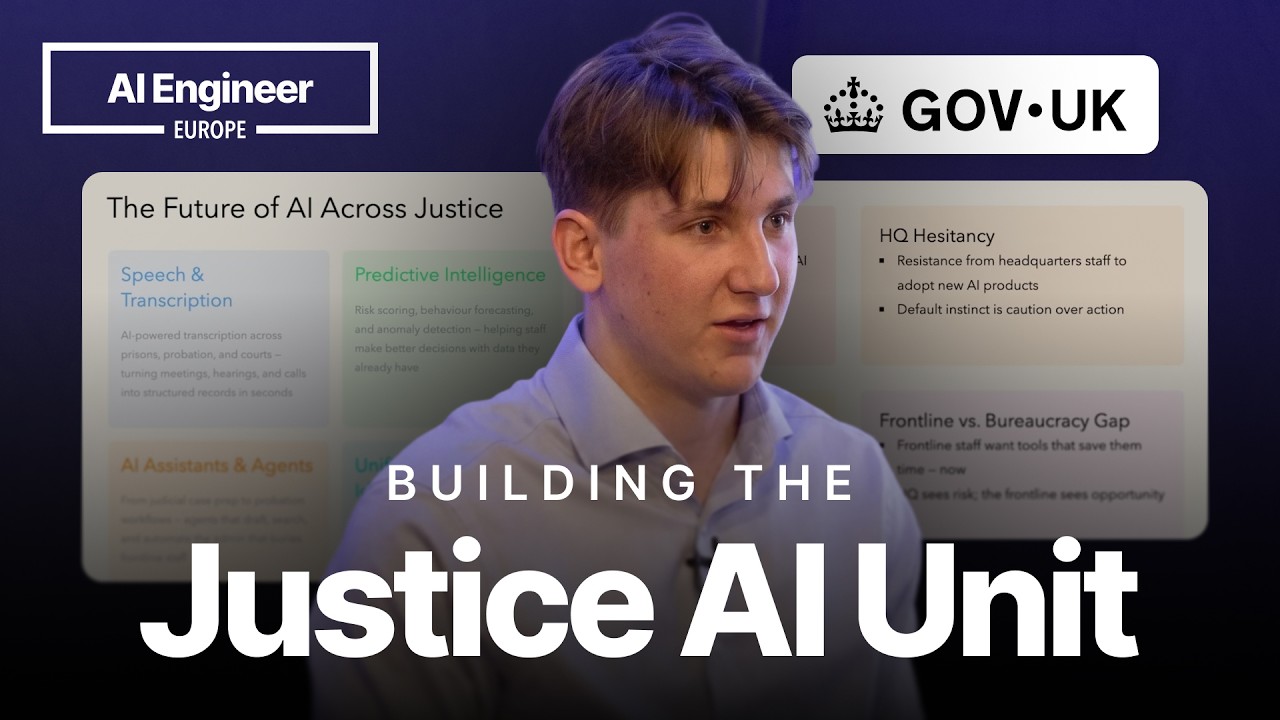

Shipping Production AI Inside Government — William Tarr, Ministry of Justice (DO NOT PUBLISH)

Shipping Production AI Inside Government — William Tarr, Ministry of Justice (DO NOT PUBLISH)

The UK Ministry of Justice Justice AI Unit operates as a startup within government, deploying engineers directly into prisons and probation offices. This 'forward deployed' model enables rapid, user-centric AI product development, overcoming bureaucratic hurdles by prioritizing real-world feedback and agile implementation to empower frontline staff and solve critical operational challenges.

GTM Is You - Victoria Melnikova, Evil Martians

GTM Is You - Victoria Melnikova, Evil Martians

Victoria Melnikova discusses optimal Go-To-Market strategies for developer tools and AI startups, asserting that a founder's personal brand is the most underrated competitive advantage in 2026. She covers foundational GTM hygiene, the strategic importance of San Francisco, effective advertising and event tactics, embracing unconventional marketing, and the critical role of authenticity and personal connection in building trust and cutting through digital noise.

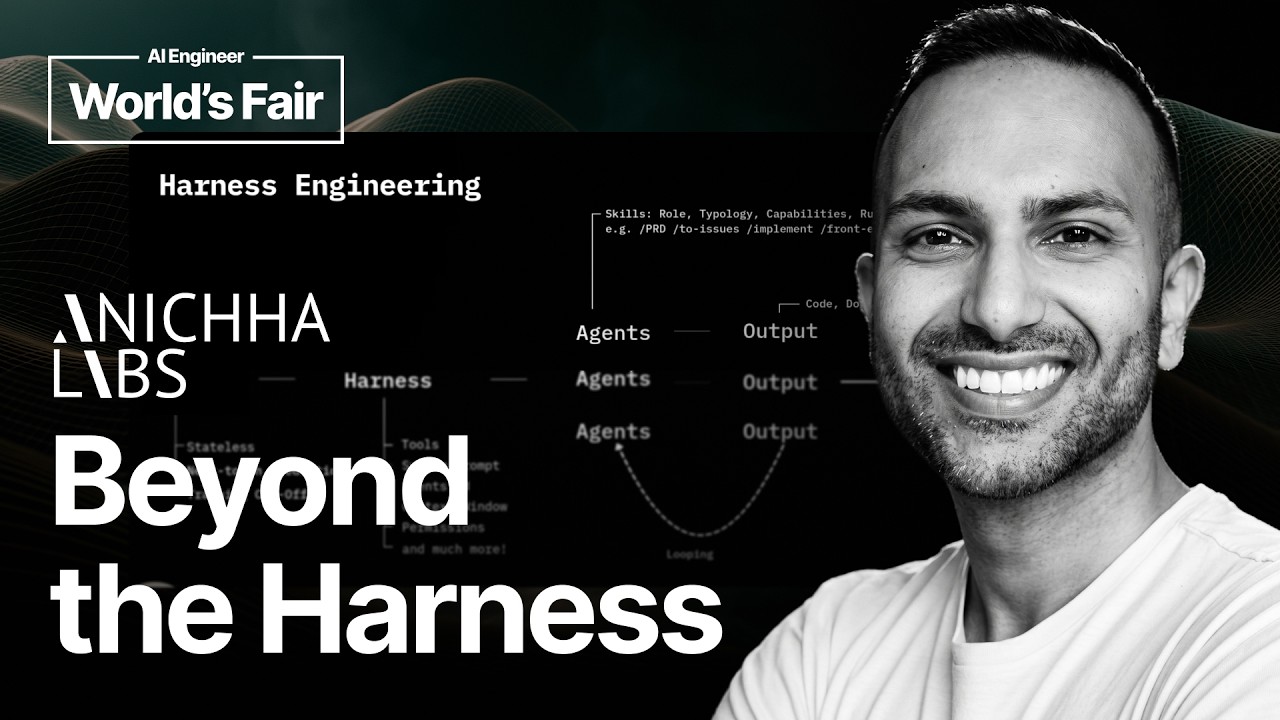
Beyond the Harness: A Journey Towards Adaptative Engineering - Rajiv Chandegra, Annicha Labs

Beyond the Harness: A Journey Towards Adaptative Engineering - Rajiv Chandegra, Annicha Labs

Rajiv Chandegra introduces adaptive engineering, a new AI design philosophy. He argues that as AI models become more powerful and interact with complex, dynamic real-world problems, the traditional 'fixed harness' approach—predictable but brittle—will become obsolete. Drawing on complexity science, he explains how adaptive engineering allows the AI system's structure (harness) to emerge and adapt dynamically during runtime, mirroring natural self-organizing systems. This shift redefines the engineer's role to designing constraints and fostering horizontal intelligence in multi-agent coordination.

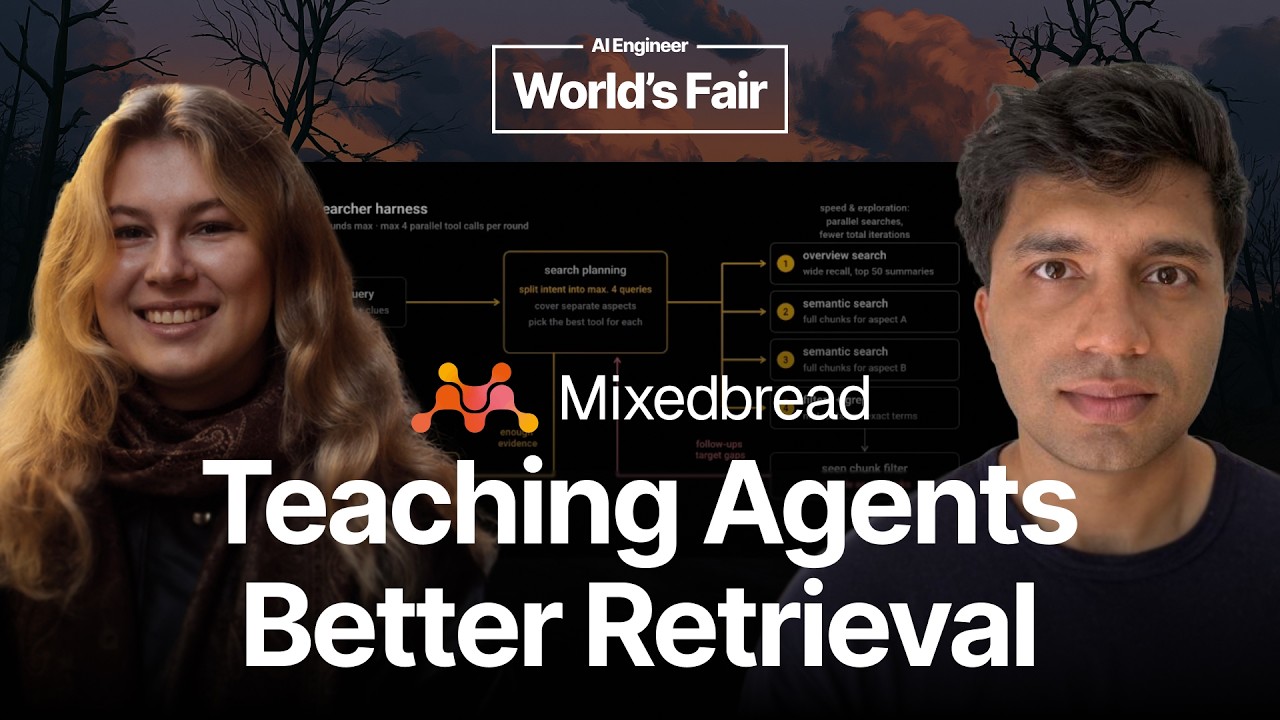
How we taught agents to use good retrieval - Hanna Lichtenberg, Mixedbread AI

How we taught agents to use good retrieval - Hanna Lichtenberg, Mixedbread AI

Mixedbread AI addresses the "Oracle Gap" – the disparity between LLM reasoning and retrieval capabilities – by developing agents trained to use advanced search tools effectively. They demonstrate how current LLMs generate poor queries due to training biases and introduce a sophisticated agent harness with diverse search tools and a unique training regimen, including supervised fine-tuning and reinforcement learning with custom rewards, to teach agents to form precise semantic queries. This approach significantly improves performance on benchmarks like Oblique Congress and Snowflake's Match QA, closing the gap between theoretical perfect retrieval and real-world agent performance.

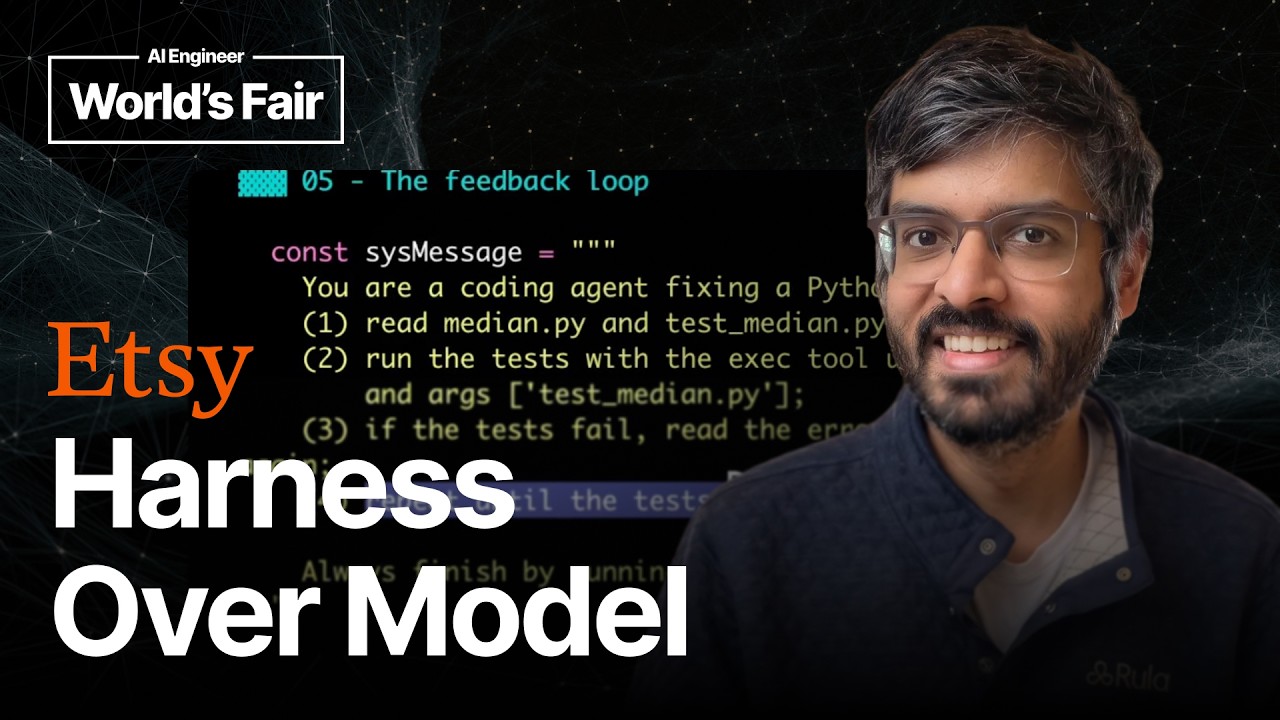
What if the harness mattered more than the model? - Aditya Bhargava, Etsy

What if the harness mattered more than the model? - Aditya Bhargava, Etsy

Aditya Bhargava argues that the 'harness' (the surrounding logic and tools) is more critical than the underlying LLM model itself for building effective AI agents. He proposes that focusing on sophisticated harness design, supported by his new language Agency, can enable local, open-source models to achieve performance comparable to large proprietary models, thereby reducing dependency and fostering innovation.