Posts

The Mathematical Foundations of Intelligence [Professor Yi Ma]

The Mathematical Foundations of Intelligence [Professor Yi Ma]

Professor Yi Ma presents a unified mathematical theory of intelligence built on two principles: parsimony and self-consistency. He challenges the notion that large language models (LLMs) understand, arguing they are sophisticated memorization systems, and demonstrates how architectures like the Transformer can be derived from the first principle of compression.
The Mathematical Foundations of Intelligence [Professor Yi Ma]

The Mathematical Foundations of Intelligence [Professor Yi Ma]

Professor Yi Ma presents a unified mathematical theory of intelligence based on two principles: Parsimony and Self-Consistency. He argues that current AI, particularly LLMs, excels at memorization by compressing already-compressed human knowledge (text), but fails at true abstraction and understanding. His framework, centered on maximizing the coding rate reduction of data, provides a first-principles derivation for architectures like Transformers (CRATE) and explains phenomena like the effectiveness of gradient descent through the concept of benign non-convex landscapes.

The arrival of AGI | Shane Legg (co-founder of DeepMind)

The arrival of AGI | Shane Legg (co-founder of DeepMind)

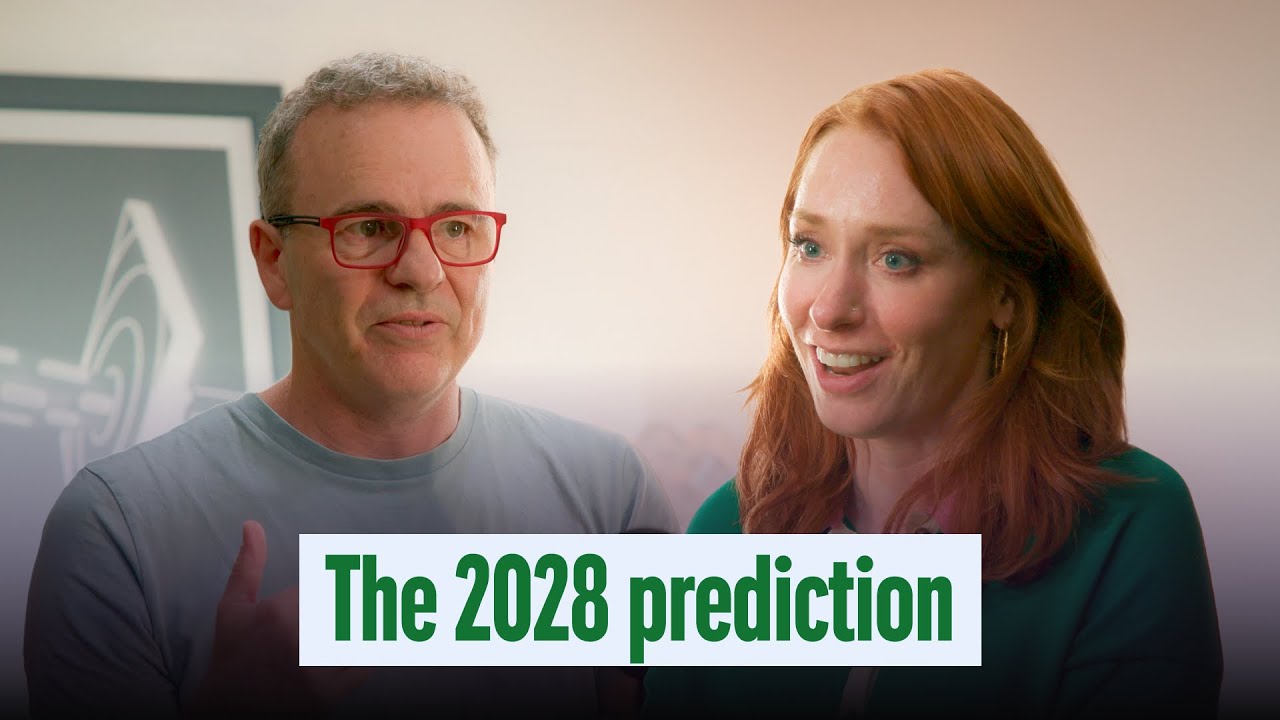
Shane Legg, Chief AGI Scientist at Google DeepMind, outlines his framework for AGI, predicting 'minimal AGI' within years and 'full AGI' within a decade. He details a path to more reliable systems and introduces 'System 2 Safety' for building ethical AI. Legg issues an urgent call for society to prepare for the massive economic and structural transformations that advanced AI will inevitably bring.

The arrival of AGI | Shane Legg (co-founder of DeepMind)

The arrival of AGI | Shane Legg (co-founder of DeepMind)

Shane Legg, Chief AGI Scientist at Google DeepMind, outlines his framework for AGI levels, predicts a 50% chance of minimal AGI by 2028, and discusses the profound societal and economic transformations that will follow.

How We Built a Leading Reasoning Model (Olmo 3)

How We Built a Leading Reasoning Model (Olmo 3)

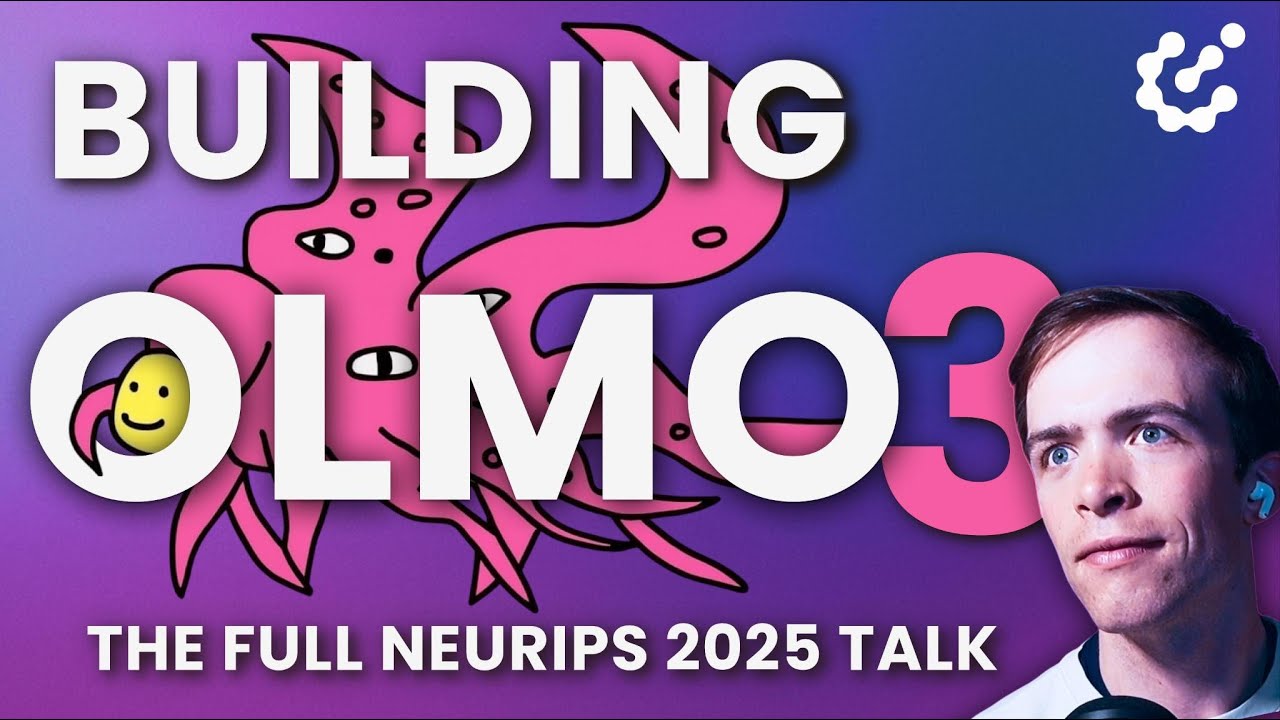
A comprehensive overview of the entire process behind building Olmo 3 Think, covering the full stack from pre-training architecture and data selection to the detailed post-training recipe involving SFT, DPO, and a deep dive into the advanced infrastructure for scaling Reinforcement Learning (RL). The summary also includes critical reflections on the challenges and nuances of evaluating modern reasoning models.

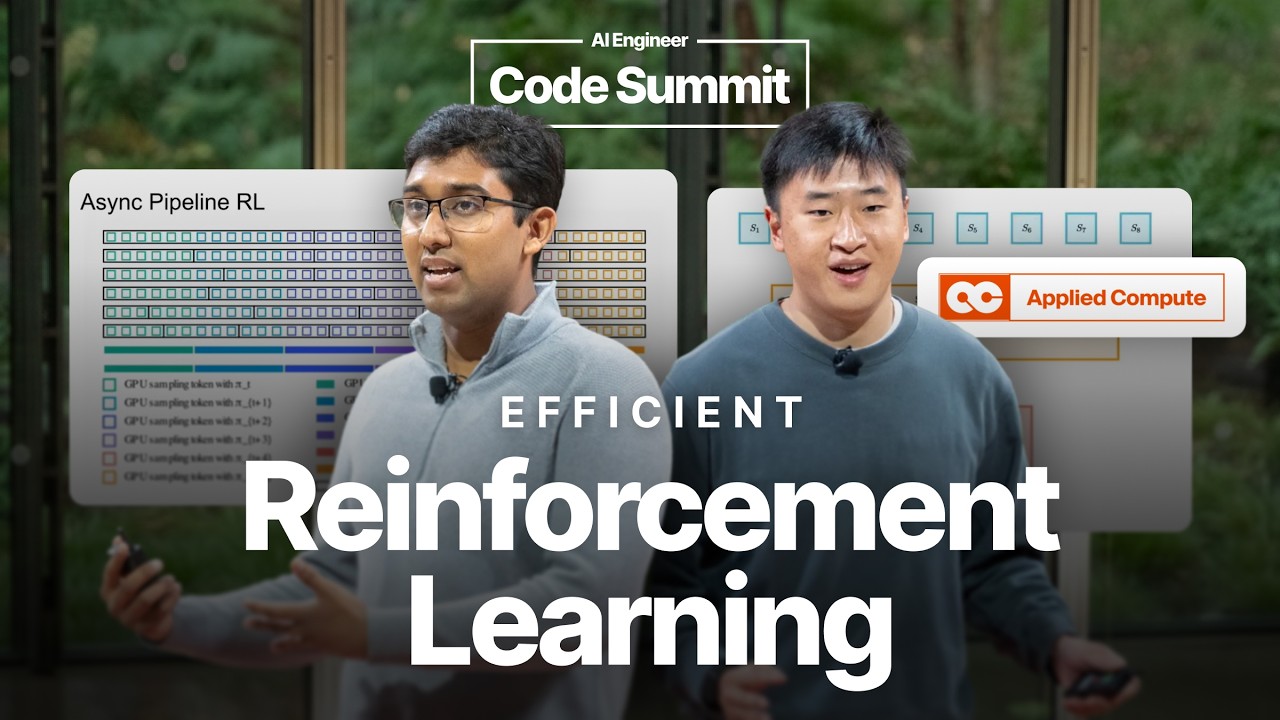
Efficient Reinforcement Learning – Rhythm Garg & Linden Li, Applied Compute

Efficient Reinforcement Learning – Rhythm Garg & Linden Li, Applied Compute

At Applied Compute, efficient Reinforcement Learning is critical for delivering business value. This talk explores the transition from inefficient synchronous RL to a high-throughput asynchronous 'Pipeline RL' system. The core challenge is managing 'staleness'—a side effect of in-flight weight updates that can destabilize training. The speakers detail their first-principles systems model, based on the Roofline model, used to simulate and find the optimal allocation of GPU resources between sampling and training, balancing throughput with algorithmic stability and achieving significant speedups.