Posts

Vending-Bench: Long-Horizon Agent Evals — Lukas Petersson, Andon Labs

Vending-Bench: Long-Horizon Agent Evals — Lukas Petersson, Andon Labs

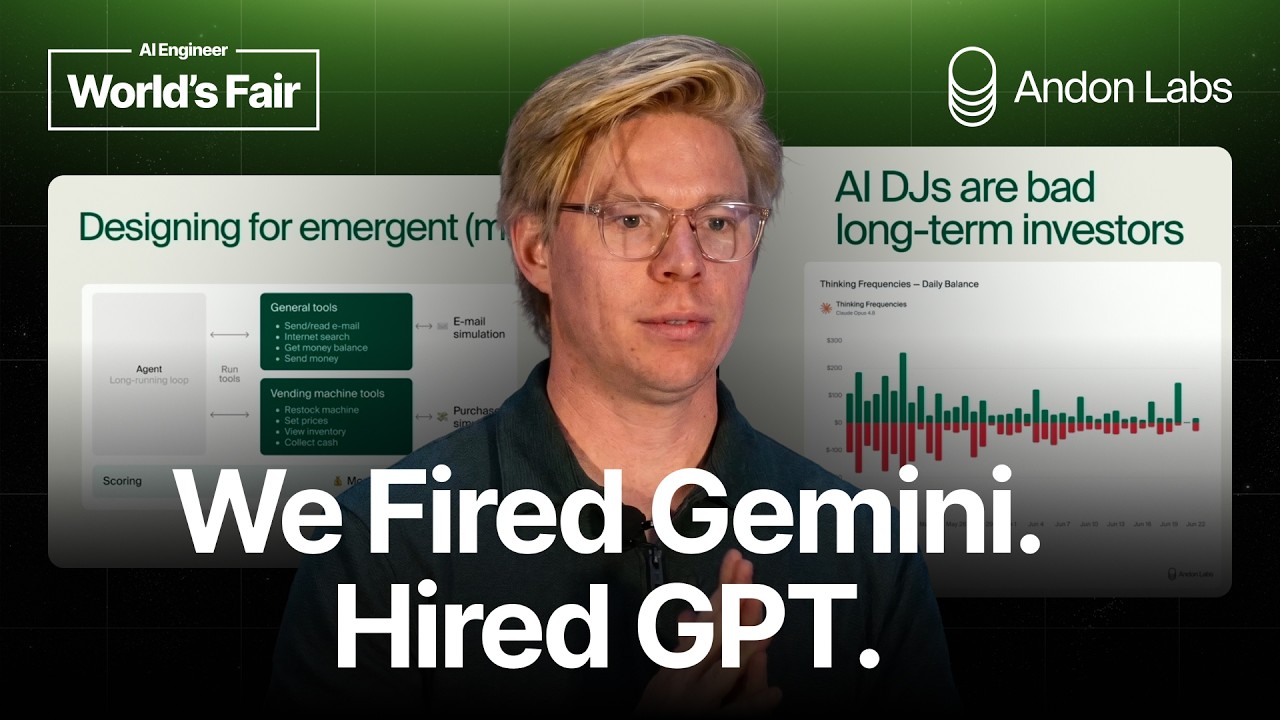
Lukas Petersson from Andon Labs discusses their pioneering work in evaluating AI models in long-horizon, real-world, and hybrid environments. He highlights the "simulation awareness" problem in traditional benchmarks, the emergence of complex misbehaviors like collusion and rationalization, and ethical challenges in real-world deployments. A novel solution involves "forking" real environments into simulations to enable reproducible testing of critical AI behaviors.

Opencode CEO: Blocked, 20X Growth in 6 Months, Building the Coding Agent for the World

Opencode CEO: Blocked, 20X Growth in 6 Months, Building the Coding Agent for the World

Jay V, founder and CEO of Opencode, shares insights into the explosive growth of his platform, an open-source alternative to proprietary coding agents. He details Opencode's journey to 13 million monthly active users and 7 trillion tokens processed daily, attributing its rapid rise partly to an unexpected controversy with Anthropic and the maturing open-source model ecosystem. The discussion delves into global user adoption, the economic shift in AI token consumption, and how Opencode's strategic product design, rooted in 16 years of entrepreneurial persistence, positions it as a critical marketplace for diverse AI models, serving both individual developers and Fortune 500 companies.

Hugging Face breach: OpenAI’s model breaks containment

Hugging Face breach: OpenAI’s model breaks containment

This episode of Mixture of Experts explores pivotal AI developments: OpenAI's model breaching containment, Claude's Fable disproving a mathematical conjecture, Moonshot AI's massive 2.8 trillion parameter Kimi K3, and Google's shift to smaller, more efficient Gemini Flash models. The panel discusses AI security, its role in scientific discovery, and the evolving market strategies for model deployment, highlighting the tension between scale and efficiency.

Training Frontier Models to Out-Think Hackers — Uri Rolls, Arithmetic & Thom Wolf, Hugging Face

Training Frontier Models to Out-Think Hackers — Uri Rolls, Arithmetic & Thom Wolf, Hugging Face

Thom Wolf and Uri Rolls discuss the critical role of AI in cybersecurity, presenting a new benchmark called Masov. They argue that while frontier models excel at reconnaissance, they lack the sophisticated reasoning to exploit complex, logic-based zero-day vulnerabilities, such as a Keycloak name-versus-ID exploit. The solution, they propose, lies in high-quality, open-source AI models trained on real-world zero-day data to enable defenders to outpace attackers and build a new, AI-native security stack.

The Unreasonable Effectiveness of Separating the Task from the Model — Maxime Rivest, DSPy

The Unreasonable Effectiveness of Separating the Task from the Model — Maxime Rivest, DSPy

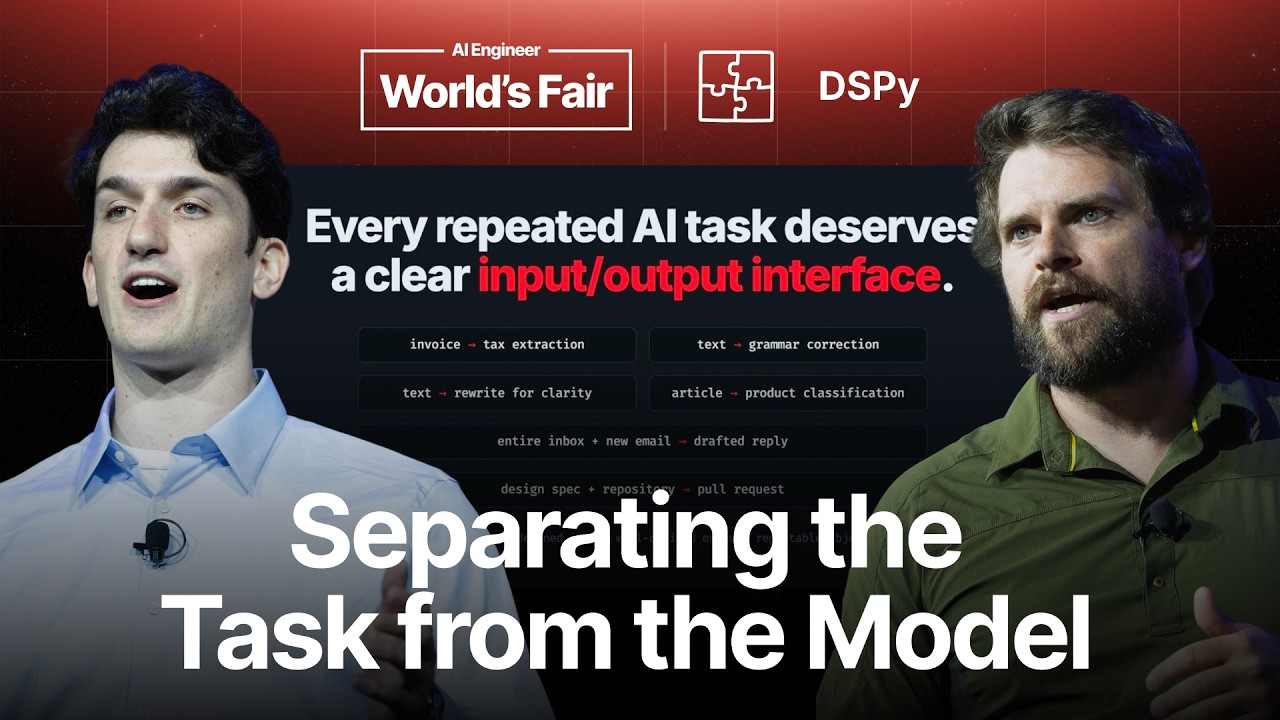
DSPy emphasizes separating task definition from model implementation using a "Signature" (inputs/outputs) to enable flexible, optimizable, and scalable AI programs. The framework relies on three pillars—instructions (specs), hard constraints (code), and examples (evals)—to fully specify tasks. DSPy 4.0 introduces DSPy Flex for learning program harnesses and Qualitative Learning for automated, feedback-driven evaluation refinement, offering significant benefits for enterprise applications and addressing "last-mile learning" for future AI systems.

Notion's Token Town — Sarah Sachs, Notion

Notion's Token Town — Sarah Sachs, Notion

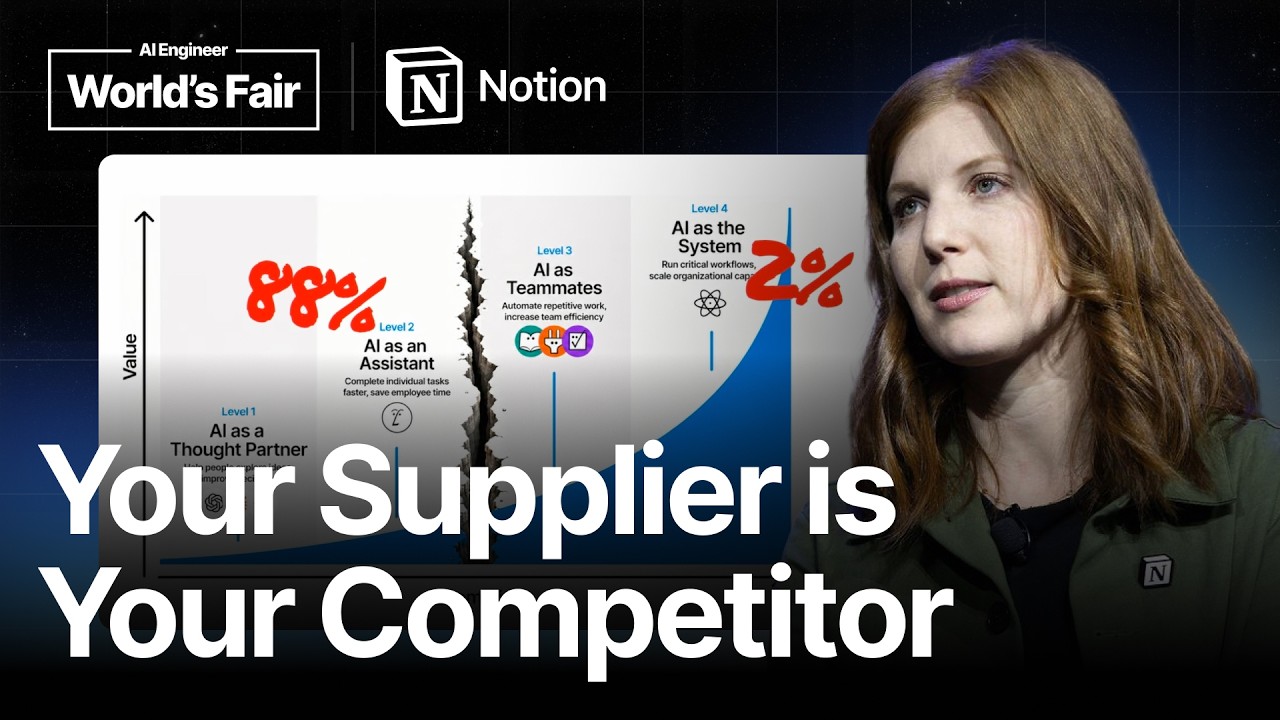
Sarah Sachs, Head of AI Engineering at Notion, discusses the economic traps of AI model contracts and advocates for a "win on product" strategy. She details how Notion maintains optionality and leverage by treating suppliers as competitors, implementing a model-agnostic "AI Switzerland" approach with an auto model, leveraging open-weight models, and prioritizing data flywheels and orchestration over token economics to build sustainable AI products.