Plenary Talk 2: Reimagining Education and Skilling for the Age of AI: Challenges & Opportunities
Manohar Swaminathan critiques India's "broken" education system, asserting AI offers a unique opportunity for fundamental redesign rather than incremental fixes. He introduces `Echaliva` (reimagined workflows) and `Shiksha` (agentic AI support) frameworks, underpinned by six pillars: pervasive AI access, learner agency in real-world problem-solving, portfolio-based assessment, micro-credentialing, lifelong learning, and faculty incentives focused on impact. The talk details how agentic AI, via tools like "lumens," can manage complex learning pathways and showcases examples from institutions implementing these transformative changes, extending to a "Pluriversity" model for large-scale skilling and enhanced employability.
Manohar Swaminathan critically assesses India’s education system, declaring it “completely broken” across all levels, from primary school to higher education. He contends that this systemic failure is often overlooked by a privileged few who, having benefited from it, are blind to its flaws. Swaminathan asserts that the advent of AI presents a “once-in-a-multiple-lifetime opportunity” to radically reimagine and rebuild education from the ground up, rather than resorting to superficial fixes. He underscores the urgency of this transformation, pointing to the widespread discontent among millions of unemployed or underemployed youth and the impending decline in job opportunities due to AI’s impact.
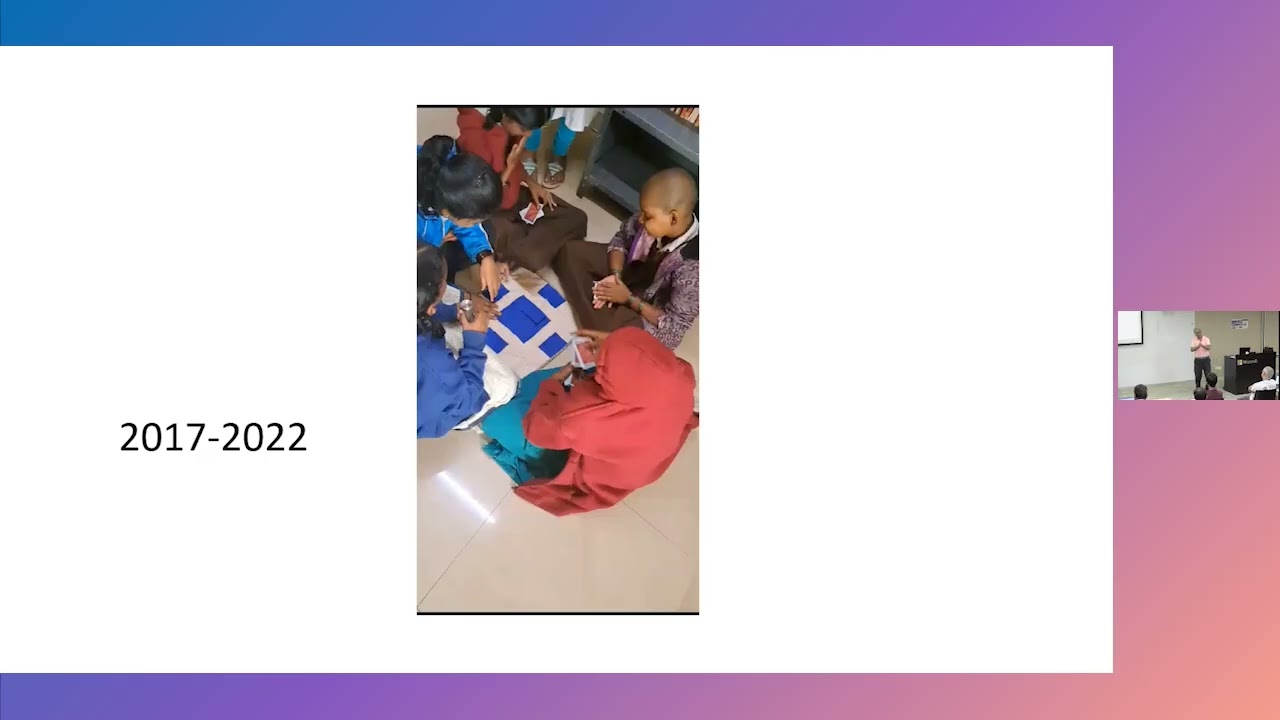
His perspective is deeply rooted in personal experience. Following his return to India in 1990 with triplets, he questioned conventional educational models. Influenced by educational philosophers like John Holt (whose book “How Children Fail” inspired the adage “learning happens in spite of teaching”), Swaminathan became a proponent of the “inherent joy of learning,” emphasizing learner agency and trust. These principles were reinforced by observations of children, such as tribal students using computers in Chhattisgarh and blind children mastering numeracy through card games. An earlier, unsuccessful endeavor to reform engineering education further solidified his conviction that systemic change is necessary.
Swaminathan introduces two complementary frameworks:
- Echaliva: A comprehensive redesign of the educational workflow. He warns against using AI merely to “amplify a bad thing” (e.g., enhancing assessment in a flawed grading system) and instead advocates for a holistic transformation.
- Shiksha: An agentic AI framework designed to enable and support this radical pedagogical shift, providing the necessary technological infrastructure.
These frameworks are mutually dependent, forming a “Yin and Yang” relationship. Swaminathan delineates six core pillars for this reimagined education system:
- Pervasive AI Access and Assessment: Given that employers expect AI proficiency, students should have continuous access to AI throughout their academic journey, including during examinations. This necessitates a fundamental re-evaluation of what, how, and why teaching occurs, shifting focus to critical “threshold concepts.”
- Learner Agency Through Problem-Solving: Learning should be motivated by allowing students the agency to choose and solve real-world problems. Faculty members are encouraged to collaborate in identifying significant, long-term challenges relevant to their institutions and local communities. Incoming students would then select a problem to tackle, guided by faculty (e.g., IIT Jammu’s initiative to make its campus carbon-neutral).
- Redefined Assessment: Traditional grading systems (A/B/C/D) should be replaced with A (accomplished), B (best effort), and I (in progress). Student learning would be evaluated through a “validated portfolio of artifacts” that documents their efforts, successes, and learning from failures in problem-solving. These portfolios would be transparent and publicly accessible.
- Micro-Credentialing and Flexible Pathways: To address issues of educational attrition and facilitate lifelong learning, education should be broken down into small, stackable “micro-credentials.” This approach enables individuals to accumulate credits over time, supporting continuous learning and re-entry into formal education, aligning with existing policy frameworks like the National Credit Framework.
- Lifelong Learning and Earning: The proposed system aims to integrate learning and earning, allowing individuals to “learn while earning and earn while learning.” This challenges the conventional model where one must pause earning to learn or vice-versa, echoing John Dewey’s philosophy that “education is not preparation for life; it is life itself.”
- Realigned Faculty Incentives: Current faculty incentive structures, which prioritize publications and H-index, are deemed obsolete, particularly given AI’s capacity to generate academic content. New incentives should reward faculty for fostering student learning, solving real-world problems, and making tangible contributions to their institutions and communities, even if these do not result in traditional academic publications.
The Shiksha framework leverages agentic AI tools to manage the complexity of this new system. For large institutions, AI is crucial for tracking student progress, portfolios, and micro-credentials. Key tools include:
- Lumens: Personalized, lifelong AI agents for each student and faculty member, accumulating all learning records, artifacts, and projects, linked to national identification systems.
- Portfolio Management Agents: These AI agents would manage and match student capabilities (demonstrated through their portfolios) with employer requirements, effectively replacing traditional CGPA-based hiring.
Swaminathan highlights several institutions already embracing these principles:
- IIT Jammu: Launching a “unified engineering” B.Tech program that dissolves departmental boundaries, focusing on engineers as problem-solvers from day one.
- Kerala Digital University: Offering an MSSE in Advanced AI, which integrates students from diverse academic backgrounds into challenge-based learning rooted in local environmental issues.
- Transdisciplinary Health Sciences University (TDU), Karnataka: Developing an MSSE in Ayurveda Biology, which merges disparate fields like molecular genetics and Ayurvedic plant biology into integrated courses, promoting collaborative learning between faculty and students.
- Lakshmi Vidya Sa, Maduray: A school adopting a similar model from the seventh standard, focusing on local problems (e.g., the Maduray Malikai flower) and empowering teachers.
He extends this vision to address India’s significant skilling crisis, proposing a “Pluriversity” model. This concept involves institutions in close proximity collaborating to share expertise and enable faculty and students to solve large-scale local problems (e.g., a cyber-security initiative in Kalaburagi where a reputable college trains local students and teachers, who then educate their communities, earning micro-credits). This holistic approach aims to unify fragmented efforts in education, skilling, and literacy, transitioning from merely distributing frameworks to fostering diverse, organic growth.
In his concluding remarks, Swaminathan addresses young people, emphasizing that AI alone cannot solve “messy problems” such as those in education, health, and community development. These challenges demand human engagement, fostering values like play, friendship, wonder, loyalty, and joy. He believes that a redesigned educational system, by promoting a community-driven, problem-solving ethos, will liberate both faculty and students, rekindling the inherent joy in learning and teaching.