Amex Global Business Travel: The World’s First AI Take Private with Long Lake CEO Alexander Taubman
Alexander Taubman, CEO of Long Lake Management, details their pioneering 'AI take-private' strategy, using a horizontal AI platform called Nexus to acquire and transform traditional service businesses. He explains why ownership trumps SaaS for driving real-world AI adoption, focusing on growth and creating a positive-sum flywheel for employees and customers, exemplified by their acquisition of Amex GBT.
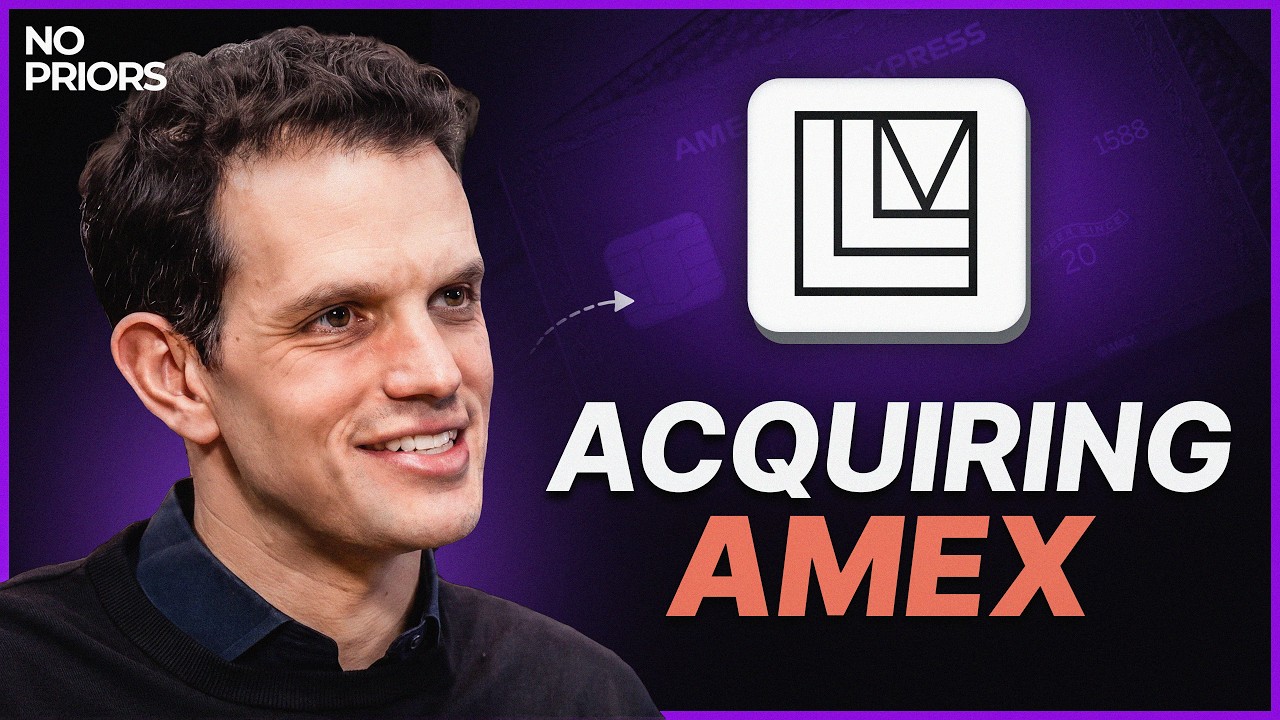
Long Lake Management is pioneering a strategy of “AI-driven roll-ups,” acquiring traditional companies and transforming them with artificial intelligence. This approach culminated in the world’s first “AI take-private” with the agreement to acquire American Express Global Business Travel (Amex GBT), a 111-year-old company, for $6.3 billion. The core thesis is that AI can fundamentally reshape the real economy, not by cutting costs, but by driving unprecedented growth and efficiency.
The Nexus Platform: A Horizontal AI Engine
At the heart of Long Lake’s strategy is Nexus, a proprietary, horizontal AI platform.
- Shared Infrastructure: Approximately 80% of the Nexus infrastructure is shared across all of Long Lake’s verticals, from HOA management to specialty tax services. The remaining 20% involves significant customization and applied AI engineering to deploy it into specific end markets.
- Workflow Integration: Nexus acts as an abstraction layer between AI models (it is model-agnostic) and the messy reality of a business’s data sources, skills, and workflows. Deployment involves mapping these workflows, cleaning data, and creating integrations to make information accessible to the models.
- Rapid Deployment: What initially took over a year to implement in early acquisitions can now be deployed within days of partnering with a new company. This allows for immediate time savings for employees and a rapid path to seeing tangible business outcomes.
The “AI Roll-up” Model: Why Acquire Instead of Sell?
Long Lake deliberately chose to acquire companies rather than follow the traditional Silicon Valley model of selling software as a service. This ownership model provides deeper alignment and allows for better business outcomes.
- Tighter Feedback Loops: By owning the companies, the engineers’ “customer” becomes the internal employees. This creates a powerful, co-located feedback loop, similar to the “skunk works” concept where engineers and factory workers are in the same location. Long Lake’s engineers are constantly in the field with team members, understanding their pain points and building solutions directly into Nexus.
- Driving Change Management: A significant barrier to AI adoption is the difficulty of changing established processes and organizational design. As an owner, Long Lake can mandate and manage these changes directly, something a software vendor cannot do.
- Cross-Functional Expertise: This model requires a rare combination of three core competencies:
- Private Equity: Expertise in sourcing and executing acquisitions.
- AI Engineering: The ability to build and deploy the sophisticated Nexus platform.
- Change Management: The hands-on operational skill to integrate AI into legacy workflows.
A Positive-Sum Vision for AI
Contrary to the common narrative of AI leading to job cuts, Long Lake’s approach is “incredibly positive-sum.” The focus is not on cost savings, but on driving growth, enhancing customer experience, and empowering employees.
“We actually think AI makes people more productive and when you have more productive people, you want more of them. And when your customers are happier, you grow faster. You actually create jobs and everybody wins.”
This philosophy creates a self-perpetuating flywheel:
- Employee Empowerment: AI tools eliminate mundane tasks (25-30% of a workday), giving employees “superpowers.” This leads to higher productivity and satisfaction.
- Talent Magnet: With the best tools, employees are more productive and can be paid more. This, combined with a better work environment, results in high employee retention and makes Long Lake’s companies a “talent magnet” in their respective industries.
- Improved Customer Outcomes: Empowered employees deliver faster response times, fewer errors, and a better overall service. This drives customer retention and satisfaction up.
- Accelerated Growth: Happier customers and more efficient operations allow the companies to grow significantly faster. Businesses that were growing 0-5% annually are now seeing 20%+ organic growth.
Transforming Service Businesses into Software-like Compounders
The application of AI fundamentally changes the economics of labor-intensive service businesses. Traditionally, growing by 20% meant increasing headcount by 20%—a painful process with low incremental margins.
With AI, existing teams can handle 30-40% more capacity. This breaks the linear relationship between revenue and headcount, allowing the business to scale with high incremental margins, much like a software company. This makes growth exciting and highly profitable again for the founders and management teams who roll over their equity alongside Long Lake.
This strategy is built on a long-term, Berkshire Hathaway-style philosophy of buying and holding great companies forever. The transformative effects of AI are not realized in a typical 2-3 year private equity cycle; they are compounding advantages that build over many years. The vision for Amex GBT is to build a “multi-decade compounding machine” by giving its travel counselors AI superpowers to deliver unparalleled customer excellence.