Understanding AI Agent Hallucination in AI Systems
Learn about AI hallucinations, why they occur in autonomous agents, and how they pose new risks as AI takes action. Discover key mitigation strategies including data grounding, tool-based reasoning, scope control, and human-in-the-loop interventions to ensure reliable AI performance.
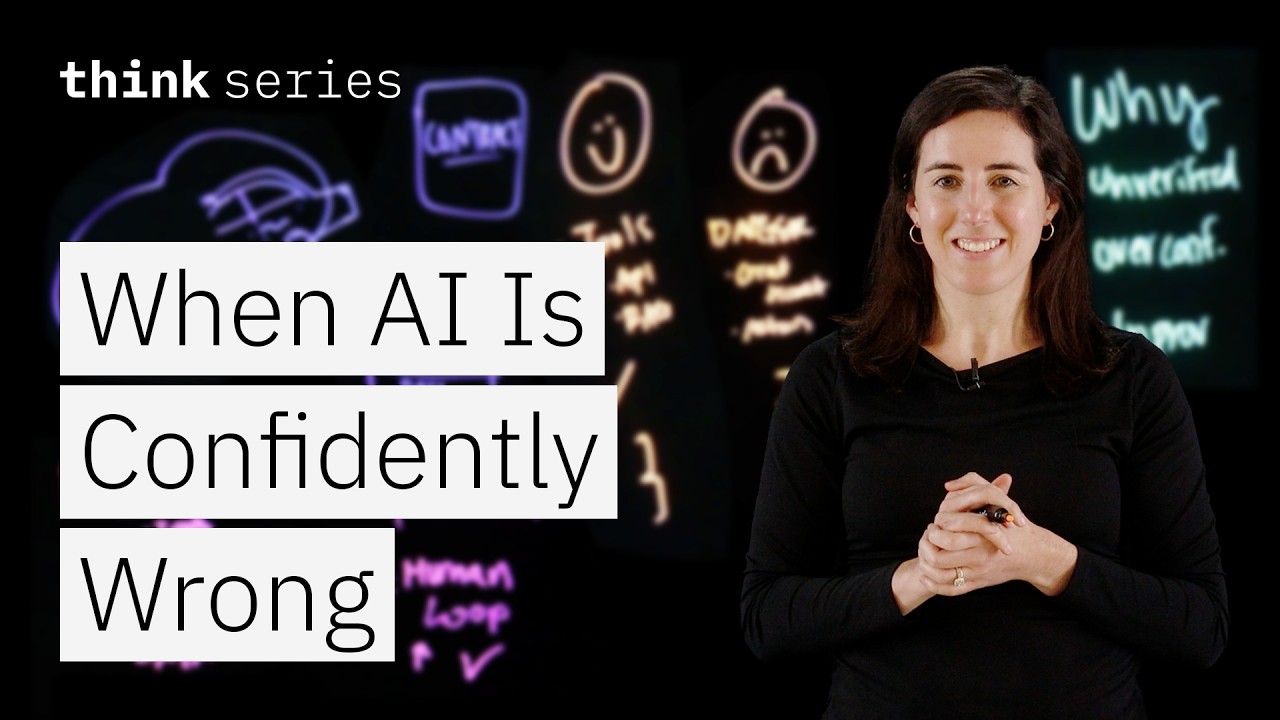
AI hallucination, where systems confidently provide incorrect information, is a critical issue that evolves significantly with the advent of autonomous AI agents. Unlike simple chatbots, agents are designed to plan, reason, use tools, and take action, fundamentally altering the risk landscape.
The Dual Impact of Agents on Hallucination
Reduced Hallucination with Tools: The good news is that agents can hallucinate less when grounded with tools such as search utilities, data connectors, enterprise knowledge sources, APIs, and retrieval systems like RAG. When an agent can truly verify and check information, rather than merely guessing, hallucination is dramatically reduced. This is akin to equipping a GPS with satellite view and real-time traffic data, enabling it to navigate based on verified, current information.
Increased Risk and Opportunities for Error: Conversely, the multi-step reasoning capabilities inherent in agents can increase output and create more opportunities for errors. Some advanced thinking models have shown higher hallucination rates. Critically, agents introduce more danger and risk because they don’t just answer questions; they take actions like creating tickets, updating data, or scheduling meetings. If the underlying reasoning chain is flawed or the context is thin, an agent can take a wrong action with complete confidence, leading to tangible negative consequences.
Why Hallucination Persists
Despite advancements, even the most capable models still hallucinate due to fundamental design and training paradigms:
- Generation of Plausible, Unverified Answers: Models are built to predict what a correct answer sounds like, generating
plausible or unverified answersrather than verified truths. They aren’t ’looking things up’ in the human sense but completing patterns based on their training data. - Training for Confidence: AI models are
trained to be confident. Fluency is rewarded, and hesitation is penalized. This incentivizes models to sound sure, even when uncertain, leading tooverconfidence. While newer models are improving at indicating uncertainty (“I don’t know”), it remains an exception. - Gap Filling and Improvisation: When data is missing or ambiguous, models do not pause for clarification; they
improvise. This improvisation, presented confidently, sounds exactly like a real answer. For example, an agent might invent a contract date if unable to retrieve it, leading to operational discrepancies.
Strategies to Mitigate Hallucination in Agents
Addressing hallucination requires intentional design choices:
- Ground the Agent in Data: The most effective way to reduce hallucination is to provide the agent with a
reliable map– connecting it directly tosources of truth. This includes systems like SharePoint, CRM, contract repositories, and APIs. Just as a consultant needs access to actual business systems, an agent requires real-time, accurate data to ground its responses and actions. - Utilize Tool-Based Reasoning: Instead of relying solely on
pure text prediction(which is like a colleague calculating a burn rate from memory), agents should be empowered withaccess to tools. This allows them to check reality through calculators, APIs, or other utilities before responding. An agent that verifies information via tools is more trustworthy than one that merely predicts. - Control the Agent’s Scope: Hallucination escalates when an agent operates without defined boundaries.
Define explicit lanesfor the agent, specifying what it can and cannot do, its approved data sources, and workflows requiring human sign-off. A tighter scope reduces the model’s opportunity towanderand produce confidently incorrect answers outside its area of expertise. - Implement a Human-in-the-Loop: Not all decisions should be fully automated. For high-importance tasks, AI should function as a
fast, thorough first draft, with a human reviewing and providing final approval. Thishuman in the loopadds judgment, context, and accountability that models cannot replicate, ensuring critical decisions are well-vetted. This is a crucial element of good system design, acting like a driver overseeing cruise control on a highway.
Ultimately, preventing AI from driving us “into the lake” is not solely about the model’s capabilities but about the design choices made in integrating and managing these powerful systems.