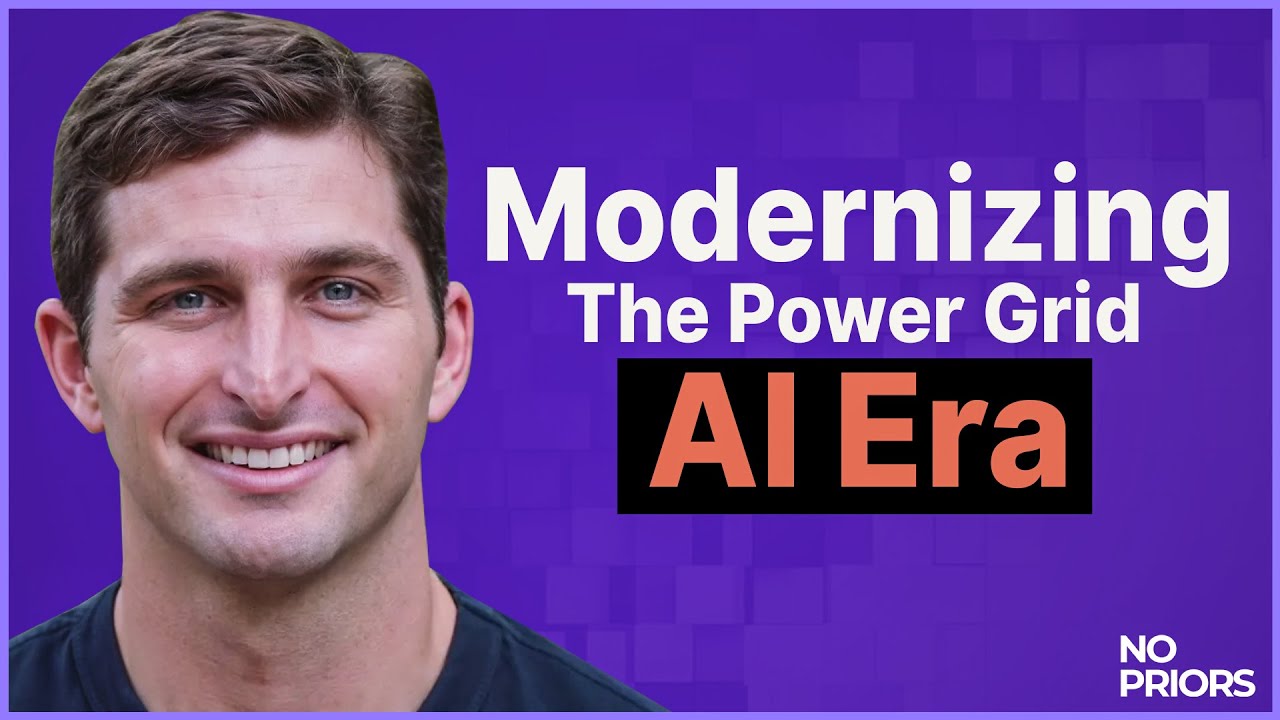
No Priors Ep. 136 | Base Power CEO and Co-Founder Zach Dell
Base Power CEO Zach Dell explains that the explosive energy demand from AI and other industries is creating a crisis for the electric grid. He outlines Base Power's mission to lower electricity costs through a vertically integrated model, building a distributed power plant using smart batteries in homes. This approach tackles the rising cost of energy transmission and modernizes the grid for an era of energy abundance.
Energy is the fundamental cost input for everything in the modern world, from manufacturing and transportation to the internet and AI data centers. As demand for energy shifts from a historical 2% annual growth rate to a projected 10%, driven largely by AI, meeting this demand without dramatic cost increases is a critical challenge. The core mission at Base Power is to lower the cost of electricity for everyone, creating a world of energy abundance that will foster human prosperity.
The Modern Power Company: A New Paradigm
The energy industry is undergoing a paradigm shift. The last five decades were defined by coal and natural gas, but the next five will be defined by solar and storage, driven by plummeting cost curves. Inspired by how companies like Tesla, SpaceX, and Anduril brought a technology-focused, R&D-driven approach to disrupt incumbent-dominated industries, Base Power was founded to be the modern power company of the electric era.
The strategy is built on a compounding cost advantage achieved through vertical integration. Base Power executes across the entire value chain:
- Design & Manufacturing: We design and manufacture our own batteries.
- Installation & Operation: We install, own, and operate these assets.
- Direct-to-Consumer: We sell power directly to homeowners, starting in Texas.
When a customer signs up, Base Power becomes their electricity provider and installs a smart battery in their home. When the grid is stable, this battery serves the grid. When the grid goes down, it provides backup power to the home. This model allows customers to save 10-20% on their monthly electricity bills.
A Distributed, Software-Defined Power Plant
At its core, Base Power is building the world’s largest distributed power plant. By installing energy assets across the grid and connecting them with sophisticated software, we can intelligently bid them into the energy market. The income generated from these grid services is used to drive down costs for customers.
This approach directly addresses a fundamental inefficiency in the U.S. grid. The grid has a peak capacity of around 700 gigawatts, but average demand is closer to 300 gigawatts. This latent capacity can be unlocked by using batteries and software to timeshift electricity, storing it when it’s abundant and cheap (e.g., peak solar production) and deploying it during peak demand.
The Economics of an Electron: Making vs. Moving
The cost of electricity can be broken down into two components:
- The Cost to Make the Electron: This cost has decreased significantly over the last 20 years, largely thanks to the build-out of solar and wind generation.
- The Cost to Move the Electron: This cost, associated with transmission and distribution via poles and wires, has risen dramatically due to aging infrastructure and a perverse incentive structure for utilities.
Regulated utilities earn a predefined rate of return on capital expenditures (capex). This incentivizes them to build more infrastructure rather than innovate on efficiency. Base Power’s strategy directly attacks the rising cost of moving energy by generating and storing it locally, effectively competing with the poles and wires, not the generators.
The Future of Generation: Solar, Storage, and Nuclear
While solar and storage are the most economically viable technologies today, we are fans of all forms of energy generation.
- Solar & Storage: The deployment of solar is happening faster than predicted, and it is now the most cost-effective way to generate power. Storage is the key enabler, solving for the intermittency of renewables.
- Nuclear: While there is great work happening in nuclear, especially with smaller modular reactors, it is currently too expensive and slow to deploy. The rate of cost reduction in solar and storage may outpace nuclear’s path to economic viability.
Ultimately, even with centralized generation like nuclear, you still need to move the power. A distributed grid with storage at the edge helps smooth supply and demand regardless of the generation source.
Capital, Culture, and the Competitive Flywheel
Building a modern energy company is a highly capital-intensive endeavor. Accessing low-cost capital is a critical competitive advantage. Our recent $1 billion fundraise is the “ante to sit at the poker table” against the largest, most well-capitalized companies on the planet. By proving the predictability of our cash flows, we can access larger, lower-cost pools of capital over time.
This effort requires a world-class, multi-disciplinary team. We’ve brought together leaders from SpaceX, Tesla, Anduril, and other top-tier technology companies to solve this complex coordination problem. The culture is defined by:
- Urgency with Focus: We ruthlessly prioritize and ensure everyone understands how their work ladders up to the company’s North Star goals.
- Radical Transparency: Key metrics are displayed on TVs throughout the office, making it clear what matters.
- A Competitive Mindset: We view our work as a competitive endeavor and are here to win.
This combination of technology, capital, and talent creates a powerful flywheel. In a commodity business like electricity, cost is everything.
- Greater scale leads to lower costs.
- Lower costs lead to higher returns.
- These returns are passed to customers as lower prices.
- Lower prices drive more demand and thus more scale.
This is how we will achieve our mission to drive down the cost of energy and increase its reliability for everyone.