America's Autism Crisis and How AI Can Fix Science with NIH Director Jay Bhattacharya
Dr. Jay Bhattacharya, Director of the NIH, discusses his vision for reforming the institution by adopting a Silicon Valley-style portfolio approach to funding, tackling the replication crisis, supporting early-career scientists, and leveraging AI to accelerate biomedical research while rebuilding public trust in science.
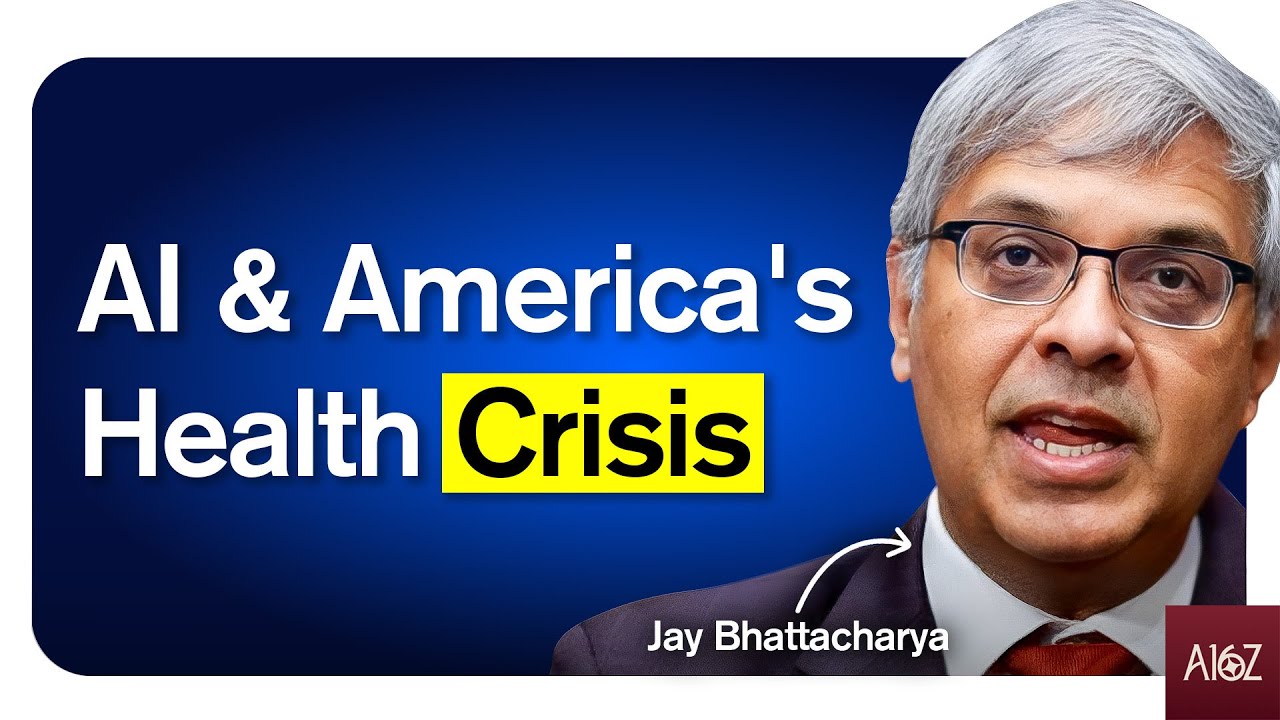
Dr. Jay Bhattacharya, appointed Director of the National Institutes of Health (NIH), outlines his strategic vision for reforming the institution to better serve the American people by tackling chronic diseases, improving scientific rigor, and fostering innovation.
New Research Initiatives on Autism and Preterm Birth
The NIH has launched a new initiative to address the rising prevalence of autism, dedicating $50 million in new funding for 13 teams under an “autism data science initiative”. Key developments include:
- Leucovorin (Folinic Acid): Highlighting its effectiveness for a subset of children with autism who have difficulty processing folate in the brain. The drug has been shown to restore speech in up to 20% of these children and lead to significant improvements in up to 60%. Efforts are underway to make it more widely available through changes in Medicare and Medicaid payment policies.
- Tylenol (Acetaminophen) Caution: New evidence, including a recent study from the Harvard School of Public Health, suggests a correlation between acetaminophen use during pregnancy and subsequent autism diagnoses. While not a cause for panic, it serves as a reminder for prudent use of any medicine, especially during pregnancy. The FDA is working on revised guidelines for parents.
- Preterm Birth: A new initiative is also focused on understanding why the U.S. has worse preterm birth outcomes than Europe, aiming to produce clinical insights and answers for families.
Adopting a “Silicon Valley Spirit” for the NIH
A core theme of the reform is to manage the NIH’s $35 billion+ budget like a venture capital portfolio, embracing risk and innovation to achieve significant breakthroughs rather than incremental progress.
- Portfolio Management: The current culture is too conservative, funding ideas that are often 6-8 years old. The NIH should operate like a VC firm where a portfolio of 50 projects is considered a success even if 49 fail, as long as the 50th is a transformative success like Google. Failure should be seen as a productive learning opportunity, not a punishable offense.
- Allocation vs. Execution:
- Allocation: Deciding which disease areas to fund is a political and societal question that should reflect the will and needs of the American people. Congress and the public play a vital role in setting these macro-priorities.
- Execution: Once funds are allocated to an area, it is the job of scientists and the NIH to execute by selecting the most promising research projects. This is where scientific expertise is paramount. The goal is to empower institute directors to build portfolios that align with their strategic plans, rather than just funding what peer-review panels approve.
Tackling the Replication Crisis and Restoring Rigor
Public trust and scientific progress depend on rigorous, reproducible science. The standard for truth in science must be replication by independent teams.
- Causes of the Crisis:
- Science is hard: It’s easy for scientists to convince themselves they are right.
- Volume and Specialization: The vast number of scientists and specialized fields makes it difficult to check each other’s work.
- Lack of Incentives: There are few career rewards for scientists who spend their time replicating the work of others.
- Solution: The NIH must actively invest in and prioritize replication to ensure the science it funds is robust.
Supporting Early-Career Investigators
The ecosystem has become hostile to young scientists, stifling innovation.
- The Problem: In the 1980s, the median age for a first major NIH grant was 35; now, it’s the mid-40s. New ideas often come from younger investigators, but the system forces them through multiple postdocs and favors established researchers.
- The Solution:
- Institute directors will be incentivized and judged on their ability to empower early-career investigators.
- Established investigators will be evaluated on their mentorship and how well they advance the careers of the junior scientists working with them.
Academic Freedom and Rebuilding Public Trust
Trust in public health, severely damaged during the pandemic, can only be rebuilt through a commitment to scientific integrity and humility.
- Restoring Academic Freedom: Dr. Bhattacharya has eliminated the rule requiring internal NIH scientists to seek supervisor permission to publish. He advocates for more openness in scientific publishing and is working on policies to challenge the expensive, for-profit journal system.
- Communicating Uncertainty: Public health officials must be honest about what they don’t know. During the pandemic, officials conveyed certainty about measures like plexiglass and school closures where the science was weak, eroding public trust. The correct approach is to be humble, admit uncertainty, and explain the process of finding answers, much like a medical student learns to say, “I don’t know, but I will find out for you.”
- Respecting the Public: The American public is intelligent and understands that science is difficult. Trust is built by presenting data, allowing for disagreement, and respecting people’s intelligence, not by blaming them for misunderstanding.
The Role of AI in the Future of Science
AI is viewed as a critical tool for augmenting, not replacing, human scientists.
- Applications:
- Accelerating Drug Development: AlphaFold has already revolutionized protein folding, turbocharging the discovery process.
- Improving Clinical Care: AI can assist radiologists in catching anomalies and help doctors focus on patients by automating electronic health record entries.
- Challenges: Research is needed to solve problems like AI hallucinations to ensure patient safety. The NIH is also working to manage the “noise” from a flood of AI-generated grant applications by limiting the number of submissions a person can make. Ultimately, AI is excellent at summarizing existing knowledge but is not yet capable of the paradigm-challenging thought that drives true scientific breakthroughs.