Juicebox: AI Agents for the Hiring Process
Co-founders David Paffenholz and Ishan Gupta share their journey building Juicebox, an AI recruiting platform. They discuss their pivot from a music app to leveraging LLMs for talent search, how they achieved product-market fit, and their vision for AI agents that automate top-of-funnel recruiting.
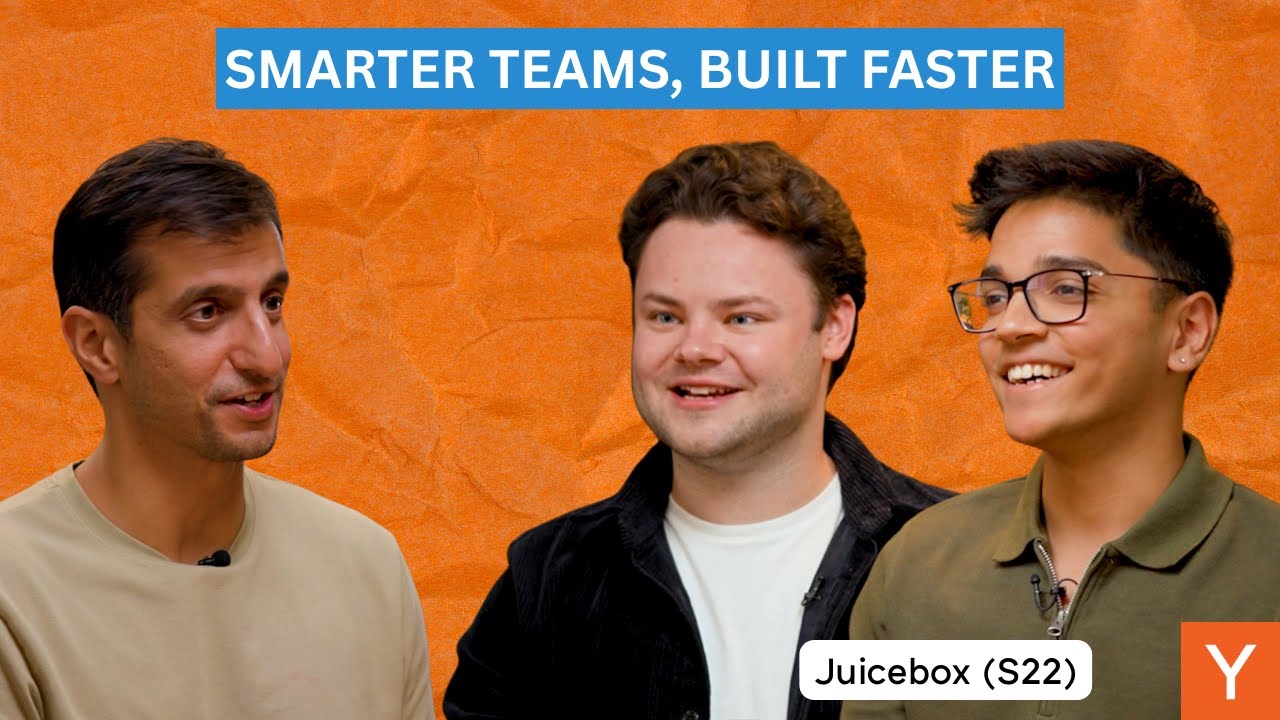
Juicebox is an AI-powered recruiting platform designed to help companies find, engage, and evaluate talent more efficiently using Large Language Models (LLMs). The platform, which serves over 2,000 customers including high-growth tech companies like Perplexity, Ramp, and Cursor, aims to automate the entire top-of-funnel recruiting workflow. This allows recruiters to move from manual, time-intensive tasks to a more strategic, AI-assisted, or fully AI-led approach.
The Founding Journey: From Music App to Recruiting
The path to building an AI recruiting platform was not linear for co-founders David Paffenholz and Ishan Gupta. They initially entered Y Combinator in 2022 with a completely different idea: a music discovery app called “Juicebox,” a play on “Jukebox.” This consumer-facing app, which connected to Spotify and offered 15-second song snippets, eventually pivoted to a merchandise marketplace concept.
The founders credit YC with exposing them to the vast world of B2B software. Realizing the potential to solve business problems, they drew on their own unconventional work experiences with freelance and independent projects. Their first B2B idea was a marketplace to connect companies with talent. This venture brought them into the recruiting space, where they interacted closely with talent teams and discovered that the core pain point wasn’t the lack of marketplaces, but the inadequacy of the tools recruiters were using.
The LLM Catalyst and Finding Product-Market Fit
The launch of ChatGPT in late 2022 was the critical turning point. The founders recognized that LLMs’ ability to draw nuanced inferences from unstructured data was a perfect match for the core task of recruiting: understanding and evaluating candidate profiles. This insight provided a clear path to a solution they were convicted about.
Their initial MVP was a simple LLM-powered application that could structure interview questions and summarize profiles. While the product was basic, it achieved “message market fit” immediately—potential customers understood the vision and expressed strong interest. However, it lacked true “product market fit.” Early users found the tool interesting but not yet reliable enough to integrate into their daily workflow, largely due to the limitations of models like GPT-3.5 and the lack of a surrounding product suite.
The team achieved product-market fit by obsessing over the core user need: finding the right talent. For four to five months, they meticulously analyzed every search query performed on the platform, using a Slack integration to monitor searches in real-time. This intense focus on improving search quality, combined with the release of more capable models like GPT-4, led to an inflection point where users began inviting their teams and integrating Juicebox into their recruiting stack.
Building an AI-Native Recruiting Platform
Juicebox is built around the philosophy of “following the recruiter” and automating the most time-consuming parts of their workflow. This has led to the development of several core AI-driven features:
- Semantic Search: Instead of relying on rigid filters, recruiters can use natural language to describe their ideal candidate (e.g., “software engineers in the Bay Area with experience in deep learning algorithms”). The platform uses LLMs and vector search to understand the semantic meaning and surface the most relevant profiles.
- Autopilot: This feature analyzes a company’s entire talent pool, deeply evaluating each profile against the specific requirements of an open role to identify the best fits.
- AI Agents: Agents are autonomous workers that manage the top-of-funnel sourcing process. A recruiter calibrates an agent by providing feedback on initial profile suggestions. Once calibrated, the agent can autonomously source and contact qualified candidates, effectively multiplying a single recruiter’s output.
The Vision for AI in Recruiting
The founders envision a future where the default answer to scaling hiring is not just adding more human recruiters, but augmenting the team with Juicebox’s AI agents. This paradigm shift frees recruiters from repetitive, low-value work like sifting through hundreds of profiles and sending cold outreach.
The role of the recruiter evolves to focus on high-value, human-centric tasks: building deep relationships with candidates, selling the company’s vision, and managing a fleet of AI agents. This not only increases efficiency but also improves the quality of candidate interactions. The platform also empowers non-recruiters, like founders and hiring managers, to effectively manage their own hiring processes.
For founders competing in the “AI talent wars,” the advice is twofold:
- Be Personally Involved: Founders should directly engage with top candidates, mirroring how leaders like Mark Zuckerberg personally recruit top researchers. A fast, dedicated process is a startup’s competitive advantage.
- Sell the Mission: Clearly articulate why an engineer should dedicate their time to your company’s vision. This unique purpose is a powerful differentiator against larger competitors.