935: Global Issues Accelerated by AI (with Solutions), feat. Stephanie Hare
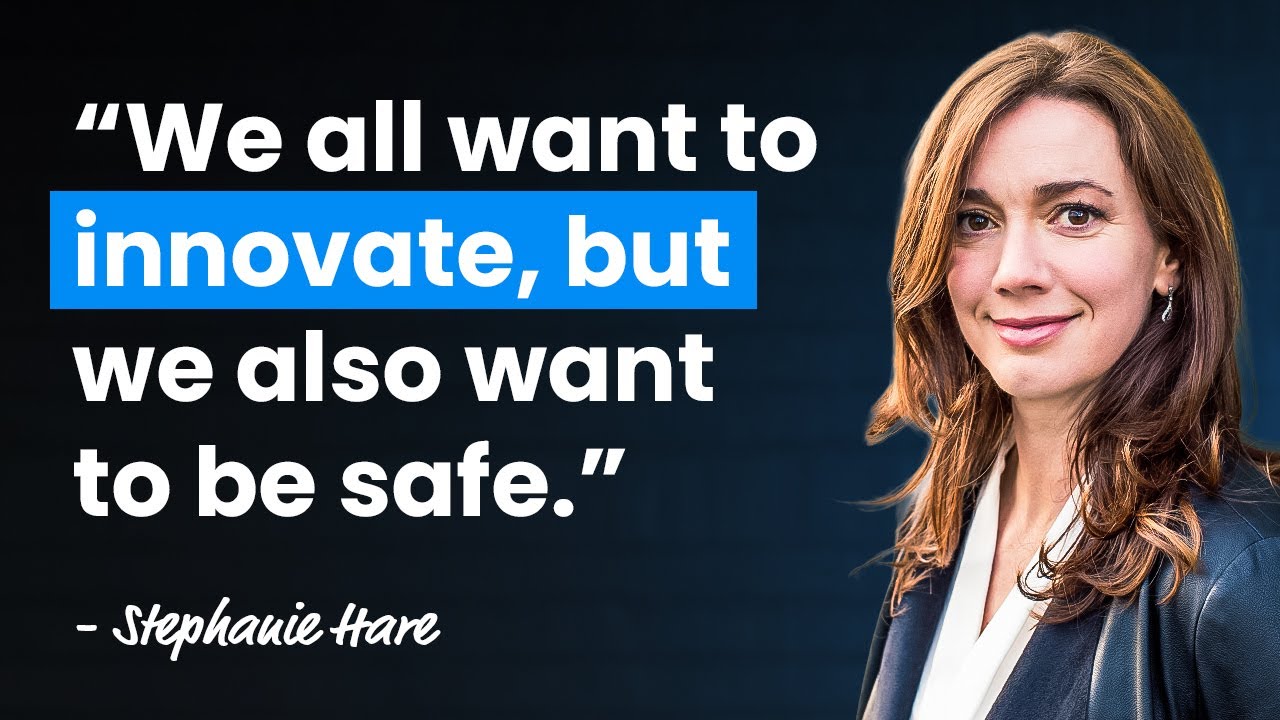
Researcher Stephanie Hare discusses the need for a guiding ethos in AI, similar to the Hippocratic Oath, to balance innovation with harm reduction. She explores the challenges of regulating technology, the degradation of the internet with AI-generated content, and the critical collision between AI's infrastructural demands and the climate crisis.
Defining Technology Ethics: A Broader Perspective
Technology ethics can be understood through a simple but powerful question: “How do we maximize the benefits and minimize the harms of anything that we are investing in, building, or using that could be described as a technology or a tool?” This definition extends beyond modern gadgets like GPT to include processes, automation, and manufacturing. The relationship between humans and tools is a fundamental part of what defines us as a species.
This requires a robust philosophical toolkit. In many Anglo-Saxon countries, there’s a lack of formal training in philosophy, leaving professionals without the intellectual tools for ethical debate. To make this accessible, one can envision philosophy as a Swiss Army knife, with its six main branches (e.g., metaphysics, epistemology, ethics) as different tools. If one tool, like ethics, isn’t sufficient to solve a problem, the others can be brought to bear. Crucially, this perspective must be global, incorporating traditions from China, Russia, Africa, and beyond, as technology is a global phenomenon.
A Hippocratic Oath for Technologists
The idea of a Hippocratic Oath for technology is not about creating another layer of enforceable regulation. Instead, it serves as a guiding ethos—a code of conduct that fosters a sense of community and professional responsibility. Many professions, including law, accounting, and the civil service, have strong ethical codes that instill a commitment to something larger than oneself.
The original oath’s principle of “first, do no harm” is a good starting point. However, a more realistic and utilitarian approach is to focus on maximizing benefits while consciously minimizing harms. This acknowledges that creating anything of value often involves trade-offs (“you cannot make the omelette without breaking some eggs”). The key is to make these choices mindfully, with knowledge and consent.
Regulating Use Cases, Not Tools
A common concern is that regulation stifles innovation. However, we accept and expect stringent safety standards in aviation, automotive manufacturing, and medicine. These regulations act as a guarantee of quality and an accountability mechanism, fostering trust rather than hindering progress.
A useful analogy is the difference between a fork and a meal.
- The Tool (The Fork): A fork is a versatile tool. It can be used for its intended purpose of eating, but it can also be used to cause harm.
- The Use Case (The Meal): We don’t need to regulate forks. We need to regulate harmful use cases, such as stabbing someone.
Regulation should be light, clear, and easy to enforce, targeting specific negative outcomes (the “no killing, no stabbing”) while leaving the tool itself free for innovation.
The Degradation of the Digital Sphere and The Path Back
The internet has evolved from the “serendipitous chaos” of its early days to the “ad-infested, low-attention-span fakeness” of modern social media. The rise of “AI slop”—low-quality, machine-generated content—threatens to accelerate this decline, a process some have termed “enshittification.”
Perhaps the only way to get people offline and re-engage with the real world is to let the internet burn itself down. As its utility decreases, we may be forced to return to more durable forms of knowledge and connection, like books, libraries, and in-person conversations.
To counter this personally, one can be more intentional with online activity:
- Remove social media and news apps from phones to break the cycle of addiction and outrage.
- Engage with content directly on websites rather than through curated feeds.
- Spend more time with people in the physical world to maintain a grounded perspective.
The Collision of AI Ambition and Physical Infrastructure
There is a significant disconnect between the ambitious national AI strategies being announced and the real-world limitations of our physical infrastructure. The UK, for example, has a goal to “mainline AI into the veins of the nation,” yet its electricity grid is old, expensive, and not fit for purpose.
This presents a “wicked problem”—a complex issue where every proposed solution creates new problems.
- Energy and Water: AI data centers are immensely energy- and water-intensive. Building them stresses aging grids and competes for scarce water resources, especially during increasingly common droughts and heatwaves.
- Geopolitics: Where these data centers are built has national security implications. Placing critical infrastructure in politically volatile regions introduces new risks.
- Execution: Grand promises often collide with the mundane reality of infrastructure projects, which are slow, expensive, and difficult to execute.
The Ultimate Priority: Climate and Biodiversity
While AI, the metaverse, and cybersecurity are all significant, the most urgent frontier shaping our future is the climate crisis and biodiversity loss. This is the fundamental challenge that affects everything else. AI has the potential to be part of the solution, but it is not currently being prioritized in that way. We already have many of the solutions needed to live more sustainably; the challenge is not one of invention but of implementation and political will. The focus should be on becoming more respectful members of the planet.