Tokenless

Interactive discovery

Explore the topic map

Follow the connections between themes, people, and ideas across the Tokenless archive in an interactive topic modeling map.

Machine Learning

View All
Frontier results, on device - RL Nabors, Arize

Frontier results, on device - RL Nabors, Arize

RL Nabors discusses the significant costs associated with using frontier AI models, covering security, latency, and financial implications. She introduces a framework for right-sizing AI solutions by leveraging smaller, task-specific models and Small Language Models (SLMs). The framework details how to prove task feasibility, establish success criteria with golden datasets, conduct capability evaluations (using tools like Phoenix), and select the most appropriate "Small And Good Enough" (SAGE) model. Nabors further demonstrates how prompt engineering, particularly few-shot prompting, and post-processing can close performance gaps with larger models, while advocating for continuous regression evaluations to maintain performance integrity. The overarching message is to "prototype big, deploy small" to optimize AI deployments.

Research to Reality: Bringing Frontier ML Research to Production - Vaidas Razgaitis, Higharc

Research to Reality: Bringing Frontier ML Research to Production - Vaidas Razgaitis, Higharc

Vaidas Razgaitis, Senior Research Engineer at Higharc, shares three tactical tips to accelerate the transition of novel AI/ML research into production-ready features. He emphasizes addressing the critical handoff challenge between ML researchers and software engineers through structured documentation (Research Prototype Taxonomy Document), a well-organized monorepo utilizing decoupled microservices, and a systematic approach to code decomposition and PR review. These strategies aim to improve legibility, maintainability, and delivery speed for ML-driven products.

Uncertainty-Guided Data Augmentation for Engineers | Deep Dive - Yongmin Kwon

Uncertainty-Guided Data Augmentation for Engineers | Deep Dive - Yongmin Kwon

This session details a data-efficient method for training engineering surrogate models by using uncertainty quantification (UQ) to guide geometric data augmentation. Instead of random deformations, the approach lets the deep ensemble model identify its own knowledge gaps (epistemic uncertainty), then uses Free-Form Deformation (FFD) to generate new shapes specifically in those uncertain regions. This ensures every expensive simulation run yields maximally informative data, significantly improving model accuracy for a fixed computational budget across domains like structural mechanics and aerodynamics.

Artificial Intelligence

View All
The Benchmark With No Instructions — Tufa Labs (ARC-AGI-3)

The Benchmark With No Instructions — Tufa Labs (ARC-AGI-3)

Tim Scarfe visits Tufa Labs to explore their top-ranking ARC-AGI-3 system, a benchmark for agentic intelligence that challenges LLMs in goal discovery and action efficiency. The team delves into the complexities of fractured representations, the role of human priors, and whether LLMs truly plan or merely simulate it effectively, all while balancing the bitter lesson with AI safety concerns.

Session on Reasoning

Session on Reasoning

This session features two talks on optimizing and verifying AI reasoning. Hongxiang Fan discusses cross-stack co-design for efficient AI, focusing on Test-Time Scaling (TTS) challenges, optimal verification granularity, and system-level optimizations for edge deployments. Nagarajan Natarajan introduces 'Advancing Verified Reasoning' with the InterVent platform, aiming to ensure AI agents comply with complex policies through formal verification, dynamic steering, and leveraging verification signals for training. Both emphasize addressing the computational and reliability costs of advanced AI.

Multimodal & Embodied Intelligence (Pt 1), Panel on Multimodal AI: Progress, Pitfalls, Possibilities

Multimodal & Embodied Intelligence (Pt 1), Panel on Multimodal AI: Progress, Pitfalls, Possibilities

This session explored Multimodal and Embodied Intelligence, featuring talks on hybrid AI in robotics (classical vs. end-to-end), AI's role in healthcare (focusing on NCDs, deployment, and uncertainty modeling), and fundamental perception challenges in multimodal reasoning (using educational video QA and visual puzzles). A panel discussed the impact of foundation models, the blurred lines between AGI and human-like AI, critical deployment pitfalls (human factors, efficiency, architectural limits), and future directions, emphasizing task-specific models and the redefinition of 'foundation models.'

Technology

View All
Are Your Tests Slowing You Down? • Trisha Gee • GOTO 2025

Are Your Tests Slowing You Down? • Trisha Gee • GOTO 2025

Trisha Gee delivers a compelling talk on Developer Productivity Engineering (DPE) for testing, dissecting common pain points in writing, troubleshooting, and running tests. She advocates for strategic use of IDEs, advanced tooling like build caches and predictive test selection (leveraging ML), and a disciplined approach to test design to overcome these challenges, emphasizing that good tests serve as crucial living documentation.

The new post-quantum cryptography executive order. Plus: What is Q-Day, really?

The new post-quantum cryptography executive order. Plus: What is Q-Day, really?

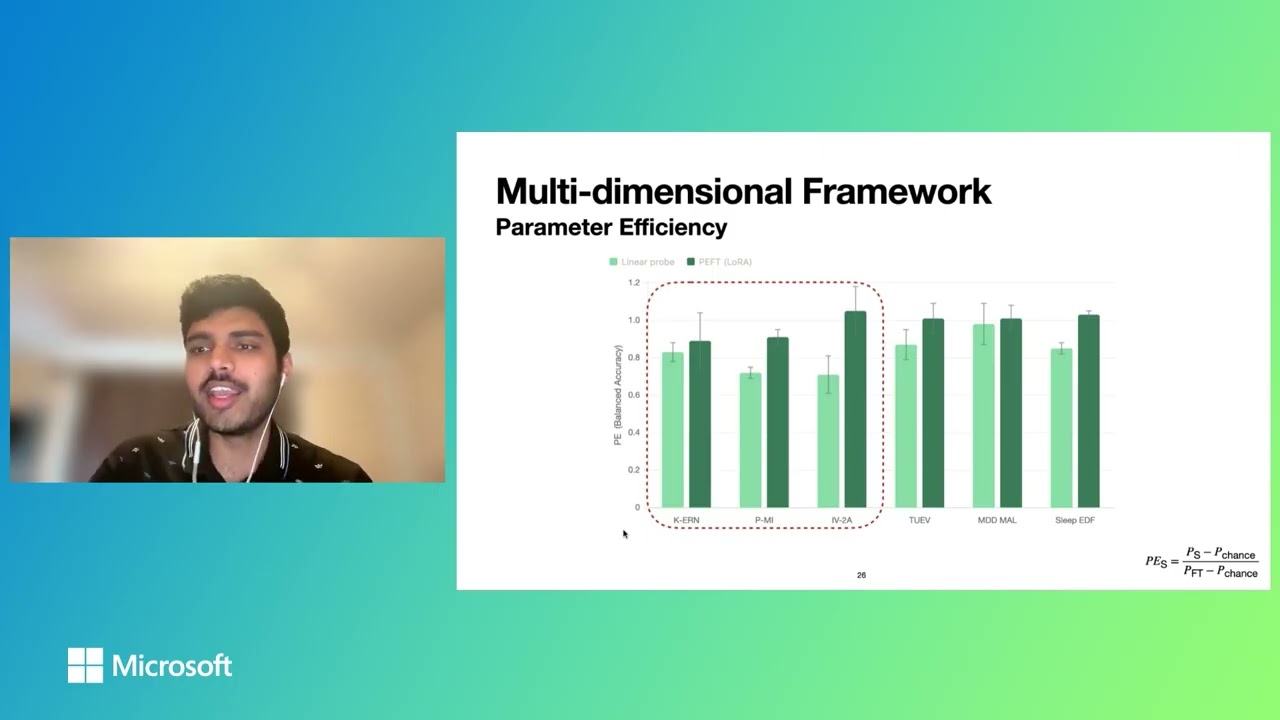
This episode delves into Q-Day, the anticipated future when quantum computers can break public key cryptography, and the U.S. Executive Order accelerating the transition to post-quantum cryptography. Experts discuss why Q-Day is a gradual process rather than a sudden event, the critical importance of "crypto-agility" as a long-term strategy, and the necessity for organizations to begin immediate discovery and planning to secure data against "collect now, decrypt later" threats. The discussion also touches upon the broader, transformative benefits of quantum computing beyond just security.

Plenary Talk 3​: Challenges and research opportunities for global hyperscale services

Plenary Talk 3​: Challenges and research opportunities for global hyperscale services

Jim Kleewein's talk outlines the immense challenges and critical research opportunities in building and operating global hyperscale services like Microsoft 365 and Azure. He emphasizes that at this scale, traditional approaches fail, necessitating a "new golden age of applied research" across areas like continuous availability, data management, security, and sustainability. Kleewein also discusses AI's powerful but limited role, stressing the ongoing need for human expertise, and highlights the ethical imperative to prevent failures that can have life-or-death consequences.


Recent Post

State of the Art of Container Security • Adrian Mouat & Charles Humble • GOTO 2026

State of the Art of Container Security • Adrian Mouat & Charles Humble • GOTO 2026

Adrian Mouat from Chainguard discusses the evolution of container security, highlighting the flaws of traditional Linux distributions for modern container workflows. He explains how Chainguard's approach of building minimal, 'distroless' images from source using Wolfi addresses the noise from vulnerability scanners, and delves into the importance of SBOMs, attestations, and a 'defense in depth' strategy, contextualized by recent major security incidents like the XZ Utils backdoor and Shai-hulud attacks.

What If Intelligence Didn't Evolve? It "Was There" From the Start! - Blaise Agüera y Arcas

What If Intelligence Didn't Evolve? It "Was There" From the Start! - Blaise Agüera y Arcas

Blaise Agüera y Arcas presents a groundbreaking perspective on the origin of life, arguing that it is an emergent computational phenomenon. Through an artificial life experiment named 'BFF', he demonstrates how complex, self-replicating programs spontaneously arise from random noise, not through mutation, but through a process of fusion and merger he calls symbiogenesis. This talk re-frames evolution, suggesting that life has been computational from its inception and that intelligence is a natural consequence of biological computers modeling each other.

How to be a CEO when AI breaks all the old playbooks | Sequoia CEO Coach Brian Halligan

How to be a CEO when AI breaks all the old playbooks | Sequoia CEO Coach Brian Halligan

Brian Halligan, HubSpot co-founder and Sequoia's in-house CEO coach, shares his frameworks for building and scaling tech companies. He details his LOCKS framework for evaluating founders, offers tactical advice on hiring "spiky" talent over consensus picks, and discusses the future of go-to-market strategies in the age of AI.

AI Privilege Escalation: Agentic Identity & Prompt Injection Risks

AI Privilege Escalation: Agentic Identity & Prompt Injection Risks

Grant Miller explains how malicious actors exploit AI systems through privilege escalation, using techniques like prompt injection to compromise over-permissioned AI agents. The summary covers key mitigation strategies, including the principle of least privilege, robust access governance, dynamic context-based access, and continuous monitoring to secure agentic systems.

Clean Architecture with Python • Sam Keen & Max Kirchoff

Clean Architecture with Python • Sam Keen & Max Kirchoff

Sam Keen, author of 'Clean Architecture with Python', discusses with Max Kirchoff how to pragmatically apply architectural principles to Python. They explore the critical link between architecture and testability, thoughtful dependency management through layered design, and how these principles enhance modern AI-assisted coding workflows by providing clear structure and scope.

Copilot usage reveals AI adoption patterns

Copilot usage reveals AI adoption patterns

The panel discusses Microsoft's Copilot usage report, the "Ralph Wiggum" prompting strategy for coding agents, the significance of the India AI Impact Summit, and the implications of AI companies advertising during the Super Bowl.

Stay In The Loop! Subscribe to Our Newsletter.

Get updates straight to your inbox. No spam, just useful content.