Tokenless

Machine Learning

View All
Post-training best-in-class models in 2025

Post-training best-in-class models in 2025

An expert overview of post-training techniques for language models, covering the entire workflow from data generation and curation to advanced algorithms like Supervised Fine-Tuning (SFT), Direct Preference Optimization (DPO), and Reinforcement Learning (RL), along with practical advice on evaluation and iteration.
Anaximander: Interactive Orchestration and Evaluation of Geospatial Foundation Models

Anaximander: Interactive Orchestration and Evaluation of Geospatial Foundation Models

This talk introduces Anaximander, a system designed to bridge the gap between traditional, GUI-driven Geographic Information System (GIS) workflows and modern, code-heavy machine learning practices. Anaximander integrates geospatial foundation models directly into QGIS, allowing experts to interactively orchestrate, run, and evaluate models for tasks like semantic segmentation and object detection on satellite imagery.

Efficient Reinforcement Learning – Rhythm Garg & Linden Li, Applied Compute

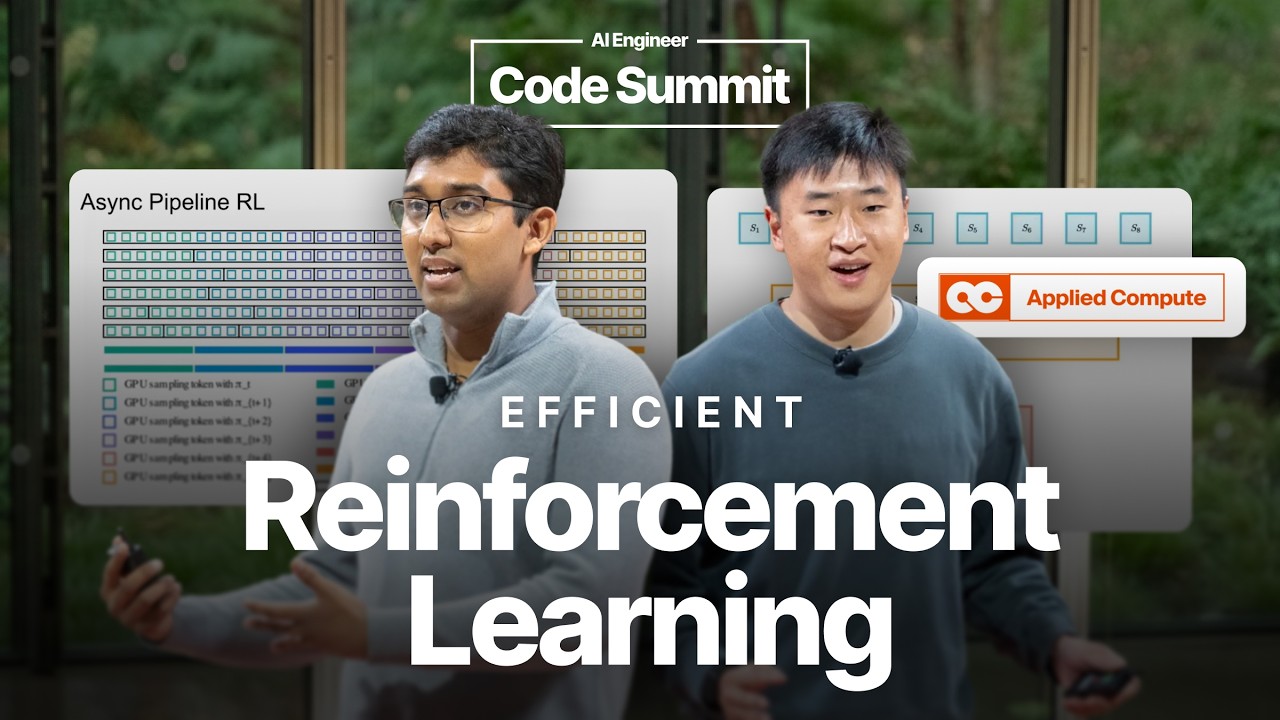
Efficient Reinforcement Learning – Rhythm Garg & Linden Li, Applied Compute

At Applied Compute, efficient Reinforcement Learning is critical for delivering business value. This talk explores the transition from inefficient synchronous RL to a high-throughput asynchronous 'Pipeline RL' system. The core challenge is managing 'staleness'—a side effect of in-flight weight updates that can destabilize training. The speakers detail their first-principles systems model, based on the Roofline model, used to simulate and find the optimal allocation of GPU resources between sampling and training, balancing throughput with algorithmic stability and achieving significant speedups.

Artificial Intelligence

View All
Lessons from Building Open Source Libraries

Lessons from Building Open Source Libraries

Thomas Wolf, co-founder of Hugging Face, discusses his journey from physics to AI, the power of open-source models to accelerate innovation, the practical challenges of productionalizing AI demos, and why the biggest opportunities for founders now lie in the application layer on top of powerful foundation models.

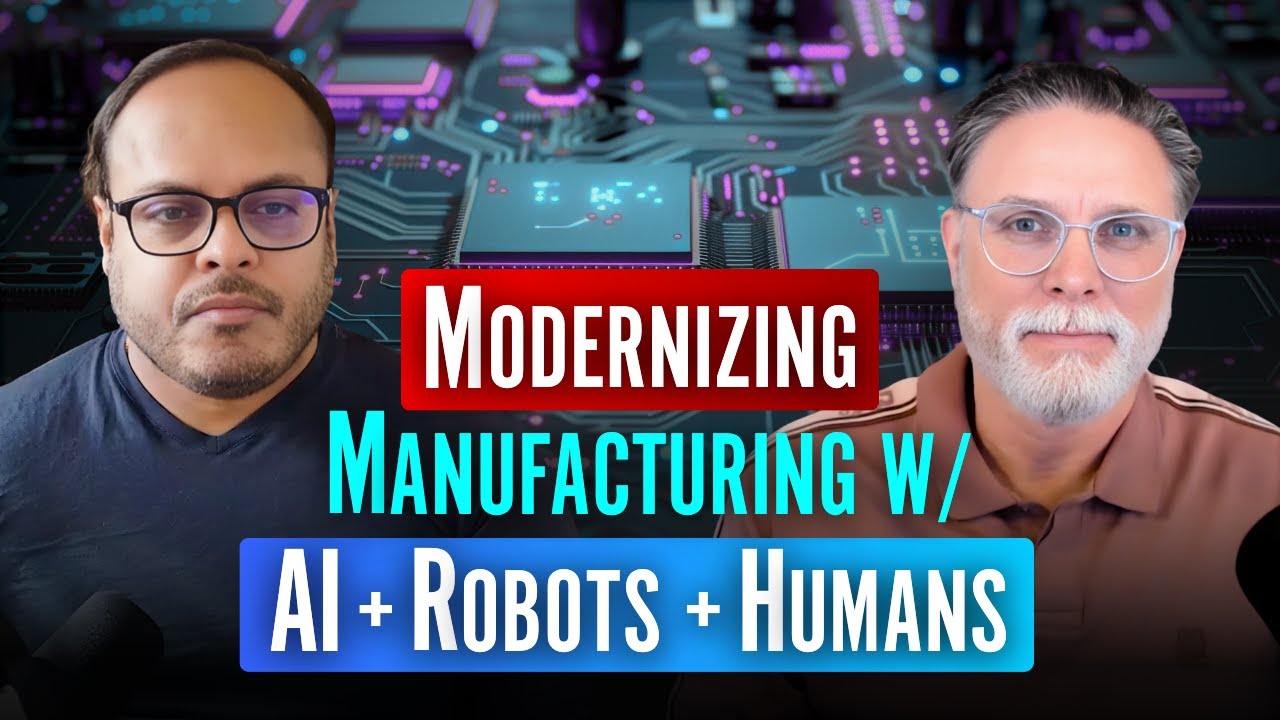
Modernizing Manufacturing: AI + Robots + Humans | Daren Fields | Founder & CEO | Virtual Select | 4K

Modernizing Manufacturing: AI + Robots + Humans | Daren Fields | Founder & CEO | Virtual Select | 4K

Daren Fields, Co-Founder & CEO of Virtual Select, discusses the future of manufacturing, emphasizing the role of AI as a tool for human augmentation, not replacement. He explores how to modernize manufacturing by combining a carbon-based workforce with silicon-based systems to prevent defects, reduce costs, and de-risk execution.

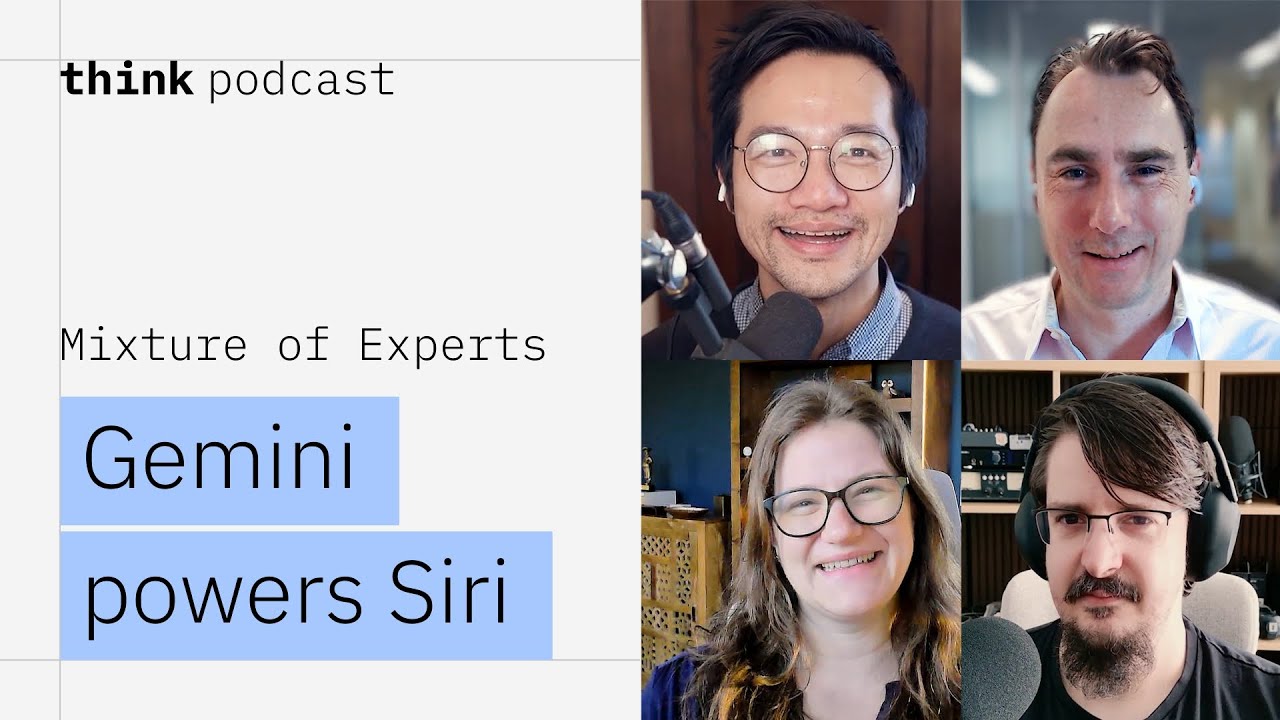
Claude Cowork analysis & Apple picks Gemini

Claude Cowork analysis & Apple picks Gemini

The panel discusses Anthropic's Claude Cowork and the challenge of user trust in AI agents for everyday tasks. They then analyze the Apple-Google partnership to integrate Gemini into Siri, debating its implications for edge AI, privacy, and hardware limitations. Finally, they explore Linus Torvalds' use of AI for "vibe coding," considering its impact on hobbyist programming and entrepreneurship versus the current limitations in producing production-ready software.

Technology

View All
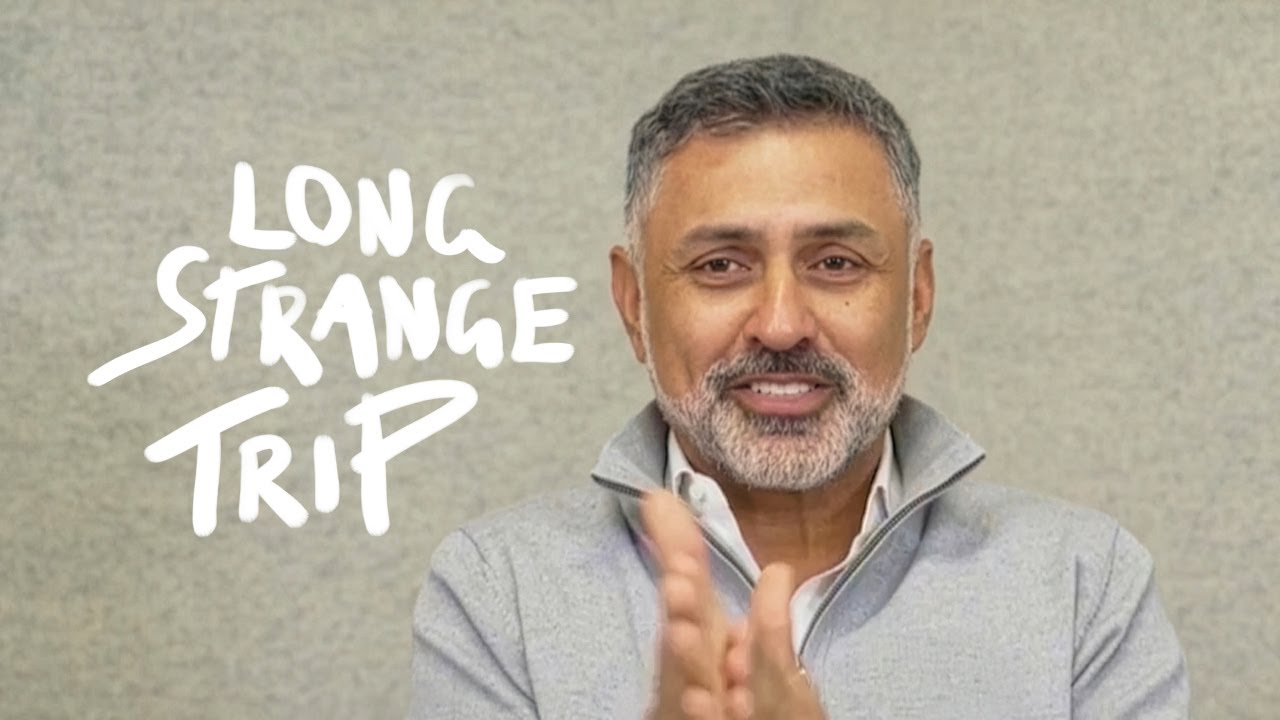
Palo Alto Networks CEO Nikesh Arora on the Virtues of Being an Outsider

Palo Alto Networks CEO Nikesh Arora on the Virtues of Being an Outsider

Nikesh Arora, CEO of Palo Alto Networks, shares his unconventional journey and leadership philosophy. He provides a masterclass in building a multi-platform company through strategic M&A, explains why founders should sometimes ignore customers, and reveals how to lead with conviction while managing imposter syndrome.

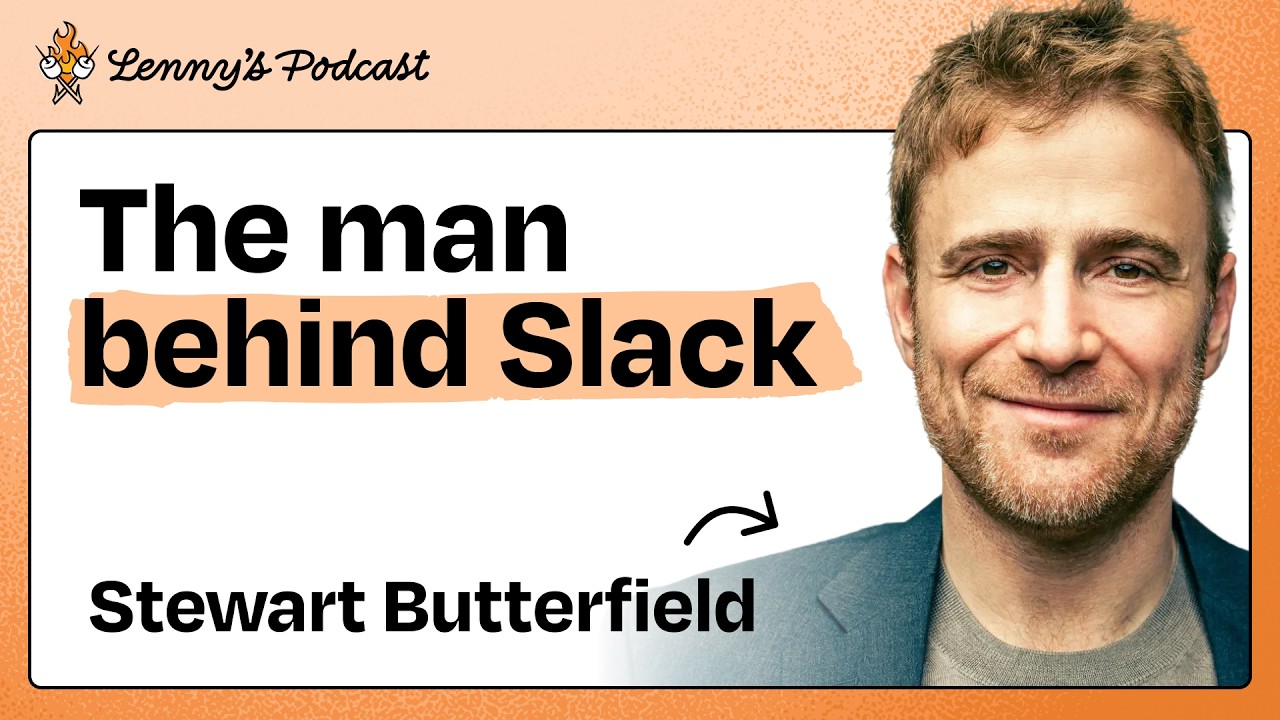
Mental models for building products people love ft. Stewart Butterfield

Mental models for building products people love ft. Stewart Butterfield

Stewart Butterfield, co-founder of Slack and Flickr, shares the product frameworks and leadership principles that guided his success. He delves into concepts like "utility curves" for feature investment, the "owner's delusion" in product design, and why focusing on "comprehension" is often more important than reducing friction. He also introduces powerful mental models for organizational effectiveness, such as combating "hyper-realistic work-like activities" and applying Parkinson's Law to team growth.

Intuit CEO Sasan Goodarzi’s Grown-Up CEO Playbook

Intuit CEO Sasan Goodarzi’s Grown-Up CEO Playbook

Intuit CEO Sasan Goodarzi discusses the operational playbook for reinventing a 40-year-old company, from its slow transition to SaaS to its early adoption of AI. He shares insights on winning the SMB market by treating small businesses like consumers, building effective channel partnerships, and developing a platform strategy. Goodarzi also details his leadership philosophy, emphasizing that grit and curiosity are more critical than raw talent.


Recent Post

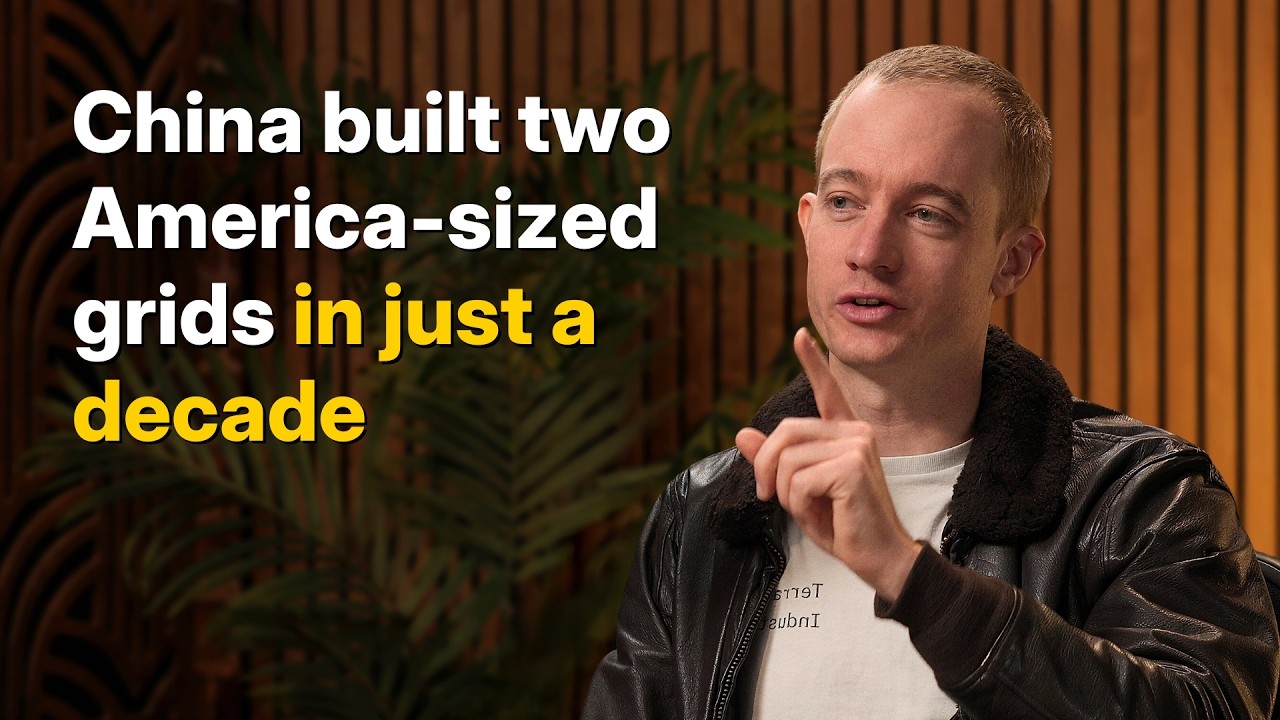
China is killing the US on energy. Does that mean they’ll win AGI? – Casey Handmer

China is killing the US on energy. Does that mean they’ll win AGI? – Casey Handmer

Casey Handmer explains why the massive energy demand from AI will be met not by the grid or natural gas, but by vast, off-grid solar farms, and what this energy singularity means for the future of civilization.

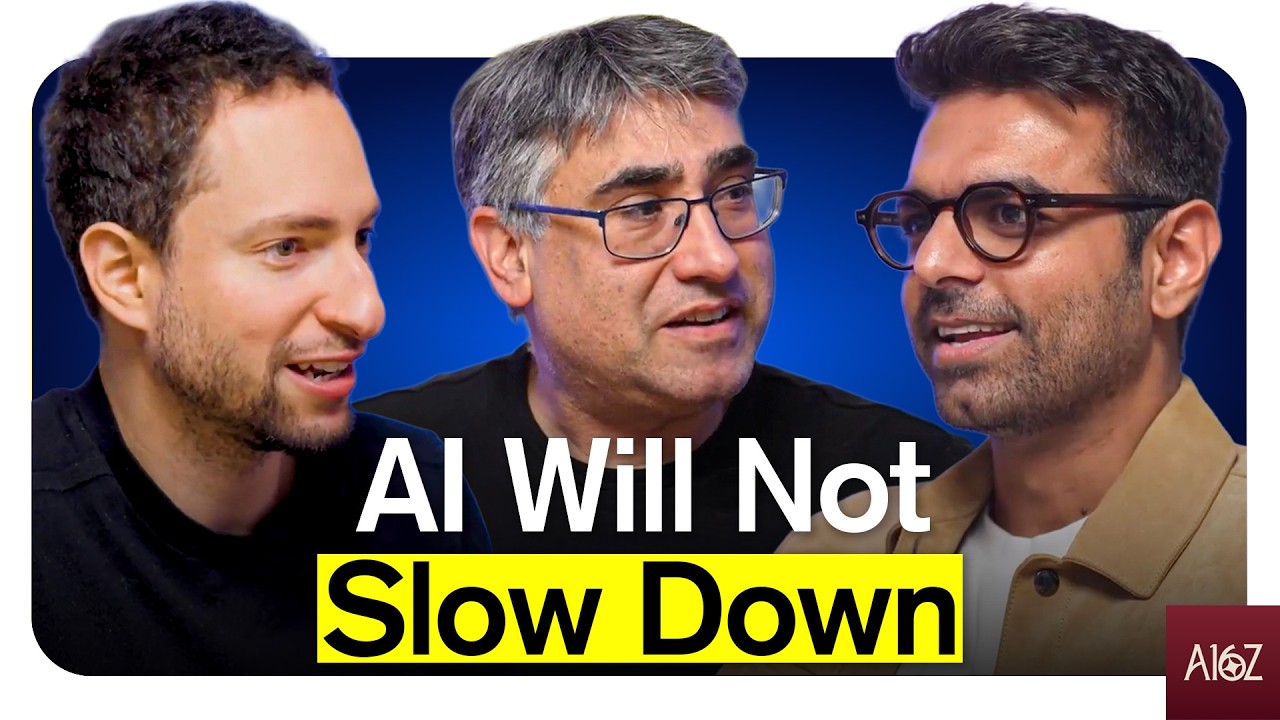
The Current Reality of American AI Policy: From ‘Pause AI’ to ‘Build’

The Current Reality of American AI Policy: From ‘Pause AI’ to ‘Build’

a16z's Martin Casado and Anjney Midha detail the dramatic shift in U.S. AI policy from a 'pause AI' stance, fueled by doomerism and flawed analogies, to a pro-innovation 'win the race' strategy. They discuss how China's progress shattered illusions of a U.S. lead, the strategic business case for open source AI, and the pragmatic promise of the new AI Action Plan.

Balancing Coupling in Software Design • Vlad Khononov & Sheen Brisals

Balancing Coupling in Software Design • Vlad Khononov & Sheen Brisals

Author Vlad Khononov discusses his book "Balancing Coupling in Software Design," explaining how a failed microservices project led him to rediscover timeless design principles from the 1970s. He explores the concepts of local vs. global complexity, the role of modularity as an antidote to complexity, and how managing coupling is crucial for building maintainable systems in any architectural style, from monoliths to cloud-native applications.

Perplexity’s bid for Chrome, Grok Imagine and GPT-5 check-in

Perplexity’s bid for Chrome, Grok Imagine and GPT-5 check-in

Experts from IBM discuss Perplexity's audacious bid for Google Chrome, analyzing it as a strategic marketing move and debating the browser's future as a key platform for enterprise AI. They also explore the future of generative video, questioning if it's a consumer or enterprise feature while highlighting critical IP and ethical hurdles. Finally, they assess the GPT-5 release, countering claims of an AI plateau and discussing user attachment to older models and the shift towards software-defined AI systems.

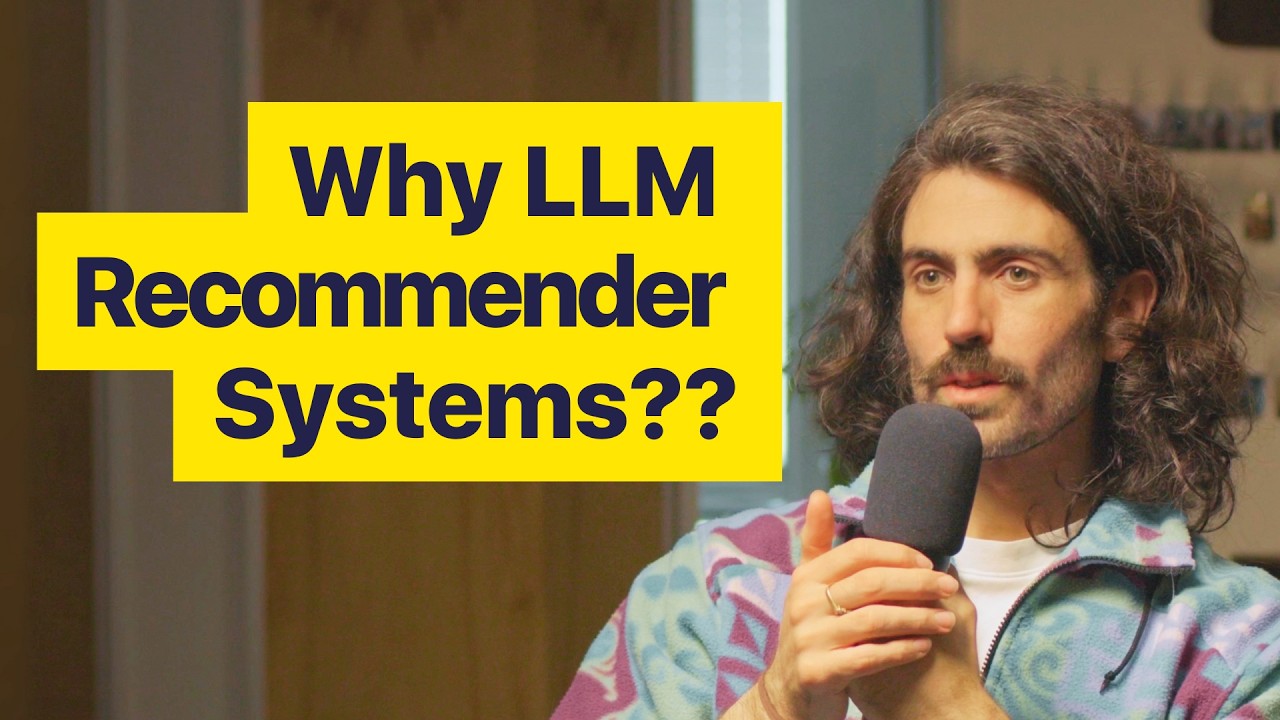
Traditional vs LLM Recommender Systems: Are They Worth It?

Traditional vs LLM Recommender Systems: Are They Worth It?

This summary explores Arpita Vats's insights on how Large Language Models (LLMs) are revolutionizing recommender systems. It contrasts the traditional feature-engineering-heavy approach with the contextual understanding of LLMs, which shifts the focus to prompt engineering. Key challenges like inference latency and cost are discussed, along with practical solutions such as lightweight models, knowledge distillation, and hybrid architectures. The conversation also touches on advanced applications like sequential recommendation and the future potential of agentic AI.

Encrypted Computation: What if Decryption Wasn’t Needed? • Katharine Jarmul • GOTO 2024

Encrypted Computation: What if Decryption Wasn’t Needed? • Katharine Jarmul • GOTO 2024

An exploration of encrypted computation, detailing how techniques like homomorphic encryption and multi-party computation can enable machine learning on encrypted data. The summary covers the core mathematical principles, real-world use cases, and open-source libraries to build more private and trustworthy AI systems.

Stay In The Loop! Subscribe to Our Newsletter.

Get updates straight to your inbox. No spam, just useful content.