
Tokenless

Machine Learning

View All
Post-training best-in-class models in 2025

Post-training best-in-class models in 2025

An expert overview of post-training techniques for language models, covering the entire workflow from data generation and curation to advanced algorithms like Supervised Fine-Tuning (SFT), Direct Preference Optimization (DPO), and Reinforcement Learning (RL), along with practical advice on evaluation and iteration.
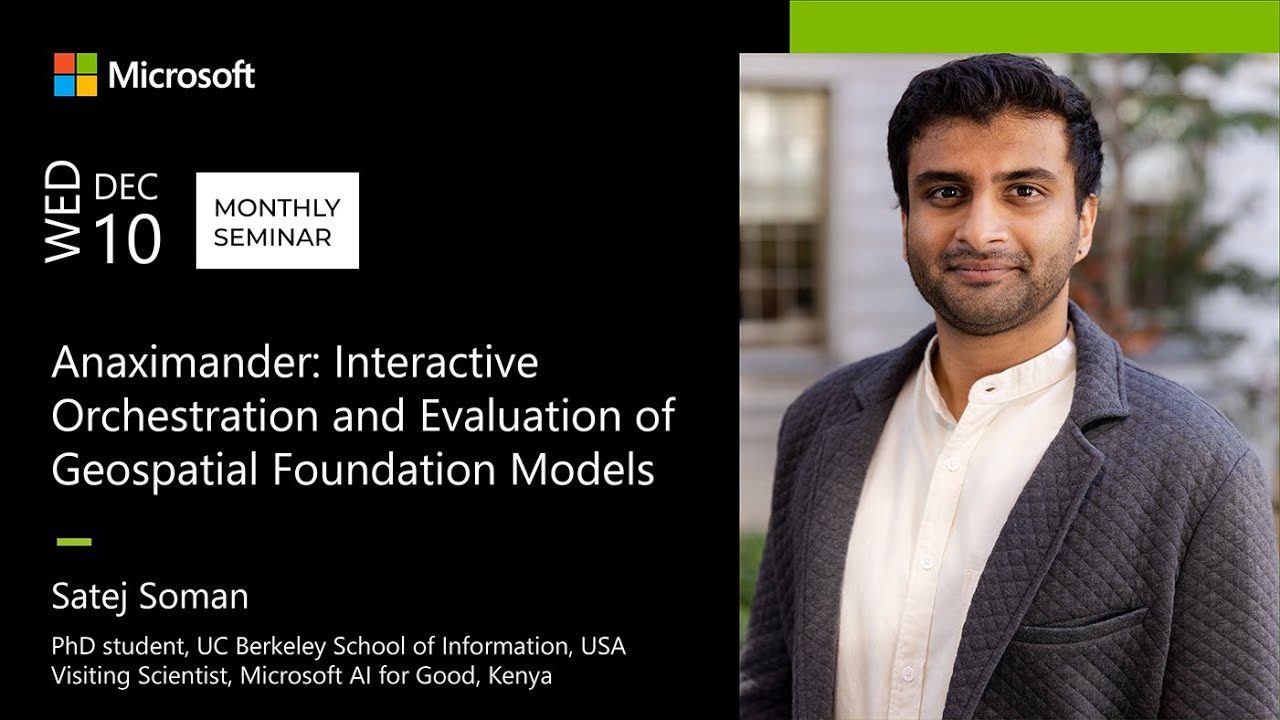
Anaximander: Interactive Orchestration and Evaluation of Geospatial Foundation Models

Anaximander: Interactive Orchestration and Evaluation of Geospatial Foundation Models

This talk introduces Anaximander, a system designed to bridge the gap between traditional, GUI-driven Geographic Information System (GIS) workflows and modern, code-heavy machine learning practices. Anaximander integrates geospatial foundation models directly into QGIS, allowing experts to interactively orchestrate, run, and evaluate models for tasks like semantic segmentation and object detection on satellite imagery.

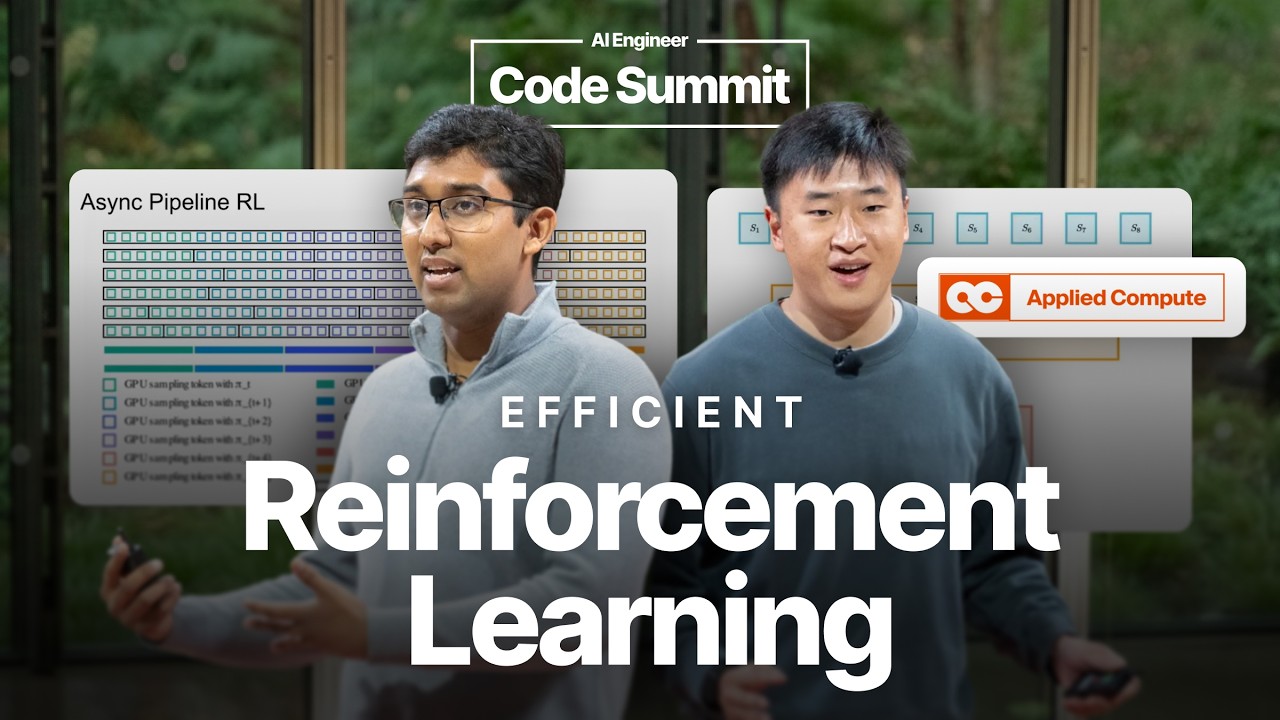
Efficient Reinforcement Learning – Rhythm Garg & Linden Li, Applied Compute

Efficient Reinforcement Learning – Rhythm Garg & Linden Li, Applied Compute

At Applied Compute, efficient Reinforcement Learning is critical for delivering business value. This talk explores the transition from inefficient synchronous RL to a high-throughput asynchronous 'Pipeline RL' system. The core challenge is managing 'staleness'—a side effect of in-flight weight updates that can destabilize training. The speakers detail their first-principles systems model, based on the Roofline model, used to simulate and find the optimal allocation of GPU resources between sampling and training, balancing throughput with algorithmic stability and achieving significant speedups.

Artificial Intelligence

View All
How Ricursive Intelligence’s Founders are Using AI to Shape The Future of Chip Design

How Ricursive Intelligence’s Founders are Using AI to Shape The Future of Chip Design

Anna Goldie and Azalia Mirhoseini of Ricursive Intelligence discuss how their work on Google's AlphaChip, which used AI to design TPUs, is now being extended to automate the entire chip design process. They explain their vision for a 'designless' industry and a recursive self-improvement loop where AI designs better chips, which in turn accelerates AI development.

Identity for AI Agents - Patrick Riley & Carlos Galan, Auth0

Identity for AI Agents - Patrick Riley & Carlos Galan, Auth0

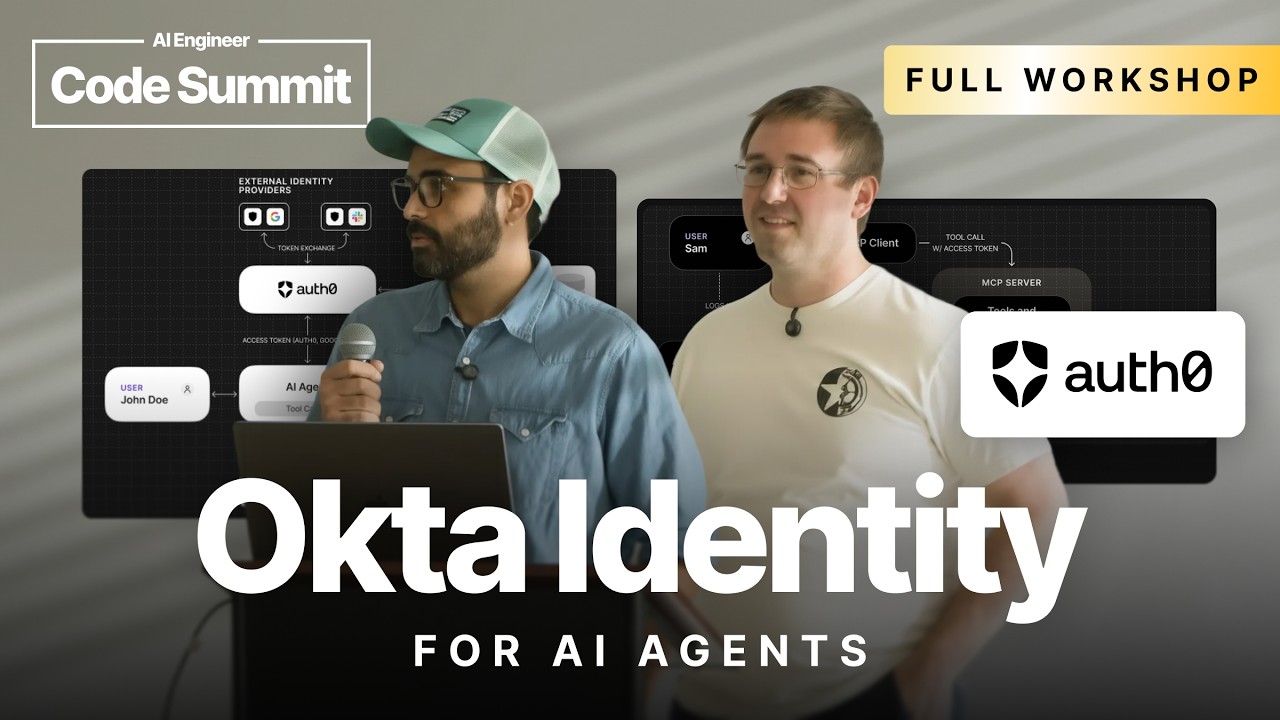
This session from Okta and Auth0 introduces a comprehensive framework for securing AI agents, covering identity establishment, delegated API access via Token Vault, user consent for risky operations using Asynchronous Authorization (CIBA), and integration with MCP servers.

Ransomware whack-a-mole, AI agents as insider threats and how to hack a humanoid robot

Ransomware whack-a-mole, AI agents as insider threats and how to hack a humanoid robot

A discussion on the evolving cybersecurity landscape, covering the persistent threat of ransomware gangs adapting with AI, the critical failures in identity security highlighted by the Zestix case, the emergence of AI agents as a new class of insider threats, and the physical-world risks demonstrated by hacking humanoid robots.

Technology

View All
Palo Alto Networks CEO Nikesh Arora on the Virtues of Being an Outsider

Palo Alto Networks CEO Nikesh Arora on the Virtues of Being an Outsider

Nikesh Arora, CEO of Palo Alto Networks, shares his unconventional journey and leadership philosophy. He provides a masterclass in building a multi-platform company through strategic M&A, explains why founders should sometimes ignore customers, and reveals how to lead with conviction while managing imposter syndrome.

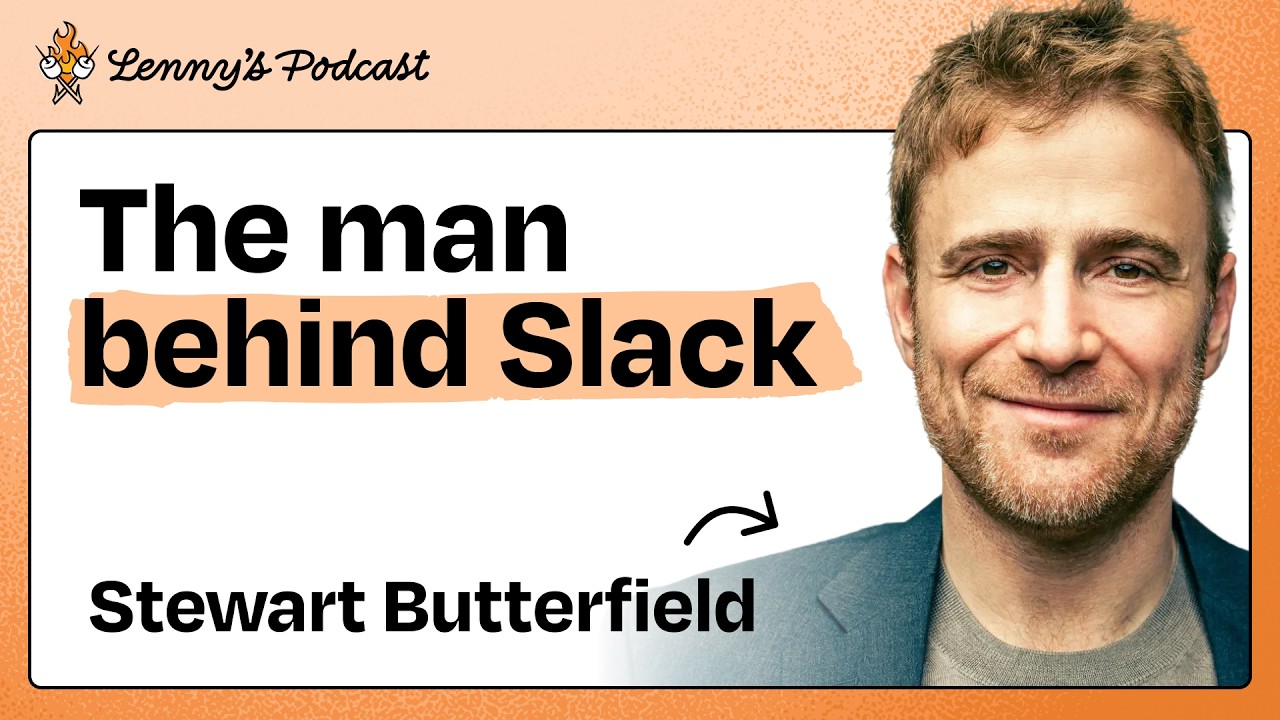
Mental models for building products people love ft. Stewart Butterfield

Mental models for building products people love ft. Stewart Butterfield

Stewart Butterfield, co-founder of Slack and Flickr, shares the product frameworks and leadership principles that guided his success. He delves into concepts like "utility curves" for feature investment, the "owner's delusion" in product design, and why focusing on "comprehension" is often more important than reducing friction. He also introduces powerful mental models for organizational effectiveness, such as combating "hyper-realistic work-like activities" and applying Parkinson's Law to team growth.

Intuit CEO Sasan Goodarzi’s Grown-Up CEO Playbook

Intuit CEO Sasan Goodarzi’s Grown-Up CEO Playbook

Intuit CEO Sasan Goodarzi discusses the operational playbook for reinventing a 40-year-old company, from its slow transition to SaaS to its early adoption of AI. He shares insights on winning the SMB market by treating small businesses like consumers, building effective channel partnerships, and developing a platform strategy. Goodarzi also details his leadership philosophy, emphasizing that grit and curiosity are more critical than raw talent.


Recent Post

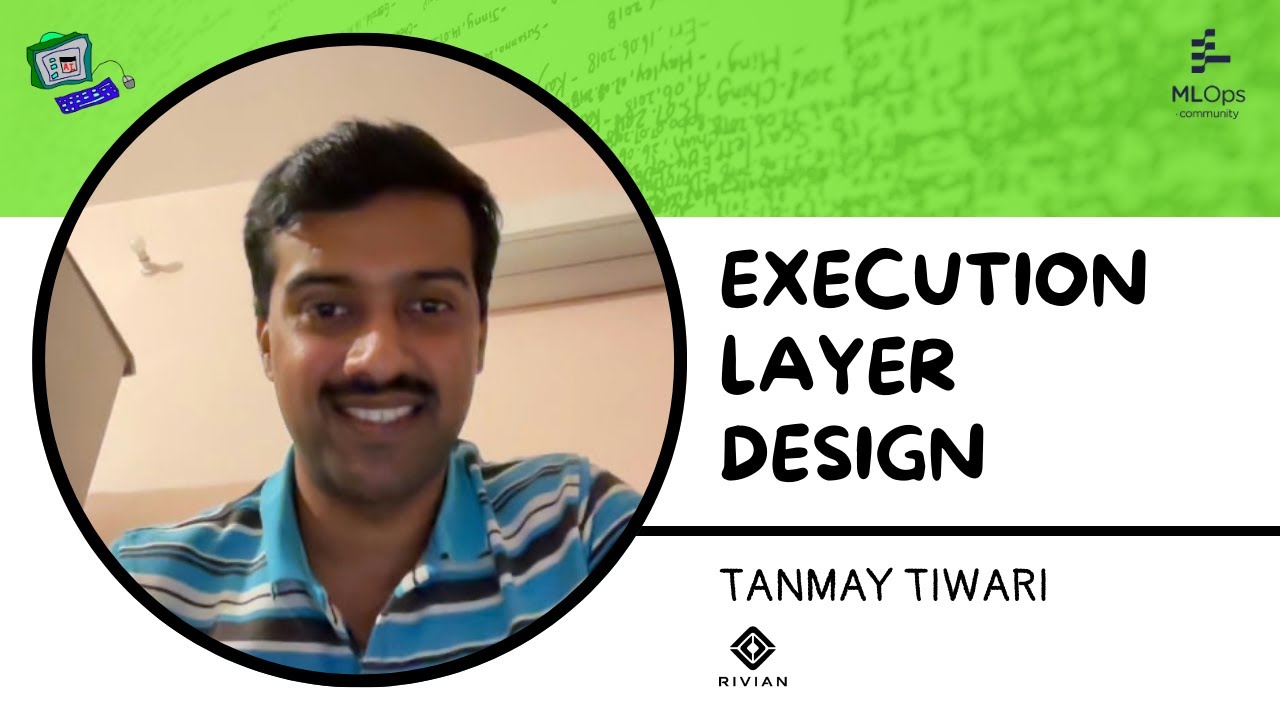
How to Build Execution Layers That Don’t Burn Out // Tanmay Tiwari // Agents in Production 2025

How to Build Execution Layers That Don’t Burn Out // Tanmay Tiwari // Agents in Production 2025

A talk on designing a dependable AI execution layer that handles thousands of operations without constant supervision. The system is built to be precise, responsible, and action-oriented, avoiding common LLM pitfalls like burnout, memory bloat, and overthinking.

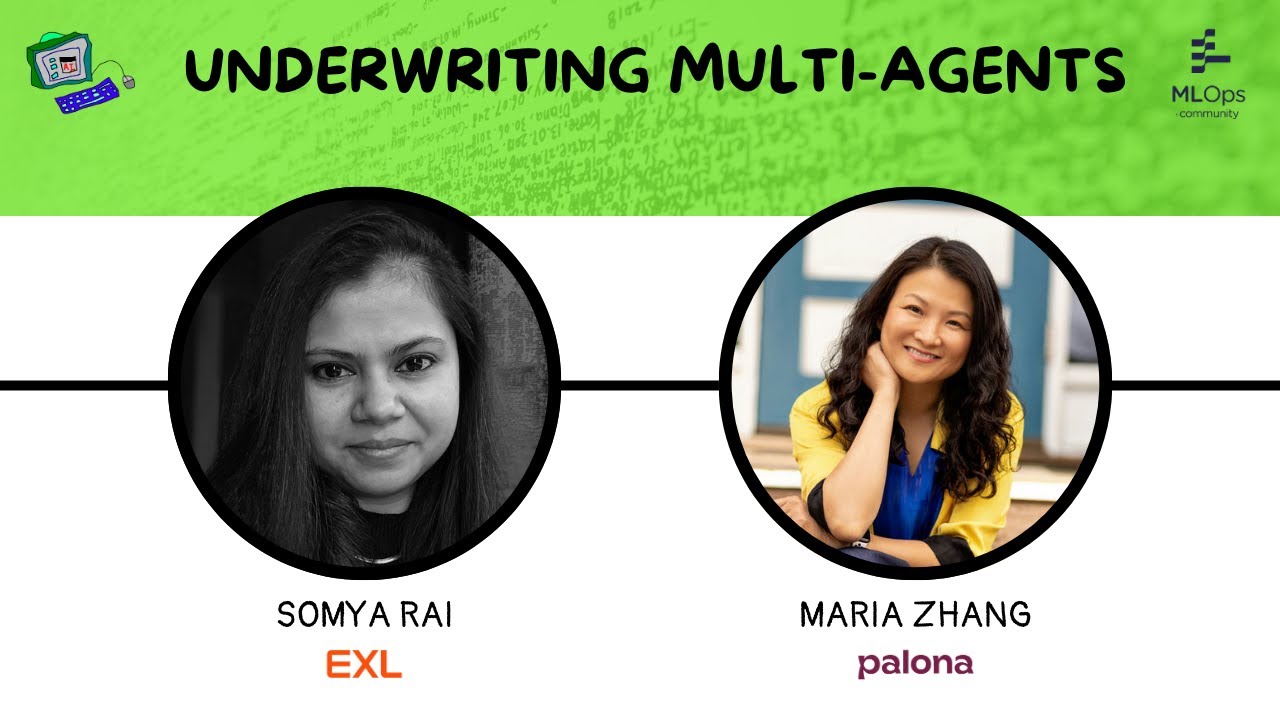
Underwriting Assist - A Multi Agent System // Somya Rai | Maria Zhang // Agents in Production 2025

Underwriting Assist - A Multi Agent System // Somya Rai | Maria Zhang // Agents in Production 2025

Maria Zhang, CEO of Palona AI, and Somya Rai, Principal AI Engineer at EXL, discuss the architecture, scaling, memory management, and cost optimization of multi-agent systems in their respective domains of restaurants and insurance. They explore practical challenges, such as real-world bottlenecks and regulatory compliance, and share their technical stacks, including LangGraph, Ray, and NVIDIA platforms, for building robust and efficient agentic solutions.

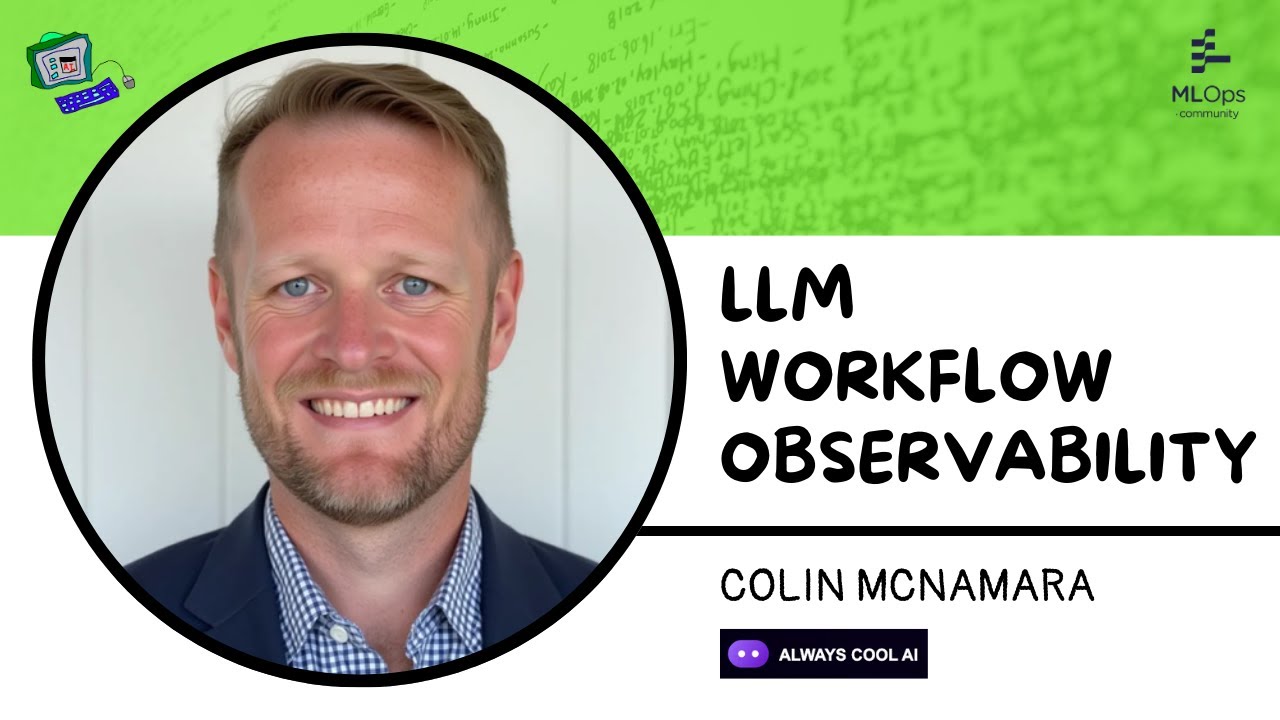
Why You Should Care About Observability in LLM Workflows

Why You Should Care About Observability in LLM Workflows

An inside look at AlwaysCool.ai's journey from simple GPT wrappers to a production-ready agentic infrastructure. This talk covers the evolution from synchronous tools to asynchronous, multi-step flows orchestrated by LangGraph, the critical role of OpenTelemetry for compliance and observability, and the architectural patterns of using FastAPI to serve centralized AI agents.

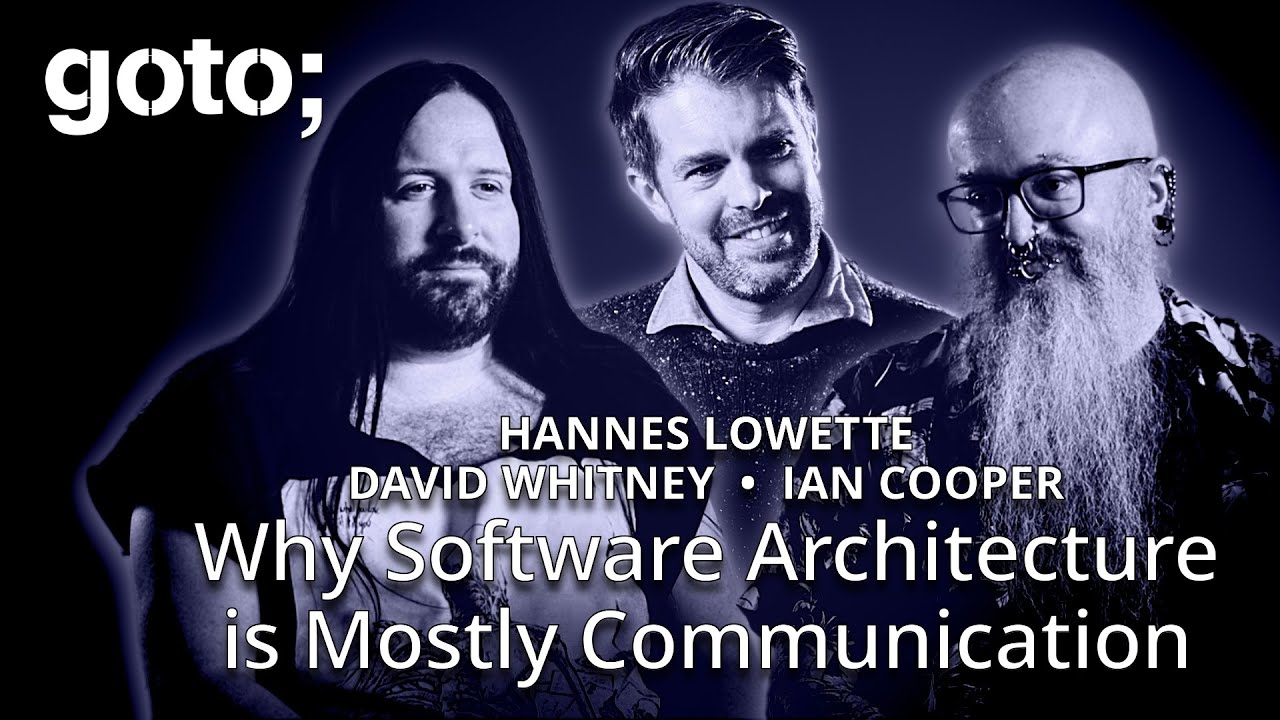
Why SW Architecture is Mostly Communication • David Whitney, Ian Cooper & Hannes Lowette • GOTO 2025

Why SW Architecture is Mostly Communication • David Whitney, Ian Cooper & Hannes Lowette • GOTO 2025

Three experienced software engineers—Ian Cooper, David Whitney, and Hannes Lowette—deconstruct the evolution of software architecture from a top-down, "ivory tower" practice to a modern, collaborative discipline. They explore the dynamics between emergent and intentional design, the importance of sustainable development over "slash-and-burn" cycles, and how architectural strategies must adapt to organizational scale. The conversation emphasizes that the architect's primary role has shifted to coaching, fostering a shared language, and managing trade-offs, concluding that all significant architectural challenges are ultimately people problems rooted in communication, empathy, and culture.

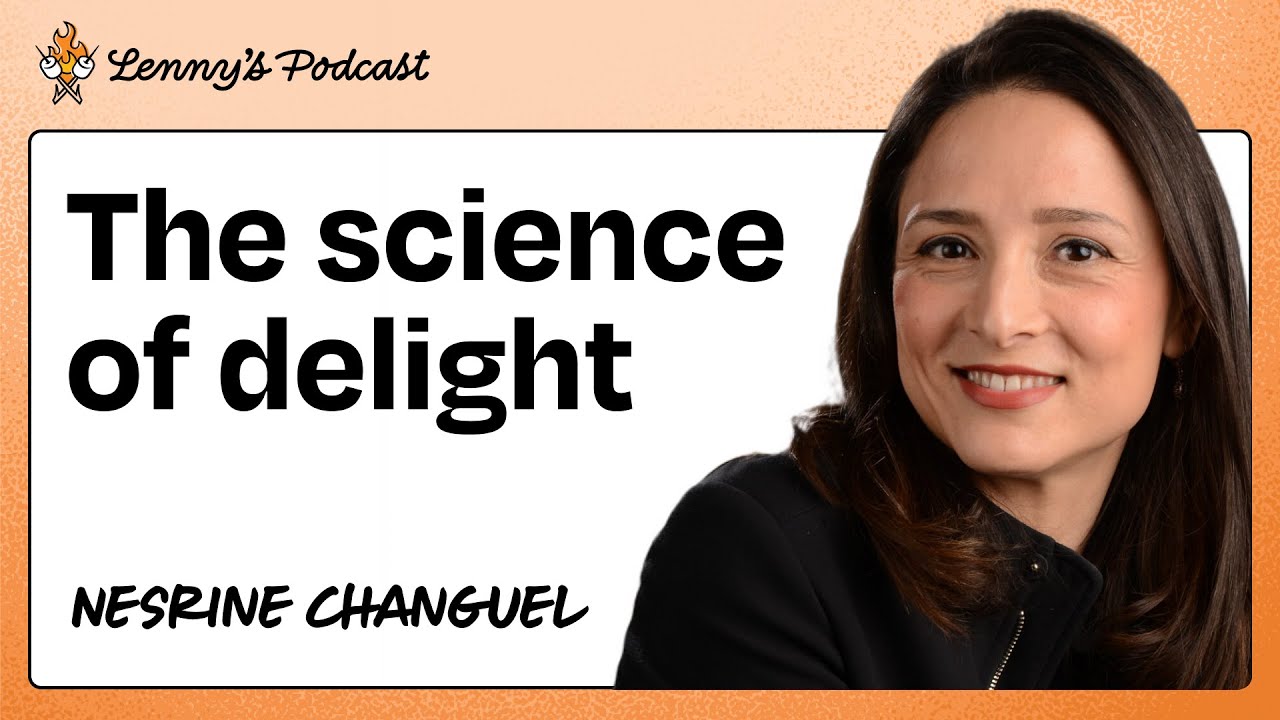
A 4-step framework for building delightful products | Nesrine Changuel (Spotify, Google, Skype)

A 4-step framework for building delightful products | Nesrine Changuel (Spotify, Google, Skype)

Nesrine Changuel, a former product leader at Spotify and Google, presents a pragmatic framework for building delightful products. She argues that delight is not a superficial add-on but a core business strategy that drives retention and differentiation by creating products that serve both functional and emotional needs. The summary covers her three pillars of delight, a four-step model for implementation, the 50-40-10 rule for prioritization, and real-world examples from her time at Chrome, Google Meet, and Spotify.

29.4% ARC-AGI-2 🤯 (TOP SCORE!) - Jeremy Berman

29.4% ARC-AGI-2 🤯 (TOP SCORE!) - Jeremy Berman

Jeremy Berman, winner of the ARC-AGI v2 public leaderboard, discusses his novel evolutionary approach that refines natural language descriptions instead of code. He explores the idea of building AI that synthesizes new knowledge by constructing deductive "knowledge trees" rather than merely compressing data into "knowledge webs," touching on the fundamental challenges of reasoning, continual learning, and creativity in current models.

Stay In The Loop! Subscribe to Our Newsletter.

Get updates straight to your inbox. No spam, just useful content.