Tokenless

Interactive discovery

Explore the topic map

Follow the connections between themes, people, and ideas across the Tokenless archive in an interactive topic modeling map.

Machine Learning

View All
Frontier results, on device - RL Nabors, Arize

Frontier results, on device - RL Nabors, Arize

RL Nabors discusses the significant costs associated with using frontier AI models, covering security, latency, and financial implications. She introduces a framework for right-sizing AI solutions by leveraging smaller, task-specific models and Small Language Models (SLMs). The framework details how to prove task feasibility, establish success criteria with golden datasets, conduct capability evaluations (using tools like Phoenix), and select the most appropriate "Small And Good Enough" (SAGE) model. Nabors further demonstrates how prompt engineering, particularly few-shot prompting, and post-processing can close performance gaps with larger models, while advocating for continuous regression evaluations to maintain performance integrity. The overarching message is to "prototype big, deploy small" to optimize AI deployments.

Research to Reality: Bringing Frontier ML Research to Production - Vaidas Razgaitis, Higharc

Research to Reality: Bringing Frontier ML Research to Production - Vaidas Razgaitis, Higharc

Vaidas Razgaitis, Senior Research Engineer at Higharc, shares three tactical tips to accelerate the transition of novel AI/ML research into production-ready features. He emphasizes addressing the critical handoff challenge between ML researchers and software engineers through structured documentation (Research Prototype Taxonomy Document), a well-organized monorepo utilizing decoupled microservices, and a systematic approach to code decomposition and PR review. These strategies aim to improve legibility, maintainability, and delivery speed for ML-driven products.

Uncertainty-Guided Data Augmentation for Engineers | Deep Dive - Yongmin Kwon

Uncertainty-Guided Data Augmentation for Engineers | Deep Dive - Yongmin Kwon

This session details a data-efficient method for training engineering surrogate models by using uncertainty quantification (UQ) to guide geometric data augmentation. Instead of random deformations, the approach lets the deep ensemble model identify its own knowledge gaps (epistemic uncertainty), then uses Free-Form Deformation (FFD) to generate new shapes specifically in those uncertain regions. This ensures every expensive simulation run yields maximally informative data, significantly improving model accuracy for a fixed computational budget across domains like structural mechanics and aerodynamics.

Artificial Intelligence

View All
How KV Cache Speeds Up LLMs for Faster AI Models on GPUs

How KV Cache Speeds Up LLMs for Faster AI Models on GPUs

LLMs often slow down under heavy traffic due to inefficient GPU memory management during inference. This overview explains how KV cache and Paged Attention, implemented in VLLM, optimize memory usage across prefill and decode phases, significantly boosting LLM throughput, reducing latency, and improving GPU utilization through advanced context handling and specific tuning techniques like prefix caching and speculative decoding.

The AI Agents Helping Home Services Book More Jobs

The AI Agents Helping Home Services Book More Jobs

Avoca (YC W23) has achieved eight-figure revenue and a $1 billion valuation by building an AI workforce for home services, turning missed calls into revenue. Founders Apurva Shrivastava and Tyson Chen explain how AI expands software's market share beyond 1% by automating labor and operational costs, leading to a 15x larger opportunity. They emphasize that their AI agents augment human workers, reducing attrition in challenging CSR roles and creating new positions for training AI, driven by a deep customer obsession learned at YC.

What Is AI Code Review? Fixing Slow PRs & Broken Workflows with AI

What Is AI Code Review? Fixing Slow PRs & Broken Workflows with AI

Anna Gutowska explains how AI code review enhances software development by addressing the slowness and inconsistency of traditional methods. The video delves into the benefits of AI in accelerating reviews, improving code quality, fostering developer learning, and reducing technical debt. It covers the underlying technologies like static/dynamic analysis and LLMs, discusses critical considerations such as over-reliance and context, and provides best practices for integrating AI while emphasizing the indispensable role of human oversight.

Technology

View All
Platforms: Build Abstractions, not Illusions • Gregor Hohpe • GOTO 2025

Platforms: Build Abstractions, not Illusions • Gregor Hohpe • GOTO 2025

Gregor Hohpe explains the critical role of platforms in managing the growing cognitive load on developers due to complex distributed systems. He contrasts platforms, driven by "economies of speed" and fostering innovation through diversity, with traditional IT services and oversimplified abstractions that create dangerous illusions. Hohpe emphasizes building platforms that provide intuitive, domain-specific abstractions to solve real business problems, rather than just repackaging existing cloud services.

Full Stack Greenfield Projects : Are they still relevant?

Full Stack Greenfield Projects : Are they still relevant?

Bharat Goenka, co-founder of Tally, discusses the company's unconventional approach to software development through "Full Stack Greenfield" projects. He explains why building every component from scratch, despite being a high-risk strategy, has been crucial for Tally's success in serving the SMB market, fostering extreme customer loyalty, and aspiring to connect 200 million businesses. The talk delves into the historical context, the philosophy of questioning and choosing constraints, and the distinction between product and custom engineering.

3‑2‑1 Backup Rule Explained: Protect Your Data from Disaster

3‑2‑1 Backup Rule Explained: Protect Your Data from Disaster

Jeff Crume outlines essential data resiliency strategies, starting with the 3-2-1 backup rule—three copies, two media types, one offsite—and expanding to include immutable or air-gapped backups, rigorous testing, and encryption. He emphasizes these principles for robust disaster recovery, ransomware protection, and minimizing costly downtime, highlighting the trade-offs in achieving high availability.


Recent Post

Beyond Line Charts • Yao Yue • YOW! 2025

Beyond Line Charts • Yao Yue • YOW! 2025

Yao Yue challenges the dominance of line charts in telemetry visualization, arguing that their time-centric nature and misleading interpolations often obscure insights. She proposes a 'form follows function' approach, advocating for visualizations tailored to the data's shape, the metric's type (e.g., step charts for counters, heatmaps for histograms), and the specific, often 'timeless,' operational questions being asked. The key is to transform time-series data into more flexible formats like panel data to derive clearer, more direct answers.

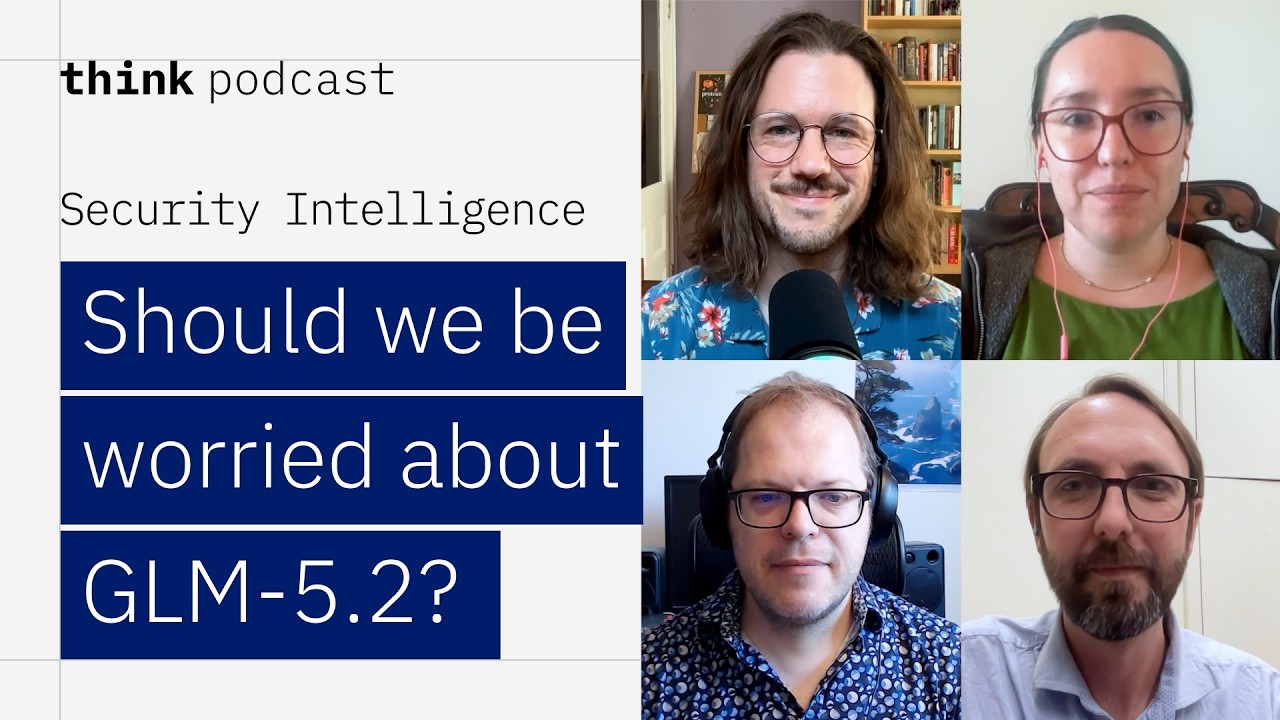
Should you let OpenClaw pen test your system? Plus: Cybersecurity for ephemeral software

Should you let OpenClaw pen test your system? Plus: Cybersecurity for ephemeral software

IBM security experts discuss the implications of using AI agents like OpenClaw for penetration testing, the challenges posed by AI-generated ephemeral software, and the strategic allocation of security budgets in an era of rapidly growing ransomware threats.

Building Generative Image & Video models at Scale - Sander Dieleman (Veo and Nano Banana)

Building Generative Image & Video models at Scale - Sander Dieleman (Veo and Nano Banana)

Sander Dieleman from Google DeepMind provides a behind-the-scenes look at the key components of training large-scale diffusion models for audio-visual data. The talk covers the entire pipeline, from the critical role of data curation and latent representations to the mechanics of diffusion, network architectures, sampling with guidance, and advanced control signals.

How AI is changing Software Engineering: A Conversation with Gergely Orosz, @pragmaticengineer

How AI is changing Software Engineering: A Conversation with Gergely Orosz, @pragmaticengineer

Gergely Orosz, author of The Pragmatic Engineer, discusses the bizarre trend of 'token maxing' in Big Tech, the evolving role of software engineers in the AI era, and why companies are heavily investing in internal AI infrastructure despite uncertain productivity gains.

Taste & Craft: A Conversation with Tuomas Artman, CTO Linear & Gergely Orosz, @pragmaticengineer

Taste & Craft: A Conversation with Tuomas Artman, CTO Linear & Gergely Orosz, @pragmaticengineer

Tuomas Artman, Cofounder and CTO of Linear, discusses the paradoxical challenge AI introduces to software development. While AI agents accelerate shipping features, this speed can lead to a decline in software quality. He argues for prioritizing "tasteful," high-quality software as the ultimate competitive advantage and shares Linear's unique internal practices, such as the "Zero-Bug Policy" and "Quality Wednesdays," designed to cultivate a deep-seated culture of quality.

Building, Managing & Governing APIs on AWS • Giedrius Praspaliauskas • GOTO 2025

Building, Managing & Governing APIs on AWS • Giedrius Praspaliauskas • GOTO 2025

Giedrius Praspaliauskas from AWS explores the ten stages of the API lifecycle, demonstrating how modern AI, Generative AI, and agentic systems are reshaping API strategy, development, security, and governance on AWS using services like API Gateway, AppSync, and Amazon Q.

Stay In The Loop! Subscribe to Our Newsletter.

Get updates straight to your inbox. No spam, just useful content.