Tokenless

Machine Learning

View All
Post-training best-in-class models in 2025

Post-training best-in-class models in 2025

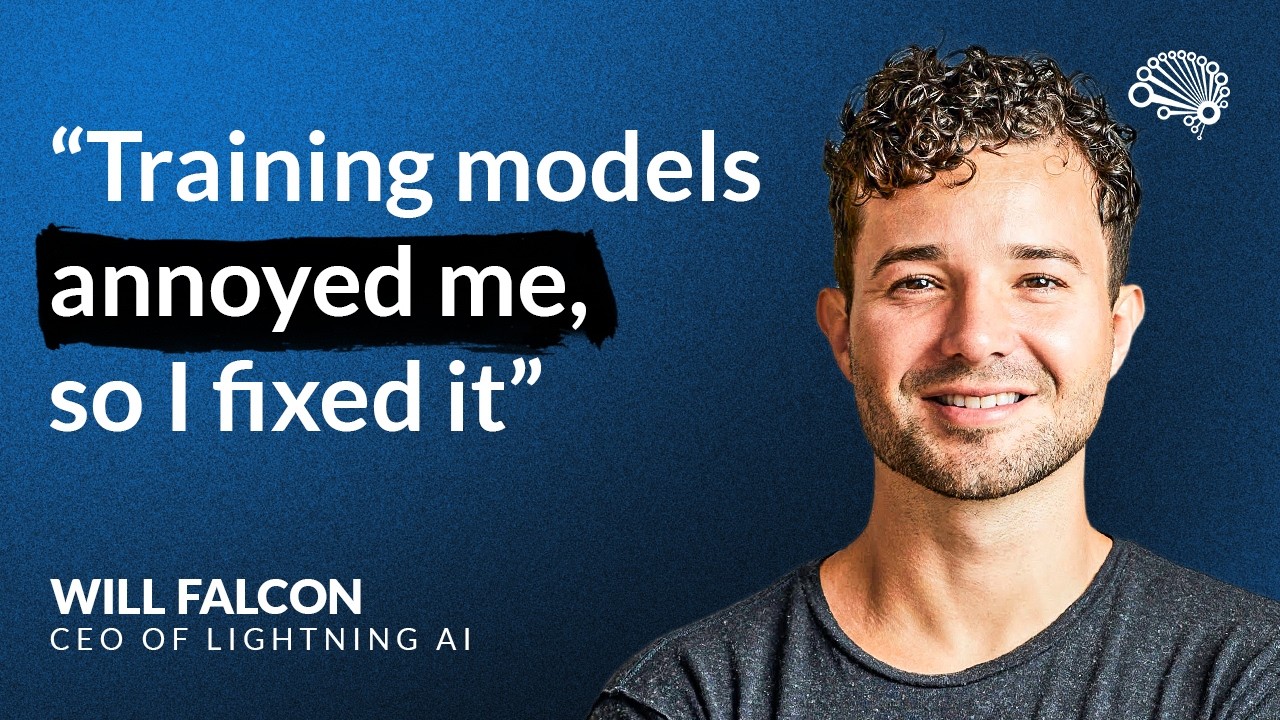
An expert overview of post-training techniques for language models, covering the entire workflow from data generation and curation to advanced algorithms like Supervised Fine-Tuning (SFT), Direct Preference Optimization (DPO), and Reinforcement Learning (RL), along with practical advice on evaluation and iteration.

Anaximander: Interactive Orchestration and Evaluation of Geospatial Foundation Models

Anaximander: Interactive Orchestration and Evaluation of Geospatial Foundation Models

This talk introduces Anaximander, a system designed to bridge the gap between traditional, GUI-driven Geographic Information System (GIS) workflows and modern, code-heavy machine learning practices. Anaximander integrates geospatial foundation models directly into QGIS, allowing experts to interactively orchestrate, run, and evaluate models for tasks like semantic segmentation and object detection on satellite imagery.

Efficient Reinforcement Learning – Rhythm Garg & Linden Li, Applied Compute

Efficient Reinforcement Learning – Rhythm Garg & Linden Li, Applied Compute

At Applied Compute, efficient Reinforcement Learning is critical for delivering business value. This talk explores the transition from inefficient synchronous RL to a high-throughput asynchronous 'Pipeline RL' system. The core challenge is managing 'staleness'—a side effect of in-flight weight updates that can destabilize training. The speakers detail their first-principles systems model, based on the Roofline model, used to simulate and find the optimal allocation of GPU resources between sampling and training, balancing throughput with algorithmic stability and achieving significant speedups.

Artificial Intelligence

View All
MCP Security: What Happens When Your Agents Talk to Everything?

MCP Security: What Happens When Your Agents Talk to Everything?

A deep dive into the security vulnerabilities of Multi-Context Protocol (MCP) for AI agents. The talk explores how identity loss, "all-or-nothing" permissions, and disappearing audit trails create significant attack surfaces, and presents solutions like identity chain tracking, context-aware permissions, and intelligent auditing to secure agent-to-tool communication.

Multi-Agent Systems for the Misinformation Lifecycle

Multi-Agent Systems for the Misinformation Lifecycle

A detailed overview of a modular, five-agent system designed to combat the entire lifecycle of digital misinformation. Based on an ICWSM research paper, this practitioner's guide details the roles of the Classifier, Indexer, Extractor, Corrector, and Verifier agents. The system emphasizes scalability, explainability, and high precision, moving beyond the limitations of single-LLM solutions. The talk covers the complete blueprint, from agent coordination and MLOps to holistic evaluation and optimization strategies for production environments.

Real-Time Voice Agents in Production

Real-Time Voice Agents in Production

Panos Stravopodis, CTO of Elyos AI, shares the infrastructure and orchestration challenges of building production-ready voice AI agents. He details the four pillars for success—latency, consistency, context, and recovery—and provides engineering patterns for error handling, context management, and achieving conversational coherence in real-time systems.

Technology

View All
Palo Alto Networks CEO Nikesh Arora on the Virtues of Being an Outsider

Palo Alto Networks CEO Nikesh Arora on the Virtues of Being an Outsider

Nikesh Arora, CEO of Palo Alto Networks, shares his unconventional journey and leadership philosophy. He provides a masterclass in building a multi-platform company through strategic M&A, explains why founders should sometimes ignore customers, and reveals how to lead with conviction while managing imposter syndrome.

Mental models for building products people love ft. Stewart Butterfield

Mental models for building products people love ft. Stewart Butterfield

Stewart Butterfield, co-founder of Slack and Flickr, shares the product frameworks and leadership principles that guided his success. He delves into concepts like "utility curves" for feature investment, the "owner's delusion" in product design, and why focusing on "comprehension" is often more important than reducing friction. He also introduces powerful mental models for organizational effectiveness, such as combating "hyper-realistic work-like activities" and applying Parkinson's Law to team growth.

Intuit CEO Sasan Goodarzi’s Grown-Up CEO Playbook

Intuit CEO Sasan Goodarzi’s Grown-Up CEO Playbook

Intuit CEO Sasan Goodarzi discusses the operational playbook for reinventing a 40-year-old company, from its slow transition to SaaS to its early adoption of AI. He shares insights on winning the SMB market by treating small businesses like consumers, building effective channel partnerships, and developing a platform strategy. Goodarzi also details his leadership philosophy, emphasizing that grit and curiosity are more critical than raw talent.


Recent Post

I’m Teaching AI Self-Improvement Techniques

I’m Teaching AI Self-Improvement Techniques

Aman Khan from Arize discusses the challenges of building reliable AI agents and introduces a novel technique called "metaprompting". This method uses continuous, natural language feedback to optimize an agent's system prompt, effectively training its "memory" or context, leading to significant performance gains even for smaller models.

Beyond the Hype: Real Talk on AI-Assisted Development • Jessica Kerr & Diana Montalion

Beyond the Hype: Real Talk on AI-Assisted Development • Jessica Kerr & Diana Montalion

Jessica Kerr and Diana Montalion explore a pragmatic approach to AI-assisted coding, framing AI not as a replacement for developers, but as a powerful tool for automating tedious work like typing, scaffolding, and error handling. They argue that AI's strength lies in executing well-defined, laborious tasks, which frees up developers to focus on the nuanced, high-level work of systems thinking, architectural design, and discerning the right response to complex problems—skills where AI currently falls short.

941: Multi-Agent Human Societies — with Dr. Vijoy Pandey

941: Multi-Agent Human Societies — with Dr. Vijoy Pandey

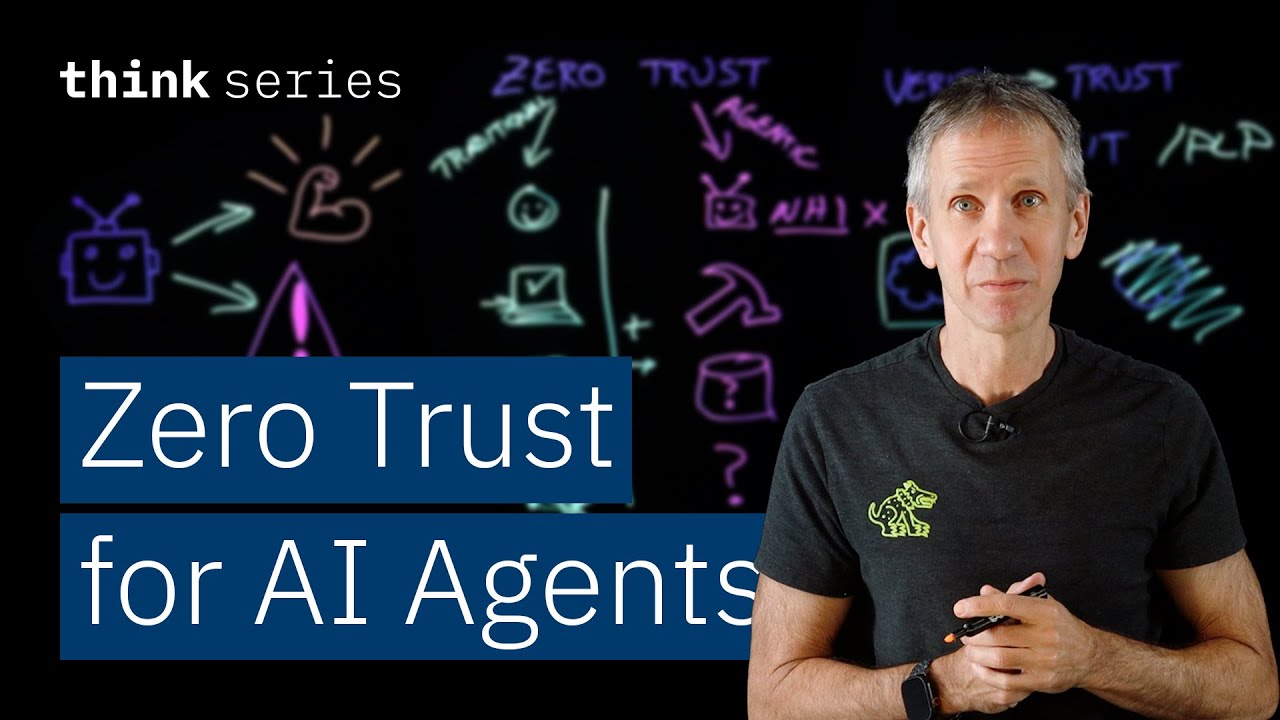
Dr. Vijoy Pandey of Cisco's Outshift incubator discusses his vision for a future where multi-agent human societies collaborate to solve major scientific and physical challenges. He introduces AGNTCY, an open-source project for the "Internet of Agents," designed to address the critical hurdles of agent interoperability and trust through a Zero Trust framework and Task-Based Access Control (T-BACK).

AI ATTACKS! How Hackers Weaponize Artificial Intelligence

AI ATTACKS! How Hackers Weaponize Artificial Intelligence

AI is no longer just a tool for defense; it's being weaponized by malicious actors. This summary explores six emerging AI-powered cyber attacks, from automated login attempts and polymorphic ransomware to hyper-personalized phishing and deepfake fraud. It details how AI agents and Large Language Models (LLMs) are used to automate the entire attack kill chain, significantly lowering the skill barrier for attackers and necessitating an evolution in cyber defense strategies.

How End-to-End Learning Created Autonomous Driving 2.0: Wayve CEO Alex Kendall

How End-to-End Learning Created Autonomous Driving 2.0: Wayve CEO Alex Kendall

Alex Kendall, CEO of Wayve, discusses the architectural shift from AV 1.0's hand-engineered robotics to AV 2.0's end-to-end deep learning. He explains how Wayve's generalization-first approach, powered by world models and diverse data, allows them to scale across hundreds of cities and multiple automotive OEMs, creating a path toward a general-purpose embodied AI foundation model.

Emmett Shear on Building AI That Actually Cares: Beyond Control and Steering

Emmett Shear on Building AI That Actually Cares: Beyond Control and Steering

Emmett Shear, founder of Twitch and former OpenAI interim CEO, presents a new paradigm for AI alignment called "organic alignment." He argues that the prevalent "steering and control" model is fundamentally flawed, potentially leading to disaster. Shear advocates for developing AI systems that learn to genuinely care about humans, treating alignment as a continuous process rather than a fixed state.

Stay In The Loop! Subscribe to Our Newsletter.

Get updates straight to your inbox. No spam, just useful content.