
Tokenless

Machine Learning

View All
Post-training best-in-class models in 2025

Post-training best-in-class models in 2025

An expert overview of post-training techniques for language models, covering the entire workflow from data generation and curation to advanced algorithms like Supervised Fine-Tuning (SFT), Direct Preference Optimization (DPO), and Reinforcement Learning (RL), along with practical advice on evaluation and iteration.

Anaximander: Interactive Orchestration and Evaluation of Geospatial Foundation Models

Anaximander: Interactive Orchestration and Evaluation of Geospatial Foundation Models

This talk introduces Anaximander, a system designed to bridge the gap between traditional, GUI-driven Geographic Information System (GIS) workflows and modern, code-heavy machine learning practices. Anaximander integrates geospatial foundation models directly into QGIS, allowing experts to interactively orchestrate, run, and evaluate models for tasks like semantic segmentation and object detection on satellite imagery.

Efficient Reinforcement Learning – Rhythm Garg & Linden Li, Applied Compute

Efficient Reinforcement Learning – Rhythm Garg & Linden Li, Applied Compute

At Applied Compute, efficient Reinforcement Learning is critical for delivering business value. This talk explores the transition from inefficient synchronous RL to a high-throughput asynchronous 'Pipeline RL' system. The core challenge is managing 'staleness'—a side effect of in-flight weight updates that can destabilize training. The speakers detail their first-principles systems model, based on the Roofline model, used to simulate and find the optimal allocation of GPU resources between sampling and training, balancing throughput with algorithmic stability and achieving significant speedups.

Artificial Intelligence

View All
MCP Security: What Happens When Your Agents Talk to Everything?

MCP Security: What Happens When Your Agents Talk to Everything?

A deep dive into the security vulnerabilities of Multi-Context Protocol (MCP) for AI agents. The talk explores how identity loss, "all-or-nothing" permissions, and disappearing audit trails create significant attack surfaces, and presents solutions like identity chain tracking, context-aware permissions, and intelligent auditing to secure agent-to-tool communication.

Multi-Agent Systems for the Misinformation Lifecycle

Multi-Agent Systems for the Misinformation Lifecycle

A detailed overview of a modular, five-agent system designed to combat the entire lifecycle of digital misinformation. Based on an ICWSM research paper, this practitioner's guide details the roles of the Classifier, Indexer, Extractor, Corrector, and Verifier agents. The system emphasizes scalability, explainability, and high precision, moving beyond the limitations of single-LLM solutions. The talk covers the complete blueprint, from agent coordination and MLOps to holistic evaluation and optimization strategies for production environments.

Real-Time Voice Agents in Production

Real-Time Voice Agents in Production

Panos Stravopodis, CTO of Elyos AI, shares the infrastructure and orchestration challenges of building production-ready voice AI agents. He details the four pillars for success—latency, consistency, context, and recovery—and provides engineering patterns for error handling, context management, and achieving conversational coherence in real-time systems.

Technology

View All
Palo Alto Networks CEO Nikesh Arora on the Virtues of Being an Outsider

Palo Alto Networks CEO Nikesh Arora on the Virtues of Being an Outsider

Nikesh Arora, CEO of Palo Alto Networks, shares his unconventional journey and leadership philosophy. He provides a masterclass in building a multi-platform company through strategic M&A, explains why founders should sometimes ignore customers, and reveals how to lead with conviction while managing imposter syndrome.

Mental models for building products people love ft. Stewart Butterfield

Mental models for building products people love ft. Stewart Butterfield

Stewart Butterfield, co-founder of Slack and Flickr, shares the product frameworks and leadership principles that guided his success. He delves into concepts like "utility curves" for feature investment, the "owner's delusion" in product design, and why focusing on "comprehension" is often more important than reducing friction. He also introduces powerful mental models for organizational effectiveness, such as combating "hyper-realistic work-like activities" and applying Parkinson's Law to team growth.

Intuit CEO Sasan Goodarzi’s Grown-Up CEO Playbook

Intuit CEO Sasan Goodarzi’s Grown-Up CEO Playbook

Intuit CEO Sasan Goodarzi discusses the operational playbook for reinventing a 40-year-old company, from its slow transition to SaaS to its early adoption of AI. He shares insights on winning the SMB market by treating small businesses like consumers, building effective channel partnerships, and developing a platform strategy. Goodarzi also details his leadership philosophy, emphasizing that grit and curiosity are more critical than raw talent.


Recent Post

Bolt ft. Markus Villig - From Bootstrapping in Estonia to a Global Leader in Mobility

Bolt ft. Markus Villig - From Bootstrapping in Estonia to a Global Leader in Mobility

Markus Villig recounts the story of Bolt, from a €5,000 loan from his parents to a global mobility leader. The journey is defined by counterintuitive pivots: first, competing against the very taxi companies they initially served, and second, using a first-principles data model to ignore conventional wisdom and expand into overlooked African markets, which proved to be a massive success. This data-driven, pragmatic approach allowed Bolt to triple its market share during the COVID-19 crisis by choosing not to lay off staff and instead focusing on growth while competitors were paralyzed.

Designing safe digital systems for the humanitarian sector

Designing safe digital systems for the humanitarian sector

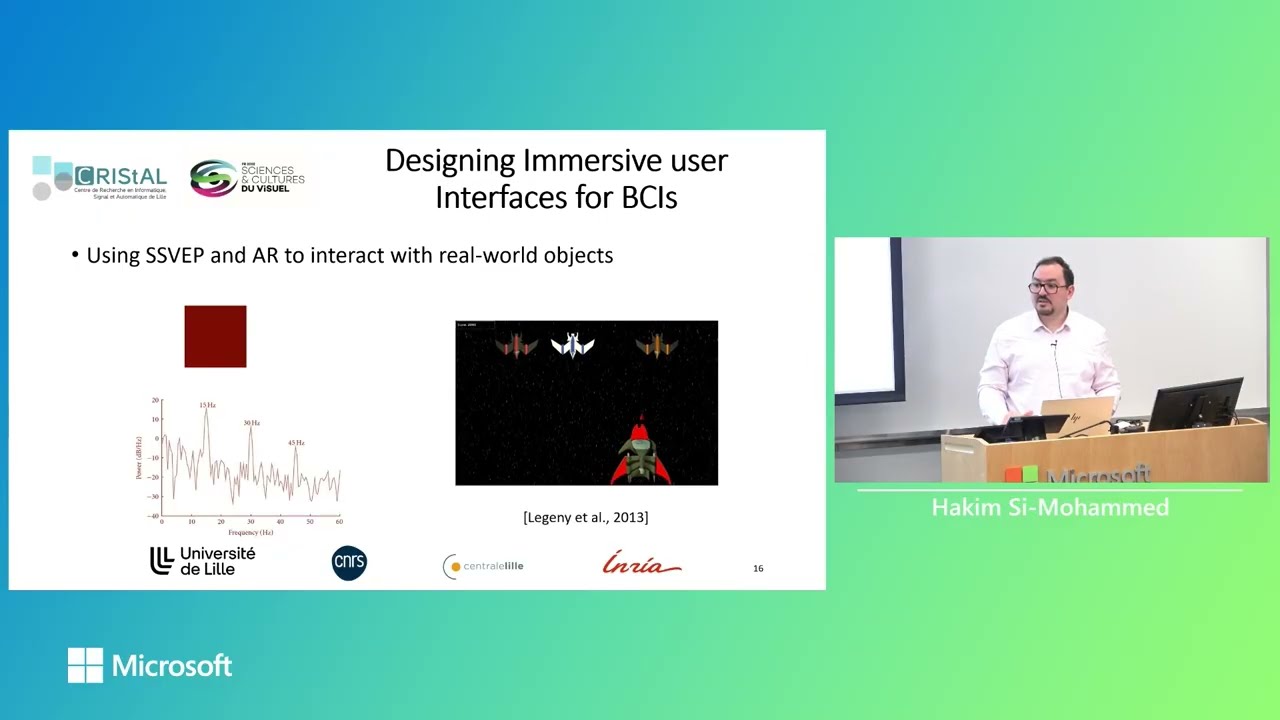
Carmela Troncoso from EPFL discusses her collaboration with the International Committee of the Red Cross (ICRC) to digitalize humanitarian aid distribution. She advocates for a paradigm shift from data minimization to "purpose limitation," designing systems that are structurally incapable of being misused, even if the data is accessed. The talk details a practical, low-cost, and connectivity-resilient system built on this principle, using smart cards and cryptographic techniques to protect vulnerable aid recipients while meeting the operational needs of the ICRC.

No Priors Ep. 141 | With Sunday Robotics Co-Founders Tony Zhao and Cheng Chi

No Priors Ep. 141 | With Sunday Robotics Co-Founders Tony Zhao and Cheng Chi

Tony Zhao and Cheng Chi, co-founders of Sunday Robotics, discuss the state of AI robotics, framing it as being between a "GPT moment" (the core technology is known) and a "ChatGPT moment" (a scalable consumer product). They detail the key research, data collection innovations, and full-stack engineering required to build Memo, their general-purpose home robot designed to free humanity from chores.

Ben Horowitz & Marc Andreessen: Why Silicon Valley Turned Against Defense (And How We're Fixing It)

Ben Horowitz & Marc Andreessen: Why Silicon Valley Turned Against Defense (And How We're Fixing It)

Silicon Valley's historical alliance with US defense fractured over 15 years of hostility, but is now being rebuilt under the "American Dynamism" thesis, driven by the geopolitical realities of Ukraine and competition with China. This shift prioritizes building in the physical world—defense, energy, manufacturing—by leveraging software, AI, and autonomy to innovate faster than legacy, five-year-plan-based incumbents and win by doubling down on America's chaotic creativity.

Anthropic stops AI spies, the new OWASP Top 10 and the rise of small-time ransomware

Anthropic stops AI spies, the new OWASP Top 10 and the rise of small-time ransomware

Experts discuss a report from Anthropic on a nearly autonomous AI-driven espionage campaign, debating its significance. The conversation explores the rise of agentic AI in attacks, the new 2025 OWASP Top 10, the fragmentation of the ransomware landscape, and the role of cyber insurance as a de facto regulator.

The CEO Behind the Fastest-Growing AI Inference Company | Tuhin Srivastava

The CEO Behind the Fastest-Growing AI Inference Company | Tuhin Srivastava

Tuhin Srivastava, CEO of Baseten, joins Gradient Dissent to discuss the core challenges of AI inference, from infrastructure and runtime bottlenecks to the practical differences between vLLM, TensorRT-LLM, and SGLang. He shares how Baseten navigated years of searching for a market before the explosion of large-scale models, emphasizing a company-building philosophy focused on avoiding premature scaling and "burning the boats" to chase the biggest opportunities.

Stay In The Loop! Subscribe to Our Newsletter.

Get updates straight to your inbox. No spam, just useful content.