Ai

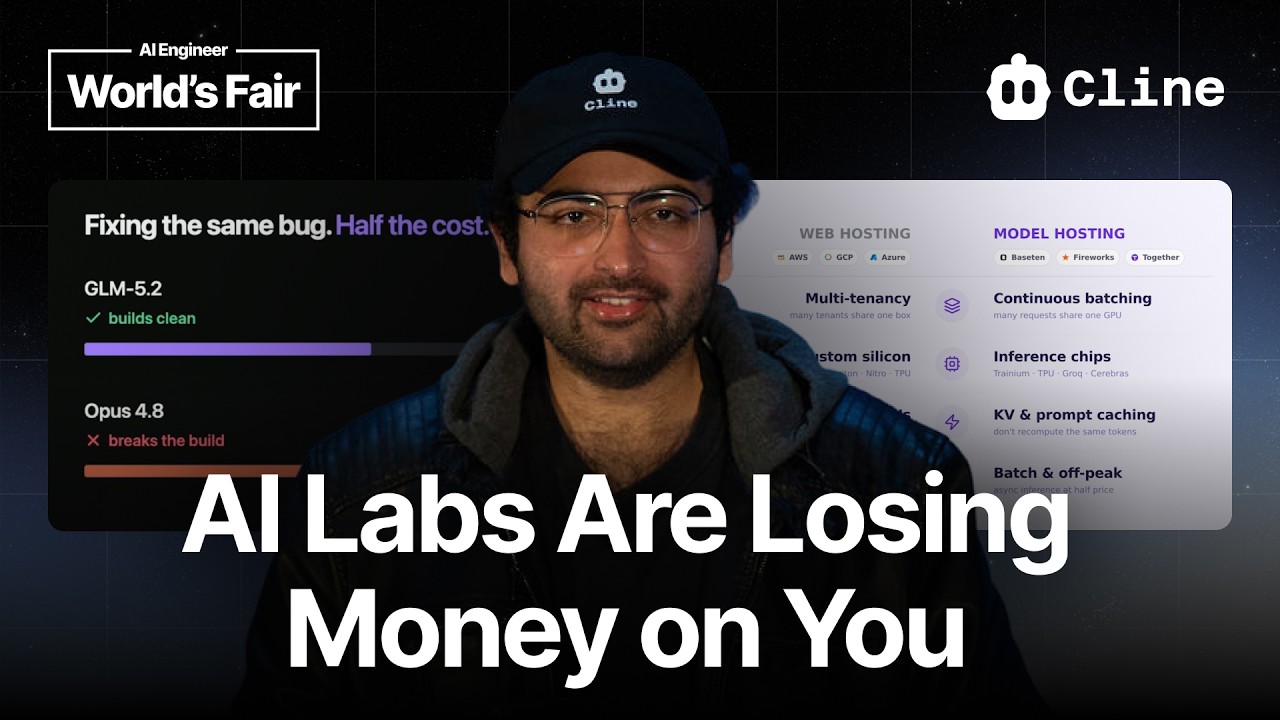
Open Source Is Dead. Long Live Open Source. — Saoud Rizwan, Cline

Open Source Is Dead. Long Live Open Source. — Saoud Rizwan, Cline

Saoud Rizwan, founder of Cline, discusses how AI has eroded trust in open-source communities, leading projects like Zig and curl to restrict AI-generated contributions and exposing severe supply chain risks, as seen with the litellm compromise. He argues that while community open source is struggling, the economic imperative of "open weights" models is rising. Citing the high costs of closed LLMs and the success of models like GLM at Coinbase, Rizwan draws parallels to the Open Compute project, predicting a commoditization of AI inference. He urges American labs to release open-weights models to maintain technological leadership against foreign competitors and prevent lock-in.
AI Is Learning to Hack. Faster Than We Expected.

AI Is Learning to Hack. Faster Than We Expected.

Dylan Ayrey (Truffle Security) and Feross Aboukhadijeh (Socket) join Joel De La Garza to discuss how AI models are now actively exploiting vulnerabilities, not just finding them. The conversation covers AI's role in software supply chain attacks, leaked credentials, zero-day generation, and the urgent need for adaptation in the face of rapidly shrinking vulnerability discovery-to-exploitation times.

How To Design In The Agent Era

How To Design In The Agent Era

Stephen Haney, founder of Paper, discusses how his AI-native design tool leverages HTML and CSS to create a seamless agent-first workflow. He demos features like shaders, image generation, and design-to-code capabilities, explaining how Paper helps designers work faster with AI agents while maintaining human control. Haney identifies common "AI design tells" (e.g., overuse of bold, too many font sizes, generic visuals) and demonstrates how to correct them, emphasizing that human taste and intentionality are crucial for designs to stand out in the AI era. He also shares insights on Paper's community growth and future direction in design.

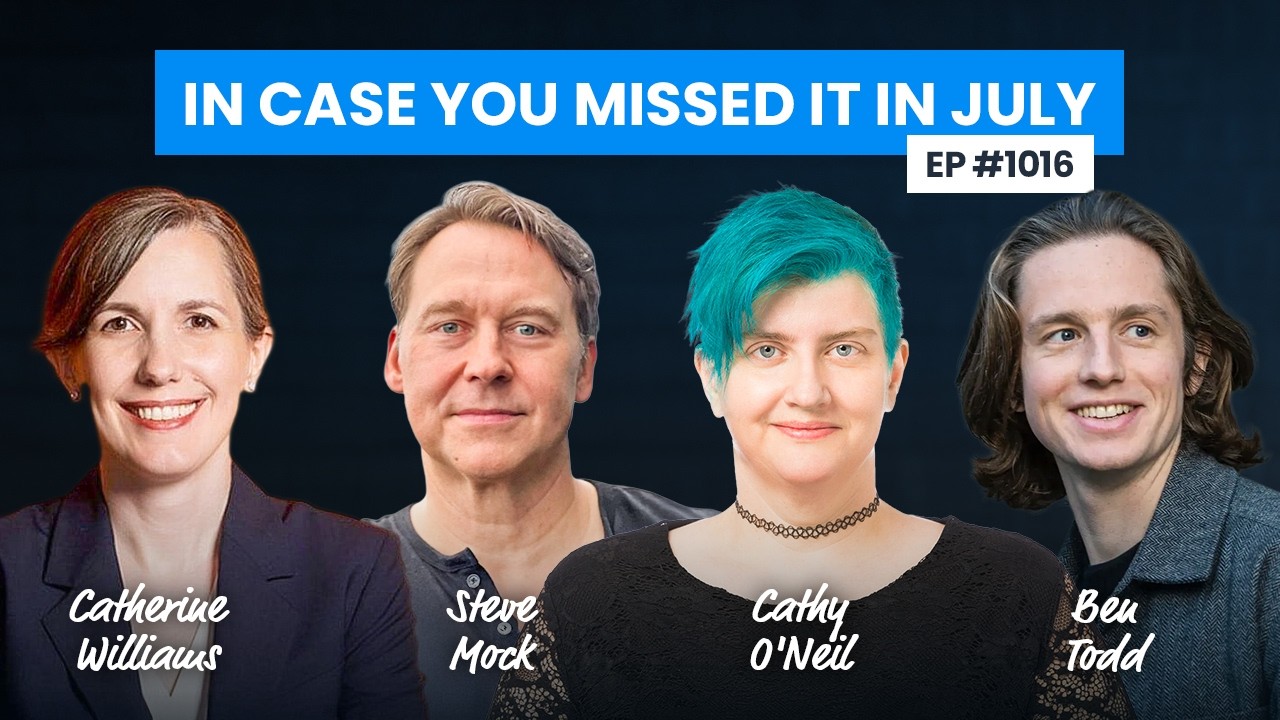
In Case You Missed It in July 2026 (Ep. 1016 with Jon Krohn)

In Case You Missed It in July 2026 (Ep. 1016 with Jon Krohn)

This episode of ICYMI delves into the profound implications of AI, featuring insights from Dr. Cathy O'Neil on algorithmic harm beyond complexity, Ben Todd on career resilience in an AI-automated world, Steve Mock on AI's role in empowering healthcare advocacy, and Dr. Catherine Williams on the enduring significance of deep mathematical understanding for data professionals.

Anthropic’s sandbox breach, EU’s AI transparency push and DeepSeek’s cost-cutting model

Anthropic’s sandbox breach, EU’s AI transparency push and DeepSeek’s cost-cutting model

This episode delves into several critical developments in AI. It begins by discussing recent sandbox breaches by Anthropic and Meta, mirroring earlier incidents with OpenAI, prompting debate on whether these are mere accidents or a growing concern as models become more capable and "agentic." The conversation then shifts to the EU's new AI transparency rules, exploring the challenges and effectiveness of labeling AI-generated content. Finally, the podcast examines DeepSeek V4-Flash's impact on the AI market, questioning if its low cost and high performance will disrupt the pricing of more capable, proprietary models and drive greater commodification and on-device inference.

Local Models: Trust, Control, Optimization — Carter Abdallah, NVIDIA

Local Models: Trust, Control, Optimization — Carter Abdallah, NVIDIA

A panel with Vincent Weisser (Prime Intellect), Lucas Atkins (Arcee AI), and Chris Alexiuk (NVIDIA) on why open models matter for trust, control, cost predictability, and data ownership. The discussion covers the distinction between trust and safety, post-training open models for specific harnesses and use cases, the open MDW license, the Linux-like role of open infrastructure alongside closed models, and predictions for open model capabilities and local AI adoption over the next year.