Ai

The Design-Code Roundtrip That Isn't — Jonathan Gordon, ReWeaver AI

The Design-Code Roundtrip That Isn't — Jonathan Gordon, ReWeaver AI

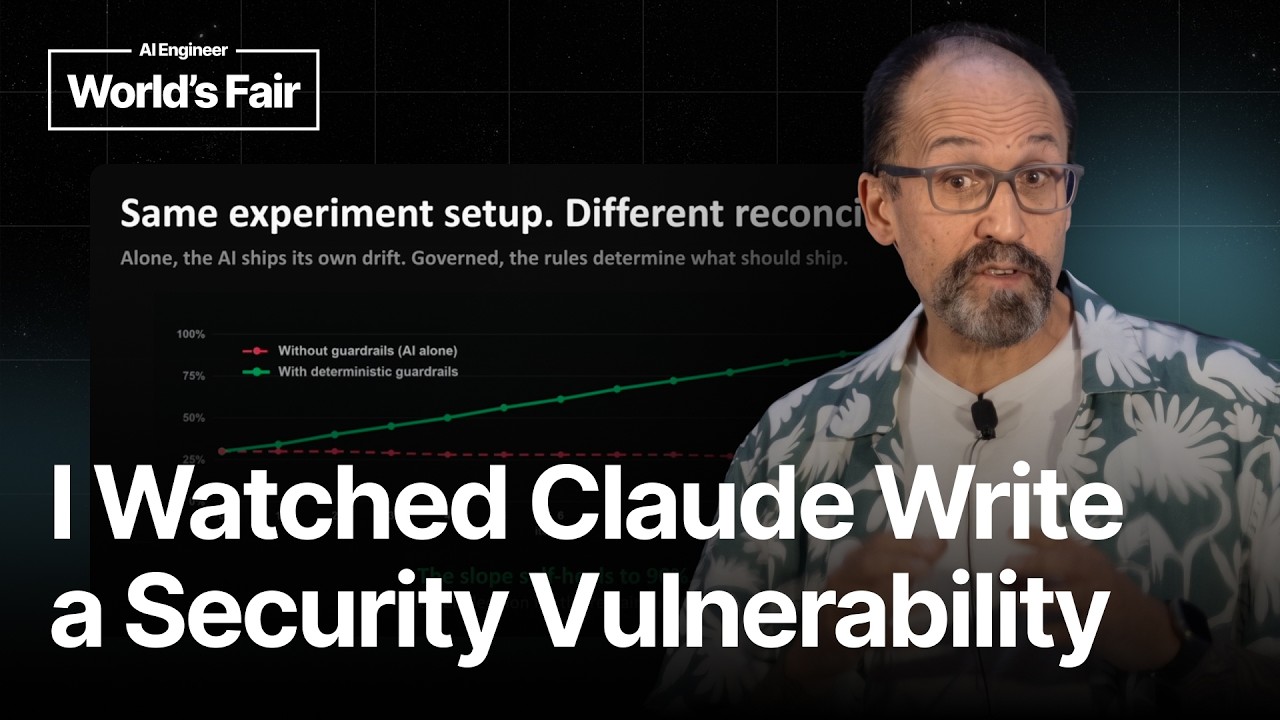
Jonathan Gordon, with three decades in dev tools, unpacks why AI hasn't solved the design-code roundtrip problem. He introduces ReWeaver, a tool that uses deterministic guardrails to detect and manage "drift" between AI-generated code and design, ensuring fidelity and control across dimensions like accessibility and design consistency, ultimately advocating for humans to remain in control.


How AI Is Rewriting the Power Law of Venture Capital

How AI Is Rewriting the Power Law of Venture Capital

This episode delves into how AI is fundamentally altering the power law of technology investing, making capital a compounding advantage for AI companies and expanding the total addressable market far beyond traditional software. The guests discuss rethinking portfolio construction, the challenges of evaluating true AI traction amidst hype, the struggles of legacy SaaS businesses, and future trillion-dollar opportunities in robotics, autonomy, healthcare, and physical infrastructure, emphasizing that the real bottleneck for AI's growth is often on the supply side, particularly compute and energy infrastructure.

AI Is Missing This Data

AI Is Missing This Data

David Fattal, CTO of Leia Inc., explains why stereo data is crucial for developing robust AI world models that can accurately understand 3D geometry and interact with the physical world. He contrasts it with monocular data, highlighting stereo's superior ability to ground AI in reality. Fattal introduces Leia's technology for glasses-free 3D displays on standard devices, predicting a "device-data flywheel" where accessible 3D hardware drives user-generated stereo content, providing essential data for AI advancement, a crucial differentiator for future AI companies.

Can AI help us better predict the weather?

Can AI help us better predict the weather?

Peter Battaglia of Google DeepMind discusses how AI is revolutionizing weather forecasting. From predicting Category 5 hurricanes like Melissa with unprecedented accuracy to enabling hourly global forecasts with WeatherNext 3, machine learning models are leveraging decades of physics data to provide critical early warnings, optimize renewable energy, and transform agricultural planning, fundamentally reshaping our understanding of atmospheric dynamics.

The Universal Remote Control for AI — Alex Hancock, Block

The Universal Remote Control for AI — Alex Hancock, Block

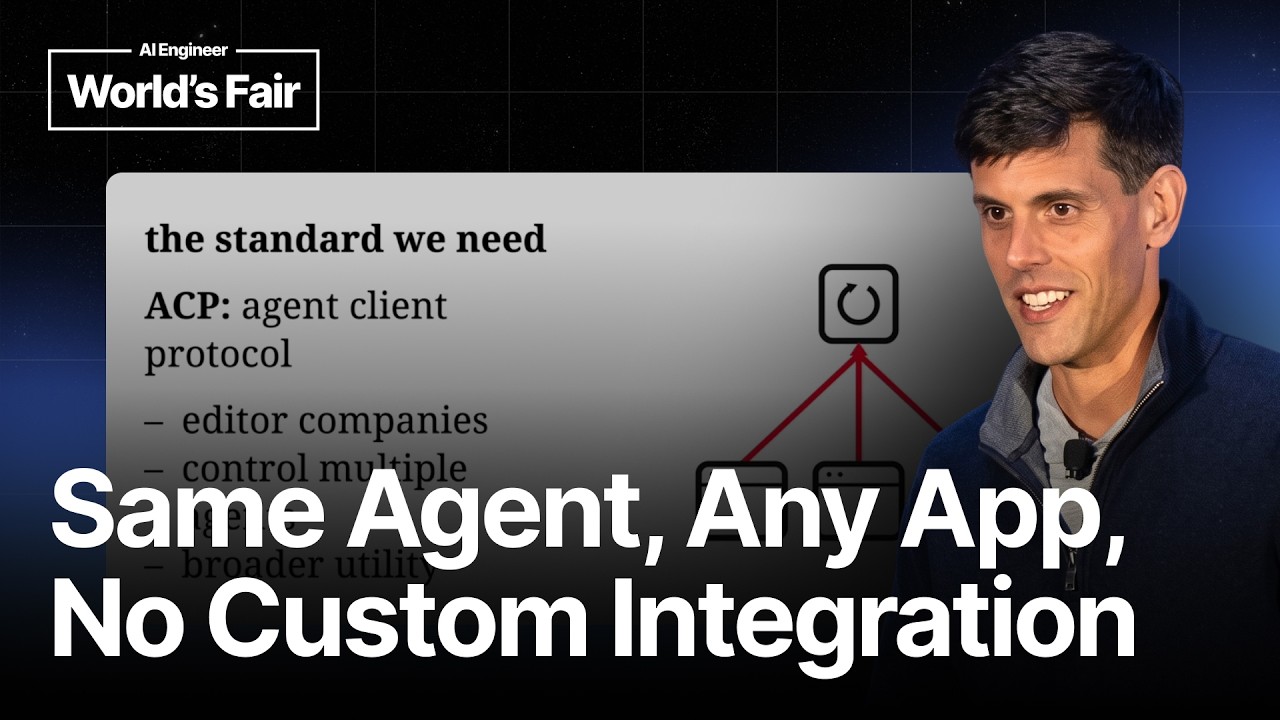
Alex Hancock discusses the need for a standardized protocol for client-to-agent communication in AI, similar to how MCP standardizes agent-to-tool interaction. He introduces the Agent Client Protocol (ACP), born from Zed and JetBrains, as a JSON RPC-based solution for client software to control agent harnesses, send tasks, and receive updates. Hancock demonstrates ACP's flexibility with multiple clients driving a single agent and highlights how its new remote transport capability, combined with MCP and model APIs, enables independent placement of all agentic stack components, fostering a competitive ecosystem that will significantly enhance user experience.

Your agents lack context: Here's how to fix "You're absolutely right!" — Brandon Waselnuk, Unblocked

Your agents lack context: Here's how to fix "You're absolutely right!" — Brandon Waselnuk, Unblocked

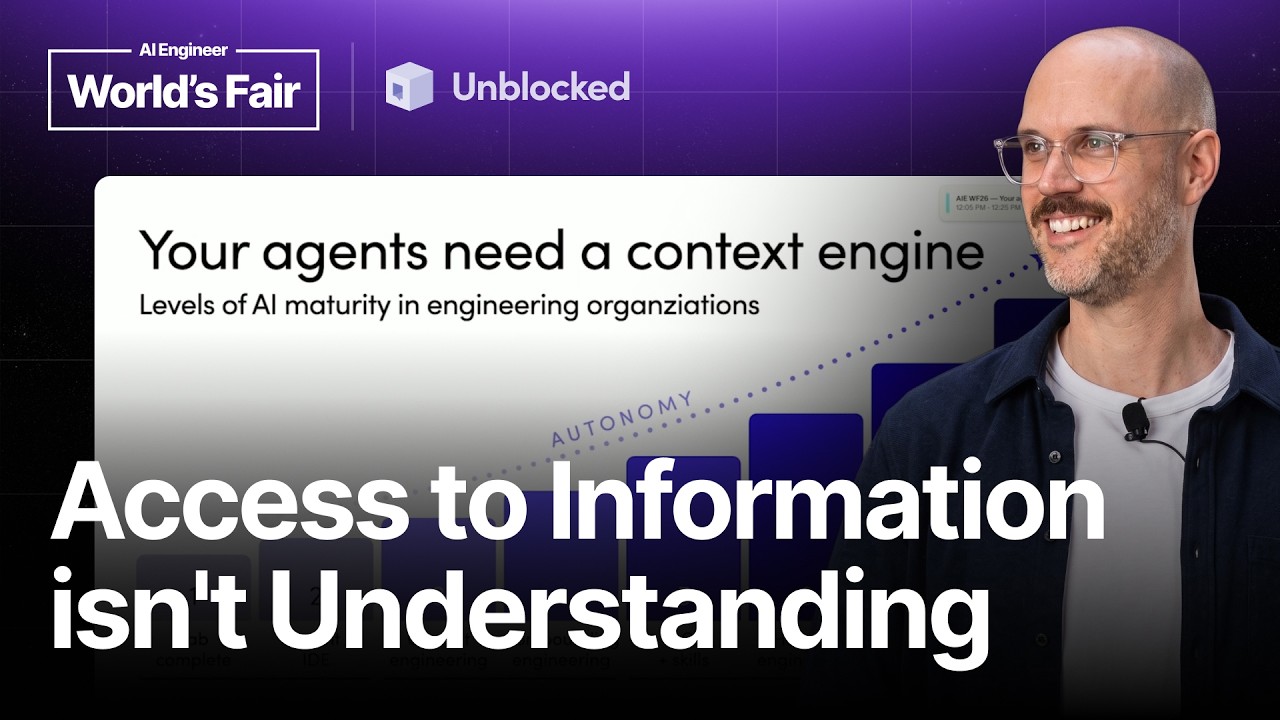
Brandon Waselnuk of Unblocked discusses the critical need for robust context engines in AI-driven software development. He explains how AI agents' lack of company-specific understanding leads to compounding costs like wasted tokens and rework. Waselnuk outlines common pitfalls in providing context and details six essential characteristics of an effective context engine, demonstrating its impact with a 50% token reduction and significant time savings. He also introduces three open-source tools from Unblocked, including a workshop to build a relational context engine, emphasizing that "access to information is not understanding" and that context, not intelligence, is the current bottleneck for AI effectiveness.