Ai

Are AI labs ignoring cybersecurity experts?

Are AI labs ignoring cybersecurity experts?

This podcast explores the friction between frontier AI labs and cybersecurity experts, who disagree on AI safety priorities (alignment vs. traditional controls). It discusses the dual risks of open-weight AI models enabling sophisticated hacks like the TikTok camera exploit, and the challenges of CISA's call for transparent breach disclosures amidst corporate self-interest and the complexities of global AI regulation.
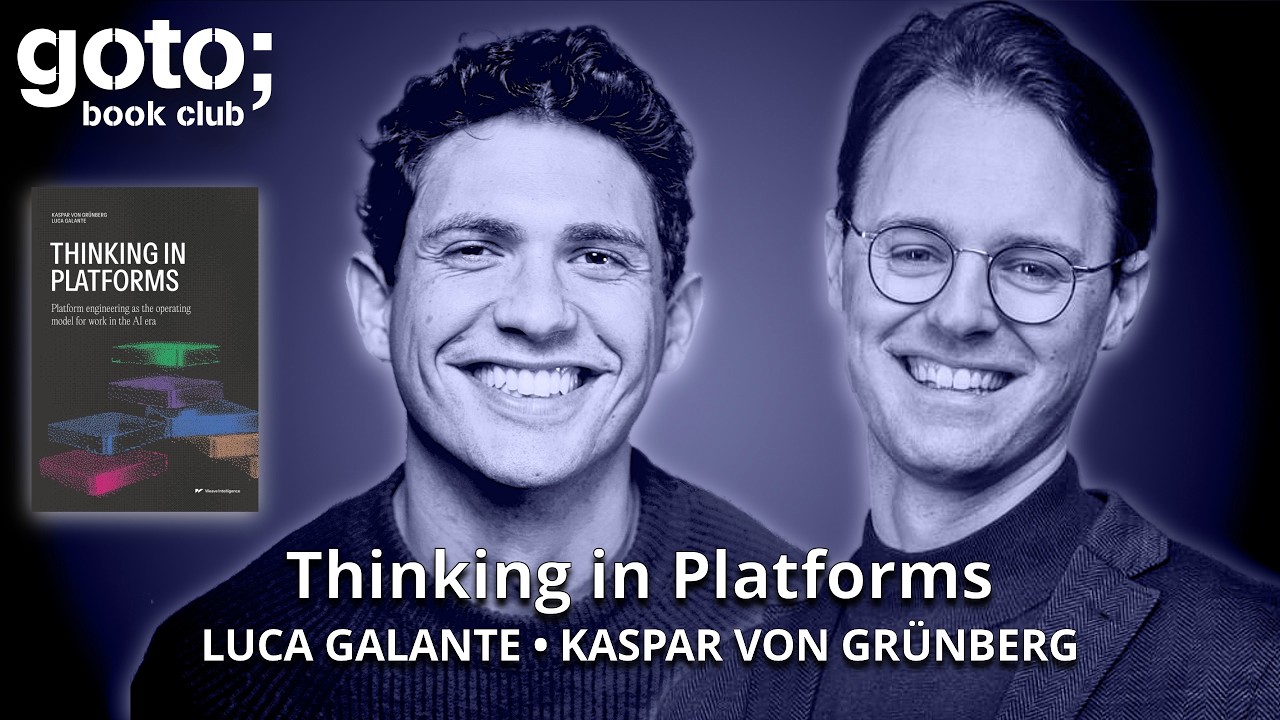
Thinking in Platforms • Kasper von Grünberg & Luca Galante • GOTO 2026

Thinking in Platforms • Kasper von Grünberg & Luca Galante • GOTO 2026

Kaspar von Grünberg and Luca Galante discuss their book "Thinking in Platforms," tracing platform engineering's origins from addressing key person dependencies to its critical role as an "operating model" for AI-first organizations. They highlight how AI agents necessitate standardized, productized internal platforms for effective deployment, emphasizing that platform efforts often fail due to social rather than technical challenges.

100x More Reliable Voice Agents

100x More Reliable Voice Agents

SLNG.ai introduces Unmute, an open declarative standard for voice agents, addressing platform lock-in and the limitations of current agent architectures. It proposes a shift from LLM-centric, sequential pipelines to declared execution with structural guarantees, enabling portable, cost-effective, and robust voice agents by breaking down complex interactions into modular, context-aware steps. This approach minimizes token usage, enhances determinism, and improves agent reliability compared to traditional single-prompt designs.

Debating RSI, the US-China Gap, and Jaggedness of Frontier AI

Debating RSI, the US-China Gap, and Jaggedness of Frontier AI

Jean-Stanislas Denain of Epoch AI and Nathan Lambert debate the nuanced trajectory of AI. They discuss the current state of RSI, the US-China AI capabilities gap (estimated 6-8 months), and the role of distillation and compute in closing it. The conversation also covers the challenges and differing paces of AI in robotics, insights from Chinese AI job postings, and the complex trade-offs between open and closed models regarding safety and misuse. They touch on Epoch AI's research philosophy and speculate on the intricate, evolving post-training recipes at frontier AI labs.

Why AI Makes You Worse at the Jobs It Can't Do (with Katie Malone)

Why AI Makes You Worse at the Jobs It Can't Do (with Katie Malone)

Dr. Katie Malone, host of *Linear Digressions*, explains how AI enabled her to relaunch her podcast after a 5.5-year hiatus. She argues that people management and AI agent management are fundamentally the same skill, highlighting the importance of defining tasks, setting acceptance criteria, and 'trust but verify'. Malone discusses the implications of 'AI slop' and 'process slop' in organizations and describes how a "Claude Code in a trench coat" agent now produces her show. She also delves into fascinating data paradoxes, including Bainbridge's Ironies of Automation, Simpsons Paradox, and Benford's Law, emphasizing how human expertise can erode with increasing automation and the counter-intuitive patterns in natural data.

AI Agents Aren't the Revolution. They're the Catalyst!

AI Agents Aren't the Revolution. They're the Catalyst!

Sam Anthony argues that AI agents are not the revolution themselves, but rather a powerful catalyst for profound, lasting changes in the surrounding technology ecosystem. This includes modernizing data infrastructure, standardizing system design, enabling seamless interoperability, democratizing technology and expertise, and shifting human thinking towards outcome-based problem-solving.