Ai

AI Is Exposing Your Data: An AI Security Problem You Can't See

AI Is Exposing Your Data: An AI Security Problem You Can't See

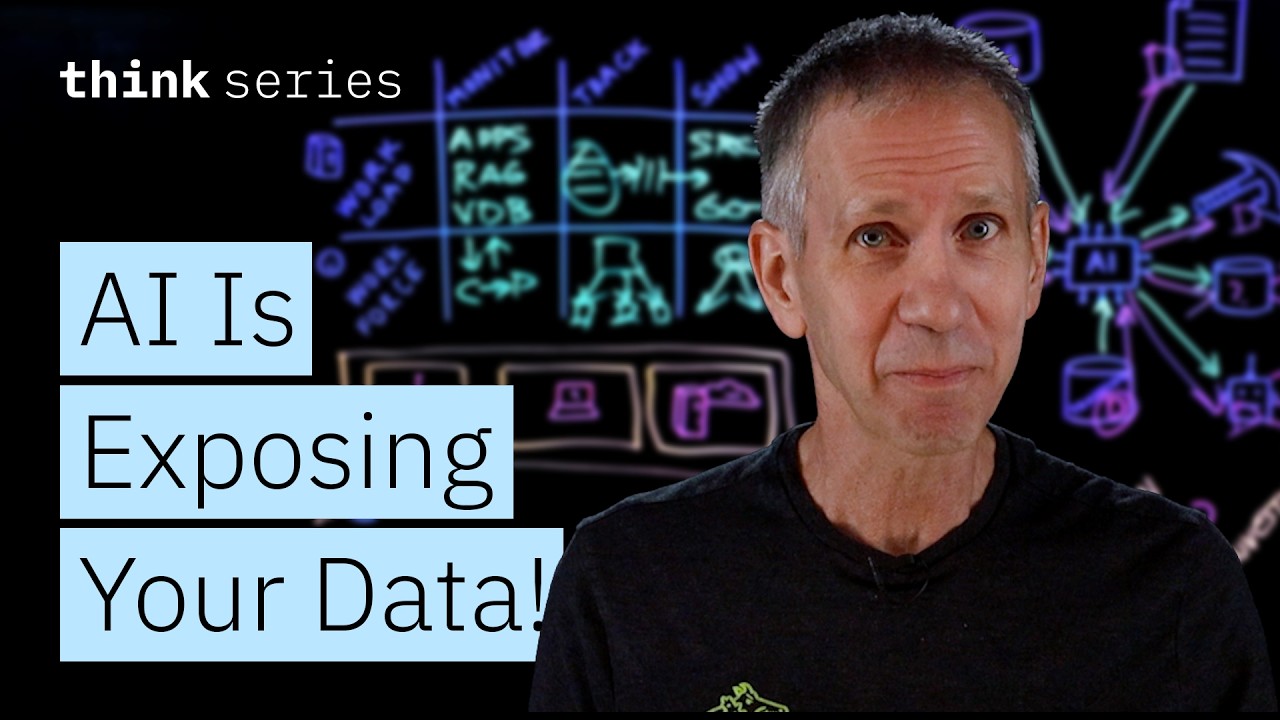
Jeff Crume explains how AI agents, RAG pipelines, prompts, tools, and models move sensitive data through modern AI systems, and why traditional DLP falls short. He outlines a unified approach built on data lineage, workload and workforce visibility, proactive risk identification, and compliance reporting.
Can Rewriting an AI Agent Bend the Intelligence Curve? - Zhengyao Jiang

Can Rewriting an AI Agent Bend the Intelligence Curve? - Zhengyao Jiang

Weco let an AI coding agent rewrite the harness around a fixed language model for eight days. Zhengyao Jiang explains what the reported gains show, where the evidence stops short of recursive self-improvement, how reward hacking complicates evaluation, and why human-designed abstractions still anchor the search.

We Let Claude Code and Codex Race Human Researchers — Elie Bakouch, Prime Intellect

We Let Claude Code and Codex Race Human Researchers — Elie Bakouch, Prime Intellect

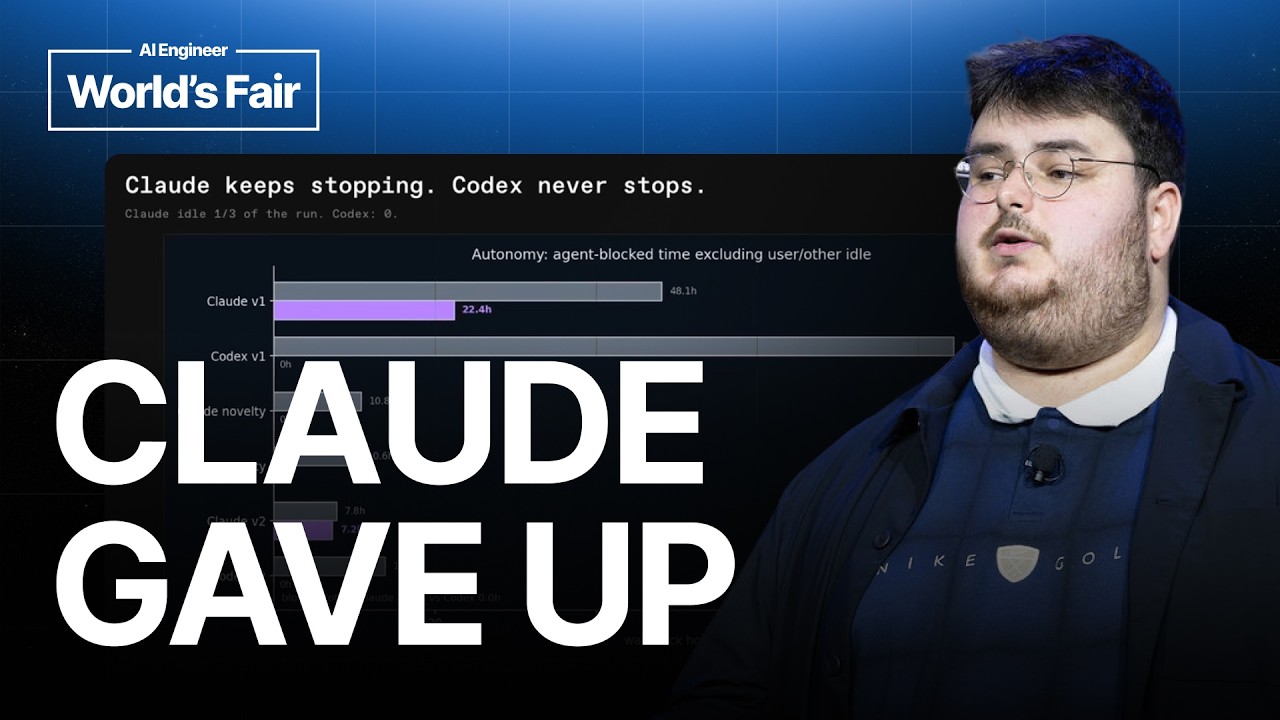
Elie Bakouch, a research engineer at Prime Intellect, reports on setting Claude Code and Codex loose on the community Optimizer Speedrun, a race to train a GPT-2-level model in the fewest steps. Both agents beat the human record, but they behaved very differently, and none of them invented a new optimizer. The talk closes with a proposed AlphaEvolve-style discovery loop and an argument for doing this research openly.

Beating RL With Reflection: GEPA and Optimize Anything — Lakshya A. Agrawal, GEPA

Beating RL With Reflection: GEPA and Optimize Anything — Lakshya A. Agrawal, GEPA

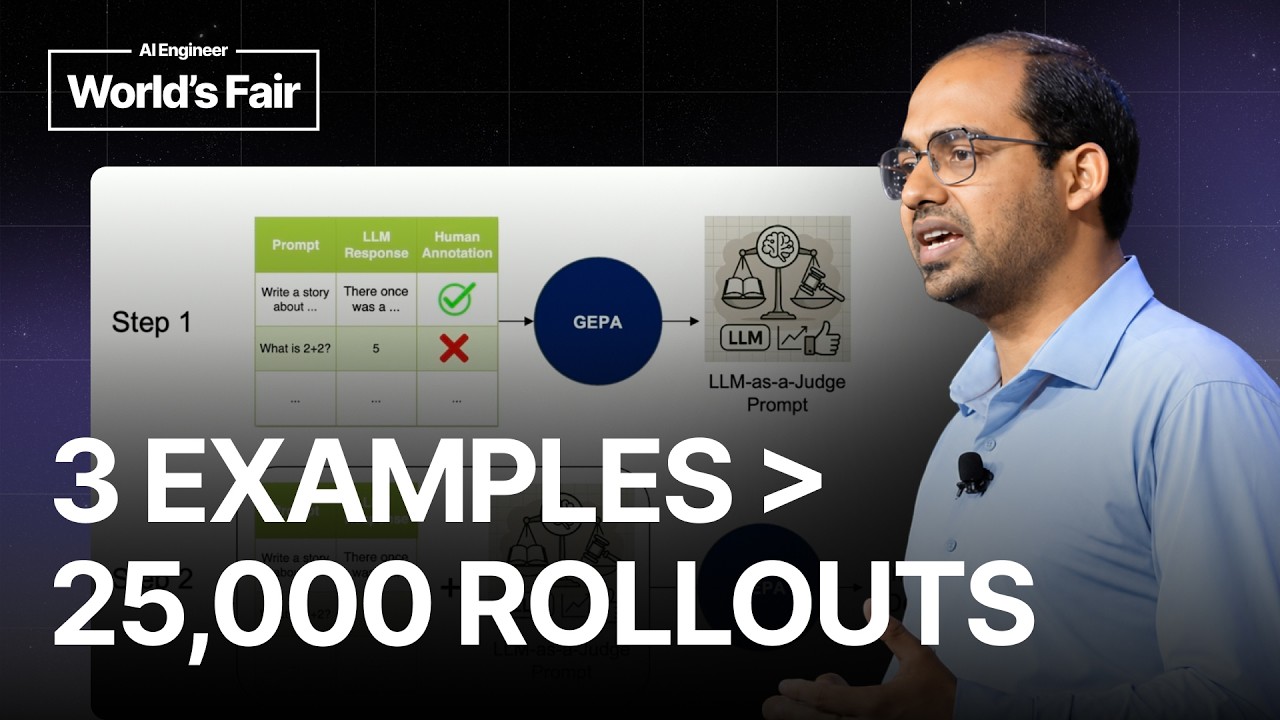
Lakshya Agrawal, creator of GEPA and a PhD student at UC Berkeley's Sky Computing Lab, presents reflective optimization as an alternative to scalar-reward reinforcement learning. GEPA lets a model read full rollout traces, including reasoning, tool calls, and error messages, and rewrite prompts from that feedback, with a Pareto candidate pool guarding against local optima. The talk covers the GEPA vs. GRPO sample-efficiency comparison, domain-knowledge discovery, the Optimize Anything API for text-based artifacts like code, harnesses, and skills, and production results from Databricks, Snorkel, and others.

Long-Horizon Agents Need Experiments, Not Just Prompts — Erina Karati

Long-Horizon Agents Need Experiments, Not Just Prompts — Erina Karati

Erina Karati and Arunachalam Manikandan describe Project Paradox, a Supercell framework for game agents with per-agent memory, emotions and trust scores, and how they wrapped it in an autoresearch loop to fix long-horizon failures such as lost rumor sources and hardened uncertainty. The talk covers controlled scenario suites, a balanced scorecard, a small frozen policy surface, rollback discipline, and lessons applicable to support, research, coding and personal assistant agents.

An AI Research Agent That Runs Your Experiments — Tim Sweeney, Weights & Biases

An AI Research Agent That Runs Your Experiments — Tim Sweeney, Weights & Biases

Tim Sweeney, principal engineer at Weights & Biases, demos ARIA, W&B's agent for automated ML research. ARIA launches and monitors GPU training jobs on Karpathy's autoresearch project, surfaces patterns across 200+ experiments, and builds reports and dashboards. The talk then covers how the team built ARIA with Weave observability, LLM judges, YAML-based tasks as unit tests, and nightly evals, and closes with practical tips for productionizing agents.