Ai

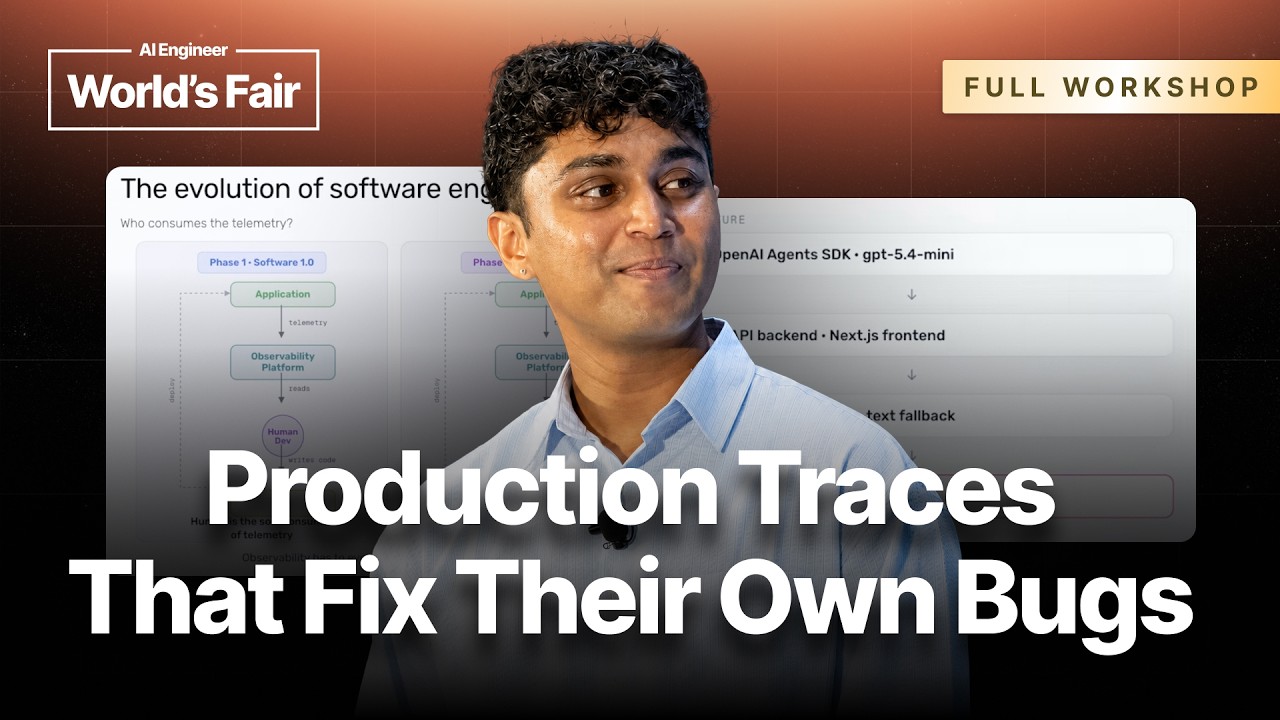
Building Self-Learning Loops for Your Agent — Fuad Ali, Arize AI

Building Self-Learning Loops for Your Agent — Fuad Ali, Arize AI

Fuad Ali demonstrates how a production failure in a shopping agent, a price filter that ignores budget limits, can become a closed improvement loop. Arize Signal and Arize Skills detect and investigate the failure from traces and code, harness-based judges assess outcomes with tool access and external context, and agent experiments validate the proposed fix against real failing traces before it ships.
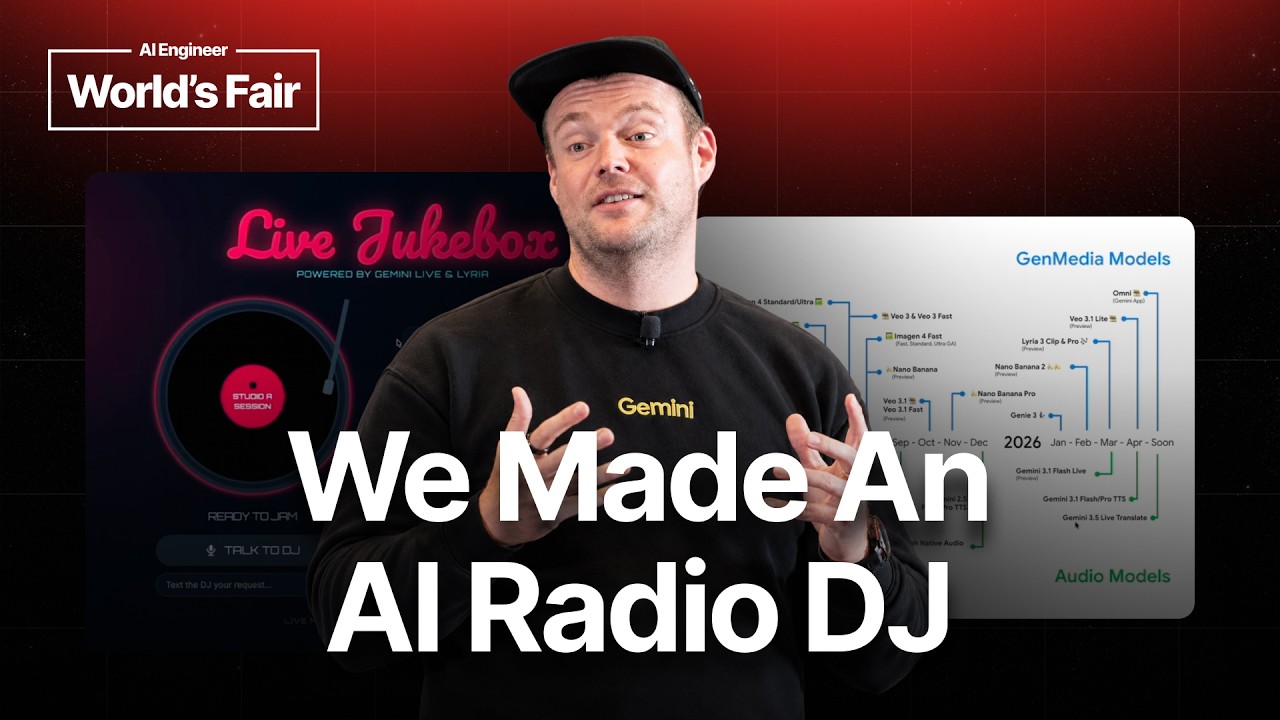
Can Your Agent Hear You Now? Building Live Voice Agents with Gemini — Thor Schaeff

Can Your Agent Hear You Now? Building Live Voice Agents with Gemini — Thor Schaeff

A live tour of Gemini's real-time and generative media stack: stateful image chaining with the Interactions API, near real-time speech translation with Gemini 3.5 Live Translate, a tool-calling AI radio DJ powered by Lyria 3, and a deep look at how the native-audio Live API works over WebSockets, including its 90-language support, barge-in and grounding.

Why every company now needs to think and operate like a lab team | Josh Woodward (VP Google Labs)

Why every company now needs to think and operate like a lab team | Josh Woodward (VP Google Labs)

Josh Woodward, head of Google Labs, the Gemini app, and AI Studio, explains why every company needs to operate like a labs team in the AI era. He covers where great ideas really come from, the almost-possible framework, how to recognize product-market fit by watching people's eyes, when to kill an idea, the skills rising in value such as unlearning rate and explosive endurance, why roles are not collapsing into a single builder, and how to structure an internal lab that graduates ideas without being crowded out.

Building AI Agents with Real-Time Web Data — Yohan Raju, Bright Data

Building AI Agents with Real-Time Web Data — Yohan Raju, Bright Data

Yohan Raju of Bright Data shows how an AI agent can combine a live Amazon listing with Reddit sentiment to produce a purchase recommendation, arguing that agents need fresh, structured web data rather than relying only on pre-trained knowledge or pre-indexed retrieval.

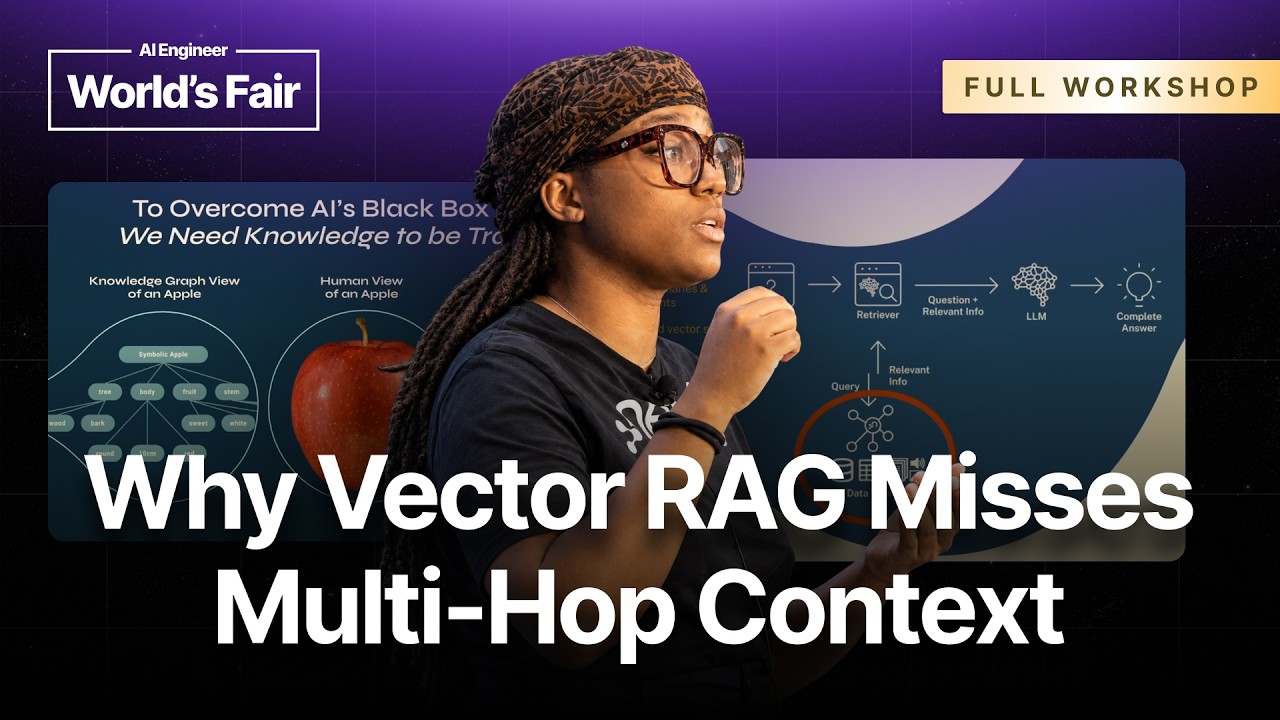
RAG Needs a Map: Using GraphRAG to Retrieve Connected Context — Nyah Macklin, Neo4j

RAG Needs a Map: Using GraphRAG to Retrieve Connected Context — Nyah Macklin, Neo4j

A hands-on GraphRAG workshop from Neo4j showing how combining vector search with a knowledge graph gives an agent connected context, multi-hop traversal, and explainable answers. It covers the difference between semantic similarity and relationships, LLM-driven entity and relationship extraction under a fixed schema, building an Aura database and Python pipeline, and configuring an Aura agent with similarity search and text-to-Cypher, with a closing check that shows why visible query evidence matters.

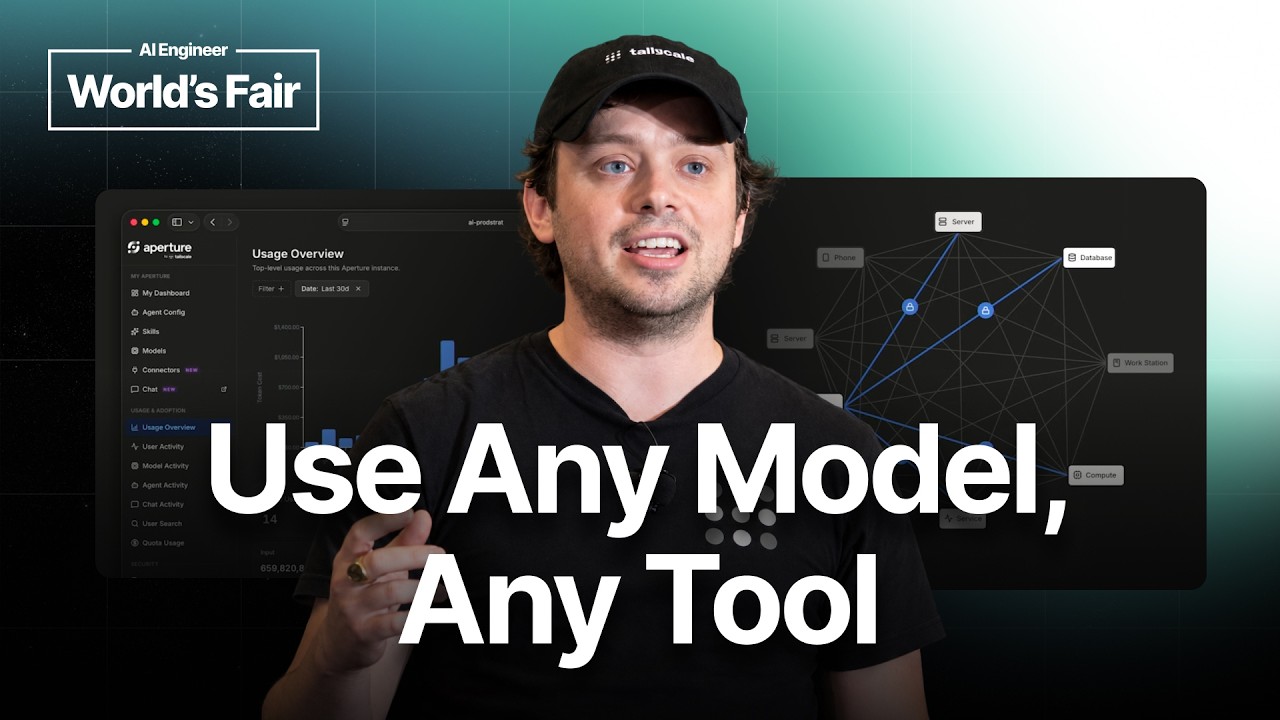
An AI Future Without the Lock-In — Remy Guercio, Tailscale

An AI Future Without the Lock-In — Remy Guercio, Tailscale

Remy Guercio of Tailscale argues that the era of unlimited AI budgets is over and that teams need to escape lock-in while proving real ROI. He breaks an internal AI deployment into four layers (models, data connectors, interfaces, and sandboxes) and presents an AI gateway as the way to keep each layer swappable. He demonstrates how Tailscale's Aperture uses tailnet identity instead of shared API keys, sets per-model budgets, serves as both an LLM and MCP gateway, centralizes authentication for coding agents, and provides logs for diagnosing agent behavior.