A discussion on the evolving economics of autonomous vehicles, driven by end-to-end AI, and the growing local opposition to AI data centers due to concerns over resources like water, electricity, and noise.
Waymo: The future of autonomous driving with Vincent Vanhoucke
Waymo Distinguished Engineer Vincent Vanhoucke discusses the core challenges of autonomous driving, explaining how Waymo fuses data from cameras, LiDAR, and radar to build a robust perception system. He delves into the "closed-loop" problem, the critical role of generative AI and simulation in training and validation, and how modern multimodal models are used in a teacher-student framework to distill vast world knowledge into the vehicle's onboard system, aiming for a safety standard that surpasses human performance.
From Self-driving to Autonomous Voice Agents — Brooke Hopkins, Coval
Brooke Hopkins, founder of Coval, discusses how evaluation methodologies from the autonomous vehicle industry, particularly from her experience at Waymo, can be adapted to build reliable, scalable, and trustworthy voice and conversational AI systems.
An exploration of Waymo's research into EMMA, an End-to-End Multimodal Model for Autonomous Driving. This summary details how foundation models like Gemini are being adapted to create a single, generalizable system that processes raw sensor data directly into driving decisions, aiming to solve the long-tail problem and improve scalability. It also covers the use of generative AI for advanced sensor simulation and model evaluation.
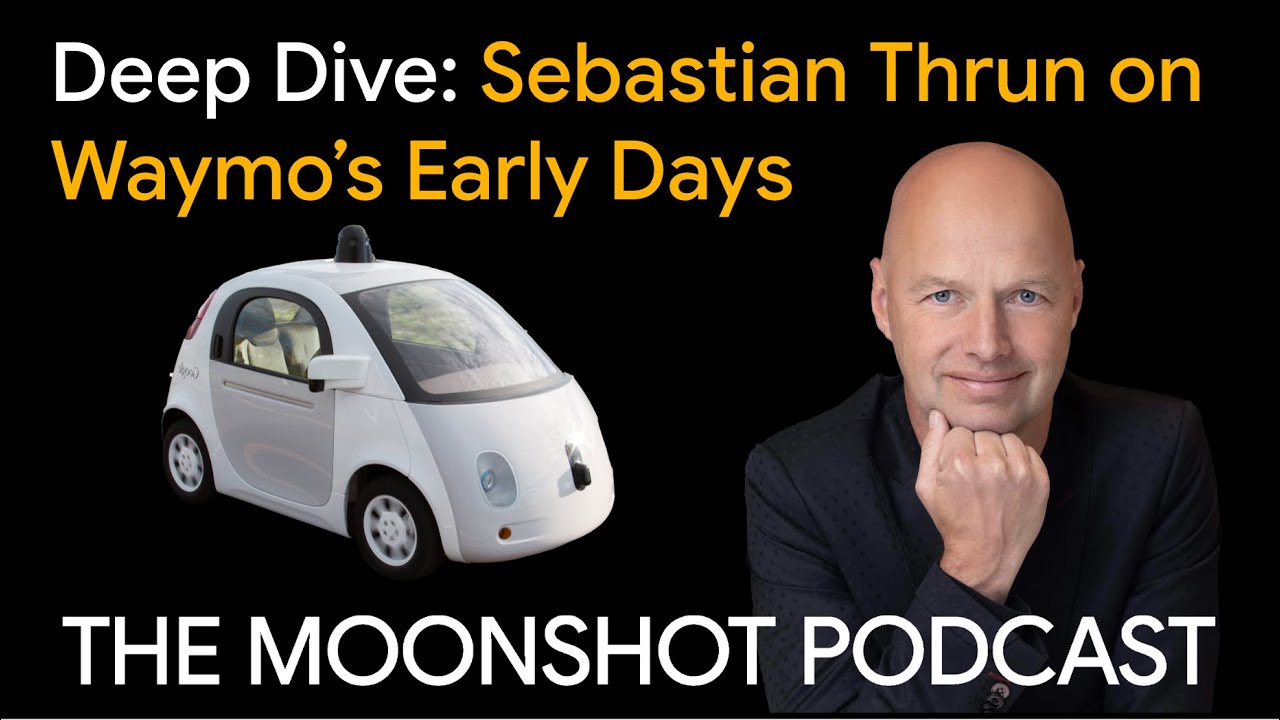
Moonshot Podcast Deep Dive: Sebastian Thrun on Waymo’s Early Days
Sebastian Thrun, co-founder of Google's Moonshot Factory, recounts the early days of X and the Waymo self-driving car project. He shares insights into the unique management philosophy that fostered radical innovation, the ethical responsibilities of technologists, and his optimistic vision for the future of AI.