Security

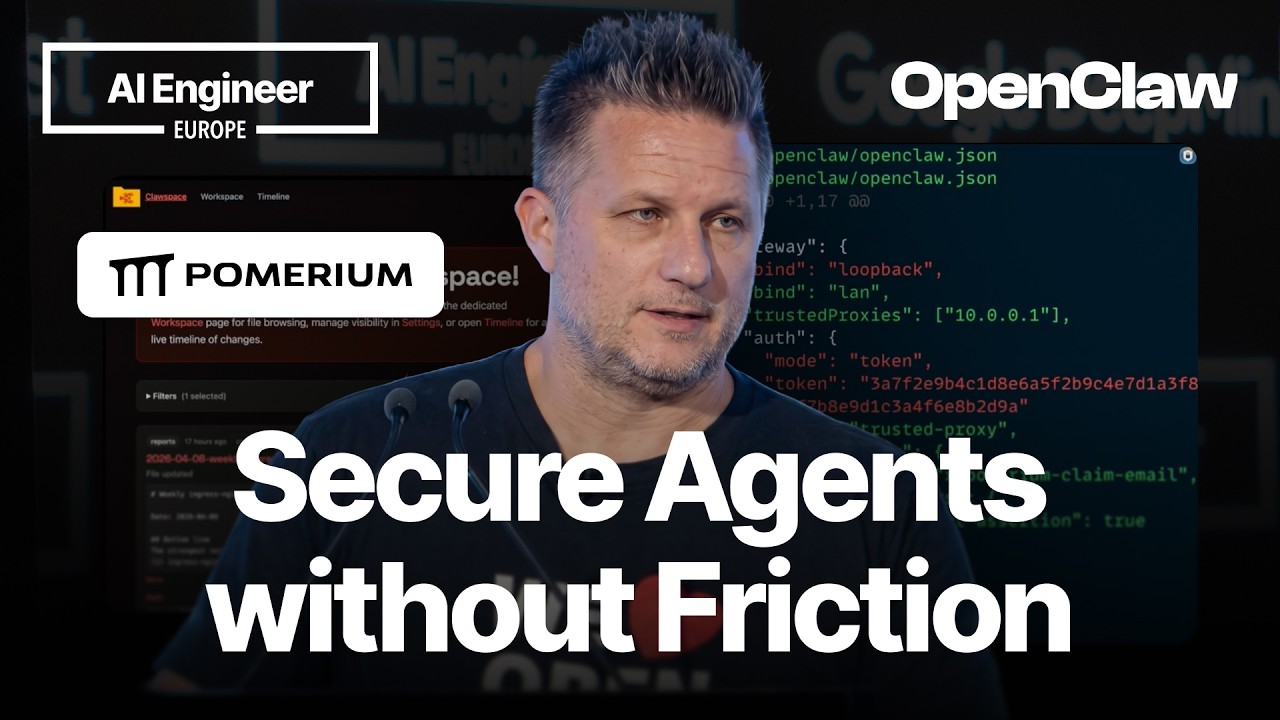
Claws Out: Securing and Building with OpenClaw - Nick Taylor, Pomerium

Claws Out: Securing and Building with OpenClaw - Nick Taylor, Pomerium

This talk details how the speaker contributed a "trusted-proxy auth mode" to the OpenClaw project to enhance security and user experience by eliminating the need for tokens and device pairing. It explains the technical implementation of this mode using Identity-Aware Proxies like Pomerium. The speaker also demonstrates a unique workflow, building and live-editing a Multi-Modal Chatbot Protocol (MCP) application directly within ChatGPT, controlled by their OpenClaw instance via Discord, showcasing the power of secure, natural language-driven web development.

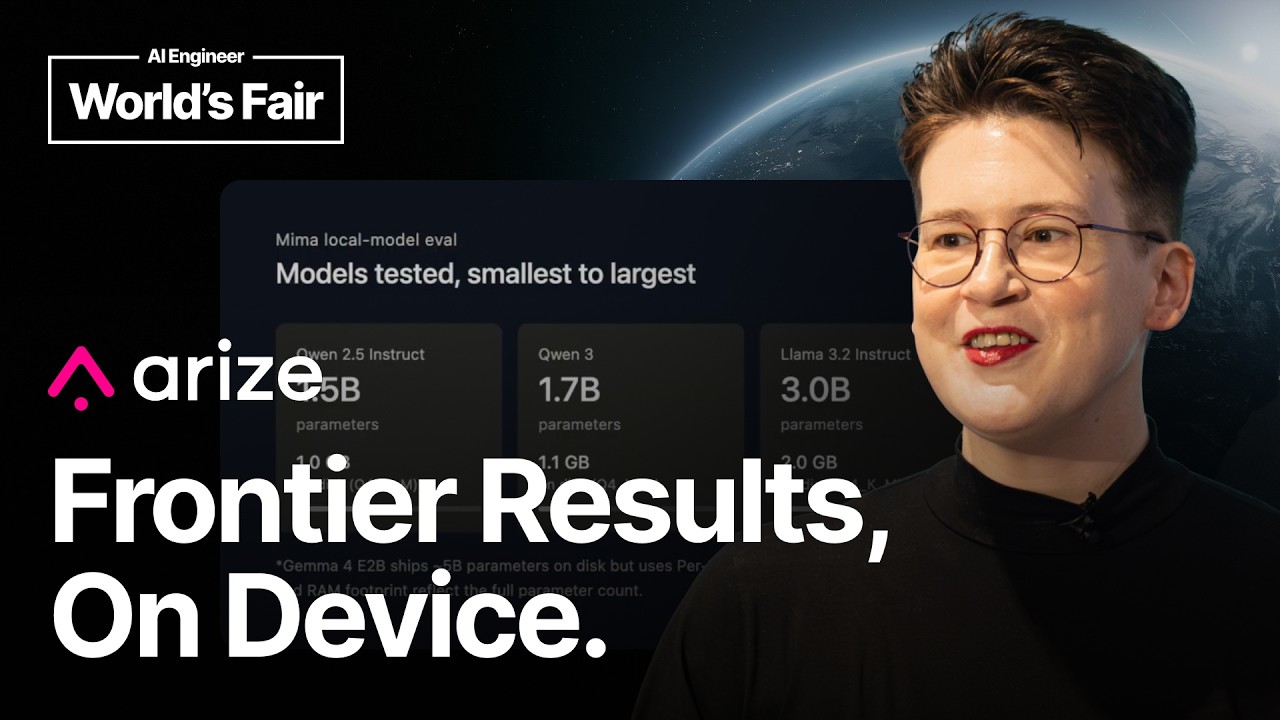
Frontier results, on device - RL Nabors, Arize

Frontier results, on device - RL Nabors, Arize

RL Nabors discusses the significant costs associated with using frontier AI models, covering security, latency, and financial implications. She introduces a framework for right-sizing AI solutions by leveraging smaller, task-specific models and Small Language Models (SLMs). The framework details how to prove task feasibility, establish success criteria with golden datasets, conduct capability evaluations (using tools like Phoenix), and select the most appropriate "Small And Good Enough" (SAGE) model. Nabors further demonstrates how prompt engineering, particularly few-shot prompting, and post-processing can close performance gaps with larger models, while advocating for continuous regression evaluations to maintain performance integrity. The overarching message is to "prototype big, deploy small" to optimize AI deployments.

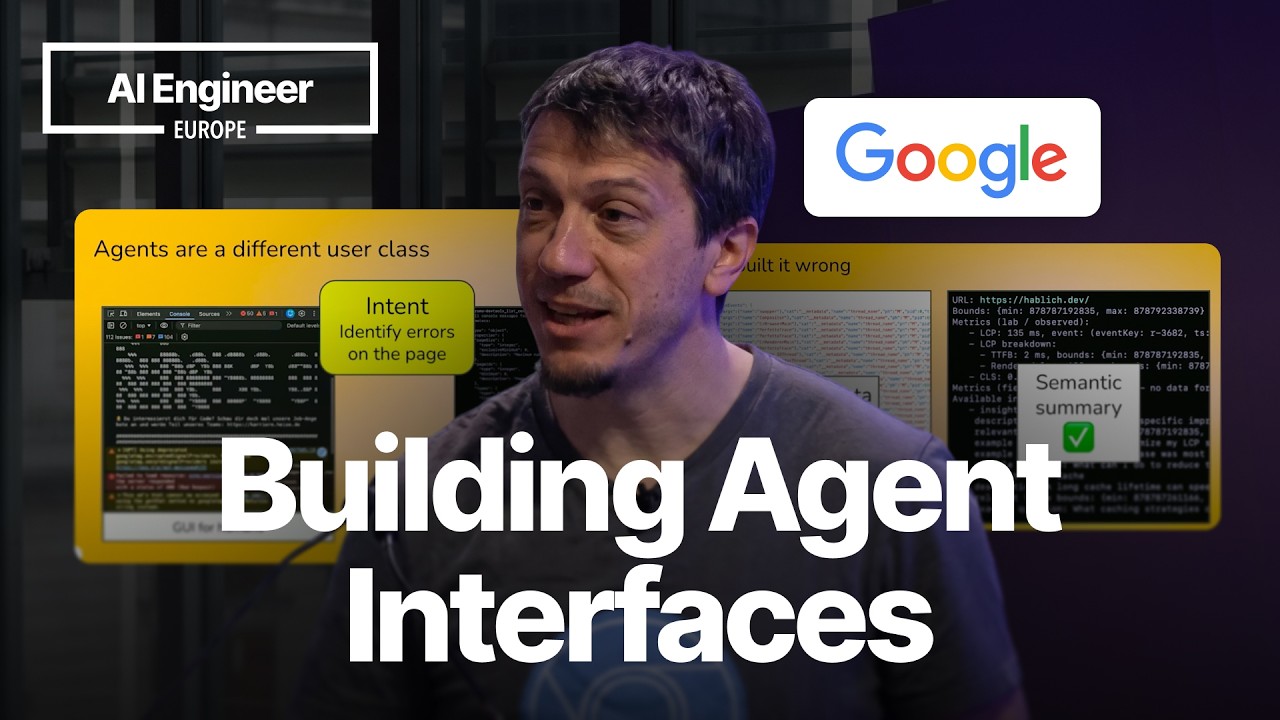
Building Agent Interfaces: Lessons from Chrome DevTools (MCP) for Agents — Michael Hablich, Google

Building Agent Interfaces: Lessons from Chrome DevTools (MCP) for Agents — Michael Hablich, Google

Michael Hablich from the Chrome DevTools team shares hard-won engineering lessons on building effective and secure interfaces for AI agents. The talk covers moving from raw data to semantic summaries, measuring interface efficiency with 'tokens per successful outcome', designing for error recovery, and the critical importance of trust boundaries and deliberate friction in UI design for agents.

Language-Agnostic Detection of Bugs in Zero-Knowledge Proof Programs

Language-Agnostic Detection of Bugs in Zero-Knowledge Proof Programs

A summary of a talk on a new language-agnostic approach using abstract interpretation to find critical vulnerabilities in Zero-Knowledge Proof (ZKP) programs by modeling and detecting mismatches between prover computations and verifier constraints.

Skill Issue: How We Used AI to Make Agents Actually Good at Supabase — Pedro Rodrigues, Supabase

Skill Issue: How We Used AI to Make Agents Actually Good at Supabase — Pedro Rodrigues, Supabase

A deep dive into building, testing, and iterating on Agent Skills to improve AI agent performance. This workshop covers the core concepts of progressive disclosure, eval-driven development, and practical application using a real-world Supabase and PostgreSQL security scenario.

Q‑Day Explained: How Quantum Computing Threatens Today’s Cryptography

Q‑Day Explained: How Quantum Computing Threatens Today’s Cryptography

Q-Day, the day a quantum computer will be powerful enough to break current encryption standards, is an inevitable threat. This summary explains how quantum algorithms like Shor’s and Grover’s will compromise both asymmetric and symmetric cryptography, the severe consequences for data confidentiality and digital trust, and why the "Harvest Now, Decrypt Later" attack vector makes immediate migration to post-quantum cryptography a critical priority for all organizations.