Sandboxing

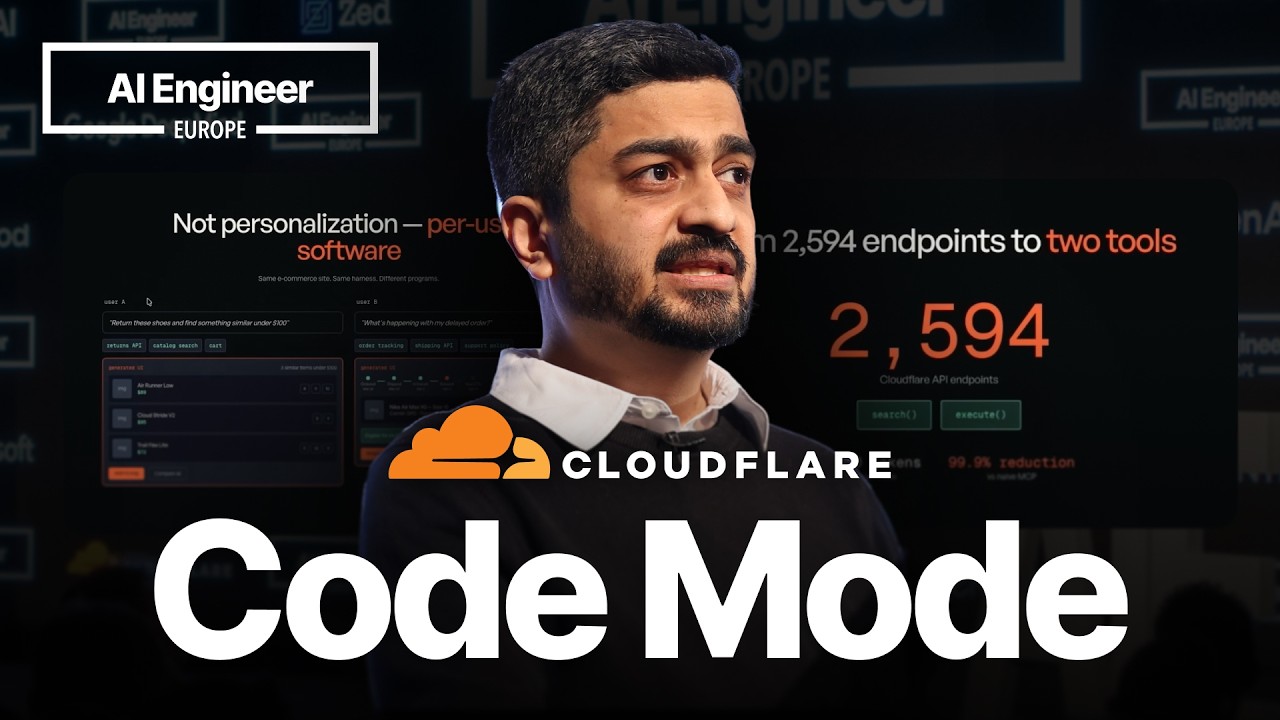
Code Mode - Sunil Pai, Cloudflare

Code Mode - Sunil Pai, Cloudflare

Sunil Pai from Cloudflare introduces "Code Mode," a paradigm where AI agents generate and execute code (like JavaScript) instead of using traditional JSON-based tool calling. This approach enables more efficient, stateful, and complex interactions with large-scale systems by leveraging the inherent capabilities of programming languages.

How Claude Code Works - Jared Zoneraich, PromptLayer

How Claude Code Works - Jared Zoneraich, PromptLayer

An unofficial deep dive into the architecture of modern coding agents like Claude Code. Jared Zoneraich of PromptLayer explains the shift towards simpler, model-centric designs, detailing the core components like the master loop, tool calling (especially `bash`), and context management strategies. The talk also contrasts Claude's philosophy with other agents like Codex, AMP, and Cursor, offering practical takeaways for building your own AI agents.

Beyond Sonic Pi: Tau5 & the Art of Coding with AI • Sam Aaron • GOTO 2025

Beyond Sonic Pi: Tau5 & the Art of Coding with AI • Sam Aaron • GOTO 2025

Sam Aaron, creator of Sonic Pi, discusses the journey from teaching children to code with music to building the next generation of live coding environments. He details the limitations of Sonic Pi (security, deployment) that led to Tau5, a new system built on Elixir and the BEAM. Tau5 is designed to be web-based, secure via a sandboxed Lua environment, and collaborative. A key focus is the integration of AI as a creative partner, using sophisticated tooling to allow AI agents to safely improvise and interact with the system.

How we hacked YC Spring 2025 batch’s AI agents — Rene Brandel, Casco

How we hacked YC Spring 2025 batch’s AI agents — Rene Brandel, Casco

A security analysis of YC AI agents reveals that the most critical vulnerabilities are not in the LLM itself, but in the surrounding infrastructure. This breakdown of a red teaming exercise, where 7 out of 16 agents were compromised, highlights three common and severe security flaws: cross-user data access (IDOR), remote code execution via insecure sandboxes, and server-side request forgery (SSRF).

Safety and security for code executing agents — Fouad Matin, OpenAI (Codex, Agent Robustness)

Safety and security for code executing agents — Fouad Matin, OpenAI (Codex, Agent Robustness)

Fouad Matin from OpenAI's Agent Robustness and Control team discusses the critical safety and security challenges of code-executing AI agents. He explores the shift from models that *can* execute code to defining what they *should* be allowed to do, presenting practical safeguards like sandboxing, network control, and human review, drawing from OpenAI's experience building Code Interpreter and the open-source Code Interpreter CLI.