Reasoning

No Priors Ep. 138 | The Best of 2025 (So Far) with Sarah Guo and Elad Gil

No Priors Ep. 138 | The Best of 2025 (So Far) with Sarah Guo and Elad Gil

A recap of key conversations from the No Priors podcast in 2025, featuring insights from leaders at OpenAI, Harvey, and the Center for AI Safety on topics ranging from reasoning models and spatial intelligence to the geopolitical risks of superintelligence and the human impact of AI in healthcare.
AI Agents + LLM Reasoning: Transforming Autonomous Workflows

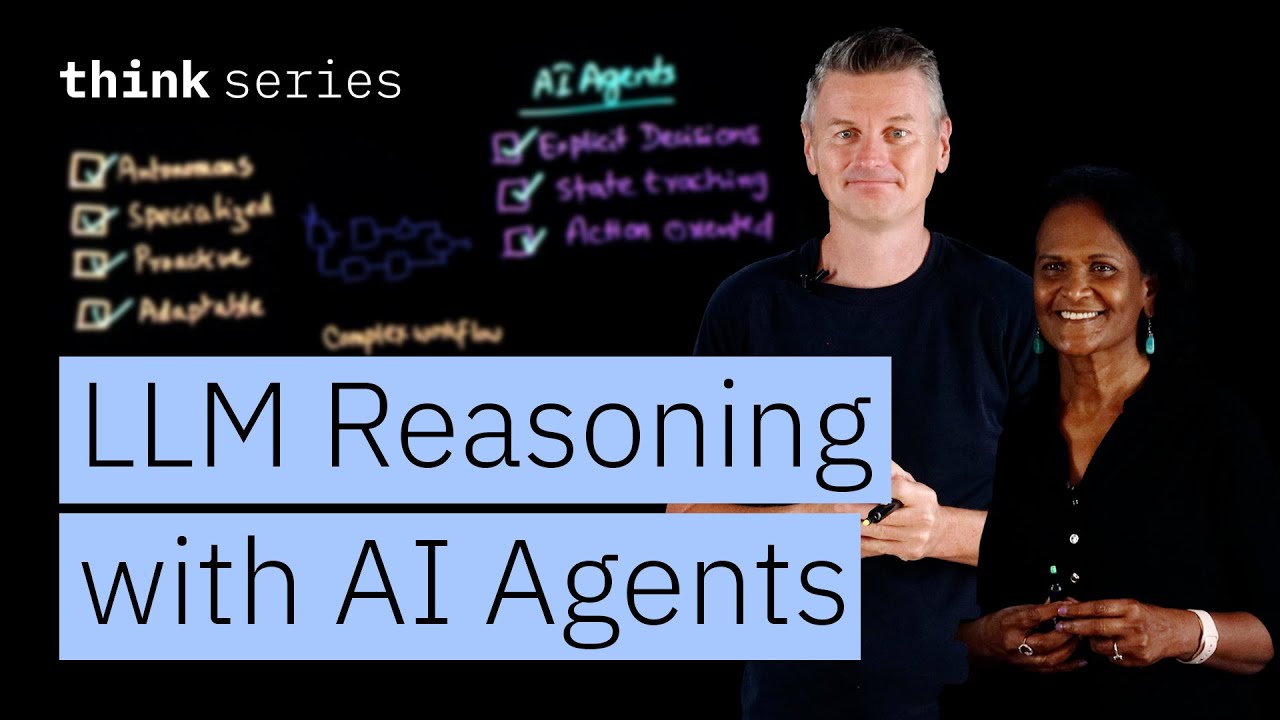
AI Agents + LLM Reasoning: Transforming Autonomous Workflows

Explore the distinction between LLMs and AI agents, focusing on how agents leverage reasoning, tool calling, and the ReAct prompting framework for autonomous decision-making and task execution in complex business workflows.

Is AI Slowing Down? Nathan Labenz Says We're Asking the Wrong Question

Is AI Slowing Down? Nathan Labenz Says We're Asking the Wrong Question

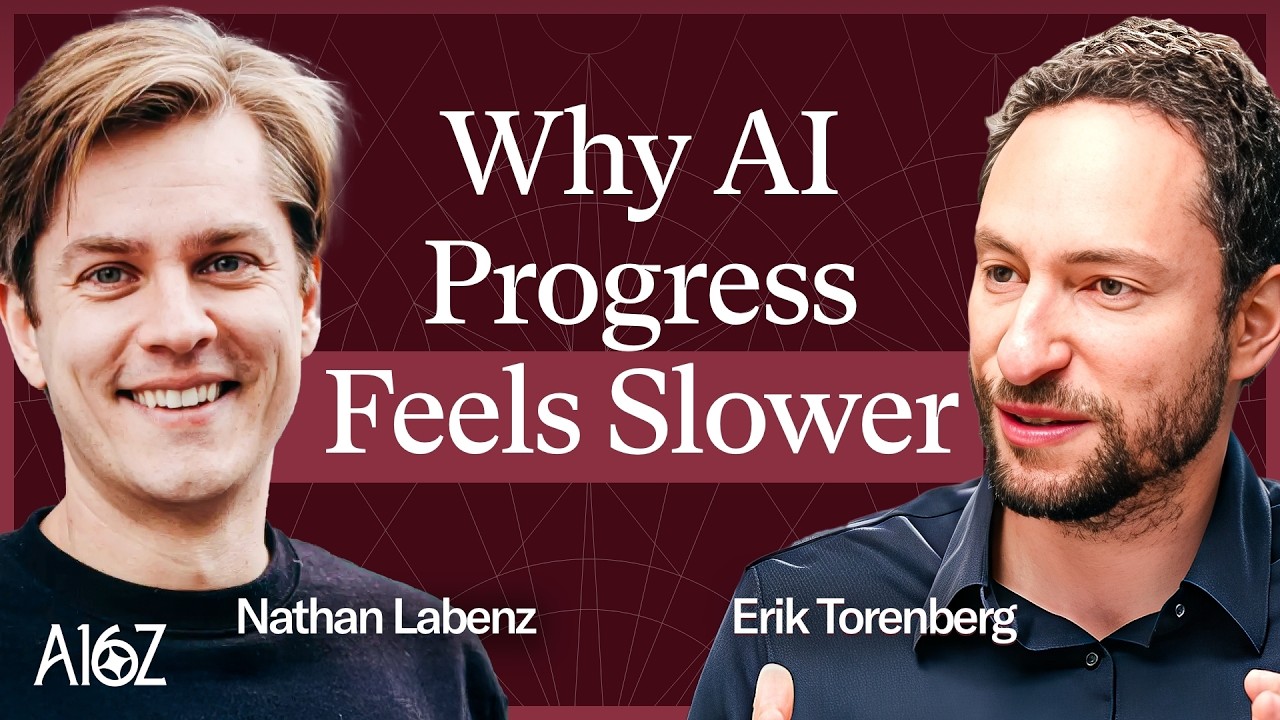
Nathan Labenz joins Erik Torenberg to challenge the narrative that AI progress is slowing down. He argues that despite perceptions around GPT-5, capabilities in reasoning and frontier science are advancing exponentially. They discuss the future of AI agents, the prospect of recursive self-improvement, the impact on jobs, and progress beyond language models into robotics and biology. The conversation culminates in a call for a more imaginative, positive vision to guide AI's trajectory.

Is AI Slowing Down? Nathan Labenz Says We're Asking the Wrong Question

Is AI Slowing Down? Nathan Labenz Says We're Asking the Wrong Question

Nathan Labenz argues that AI progress is not slowing down but is instead manifesting in less obvious but more powerful ways, such as advanced reasoning and multimodal capabilities. He deconstructs the debate around GPT-5's perceived impact, highlights the revolutionary potential of AI agents in science and engineering, and discusses the tangible effects on job automation. The conversation also explores the rise of robotics, the challenges of emergent AI behaviors like reward hacking, and concludes with a call for a collective, positive vision to steer this transformative technology.

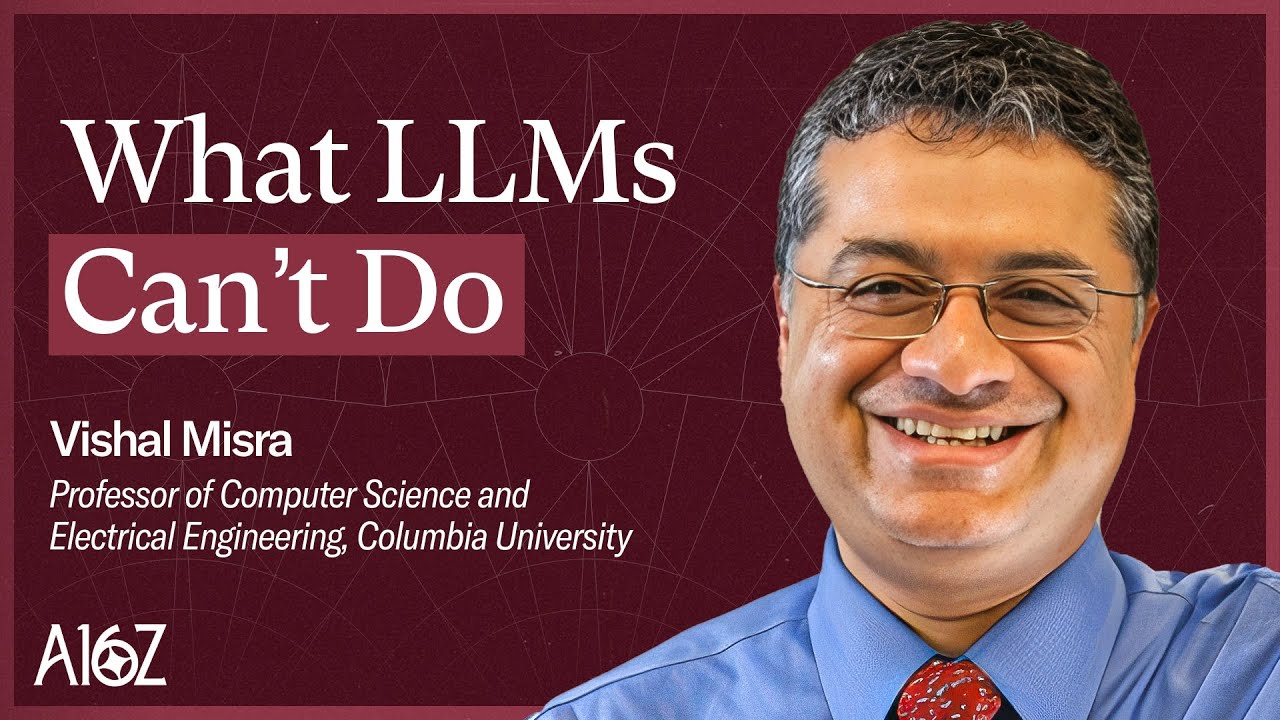
Columbia CS Professor: Why LLMs Can’t Discover New Science

Columbia CS Professor: Why LLMs Can’t Discover New Science

Professor Vishal Misra of Columbia University introduces a formal model for understanding Large Language Models (LLMs) based on information theory. He explains how LLMs reason by navigating "Bayesian manifolds", using concepts like token entropy to explain the mechanics of chain-of-thought, and defines true AGI as the ability to create new manifolds rather than just exploring existing ones.

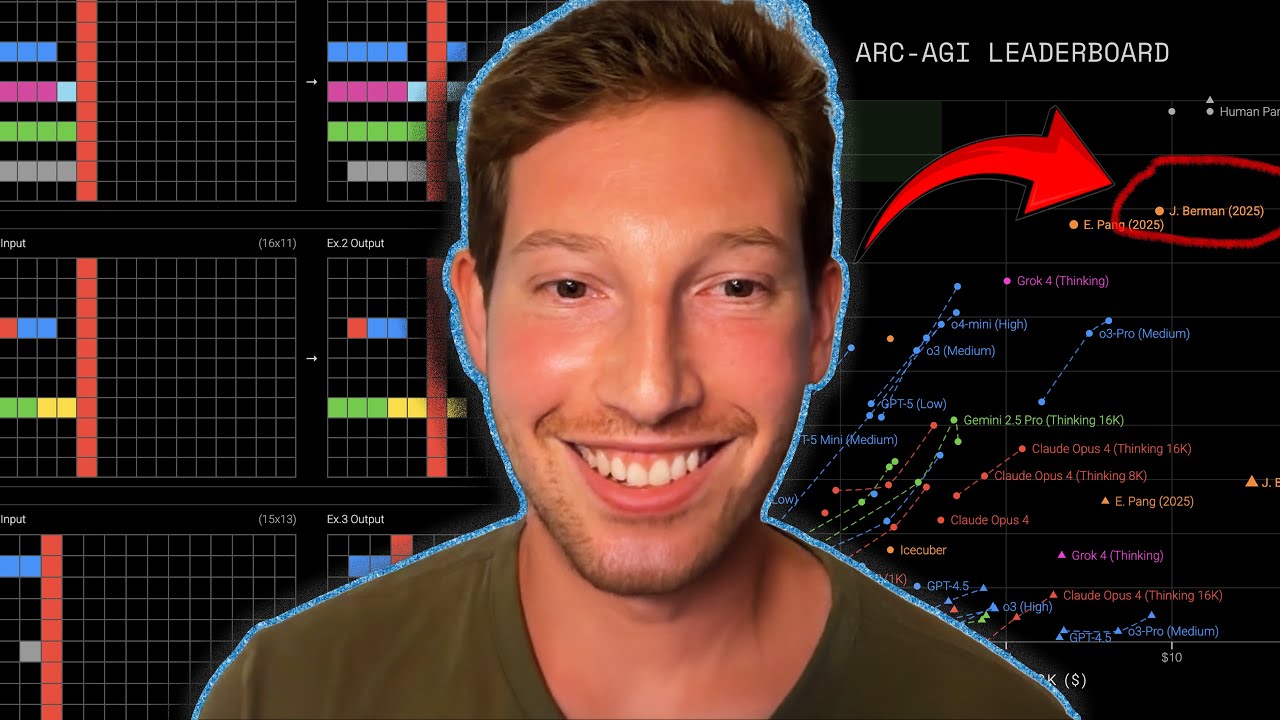
29.4% ARC-AGI-2 🤯 (TOP SCORE!) - Jeremy Berman

29.4% ARC-AGI-2 🤯 (TOP SCORE!) - Jeremy Berman

Jeremy Berman, winner of the ARC-AGI v2 public leaderboard, discusses his novel evolutionary approach that refines natural language descriptions instead of code. He explores the idea of building AI that synthesizes new knowledge by constructing deductive "knowledge trees" rather than merely compressing data into "knowledge webs," touching on the fundamental challenges of reasoning, continual learning, and creativity in current models.