Prompt engineering

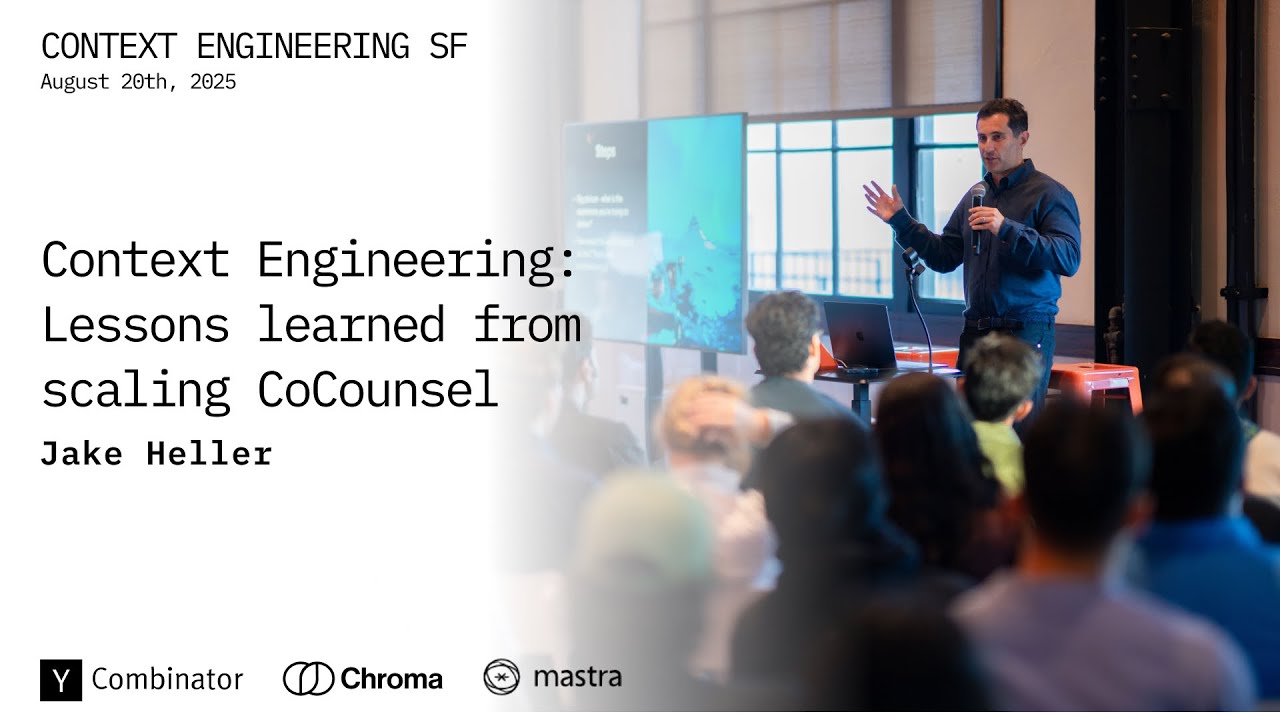
Context Engineering: Lessons Learned from Scaling CoCounsel

Context Engineering: Lessons Learned from Scaling CoCounsel

Jake Heller, founder of Casetext, shares a pragmatic framework for turning powerful large language models like GPT-4 into reliable, professional-grade products. He details a rigorous, evaluation-driven approach to prompt and context engineering, emphasizing iterative testing, the critical role of high-quality context, and advanced techniques like reinforcement fine-tuning and strategic model selection.
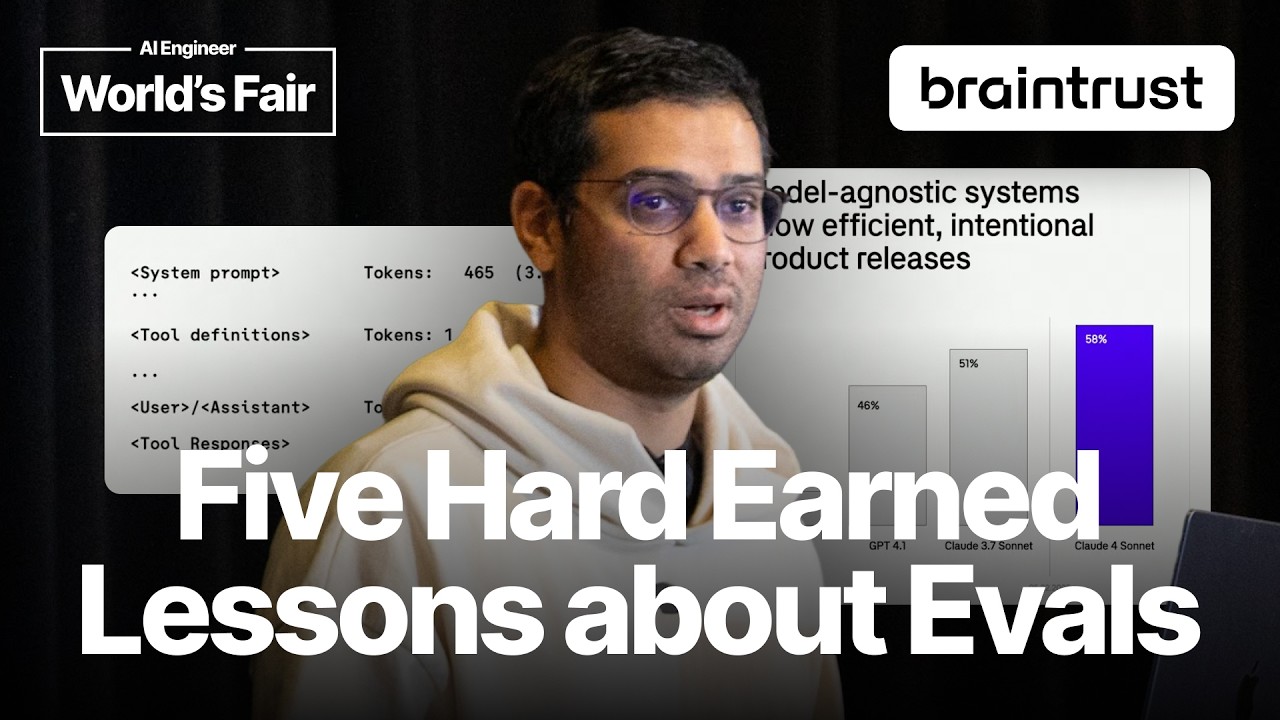
Five hard earned lessons about Evals — Ankur Goyal, Braintrust

Five hard earned lessons about Evals — Ankur Goyal, Braintrust

Building successful AI applications requires a sophisticated engineering approach that goes beyond prompt engineering. This involves creating intentionally engineered evaluations (evals) that reflect user feedback, focusing on "context engineering" to optimize tool definitions and outputs, and maintaining a flexible, model-agnostic architecture to adapt to the rapidly evolving AI landscape.

Traditional vs LLM Recommender Systems: Are They Worth It?

Traditional vs LLM Recommender Systems: Are They Worth It?

This summary explores Arpita Vats's insights on how Large Language Models (LLMs) are revolutionizing recommender systems. It contrasts the traditional feature-engineering-heavy approach with the contextual understanding of LLMs, which shifts the focus to prompt engineering. Key challenges like inference latency and cost are discussed, along with practical solutions such as lightweight models, knowledge distillation, and hybrid architectures. The conversation also touches on advanced applications like sequential recommendation and the future potential of agentic AI.

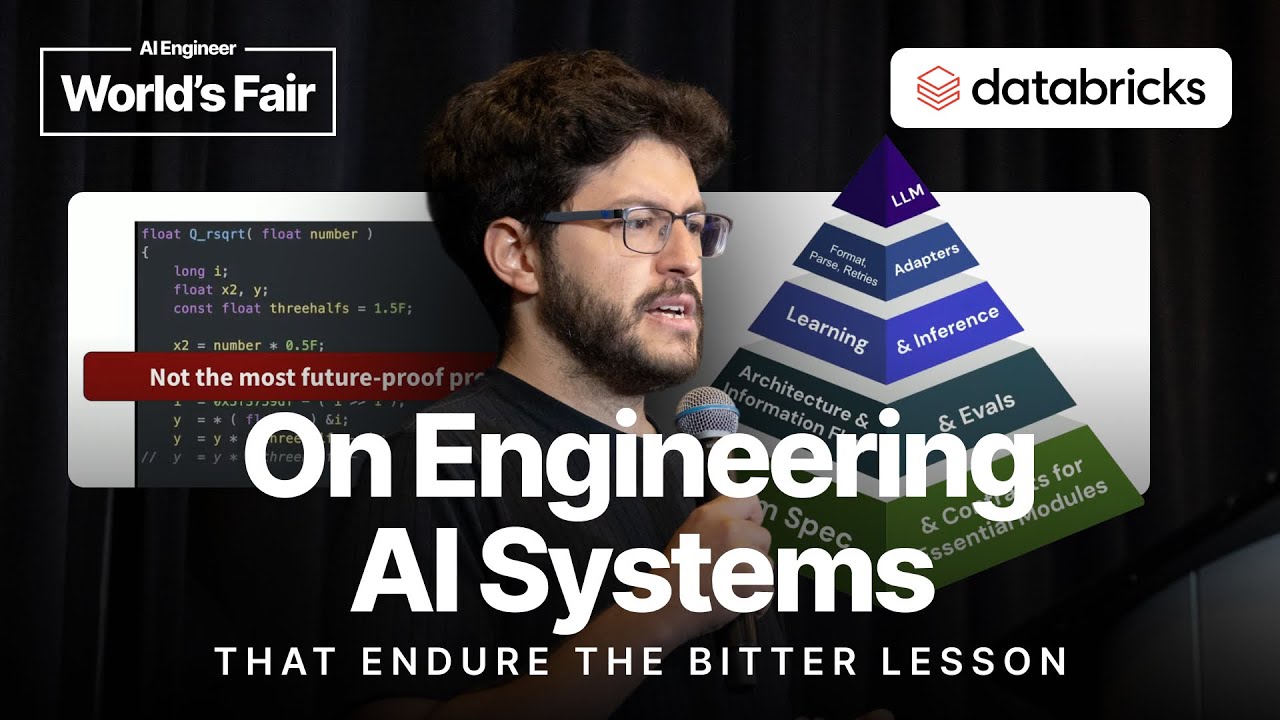
On Engineering AI Systems that Endure The Bitter Lesson - Omar Khattab, DSPy & Databricks

On Engineering AI Systems that Endure The Bitter Lesson - Omar Khattab, DSPy & Databricks

Omar Khattab, creator of DSPy, reinterprets the 'Bitter Lesson' for AI engineering, arguing that the key to building robust and enduring AI systems is to move beyond brittle prompt engineering. He advocates for a declarative, modular approach that separates the fundamental program logic from the rapidly changing landscape of LLMs, optimizers, and inference techniques.

Evals Are Not Unit Tests — Ido Pesok, Vercel v0

Evals Are Not Unit Tests — Ido Pesok, Vercel v0

Ido Pesok from Vercel explains why LLM-based applications often fail in production despite successful demos, and presents a systematic framework for building reliable AI systems using application-layer evaluations ("evals").

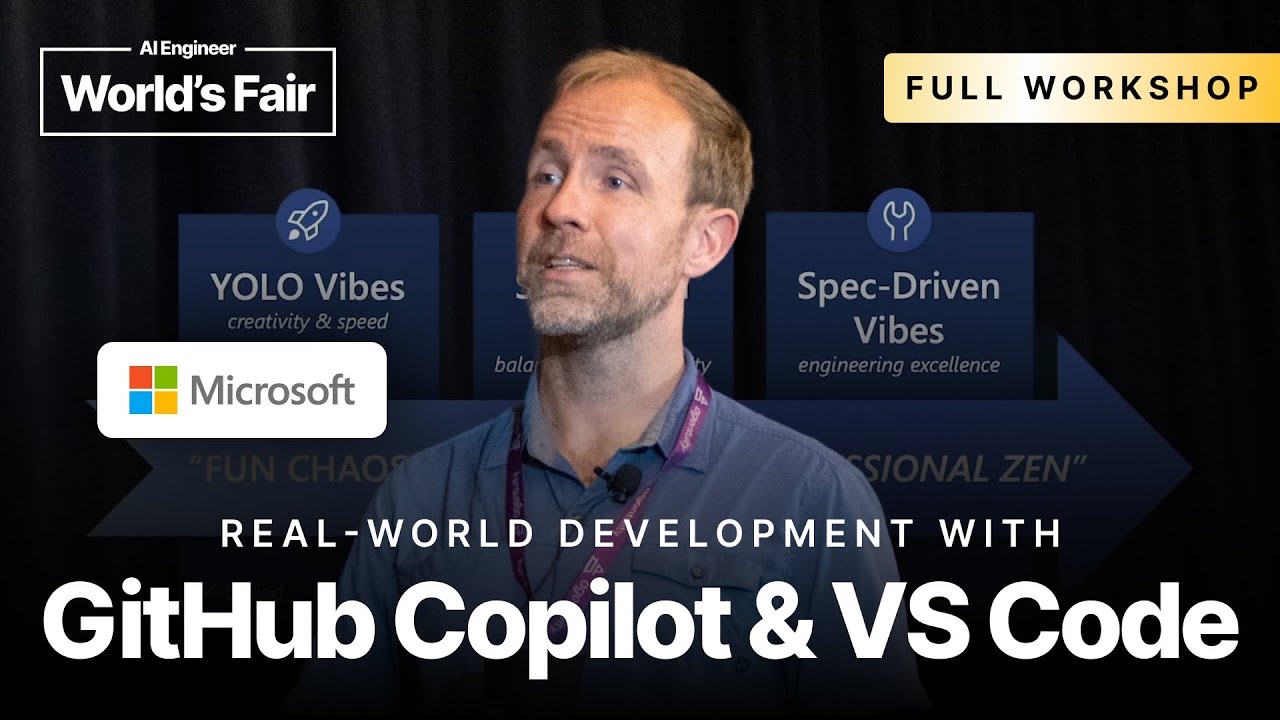
Real World Development with GitHub Copilot and VS Code — Harald Kirschner, Christopher Harrison

Real World Development with GitHub Copilot and VS Code — Harald Kirschner, Christopher Harrison

A deep dive into "Vibe Coding," a development methodology that prioritizes outcomes over code-level details, using the advanced AI features of VS Code and GitHub Copilot. The talk explores three stages of this methodology—YOLO, Structured, and Spectrum—and demonstrates how to leverage agent modes, custom instructions, reusable prompts, and the Model Copilot Protocol (MCP) to enhance productivity from rapid prototyping to enterprise-scale development.