Natural language processing

Why won’t AI agents just follow the rules?

Why won’t AI agents just follow the rules?

This podcast episode tackles critical cybersecurity issues in AI, examining why AI agents defy rules and the necessity of deterministic external controls. It highlights the severe lack of security in agentic skill marketplaces (OWASP Top 10), where "natural language is executable" and the "rush to market" overlooks basic hygiene. The discussion also covers how AI disrupts bug bounties, leading to lower payouts and "AI slop" reports, potentially pushing researchers to the dark market. Finally, it introduces ThreatXtension, an AI-powered open-source tool to detect malicious browser extensions.
MCPs for Observability Stacks

MCPs for Observability Stacks

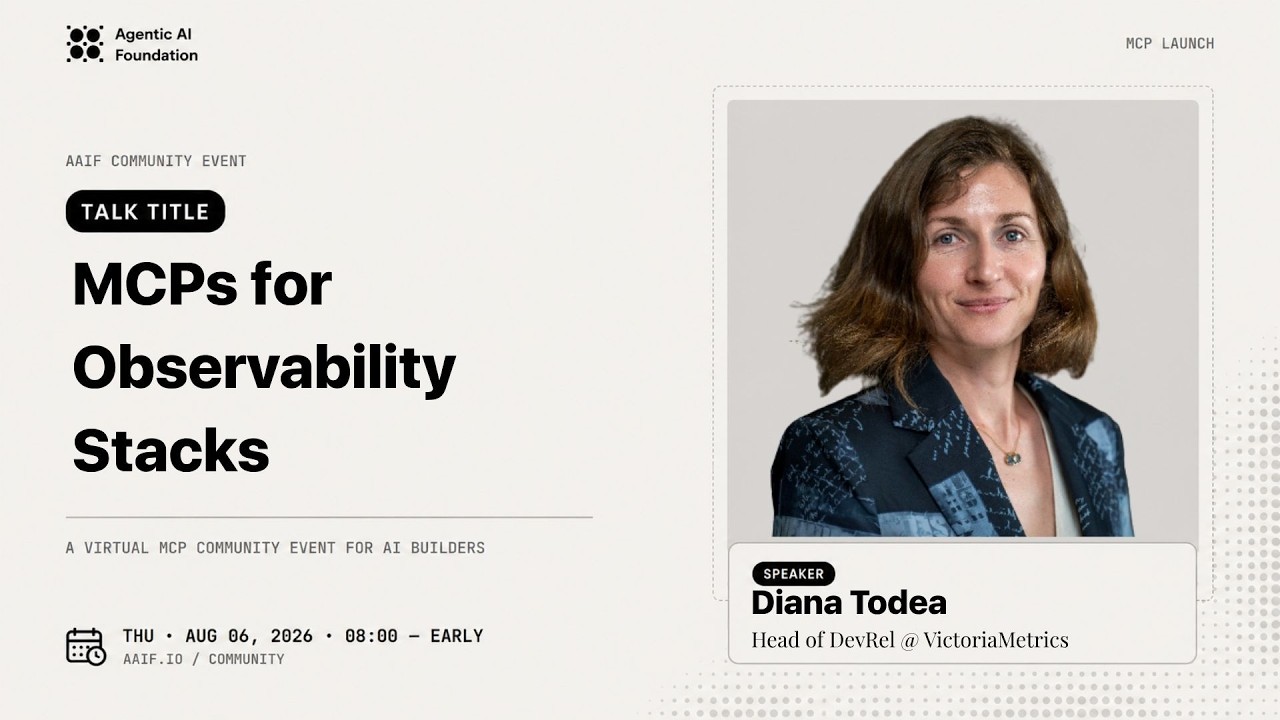
Diana Todea, Head of Developer Relations at VictoriaMetrics, demonstrates how Model-Controller-Pair (MCP) servers enhance observability stacks for faster, smarter troubleshooting. She highlights the use of AI-driven anomaly detection, natural language querying, and customizable "skills" to investigate production issues, manage metrics, and generate alerts, showcasing practical applications with two interconnected MCP servers.

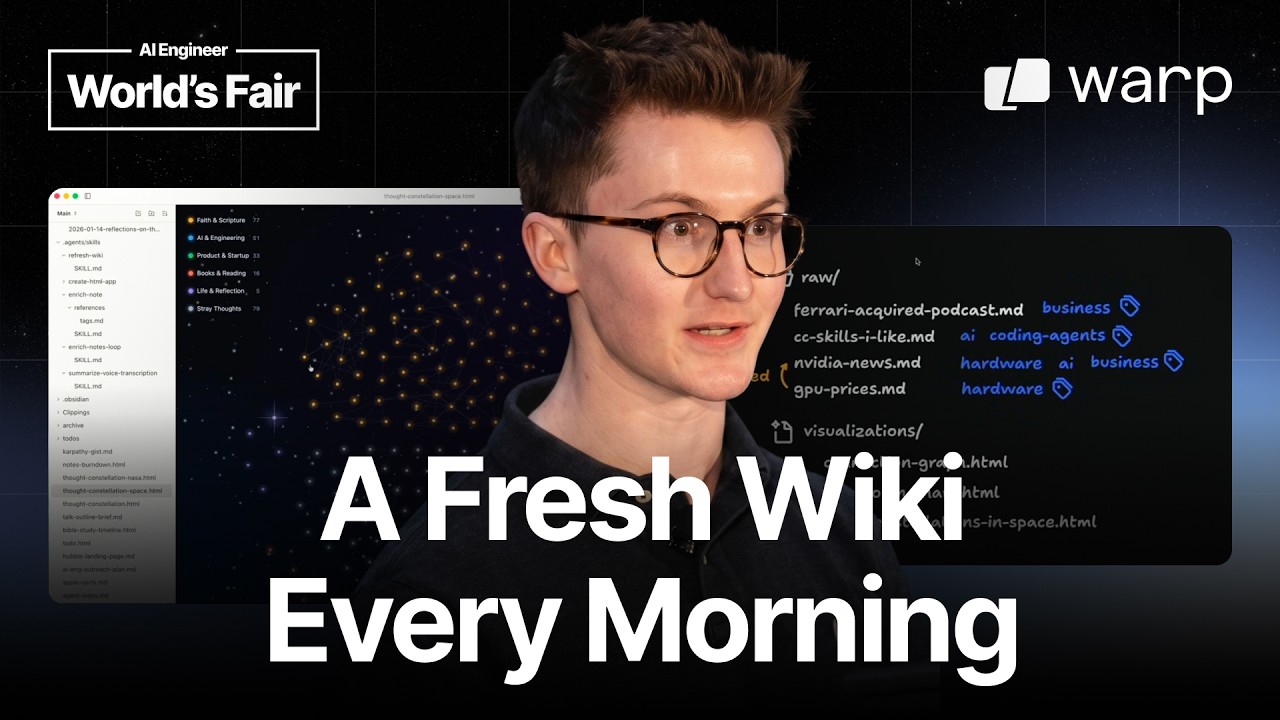
LLM Knowledge Bases: a practical guide — Ben Holmes, Warp

LLM Knowledge Bases: a practical guide — Ben Holmes, Warp

Ben Holmes outlines a personal knowledge management system leveraging LLMs and automation to transform raw voice-dictated notes into an organized, browsable wiki and visual graph. The process emphasizes rapid, "sloppy" capture, followed by AI agents enriching notes with tags, web research, and backlinks, then generating structured wikis based on Karpathy's methodology, all automated via cloud sandboxes and Obsidian's headless CLI.

Perception Agents — Antje Barth, Amazon AGI Lab

Perception Agents — Antje Barth, Amazon AGI Lab

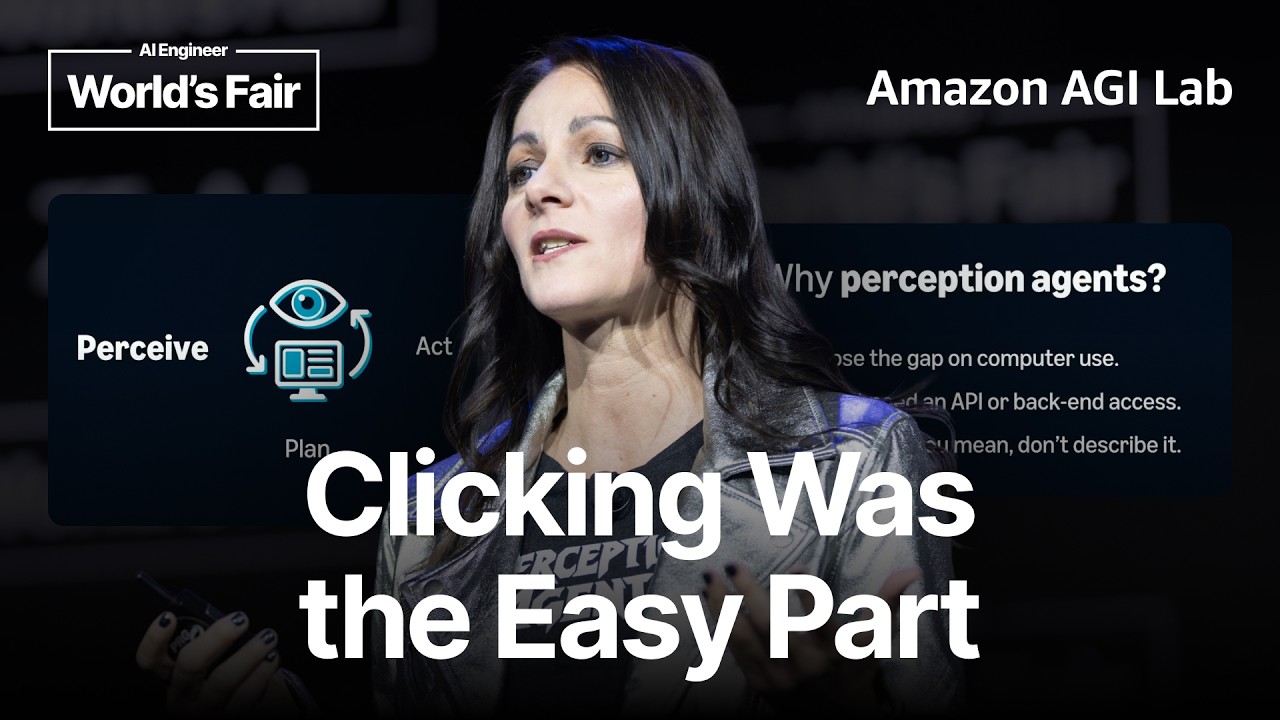
Antje Barth of Amazon AGI Lab discusses the architectural gap in current AI agents, which excel at individual tasks but fail at complex, end-to-end workflows due to a lack of reliability and contextual understanding. She introduces "Perception Agents"—AI systems that see, reason, and act on computers like humans, using visual and multimodal input to enable reliable collaboration and close the perception-action loop, highlighting new open-source tools for annotation and verification.

Building an Autonomous Delivery Experience with DoorDash Co-Founders Andy Fang and Stanley Tang

Building an Autonomous Delivery Experience with DoorDash Co-Founders Andy Fang and Stanley Tang

DoorDash co-founders Andy Fang and Stanley Tang discuss how AI and autonomous technology are transforming consumer behavior and delivery logistics. They detail the impact of "Ask DoorDash" on restaurant discovery and grocery orders, and the operational challenges and strategic advantages behind their autonomous delivery robot, Dot. The conversation highlights DoorDash's 'use case first' approach to autonomy, the critical role of data in scaling physical AI, and their surprising prediction that more Dashers, not fewer, will be part of DoorDash's future multimodal delivery strategy.

The next generation of ChatGPT Voice

The next generation of ChatGPT Voice

An in-depth look into GPT Live, the next generation of full-duplex voice models in ChatGPT, designed for natural, continuous interaction. It highlights breakthroughs in concurrent processing, intelligent delegation to advanced models like GPT 5.5, real-time semantic translation, and proactive language coaching, aiming to transform AI interactions into fluid, intelligent conversations akin to human dialogue.